Artwork
The Landing of the Remains of the Honourable Col. Cathcart for interment at Anger(e) Point in the Island of Java
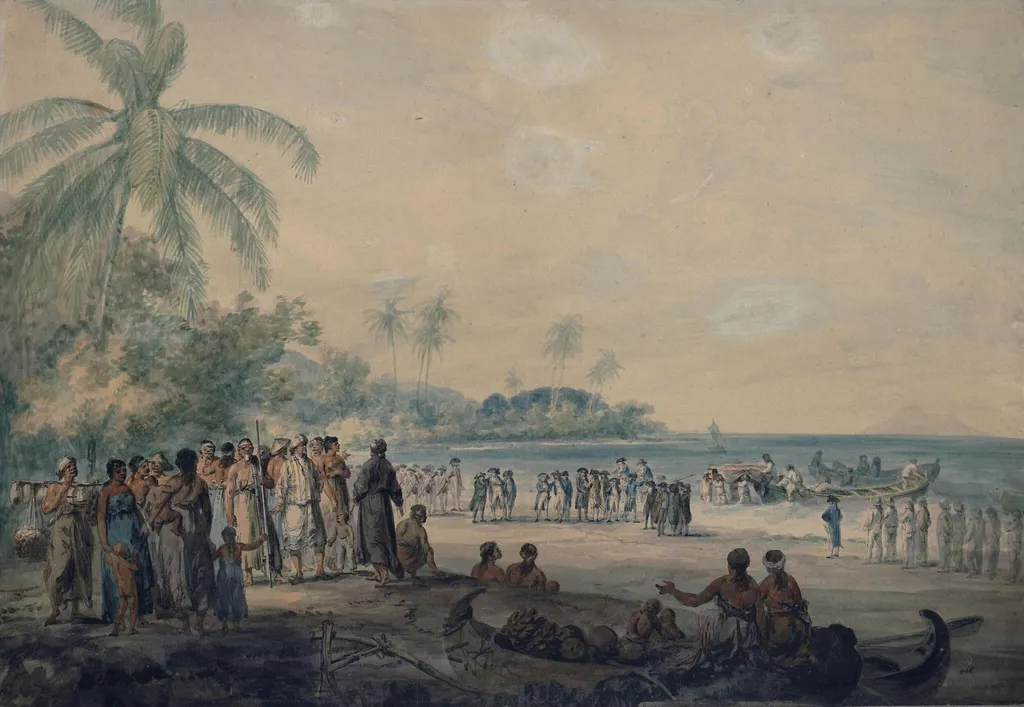
The Landing of the Remains of the Honourable Col. Cathcart for interment at Anger(e) Point in the Island of Java is a watercolor work on paper by the Rococo painting artist Julius Caesar Ibbetson, the elder. It dates from 1788 and is held in the collection of the Victoria and Albert Museum. The work is a watercolour that records the landing of Colonel Charles Cathcart’s remains at Anger Point on the island of Java.
About this work
Overview
The work is a watercolour that records the landing of Colonel Charles Cathcart’s remains at Anger Point on the island of Java. The composition presents a crowded shoreline where two distinct groups of figures are positioned on opposite sides of the beach, set against a bright, sunlit sea and distant ships.
Subject & Meaning
The scene captures the solemn occasion of the colonel’s interment, juxtaposing the formal presence of European attendants in light clothing with local participants in simpler dress. The contrast underscores the cultural encounter inherent in a colonial funeral ritual, while the inclusion of children at play adds a subtle note of everyday life continuing alongside the ceremony.
Technique & Style
Executed in watercolour, the piece employs warm, luminous hues to convey the tropical light. Delicate washes define the palm silhouettes and the shimmering ocean, while finer brushwork renders the figures and their varied attire. The clear delineation of two groups and the balanced arrangement of elements reflect a compositional rigor typical of late‑18th‑century British landscape practice.
History & Provenance
Originally ascribed to the voyage artist John Webber and linked to Captain Cook’s expeditions, the picture was reassigned to Julius Caesar Ibbetson in 1950 after comparative study. Its layout closely mirrors Ibbetson’s oil canvas shown at the Royal Academy in 1789 and a preparatory sketch held by J. Stewart Nicoll, confirming the artist’s involvement.
Context
Created during the height of Romantic interest in exotic locales, the watercolour aligns with the movement’s fascination with distant lands and dramatic events. While not overtly emotive, its emphasis on atmospheric light, natural setting, and the encounter between Western and Eastern figures reflects Romanticism’s broader preoccupation with nature, history, and the sublime.
Own this work as a print
Artist & collection
Artist
Julius Caesar Ibbetson, the elder
Julius Caesar Ibbetson painted small, detailed watercolours of British and colonial landscapes in the late 1700s, often showing daily work or faraway places.

 Λιμάνι της Πάρου
 A Small Lengua Village
 A Small Lengua Village, Uruguay
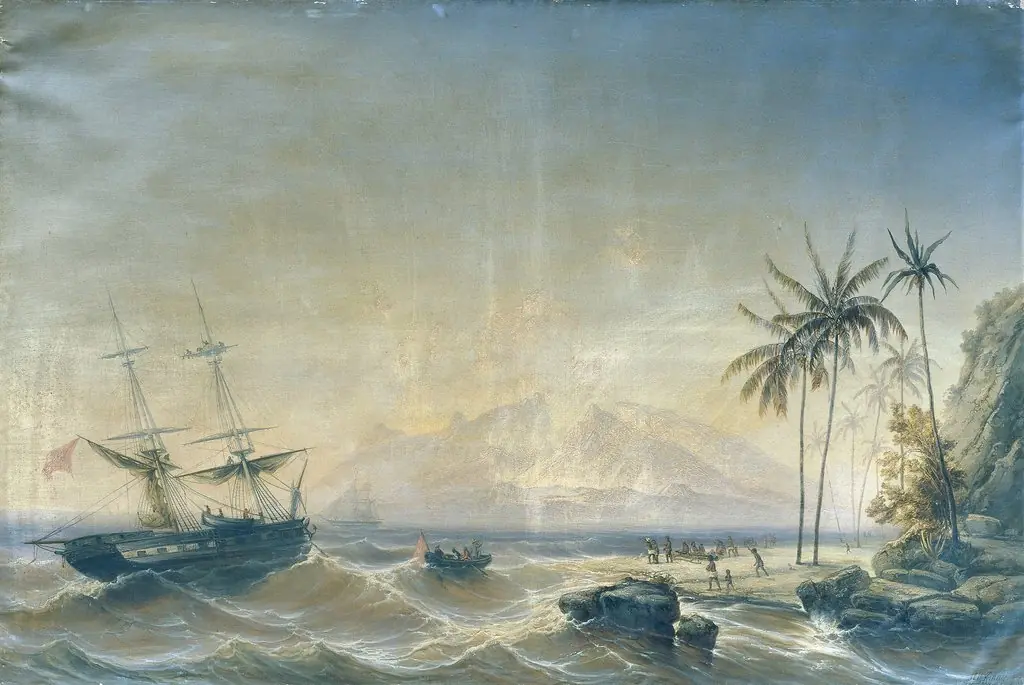 Kriegsschiff vor den Südseeinseln
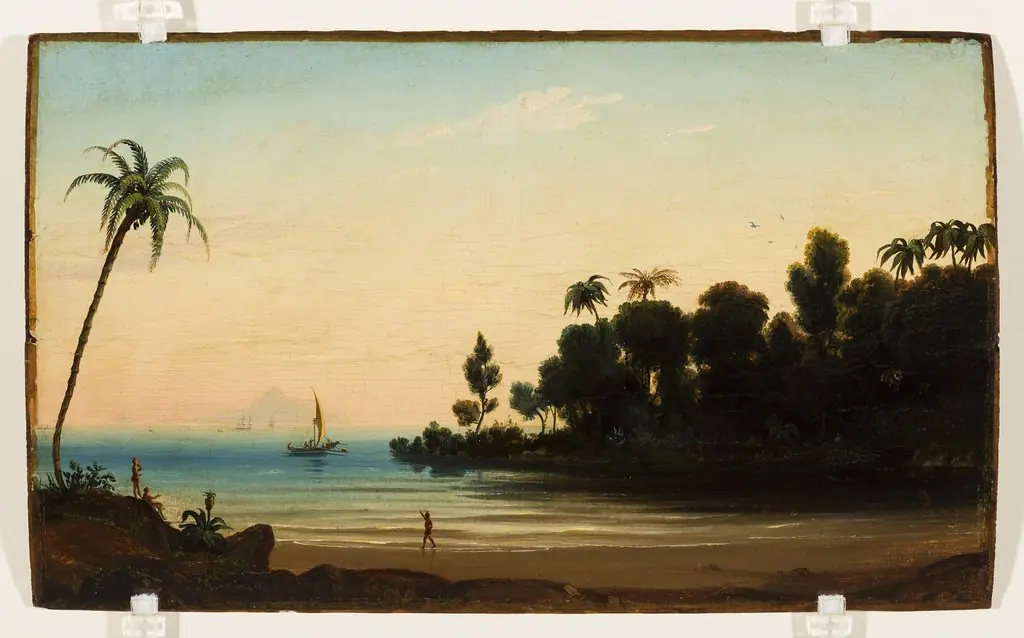 Praia com índios e veleiro (atribuído)
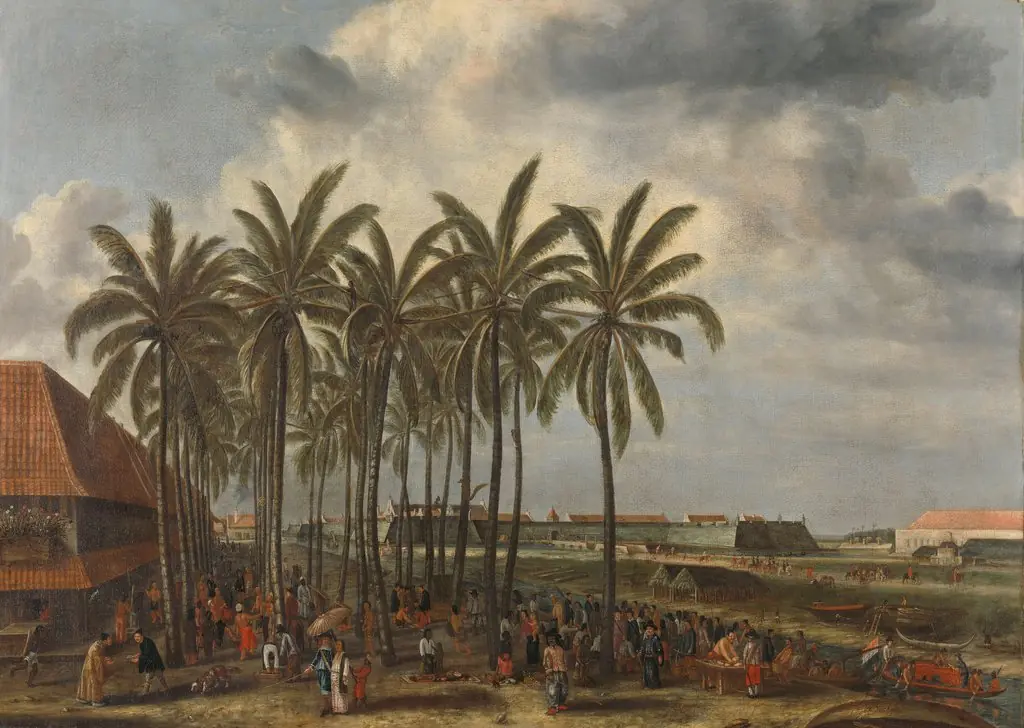 The Castle of Batavia
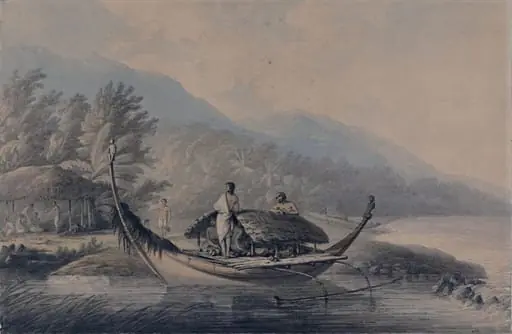 Canoe, Ulietea, Society Islands
 In the Garden House Reach, Calcutta
 Mouth of the Rio Purus
 First Sailing of the Griffin on Lake Erie. August 7, 1679
 A Yahua Village
 Halting to Make a Sketch