Artwork
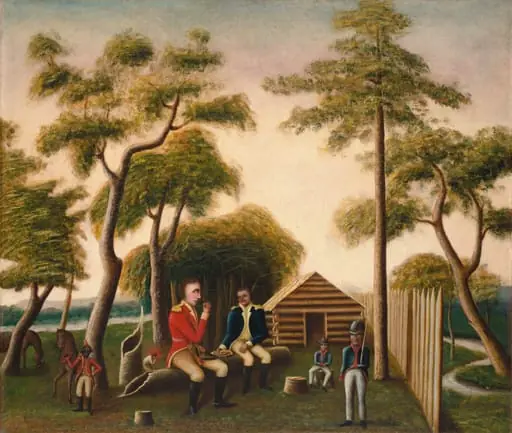
General Francis Marion Inviting A British Officer to Share His Meal or The Swamp Fox
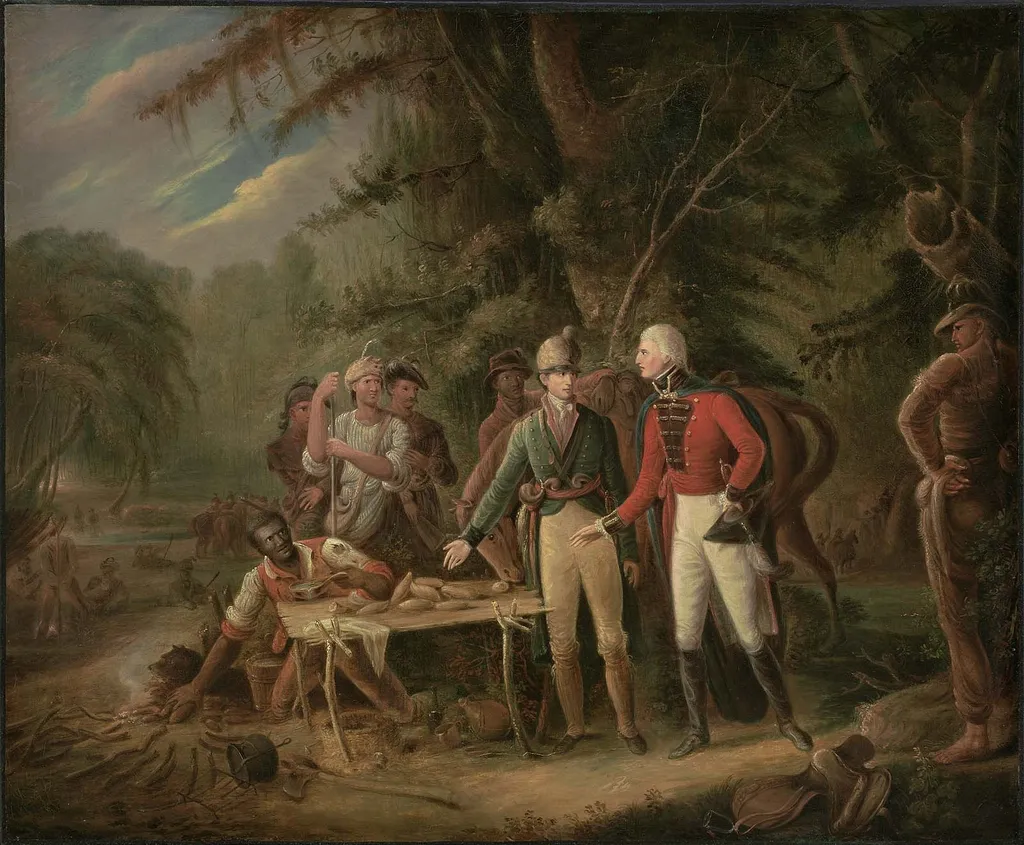
General Francis Marion Inviting A British Officer to Share His Meal or The Swamp Fox is an oil painting by the American Folk Art artist John Blake White. It dates from 1810 and is held in the collection of the Museum of Fine Arts Boston.
About this work
Overview
The scene is rendered with careful attention to natural lighting and textile detail, reflecting early 19th-century American historical painting conventions.
Painted in 1810 by John Blake White, this oil work depicts a moment of informal civility during the American Revolutionary War. It portrays General Francis Marion, known as the Swamp Fox, offering food to a British officer amid a forested landscape. The scene is rendered with careful attention to natural lighting and textile detail, reflecting early 19th-century American historical painting conventions.
Subject & Meaning
The painting captures a gesture of restraint and humanity between adversaries. Marion, in a green coat, extends hospitality to a British officer in red, symbolizing a temporary truce rooted in shared military decorum. Surrounding figures, both American and British, observe quietly, reinforcing the notion of honor beyond battlefield enmity. The meal itself becomes a quiet act of dignity in a war marked by guerrilla tactics.
Technique & Style
White employs a muted palette dominated by earth tones—olive greens, browns, and soft grays—to evoke the swampy terrain of South Carolina. Detailed brushwork renders the textures of wool, leather, and linen with precision. The composition is balanced yet informal, with figures arranged naturally around a simple table, suggesting spontaneity rather than staged formality. Light filters through the trees, enhancing the sense of place.
History & Provenance
Commissioned shortly after the war’s end, the painting reflects a growing American interest in commemorating Revolutionary figures as moral exemplars. It entered the collection of the Museum of Fine Arts, Boston, in the 19th century and has remained there since. Its early date places it among the first American artworks to dramatize partisan warfare with psychological nuance rather than heroic grandeur.
Context
Francis Marion’s reputation as a guerrilla leader made him a folk hero in the postwar South. White’s choice to depict him not in battle but in an act of mercy aligns with early national ideals of republican virtue. The scene likely draws from oral accounts rather than direct observation, as no contemporary records confirm this specific encounter. It reflects a cultural desire to humanize conflict through personal gesture.
Legacy
The painting contributed to the mythos surrounding Marion, reinforcing his image as a chivalrous partisan. While historically speculative, its emotional tone influenced later depictions of Revolutionary figures in American art. It remains a rare example of early American painting that prioritizes quiet humanity over martial triumph, offering a counterpoint to more bombastic war imagery of the period.
Own this work as a print
Artist & collection

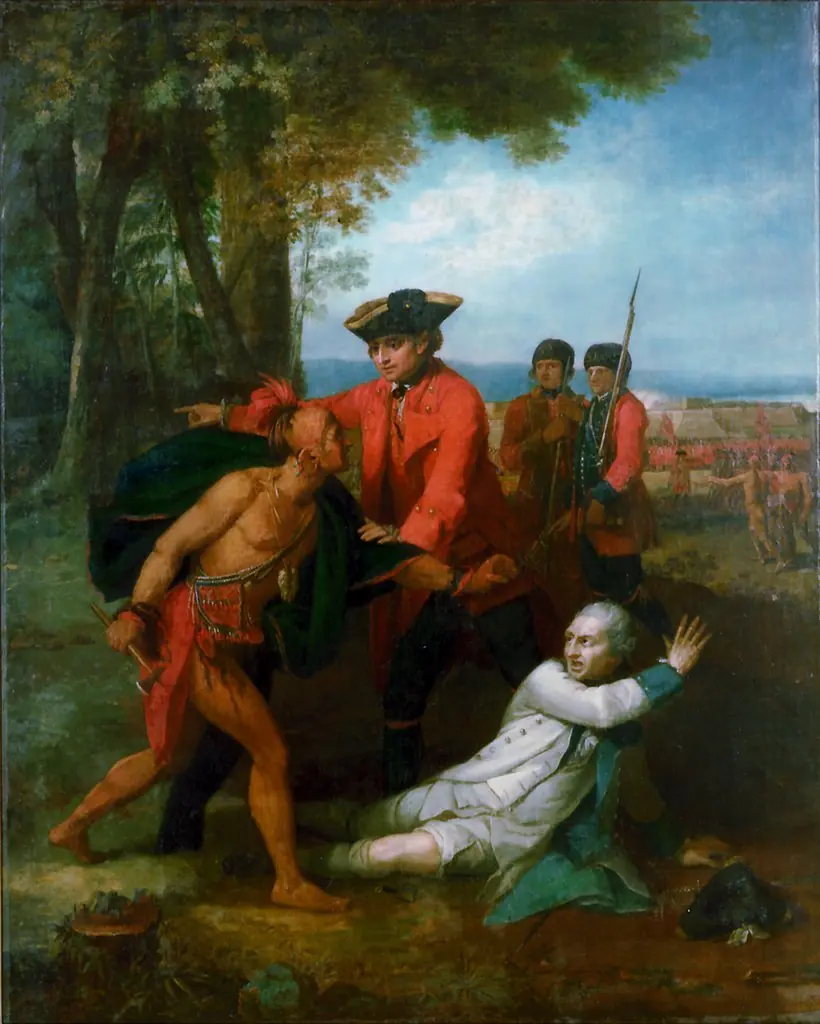 General Johnson Saving a Wounded French Officer from the Tomahawk of a North American Indian
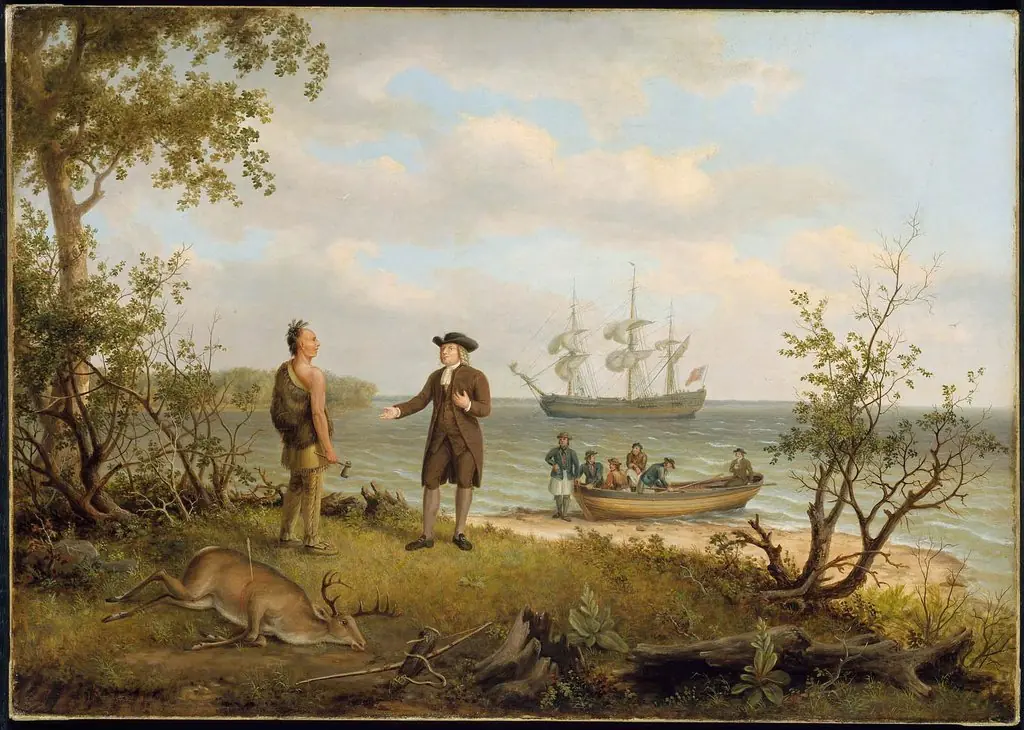 The Landing of William Penn
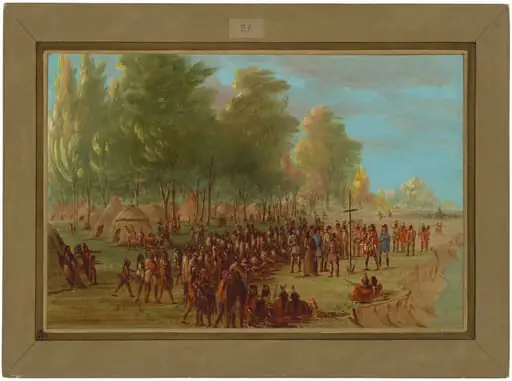 La Salle Erecting a Cross and Taking Possession of the Land. March 25, 1682
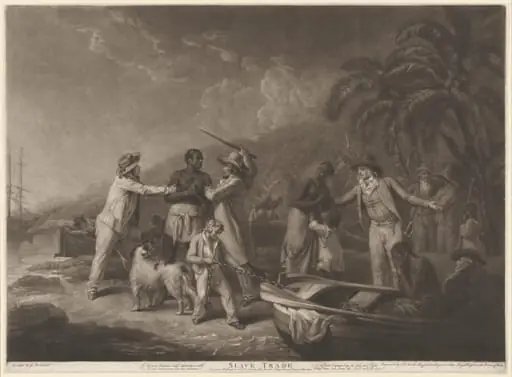 Slave Trade
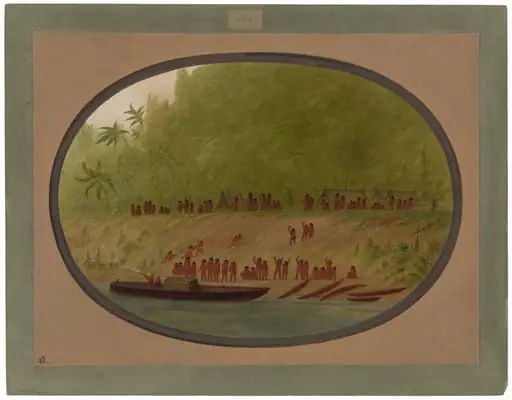 A Small Orejona Village
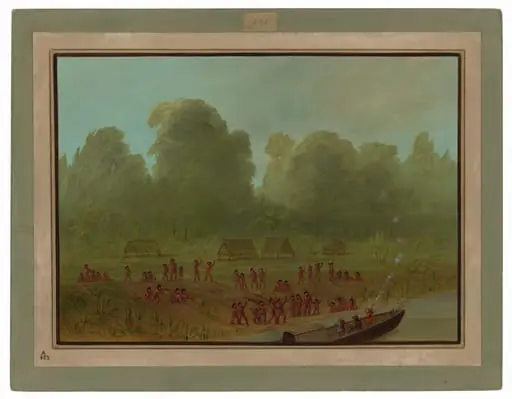 A Mayoruna Village
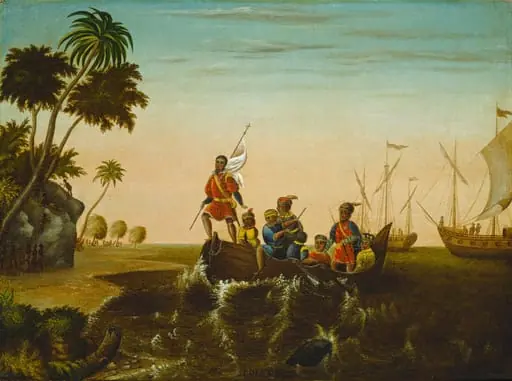 The Landing of Columbus
 Ship Cove, Queen Charlotte Sound
 Penn's Treaty with the Indians
 La Salle Taking Possession of the Land at the Mouth of the Arkansas. March 10, 1682
 Launching of the Griffin. July 1679
 Marion Feasting the British Officer on Sweet Potatoes