Artwork
Distributing Bread to the Poor
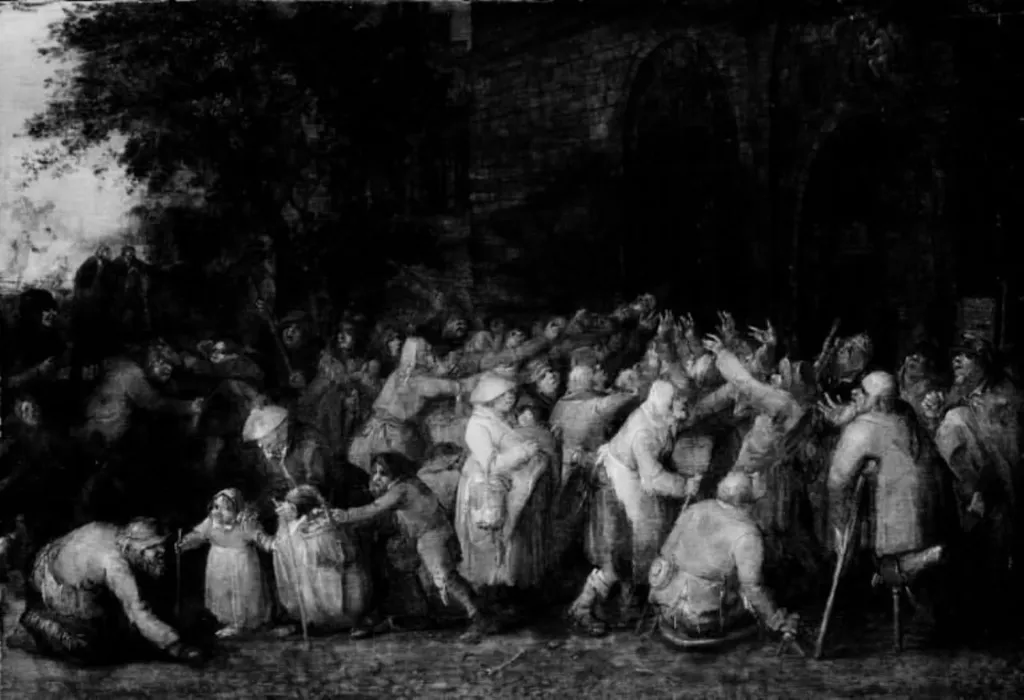
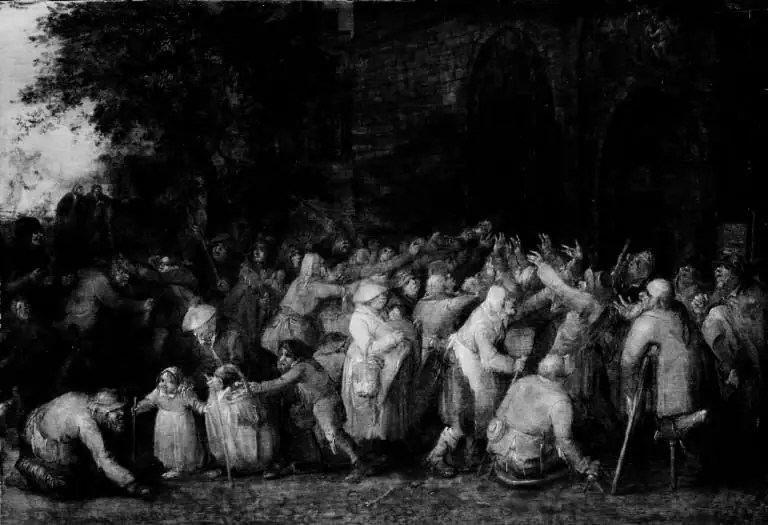
Distributing Bread to the Poor is a photography by Unknown. It dates from 1610 and is held in the collection of the Statens Museum for Kunst.
About this work
Overview
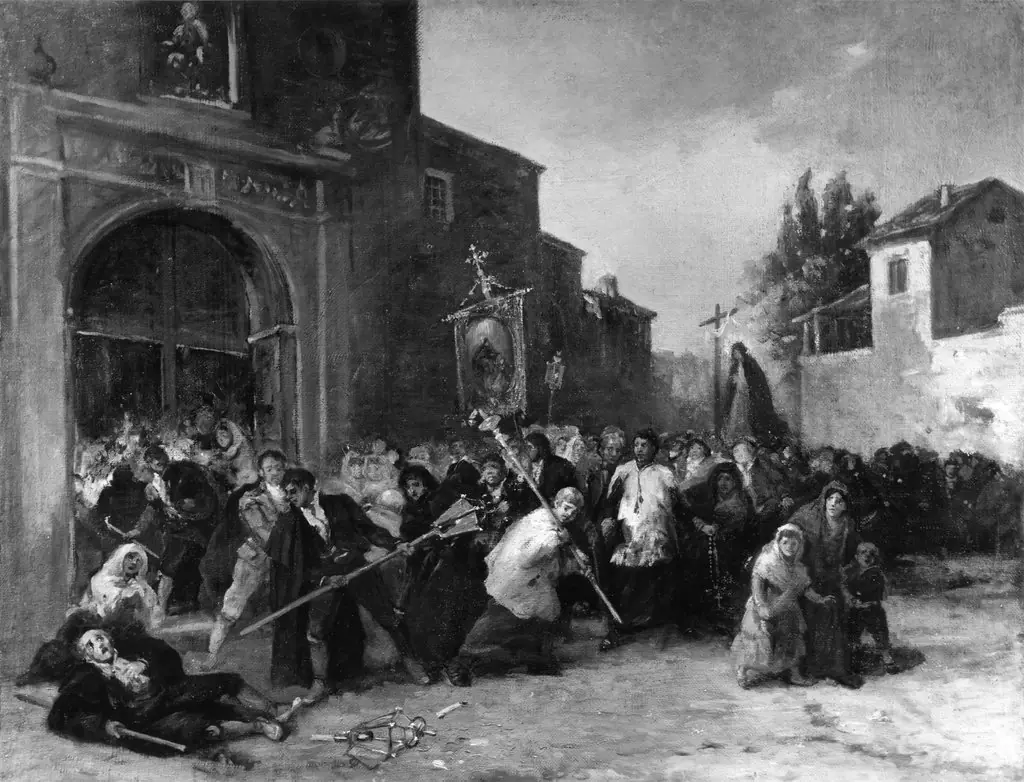
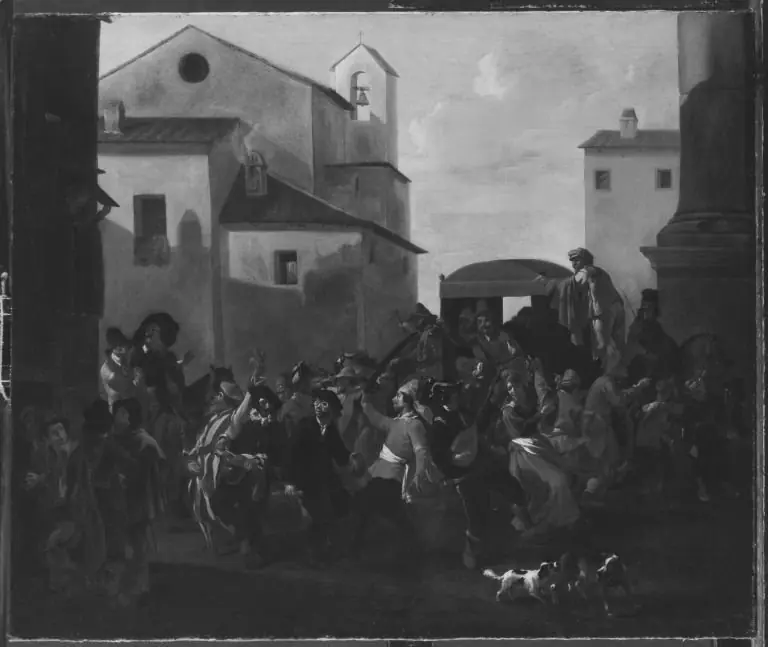
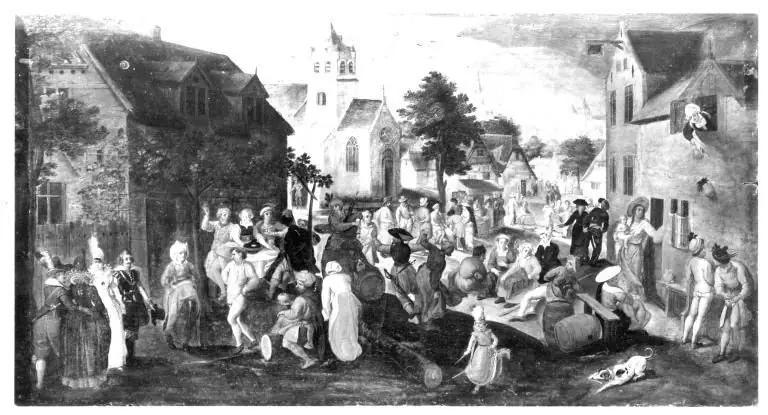
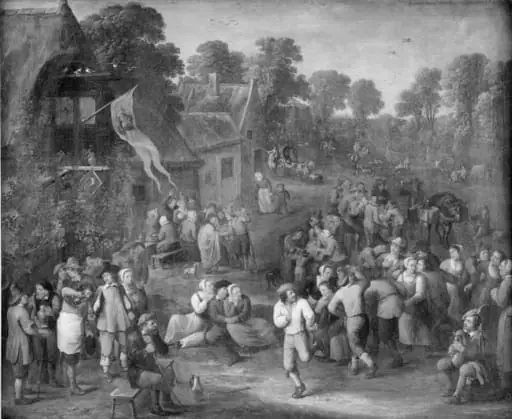
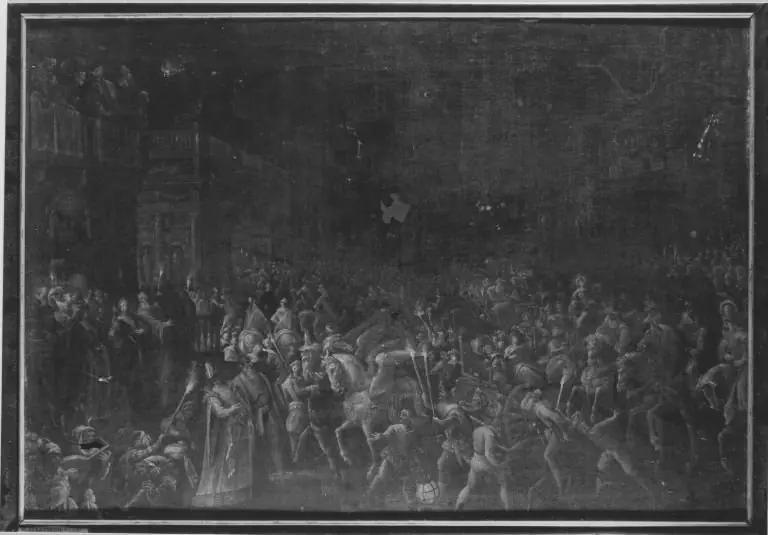
Created around 1610, this black-and-white photograph captures a moment of communal distribution, likely depicting the act of giving bread to the impoverished.
Created around 1610, this black-and-white photograph captures a moment of communal distribution, likely depicting the act of giving bread to the impoverished. Though the original artwork is lost, the photograph preserves its composition and emotional weight. The scene is set outdoors, with a dense gathering of figures centered around a single individual offering food. The image’s contrast and spatial arrangement suggest it was derived from a painted composition notable for its dramatic lighting.
Subject & Meaning
The scene portrays an act of charity, with a central figure—dressed in lighter tones—distributing food to a group of impoverished onlookers. Children stretch toward the giver, while others kneel or stand in quiet anticipation. The focus on gesture and gaze conveys dependence and compassion. The subject reflects common religious and social themes of the era: the moral duty to aid the poor, often depicted in Christian contexts as an act of piety.
Technique & Style
The photograph reproduces a composition marked by strong chiaroscuro: deep shadows and sharply lit areas define forms and direct attention to the central action. The contrast between the dark background and illuminated clothing and faces enhances the three-dimensionality of the crowd. Figures are arranged in a loose semicircle, creating a sense of intimacy and movement. The style suggests influence from early Baroque painting, emphasizing emotional immediacy through light and posture.
History & Provenance
The original painting, attributed to 2046_person, was likely produced in the early 17th century and has since been lost. The surviving image is a photographic reproduction, now held at the Museum of Ethnography. Its preservation as a photograph indicates its historical significance was recognized in later centuries, even as the physical artwork disappeared. The photograph may have been made in the 19th or early 20th century for scholarly or archival purposes.
Context
In early 17th-century Europe, depictions of charity were common in religious and civic art, often commissioned by churches or guilds to illustrate Christian virtues. Scenes of bread distribution reflected both real social conditions and moral instruction. The composition aligns with contemporaneous works by artists in the Low Countries and Italy, where everyday acts of mercy were rendered with psychological realism and dramatic lighting to engage viewers emotionally.
Legacy
Though the original painting no longer exists, the photographic record ensures its visual language endures. The image contributes to the study of how social themes were visualized in early modern art and how such scenes were later preserved through emerging photographic technology. It remains a reference point for understanding the intersection of art, charity, and public life in the early Baroque period.
Artist & collection

 Domestic Scene
 Giacomo and Cardinal Marco, investing Andrea, Abbot of San Zeno, with his Benefice
 The Nymph of Fontainebleau
 Portrait of a Woman
 Madonna and Child with Saints in the Enclosed Garden
 Venus and Minerva
 Family Group of Four on Sofa
 Wall painting from Room H of the Villa of P. Fannius Synistor at Boscoreale