Artwork
The Procession
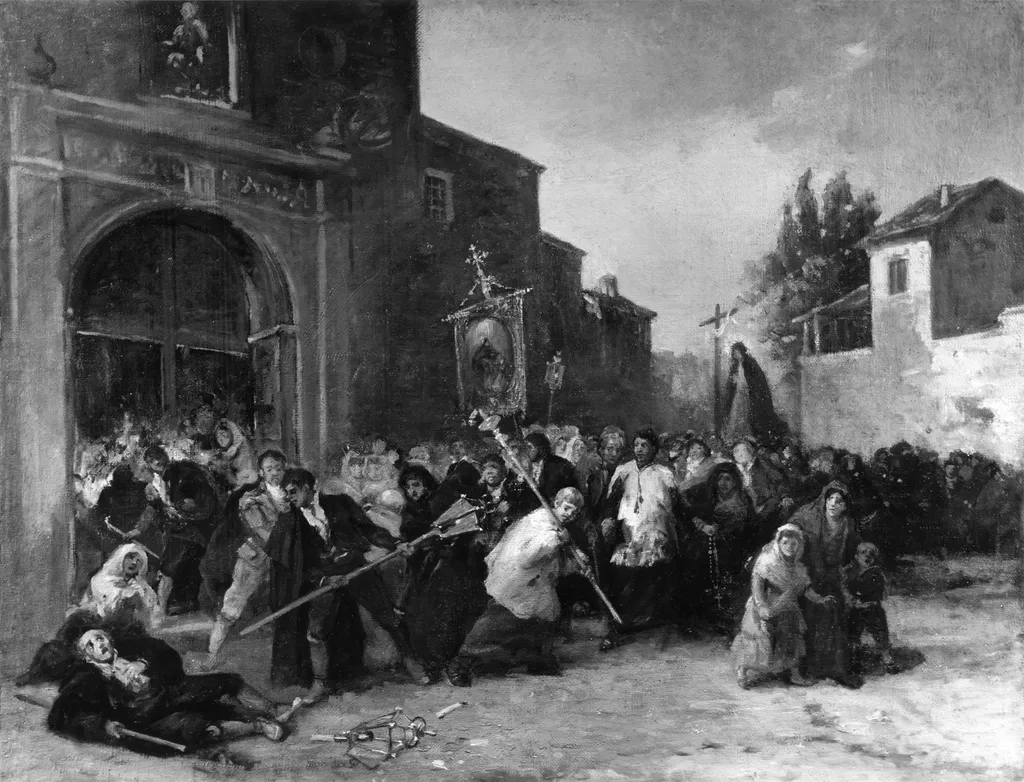
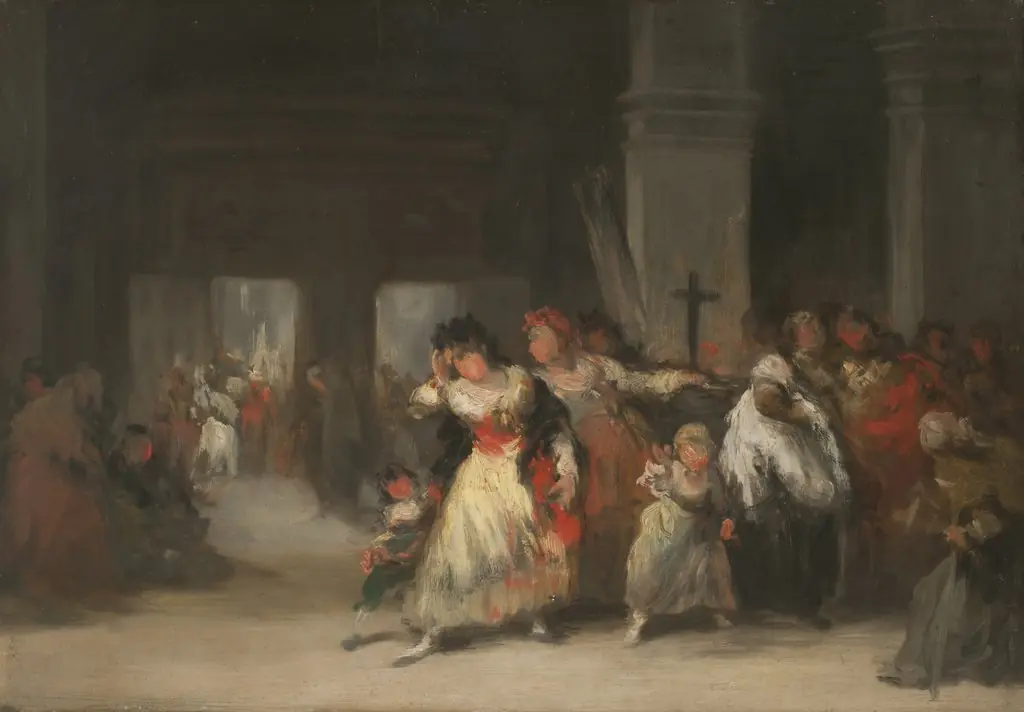
The Procession is an oil painting by Lucas Velázquez. It dates from 1850 and is held in the collection of the Walters Art Museum.
About this work
Overview
Eugenio Lucas Velázquez's oil painting, The Procession, dates to around 1850. It is a representative work of the Spanish Romantic artist, known for blending everyday life with imaginative elements.
Subject & Meaning
The painting depicts a tumultuous procession, with a crowd in the foreground displaying a range of reactions, from aggression to fear. The chaotic atmosphere is heightened by the presence of a building with an arched doorway in the background, contributing to the overall sense of disorder.
Technique & Style
The work showcases Velázquez's use of chiaroscuro, a technique that utilizes strong contrasts between light and dark to create a sense of tension and drama, fitting for the chaotic scene portrayed.
History & Provenance
The Procession is part of the Walters Art Museum's collection. Velázquez, who worked under the name Eugenio Lucas Padilla in some contemporary accounts, was active in the mid-19th century, a period that saw the flourishing of Romanticism in Spain.
Own this work as a print
Artist & collection
Artist
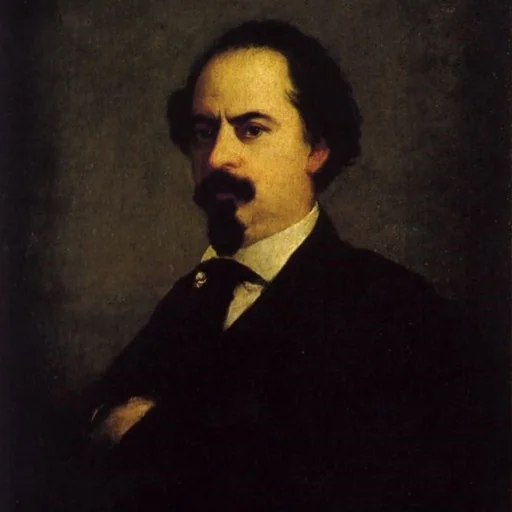
Eugenio Lucas Velázquez (9 February 1817 – 11 September 1870) was a Spanish painter in the Romantic style, known for genre and costumbrista scenes which often featured fantastic elements.

 Distributing Bread to the Poor
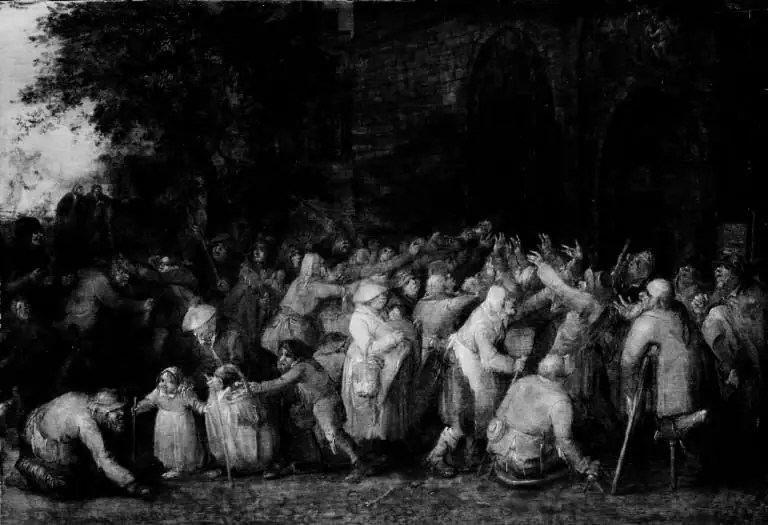 Distributing Bread to the Poor
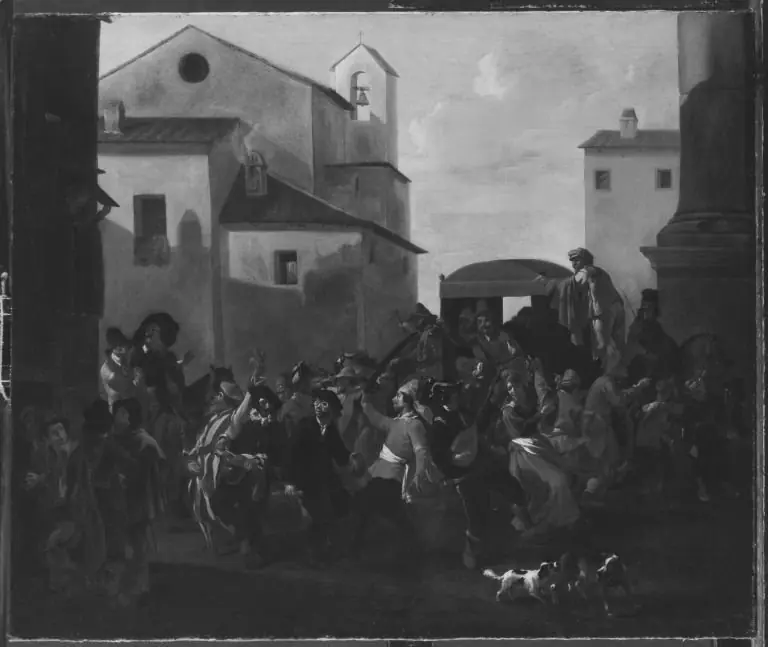 Fastnachtsbelustigung
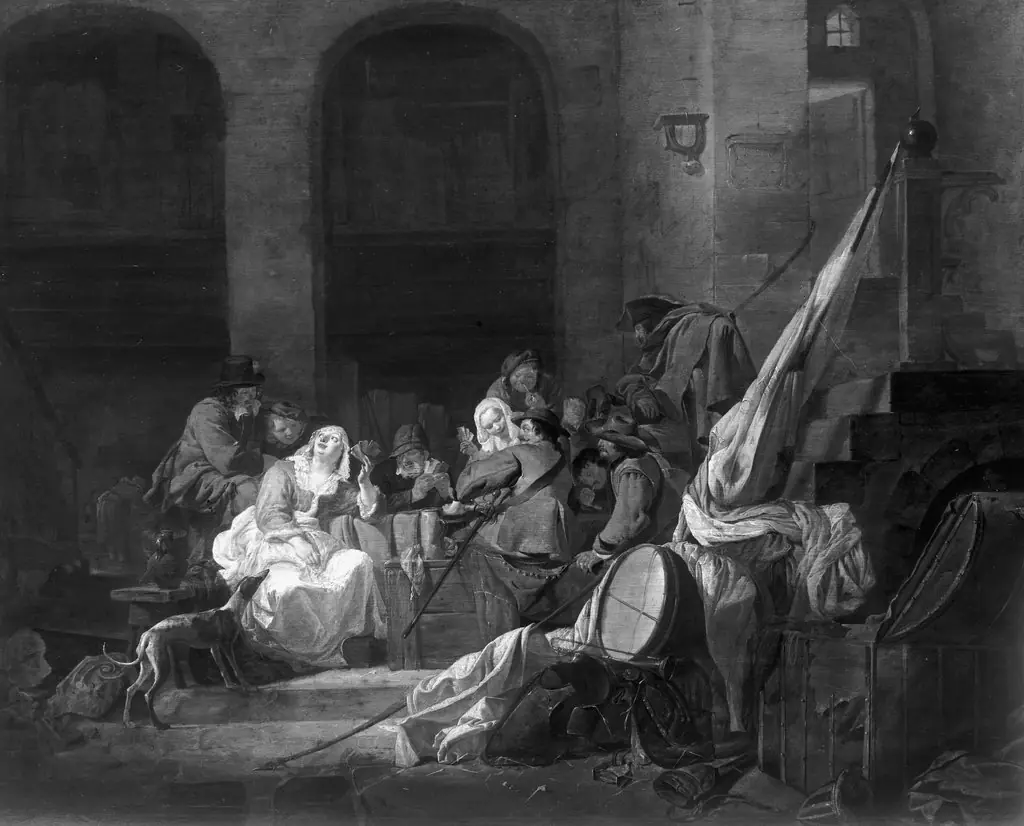 Guard room with soldiers and women
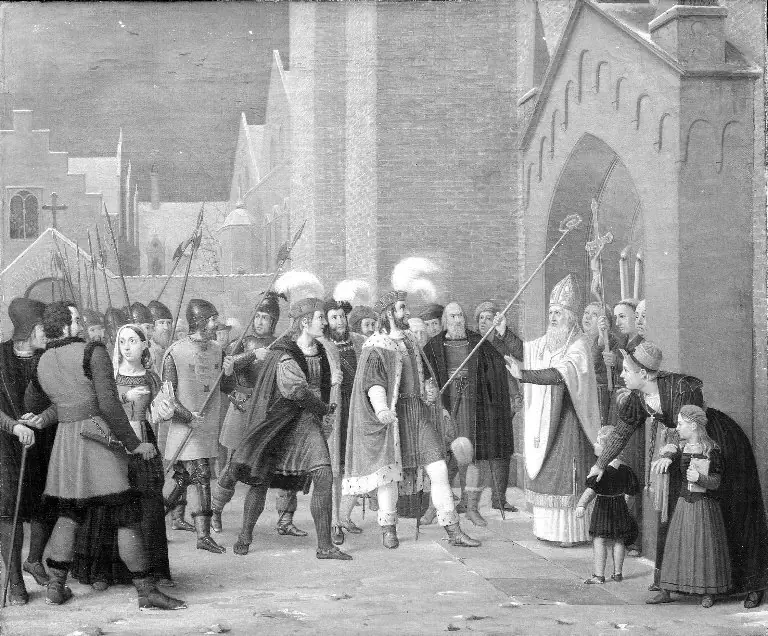 Svend Estridsen and Bishop Vilhelm
 Dans i det frie
 Dans i det frie
 Peasants' Wedding
 Italian Landscape with Carnival and Comedians
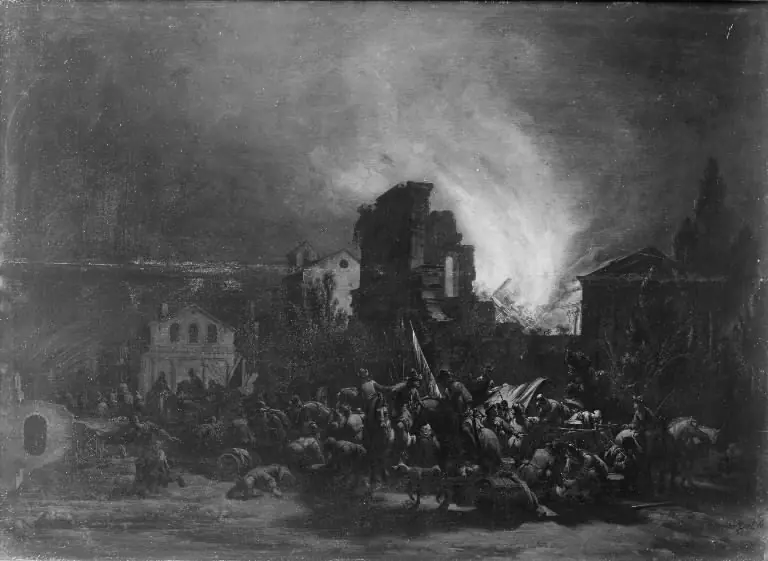 Nocturnal Fire and Looting in a Town
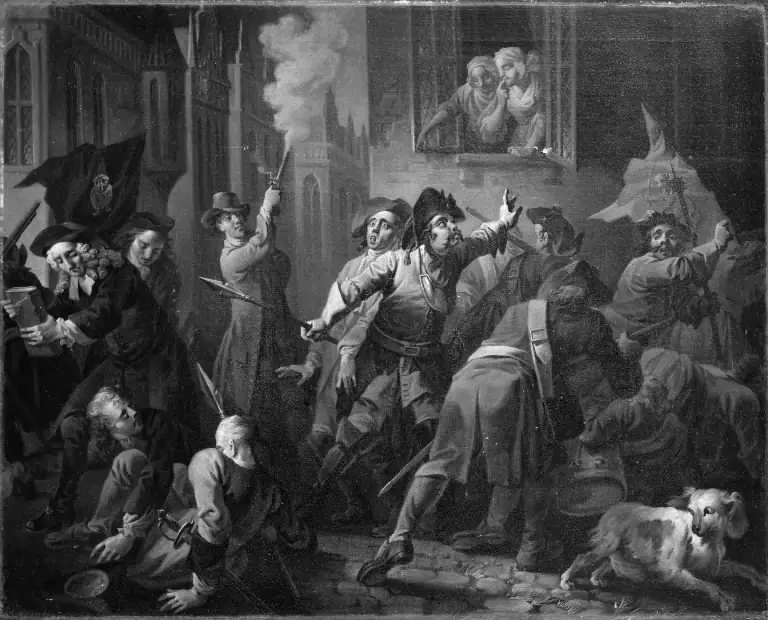 Jacob von Thyboe, V. akt, 11. scene
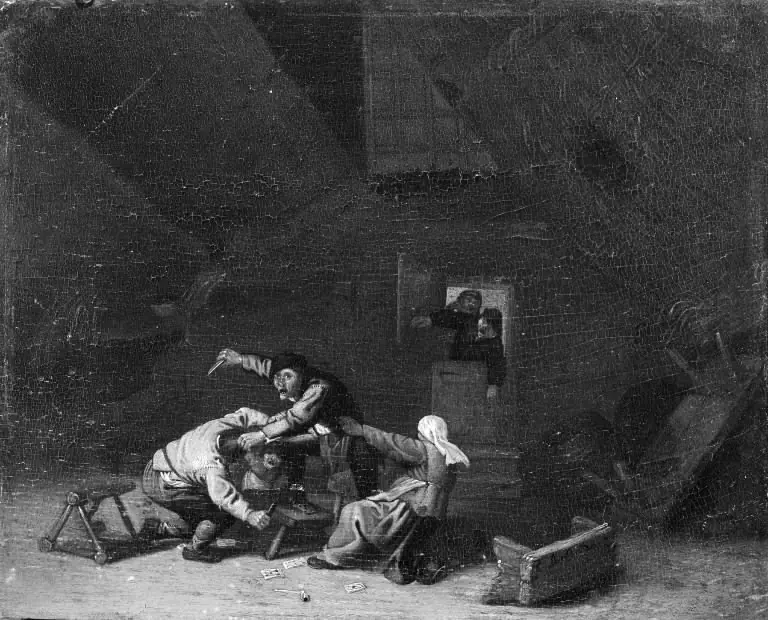 Two Peasants Fighting with Knives