Artwork
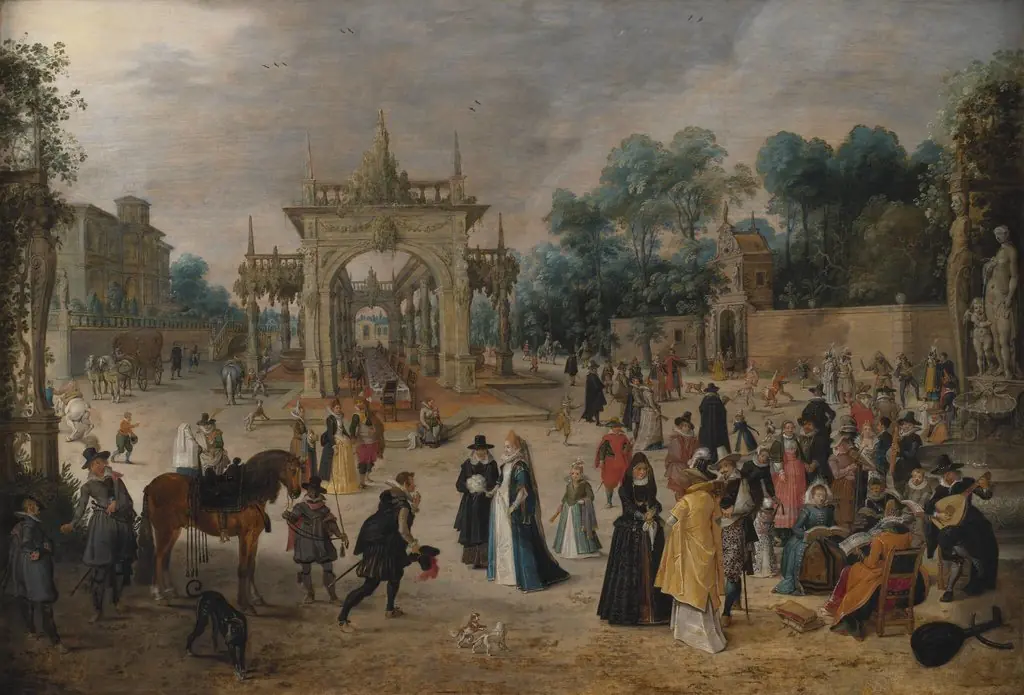
A Feast in an Italian Villa
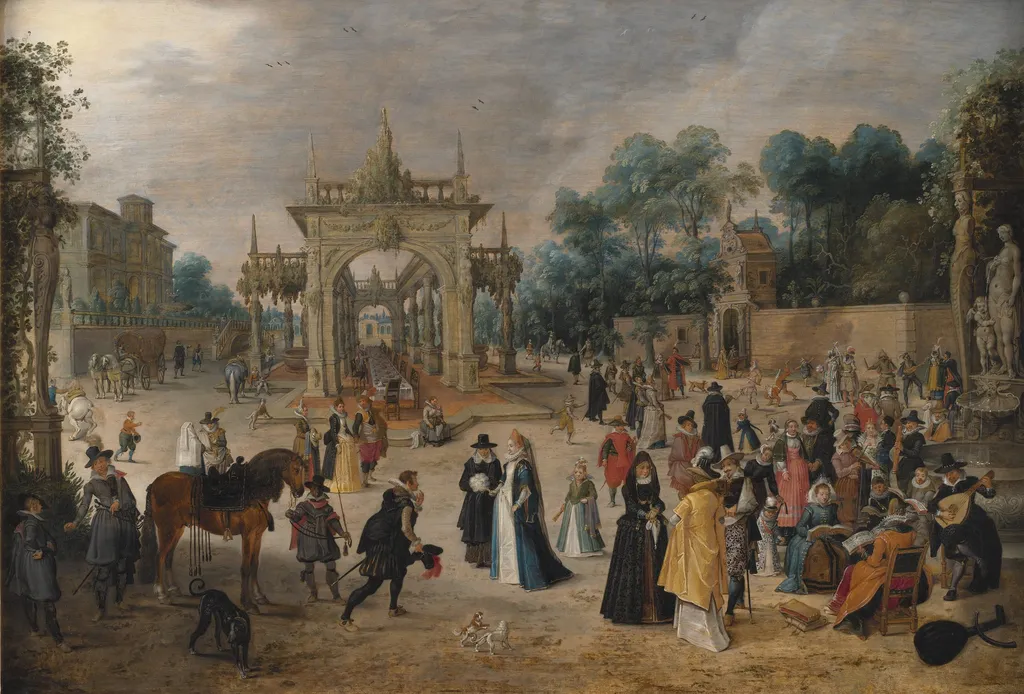
A Feast in an Italian Villa is a photography by Unknown. It dates from 1650 and is held in the collection of the Statens Museum for Kunst. Painted around 1650, this work depicts an outdoor gathering at a rural Italian villa.
About this work
Overview
The artist’s focus on naturalistic detail and spatial depth reflects the observational tendencies of mid-17th-century Italian painting.
Painted around 1650, this work depicts an outdoor gathering at a rural Italian villa. The scene captures a moment of leisure among the upper classes, with figures engaged in conversation, rest, and music. The composition centers on a stone archway framing a courtyard filled with activity, horses, and carriages. The artist’s focus on naturalistic detail and spatial depth reflects the observational tendencies of mid-17th-century Italian painting.
Subject & Meaning
The painting portrays a social ritual common among Italian nobility: a midday repast or reception in a villa’s courtyard. Figures are arranged in informal groupings, suggesting relaxed interaction rather than formal ceremony. The presence of a lute player and a resting dog adds subtle cues of domestic tranquility and cultivated leisure. The scene conveys status through attire and setting, not through overt display, aligning with aristocratic ideals of refined ease.
Technique & Style
The artist employs chiaroscuro to model forms with subtle gradations of light and shadow, enhancing the three-dimensionality of figures and architecture. Fabric textures—silks, velvets, and linens—are rendered with precision, indicating close study of material surfaces. The background recedes through atmospheric perspective, with trees and distant buildings softened in tone. Brushwork remains controlled, avoiding overt brushiness in favor of smooth transitions and clarity of form.
History & Provenance
The painting entered the collection of the Museum of Ethnography in the late 19th century, though its earlier ownership remains undocumented. It was likely commissioned by a local Italian noble family, possibly for display in a villa outside Florence or Rome. No records of its creation or initial exhibition survive, and the artist’s identity is not firmly established in contemporary sources.
Context
Created during a period when Italian aristocrats increasingly favored private villas as retreats from urban life, the painting reflects a cultural shift toward domestic leisure. Similar scenes appear in the works of Bolognese and Venetian painters, who depicted villa life with attention to social nuance and environmental detail. This work aligns with a broader trend of genre scenes that elevated everyday aristocratic routines into visual narratives.
Legacy
Though not widely exhibited or reproduced, the painting contributes to the understanding of 17th-century Italian social customs through its quiet realism. It stands as an example of how domestic spaces were visualized as sites of dignity and order, rather than spectacle. Its preservation in an ethnographic museum underscores its value as a document of material culture and daily life, beyond purely aesthetic concerns.
Artist & collection

 Domestic Scene
 Giacomo and Cardinal Marco, investing Andrea, Abbot of San Zeno, with his Benefice
 The Nymph of Fontainebleau
 Portrait of a Woman
 Madonna and Child with Saints in the Enclosed Garden
 Venus and Minerva
 Family Group of Four on Sofa
 Wall painting from Room H of the Villa of P. Fannius Synistor at Boscoreale
 Village Fair
 A Jeu de Paume Before a Country Palace
 Palaces
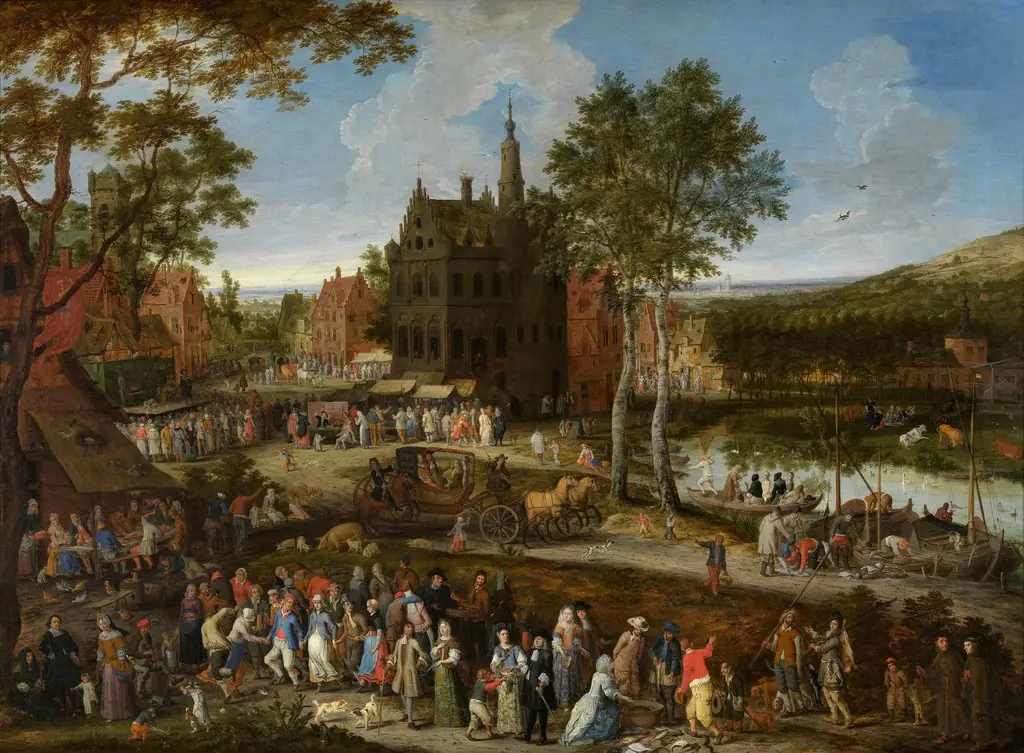 Kermis in a Flemish village
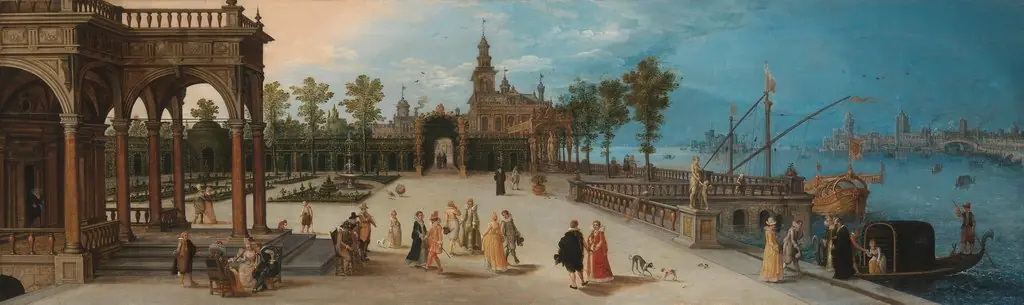 Elegant Party on a Terrace of a Venetian-inspired Setting
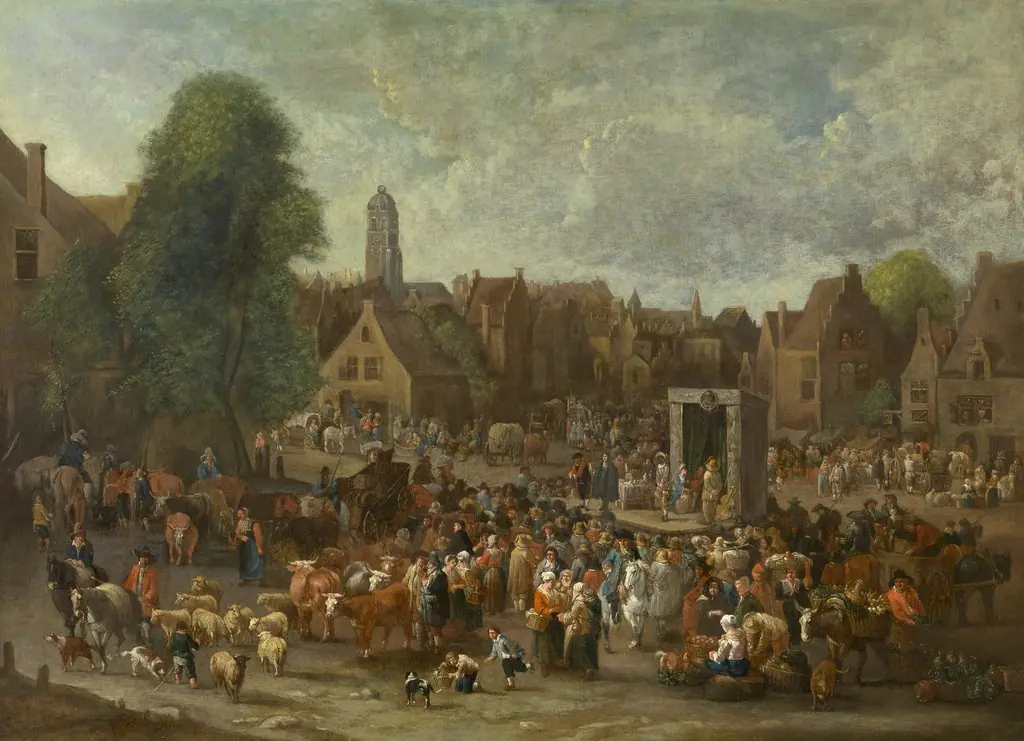 Theatre on the Marketplace
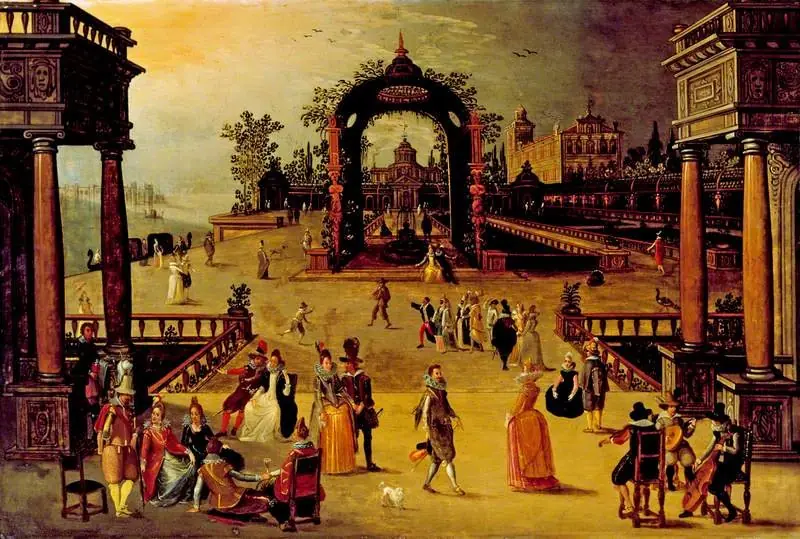 Court of a Venetian Palace
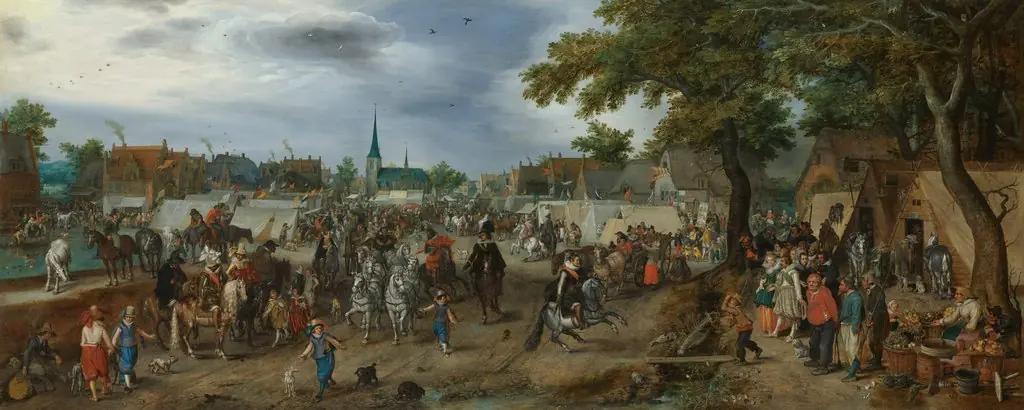 Prince Maurice and Frederick Henry at the Valkenburg Horse Fair
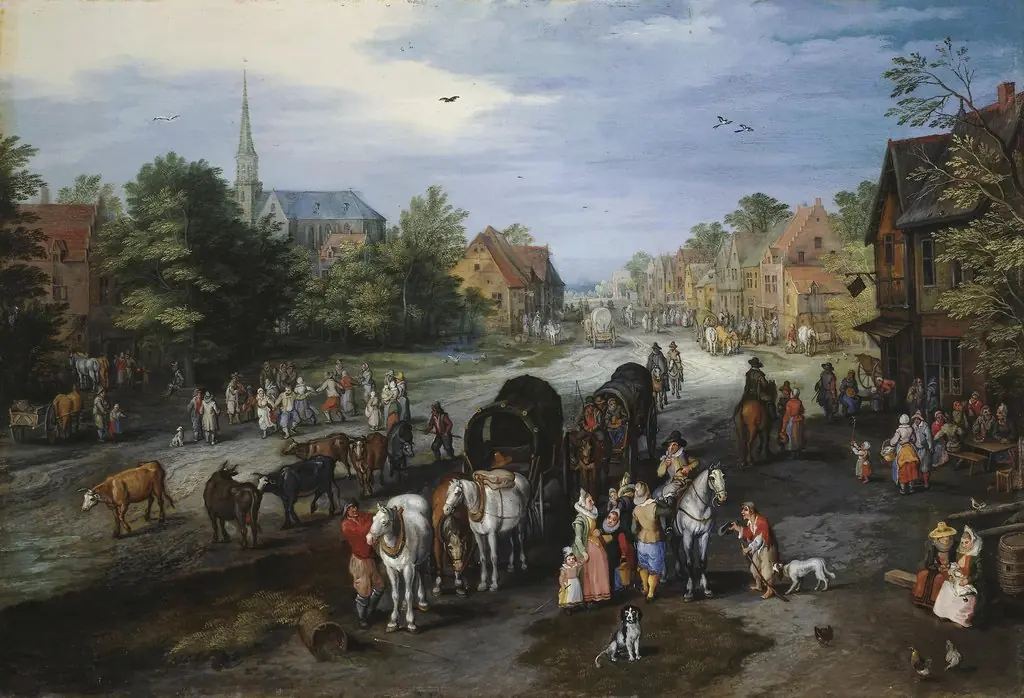 View of the Village of Schelle (Village street)
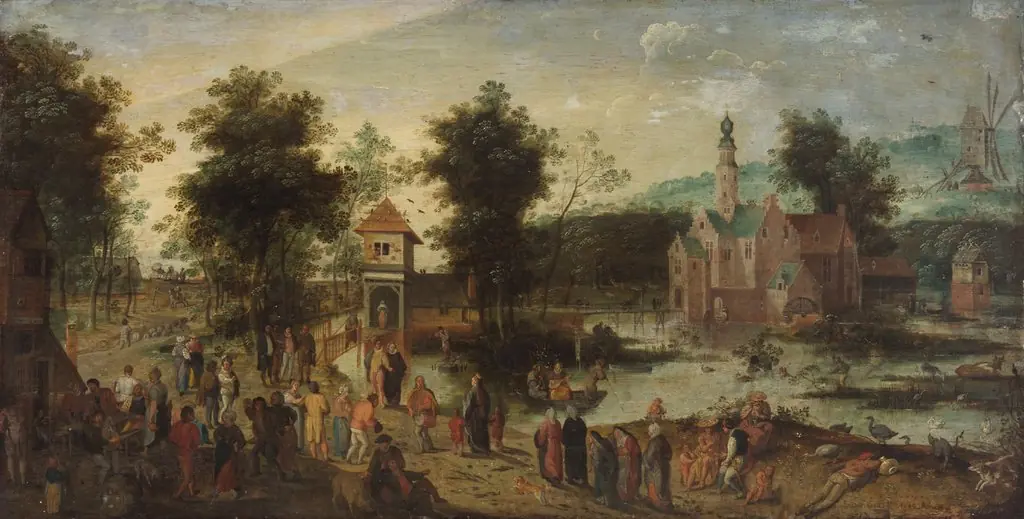 Landscape with castle and tavern
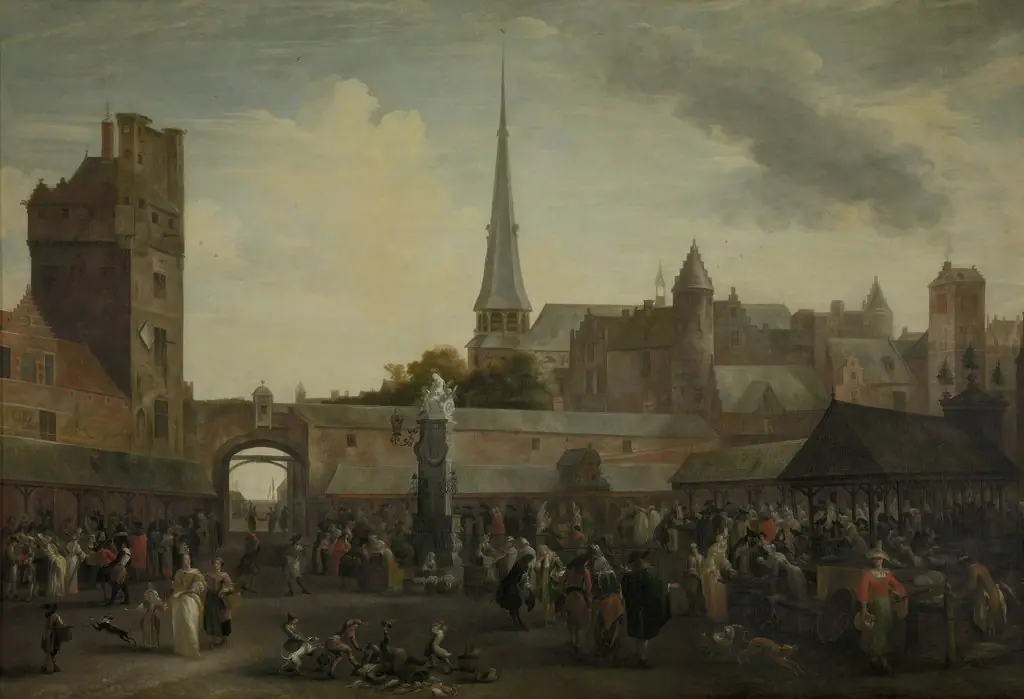 The Fish Market of Antwerp
 A Feast in an Italian Villa