Artwork
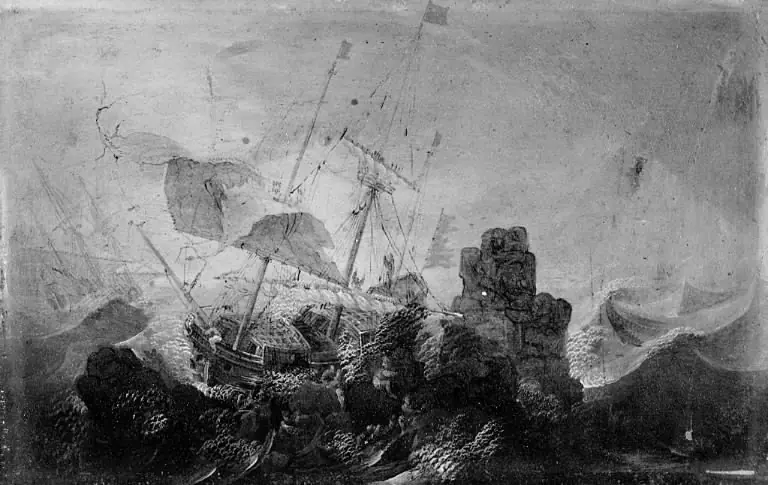
Shipwreck against a Rock
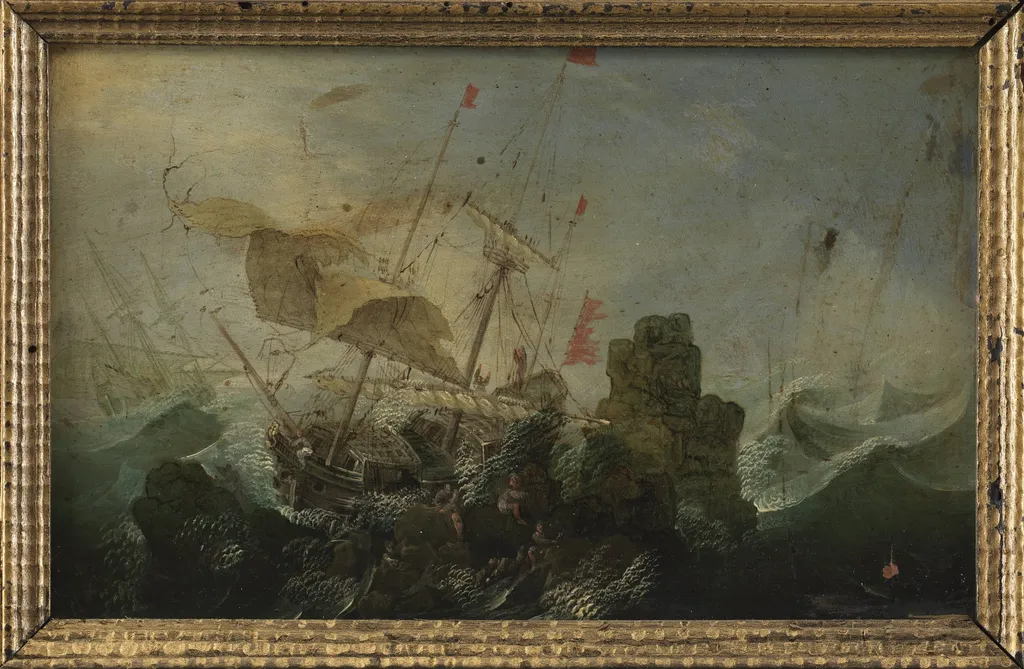
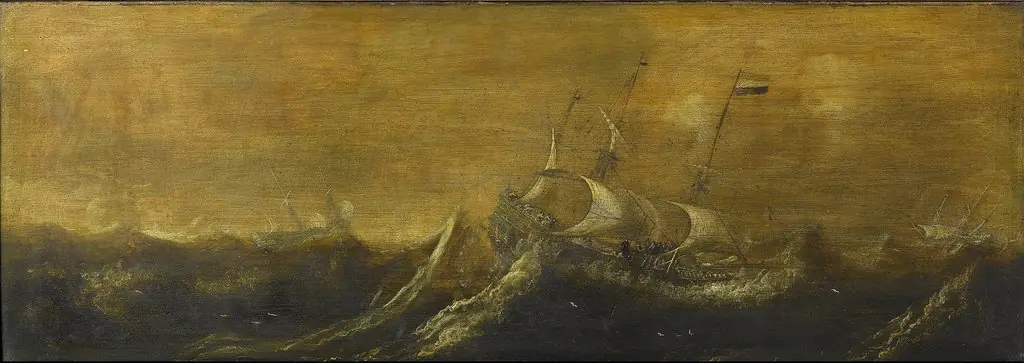
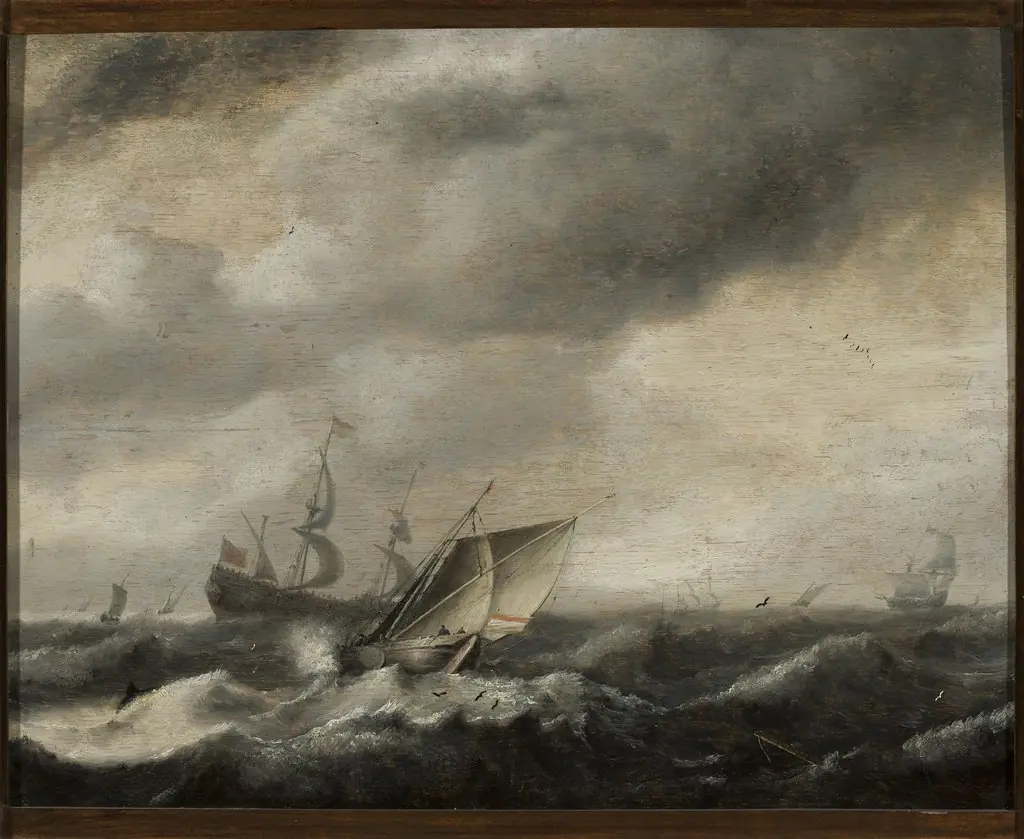
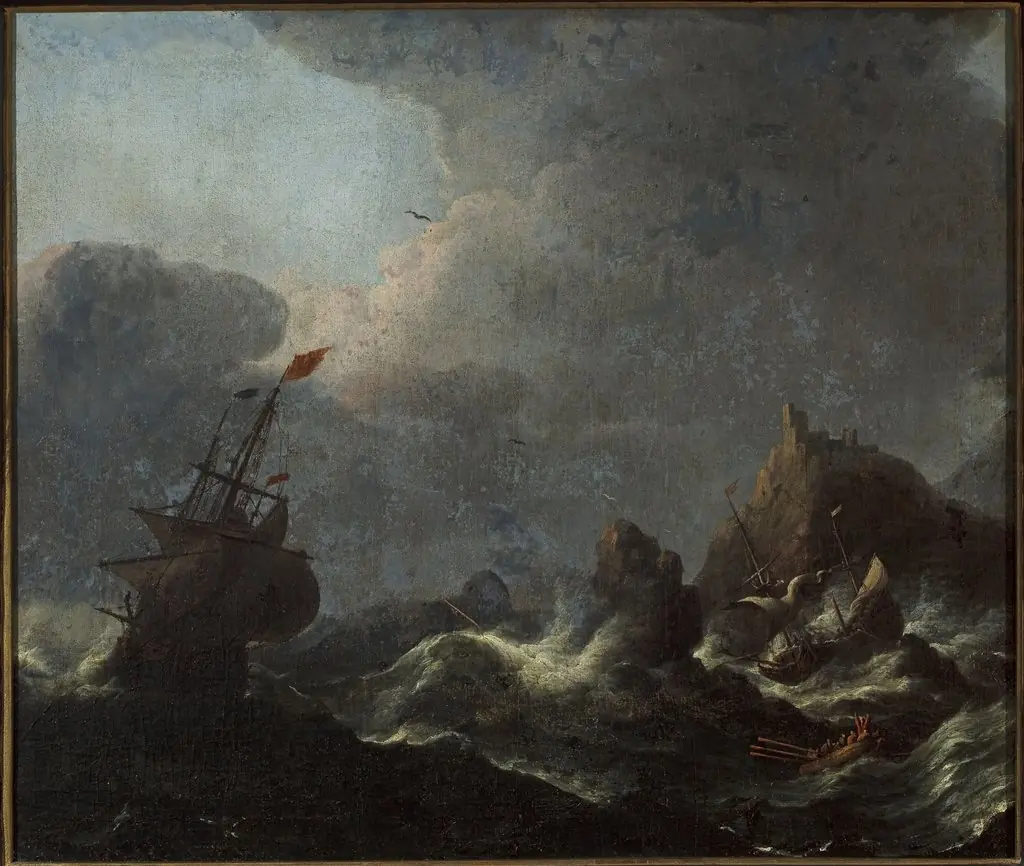
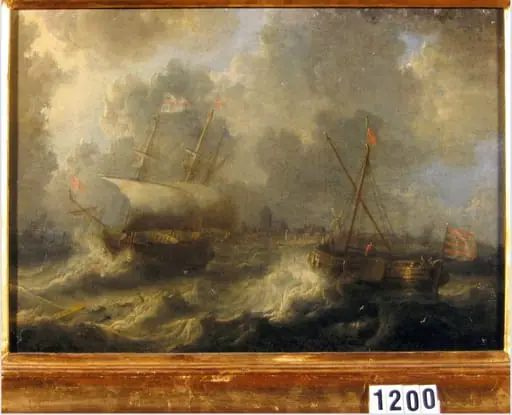
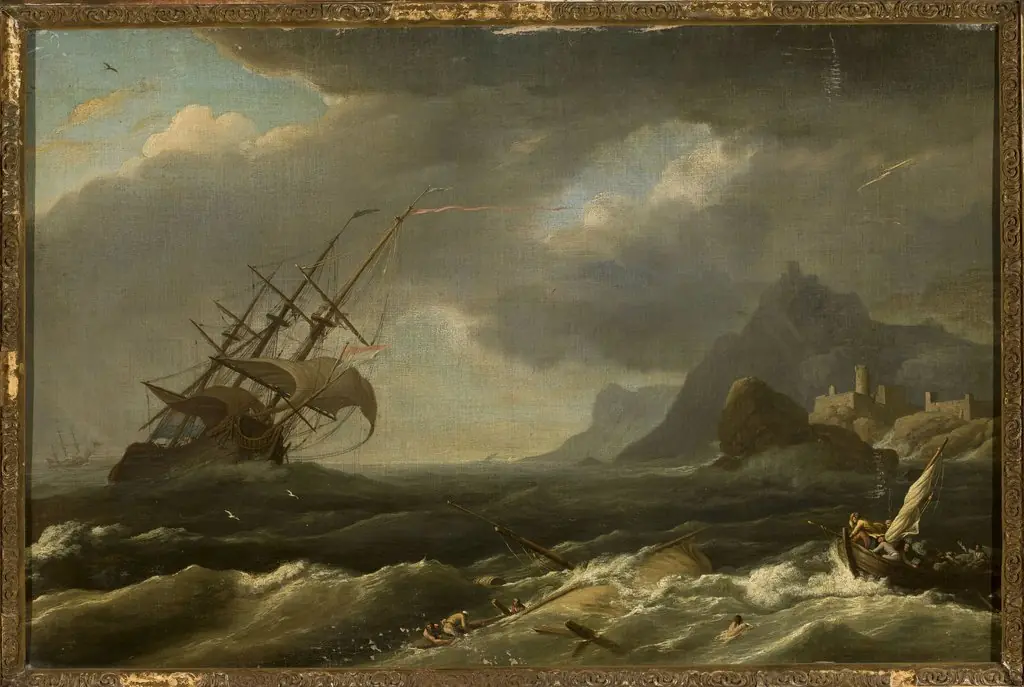
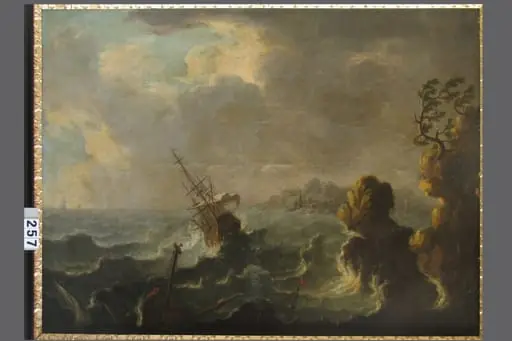
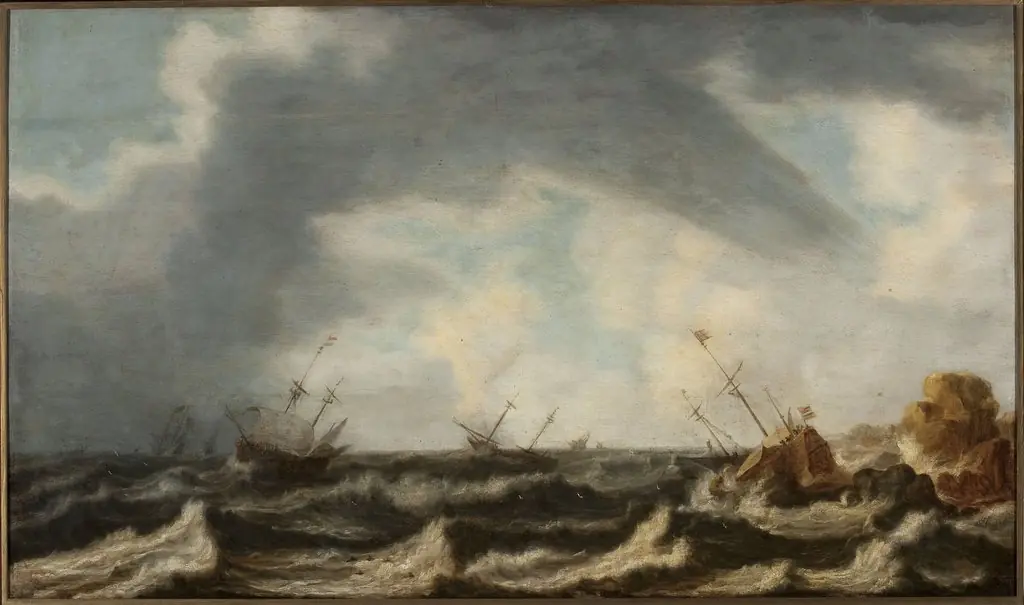
Shipwreck against a Rock is a photography by Unknown. It dates from 1650 and is held in the collection of the Statens Museum for Kunst. This work, dated around 1650, depicts a vessel in violent collision with coastal rocks amid turbulent seas.
About this work
Overview
This work, dated around 1650, depicts a vessel in violent collision with coastal rocks amid turbulent seas. Though presented as a painting, it is in fact a photograph. The image is held by the Museum of Ethnography, where it is cataloged among historical visual records of maritime life. Its physical condition—frayed edges and muted tones—reflects age and handling, not artistic intent.
Subject & Meaning
The scene captures a ship overwhelmed by nature’s force, its masts bearing faint red flags as symbols of distress or identity. The composition emphasizes vulnerability against elemental power, with no human figures visible. The image functions as a documentary record of maritime peril, conveying the risks faced by seafarers without overt moralizing or narrative embellishment.
Technique & Style
The image employs early photographic processes, likely daguerreotype or calotype, capturing fine detail in the waves and hull structure. Lighting is diffused, suggesting overcast conditions, and the tonal range is limited by period technology. The lack of color and the soft focus on distant elements reflect technical constraints rather than stylistic choice.
History & Provenance
The photograph entered the Museum of Ethnography’s collection in the late 19th century, possibly acquired during a period of expanded ethnographic documentation of seafaring cultures. Its origin as a photographic record, not a painted work, was likely clarified after initial cataloging. No known artist or commissioning body is documented.
Context
Created during a time when photography was emerging as a tool for recording real-world events, this image aligns with broader efforts to document maritime hazards and shipwrecks for scientific and navigational purposes. It reflects a shift from idealized marine art toward empirical visual evidence, valued for its perceived objectivity.
Legacy
As one of the earliest photographic records of a shipwreck, it contributes to the historical archive of oceanic dangers. Its preservation in an ethnographic context underscores its role as cultural evidence rather than aesthetic object. It continues to inform studies of maritime history and early photographic practice.
Artist & collection

 Domestic Scene
 Giacomo and Cardinal Marco, investing Andrea, Abbot of San Zeno, with his Benefice
 The Nymph of Fontainebleau
 Portrait of a Woman
 Madonna and Child with Saints in the Enclosed Garden
 Venus and Minerva
 Family Group of Four on Sofa
 Wall painting from Room H of the Villa of P. Fannius Synistor at Boscoreale