Artwork
Furtună pe mare lângă oraș ; pandant: Oraș la mare
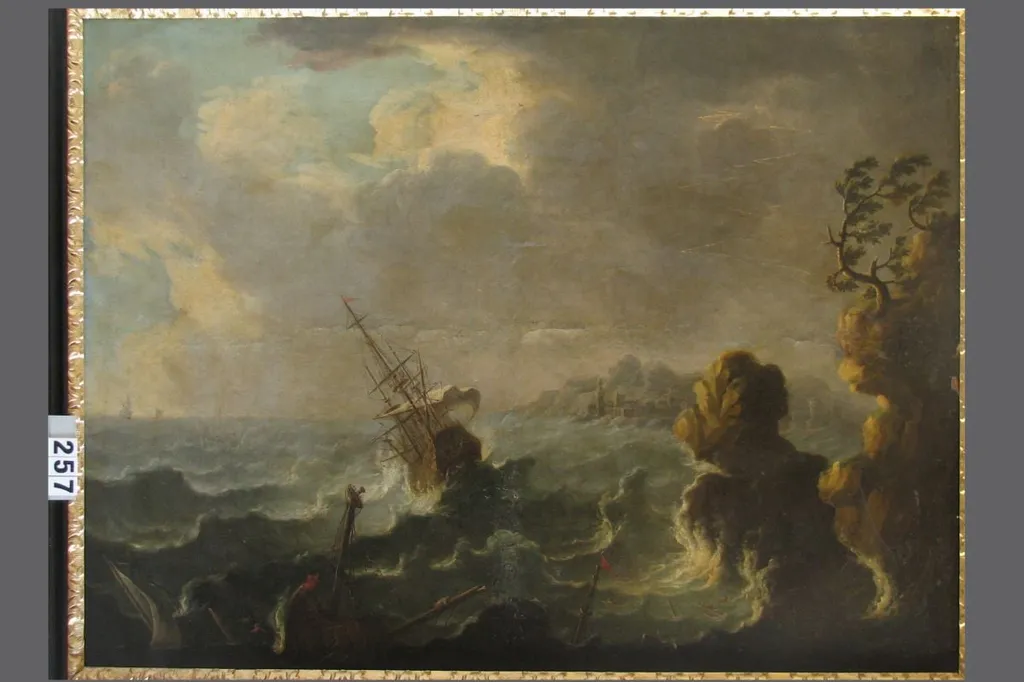
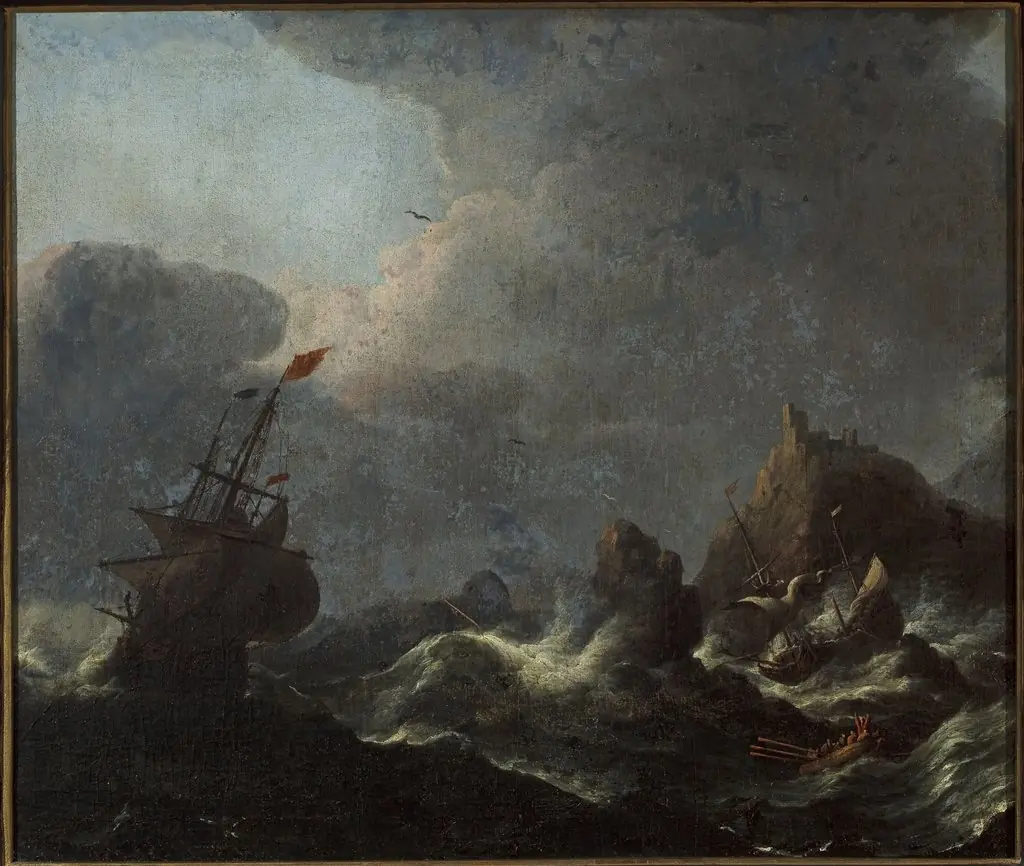
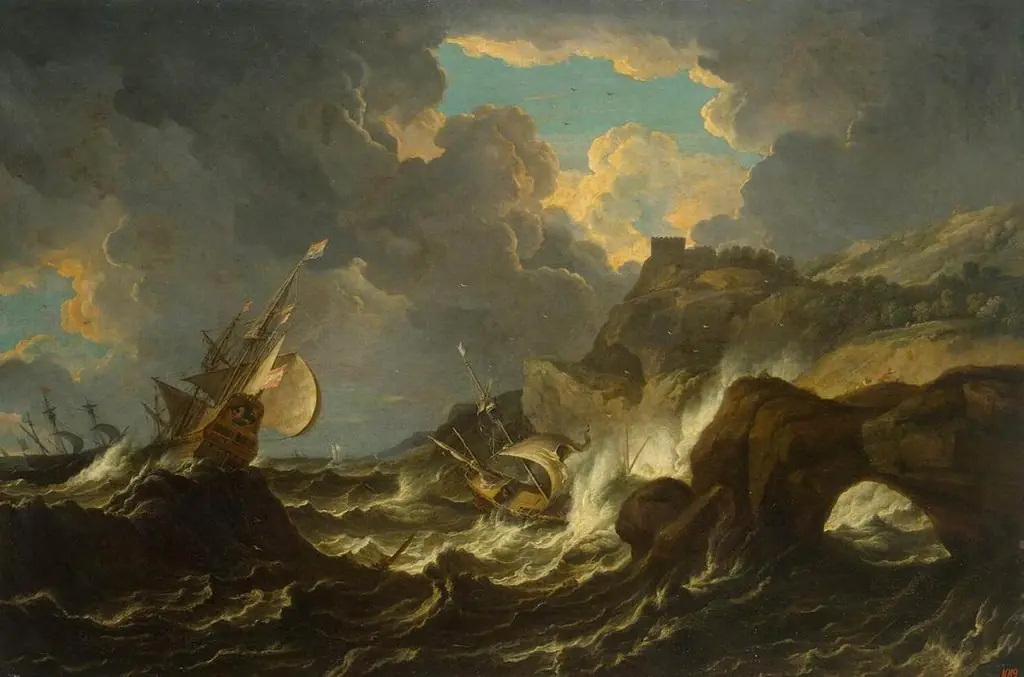
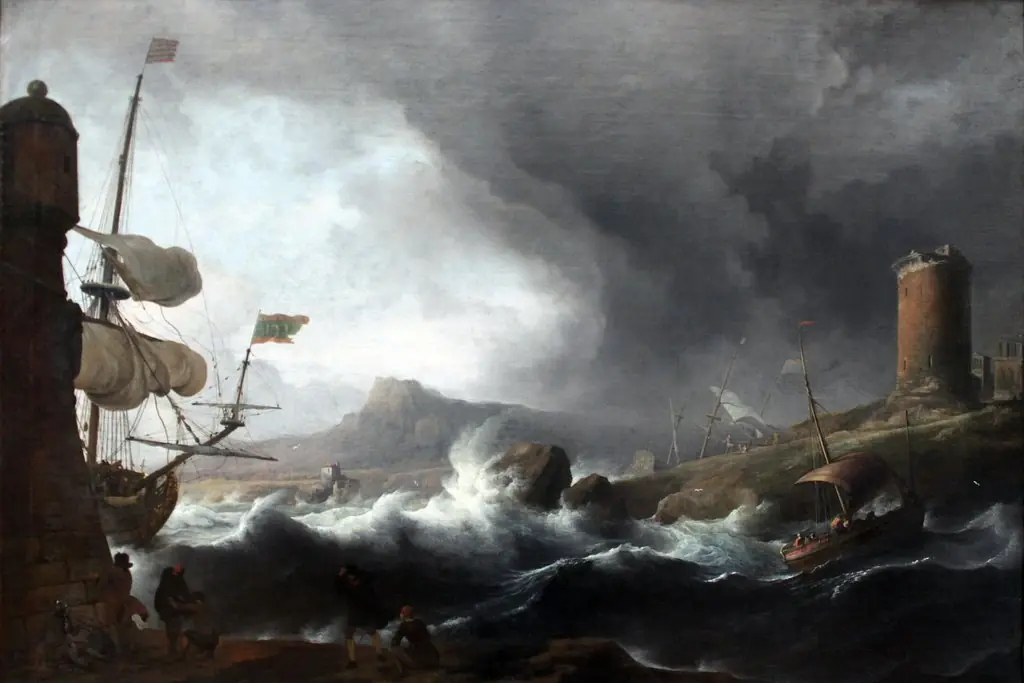
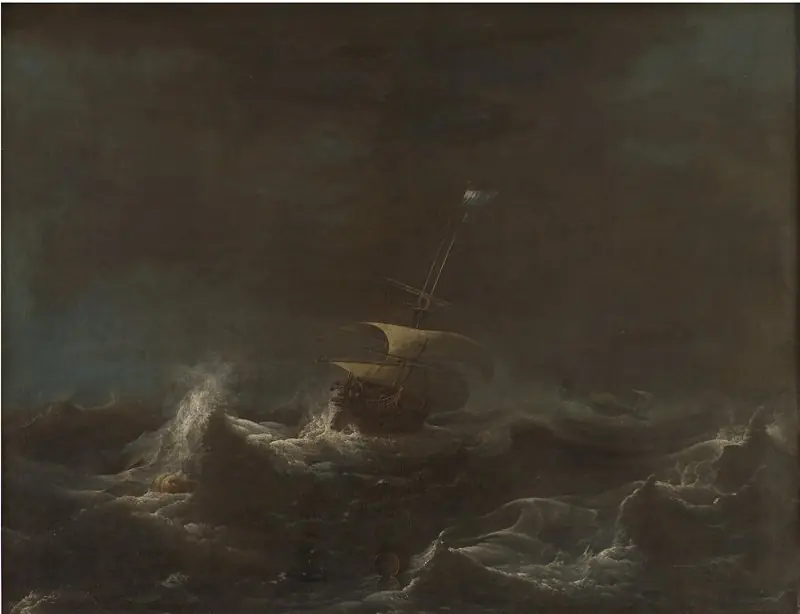
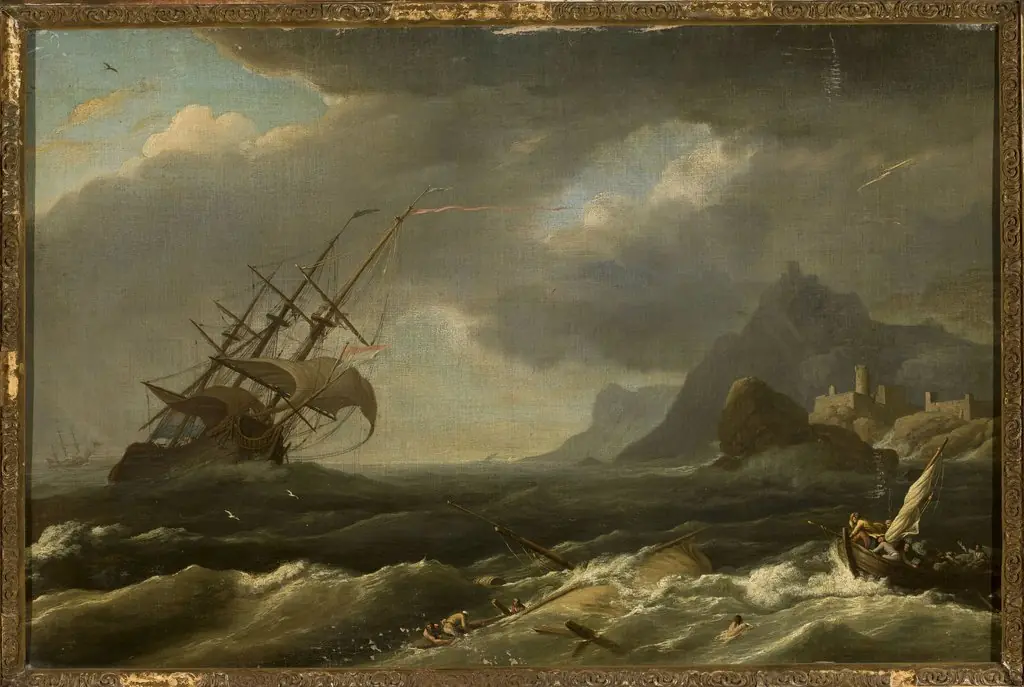
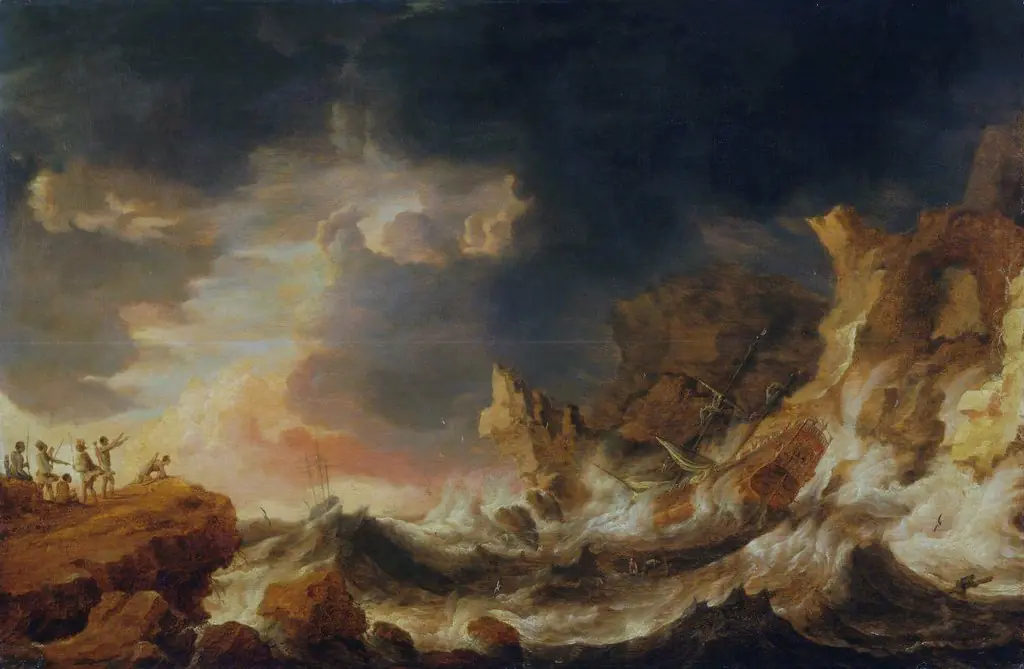
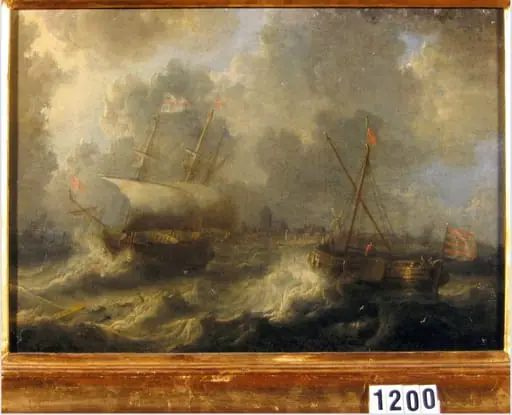
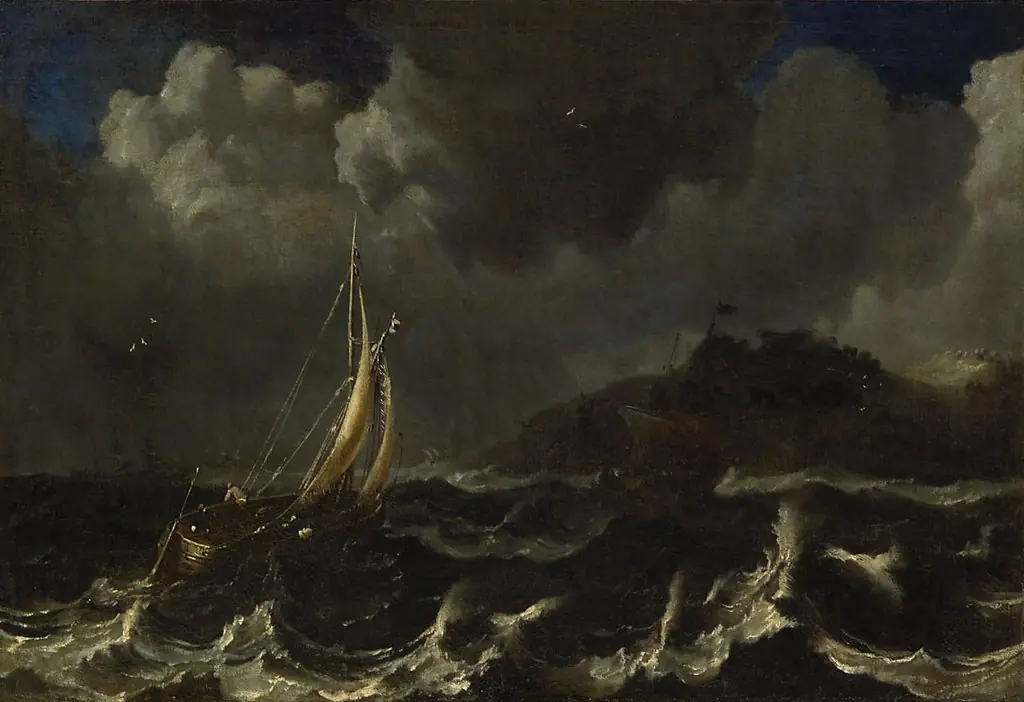
Furtună pe mare lângă oraș ; pandant: Oraș la mare is an unspecified painting by the Baroque artist Unknown. It dates from 1699 and is held in the collection of the Brukenthal National Museum. The work depicts a turbulent seascape in which a vessel is being overwhelmed by storm‑driven waves.
About this work
Overview
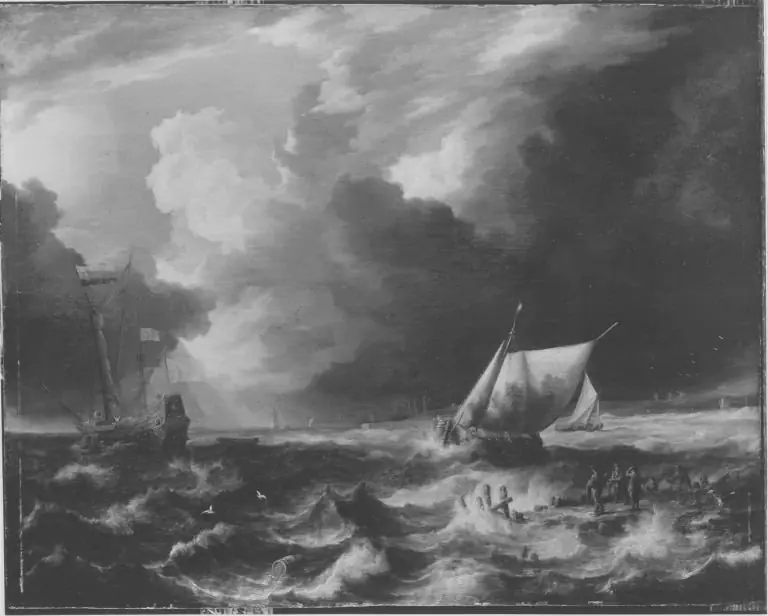
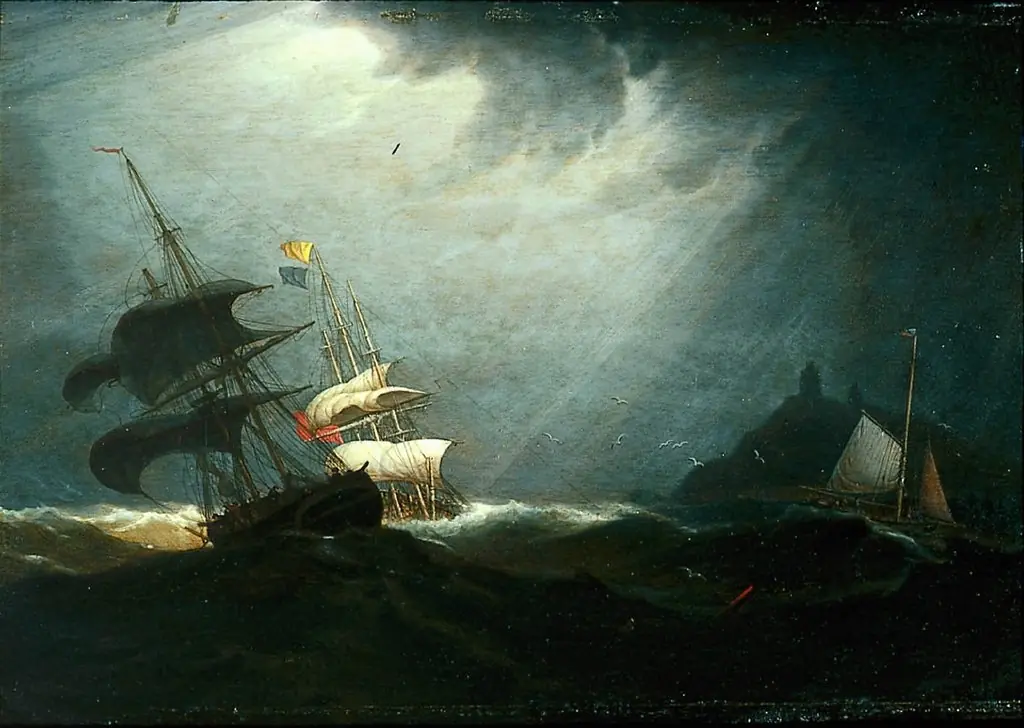
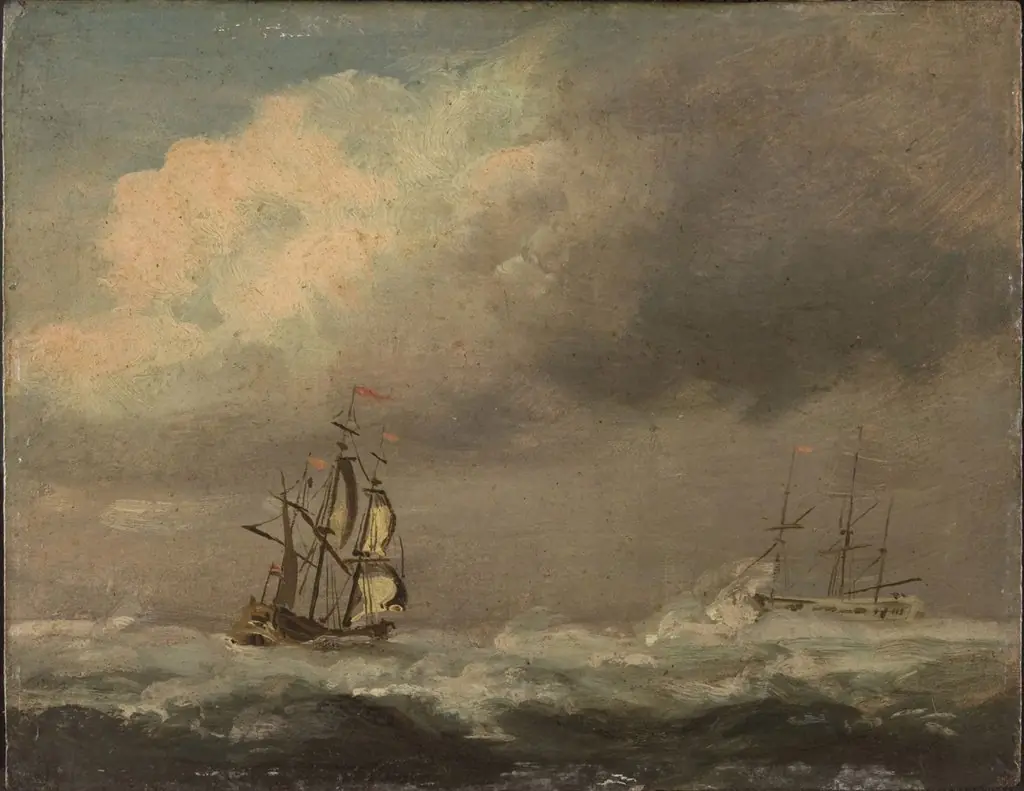
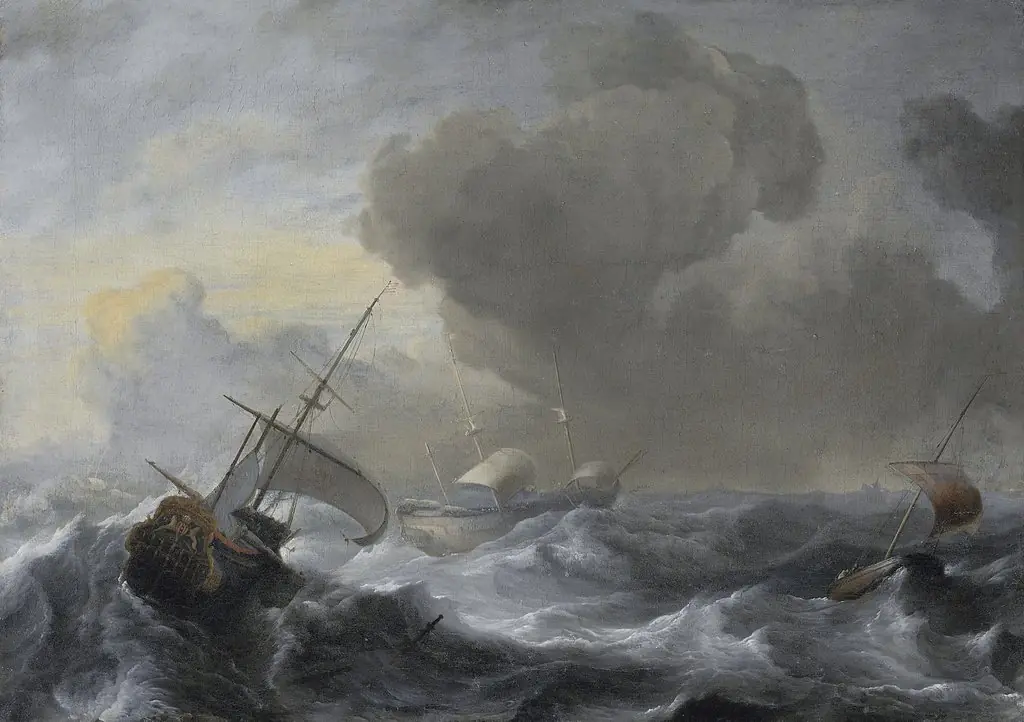
The work depicts a turbulent seascape in which a vessel is being overwhelmed by storm‑driven waves. A bent mast protrudes from the water as the ship appears to founder, while two figures stand on a craggy shoreline, observing the disaster. Dark, swirling clouds dominate the sky, and the sea is rendered with high, crashing crests that convey a sense of imminent danger.
Subject & Meaning
The composition invites reflection on the precariousness of maritime travel and the awe inspired by extreme weather.
The central narrative focuses on the confrontation between human fragility and the forces of nature. The sinking ship represents vulnerability in the face of an unforgiving environment, while the distant onlookers underscore the helplessness of those who can only witness such calamity. The composition invites reflection on the precariousness of maritime travel and the awe inspired by extreme weather.
Technique & Style
The painter employs strong chiaroscuro, contrasting the deep shadows of the storm clouds and sea with the illuminated highlights on the wave crests and the ship’s timber. Bold, sweeping brushstrokes suggest the movement of water, while the figures are rendered with finer detail, allowing them to recede into the rocky foreground. The overall palette is dominated by muted blues, grays, and occasional warm tones on the figures’ clothing.
Context
Although the precise date and artist are not recorded, the image aligns with a tradition of 19th‑century maritime genre scenes that dramatized the perils of sea travel. Such works often served both as visual records of nautical disasters and as moralizing allegories about human vulnerability. The inclusion of a shoreline with observers reflects a common compositional device used to frame the central drama.
Artist & collection

 Domestic Scene
 Giacomo and Cardinal Marco, investing Andrea, Abbot of San Zeno, with his Benefice
 The Nymph of Fontainebleau
 Portrait of a Woman
 Madonna and Child with Saints in the Enclosed Garden
 Venus and Minerva
 Family Group of Four on Sofa
 Wall painting from Room H of the Villa of P. Fannius Synistor at Boscoreale