Artwork
Outside an Inn
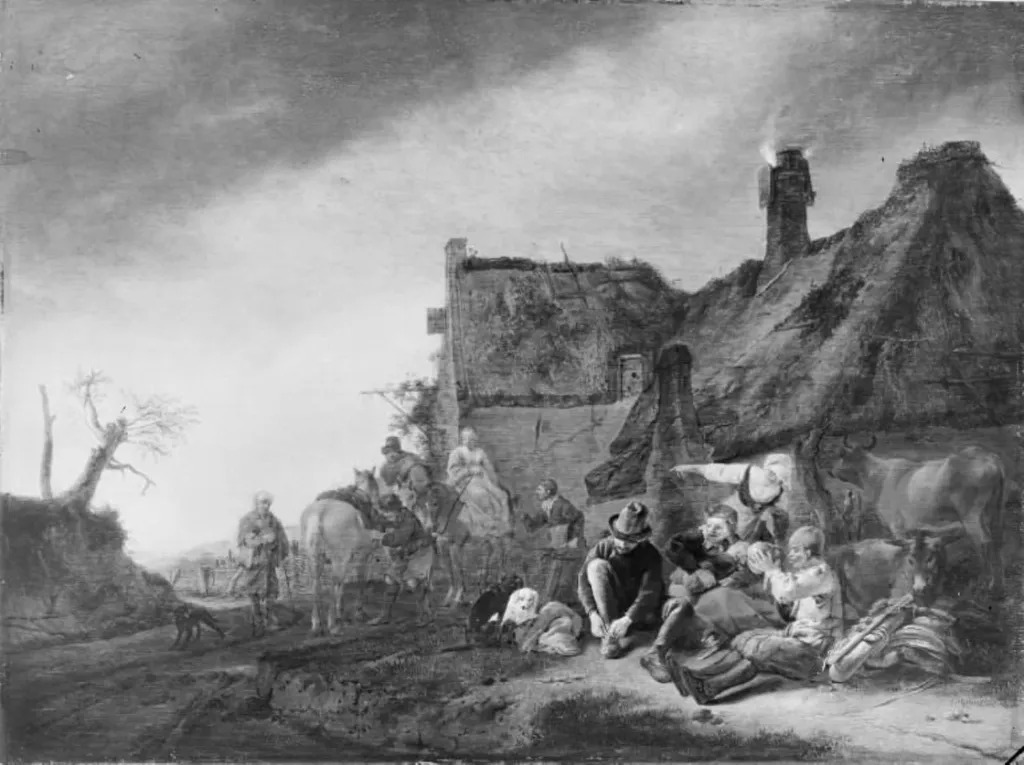
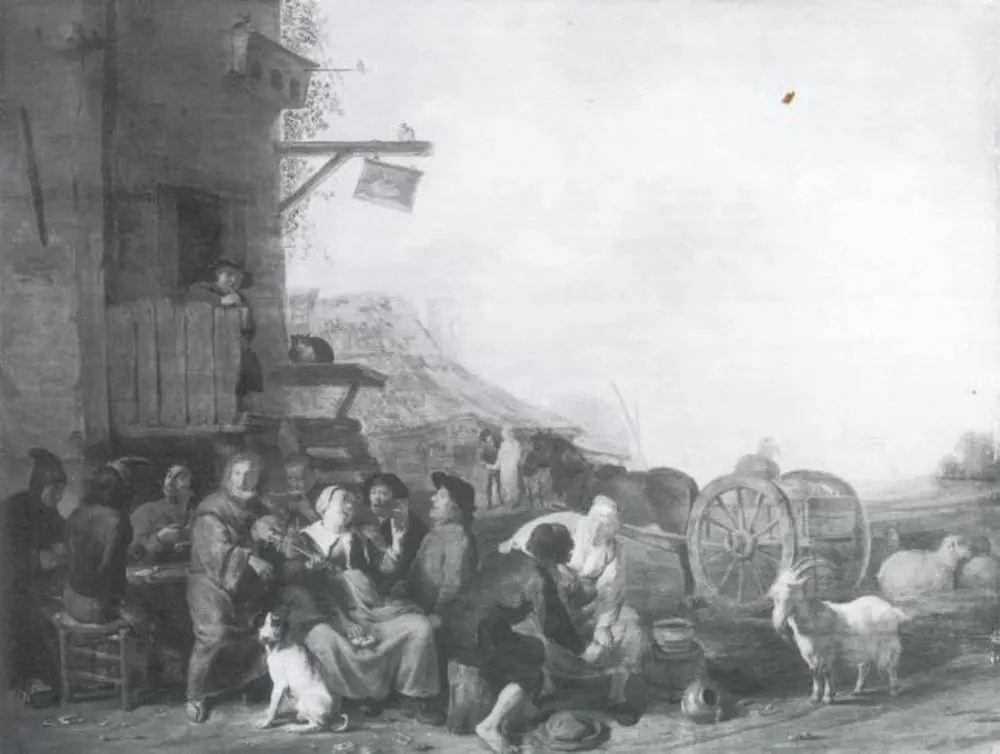
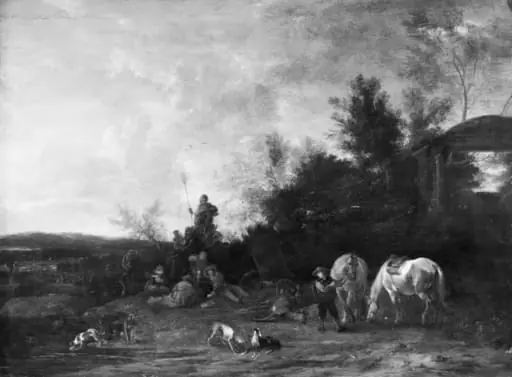
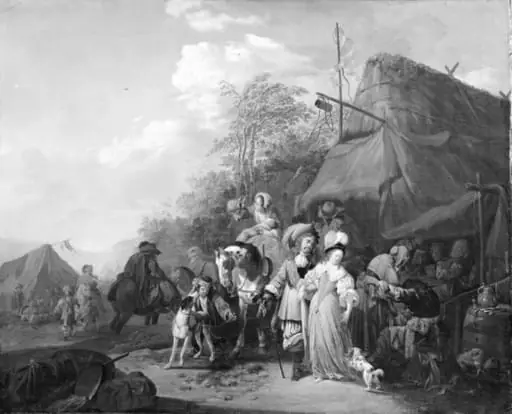
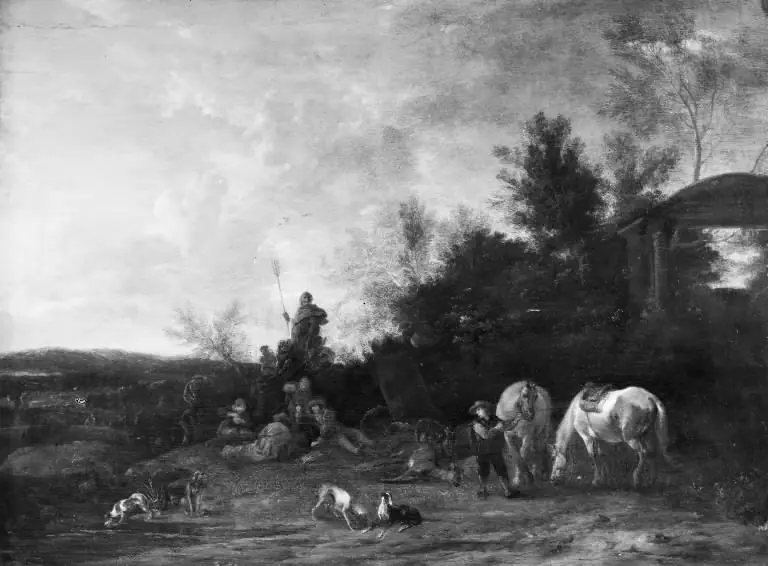
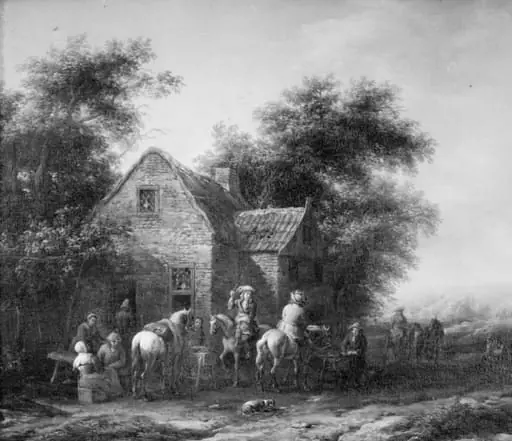
Outside an Inn is a photography by Unknown. It dates from 1645 and is held in the collection of the Statens Museum for Kunst. This black-and-white photograph, dated around 1645, captures a moment of pause outside a rural stone structure with a prominent chimney.
About this work
Overview
This black-and-white photograph, dated around 1645, captures a moment of pause outside a rural stone structure with a prominent chimney.
This black-and-white photograph, dated around 1645, captures a moment of pause outside a rural stone structure with a prominent chimney. Held by the Museum of Ethnography, it depicts a small group of travelers and locals engaged in quiet, everyday activities. The image’s grainy surface and tonal range suggest early photographic or print reproduction techniques, lending it an archival quality that emphasizes its historical distance.
Subject & Meaning
The scene portrays a transient gathering—people resting on the ground, standing near the wall, or tending to horses. No single figure dominates; instead, the composition suggests a shared, unremarkable interlude in travel. The presence of mounted animals and the inn’s modest architecture imply a roadside stop along a common route, reflecting the rhythms of pre-modern mobility and communal rest.
Technique & Style
Light and shadow are carefully modulated to define form and depth, with soft gradients across stone surfaces and clothing. The contrast between illuminated faces and shaded corners enhances the sense of atmosphere without theatricality. The image’s texture, likely from a printed negative or early photographic process, contributes to its muted, intimate tone, avoiding dramatic flair in favor of observational realism.
History & Provenance
The work is held in the Museum of Ethnography’s collection, suggesting it was acquired as a record of daily life rather than as fine art. Its origin as a photograph or photographic print remains undocumented, but its style aligns with 17th-century visual documentation practices. No known artist is credited, and its path to the museum is unrecorded in public sources.
Context
In mid-17th-century Europe, roadside inns served as vital nodes in regional travel networks, offering shelter, food, and rest for travelers and their animals. This image reflects a common, unglamorous reality of movement before mechanized transport. Similar scenes appear in contemporary prints and paintings, though few survive as direct photographic records from this period.
Legacy
Though not widely reproduced or studied, the image contributes to a broader archive of vernacular visual records from the early modern era. Its quiet composition offers insight into the physical and social conditions of travel, preserving details often omitted in formal art. It remains a quiet testament to the ordinary rhythms of life in a pre-industrial world.
Artist & collection

 Domestic Scene
 Giacomo and Cardinal Marco, investing Andrea, Abbot of San Zeno, with his Benefice
 The Nymph of Fontainebleau
 Portrait of a Woman
 Madonna and Child with Saints in the Enclosed Garden
 Venus and Minerva
 Family Group of Four on Sofa
 Wall painting from Room H of the Villa of P. Fannius Synistor at Boscoreale