Artwork
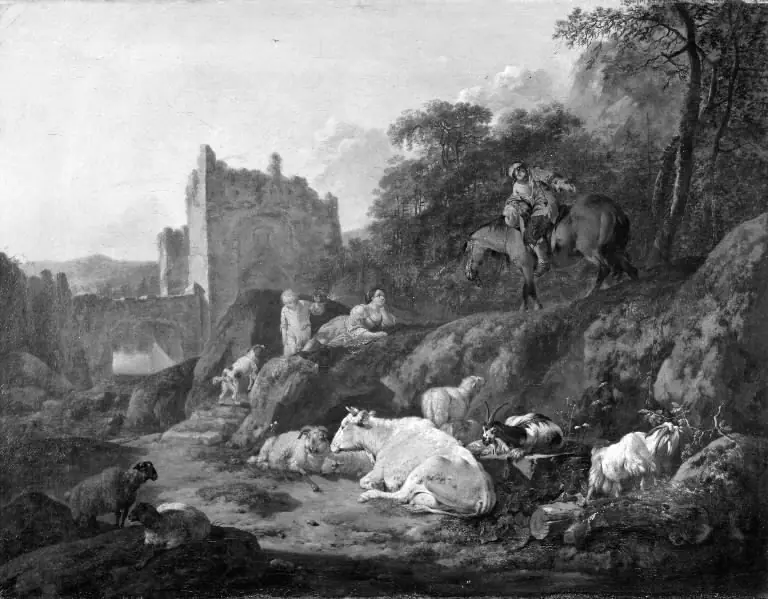
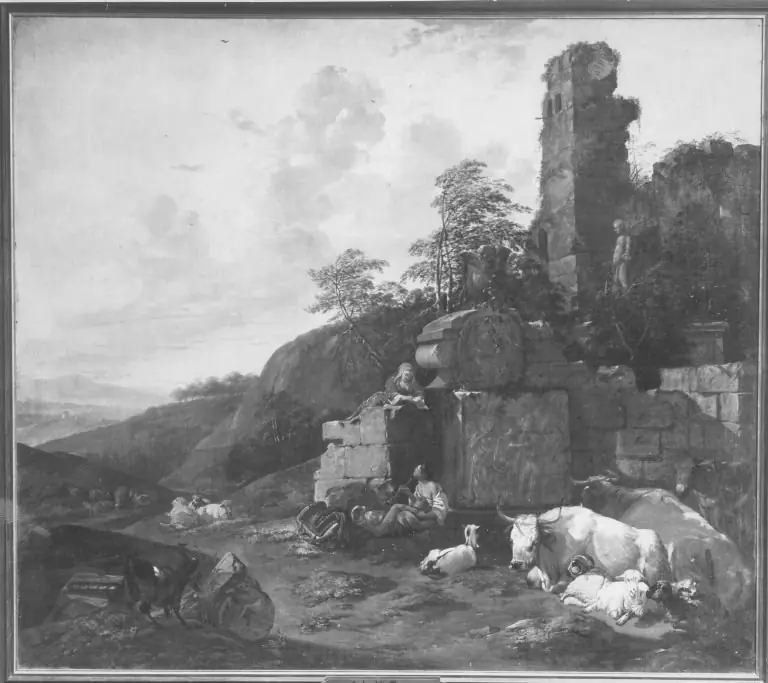
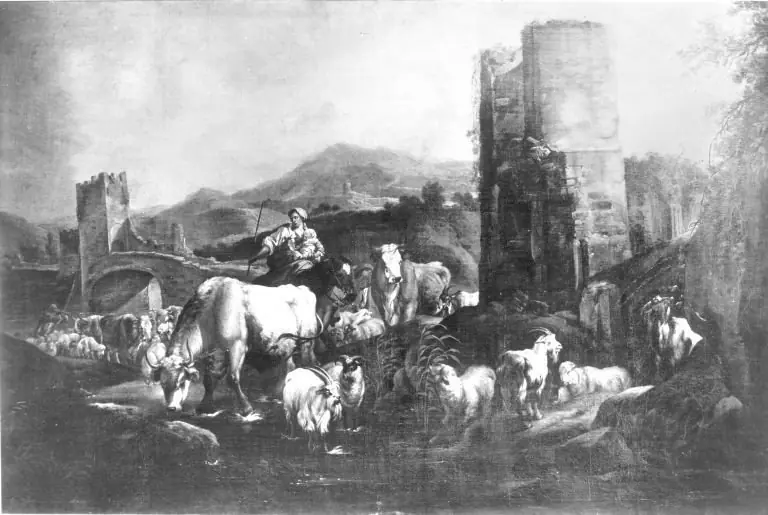
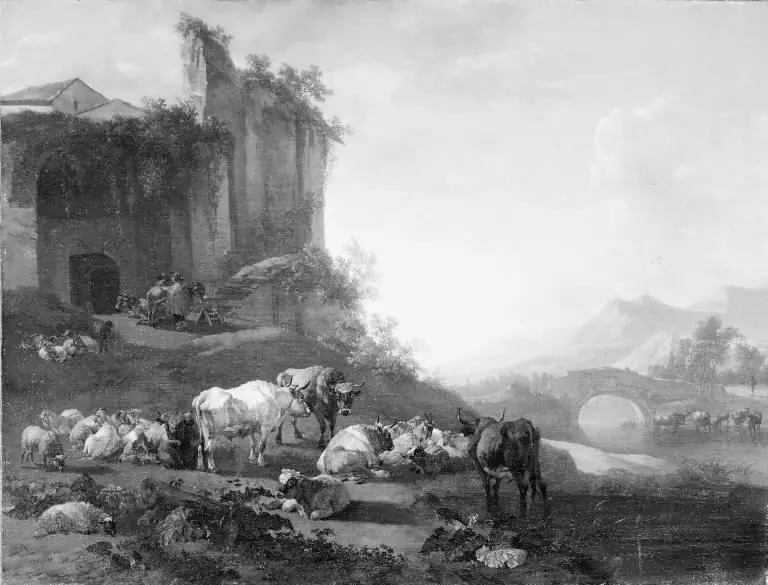
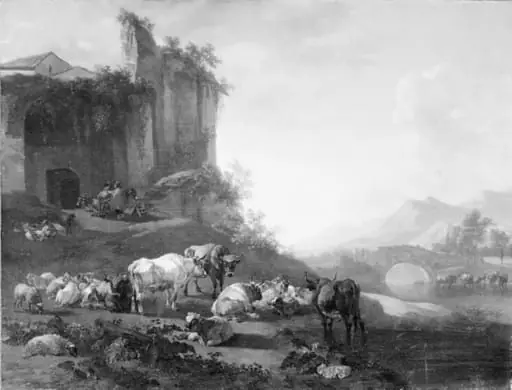
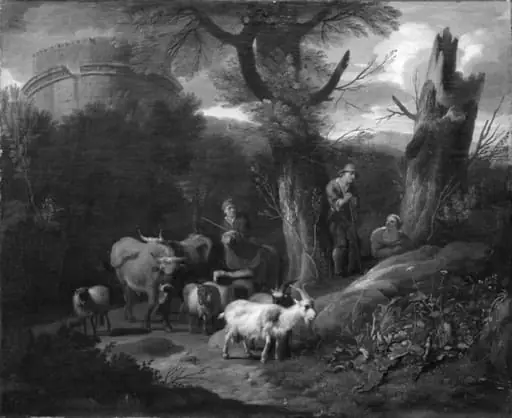
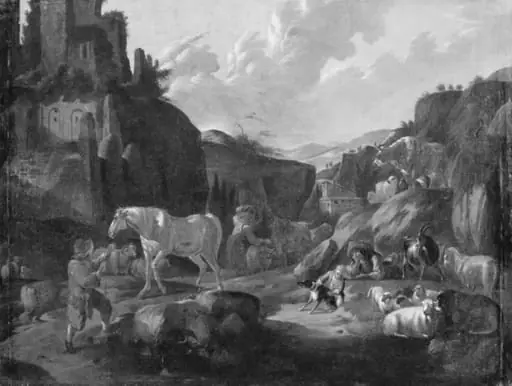
Shepherds and Cattle at he foot of Ruins
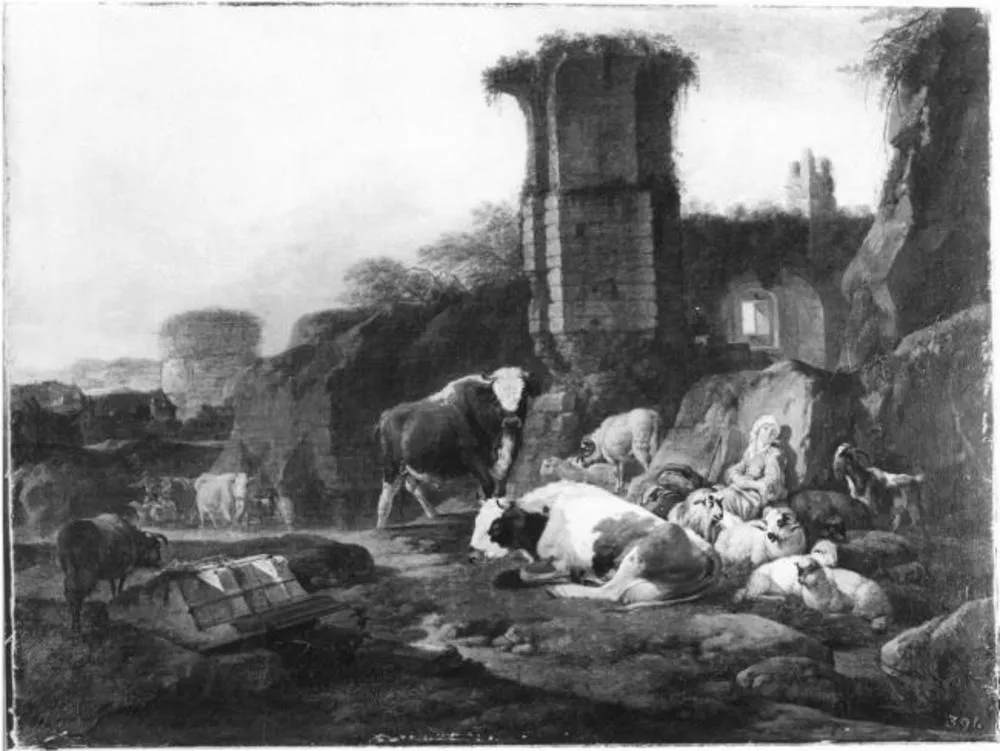
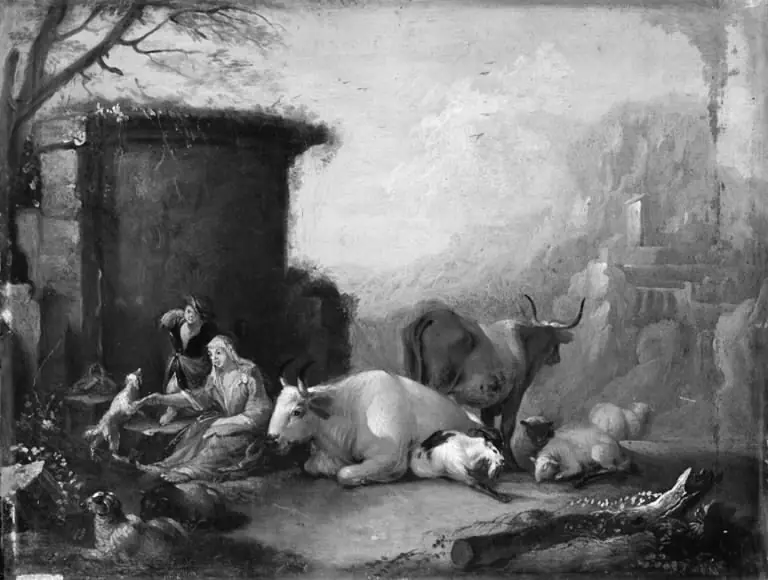
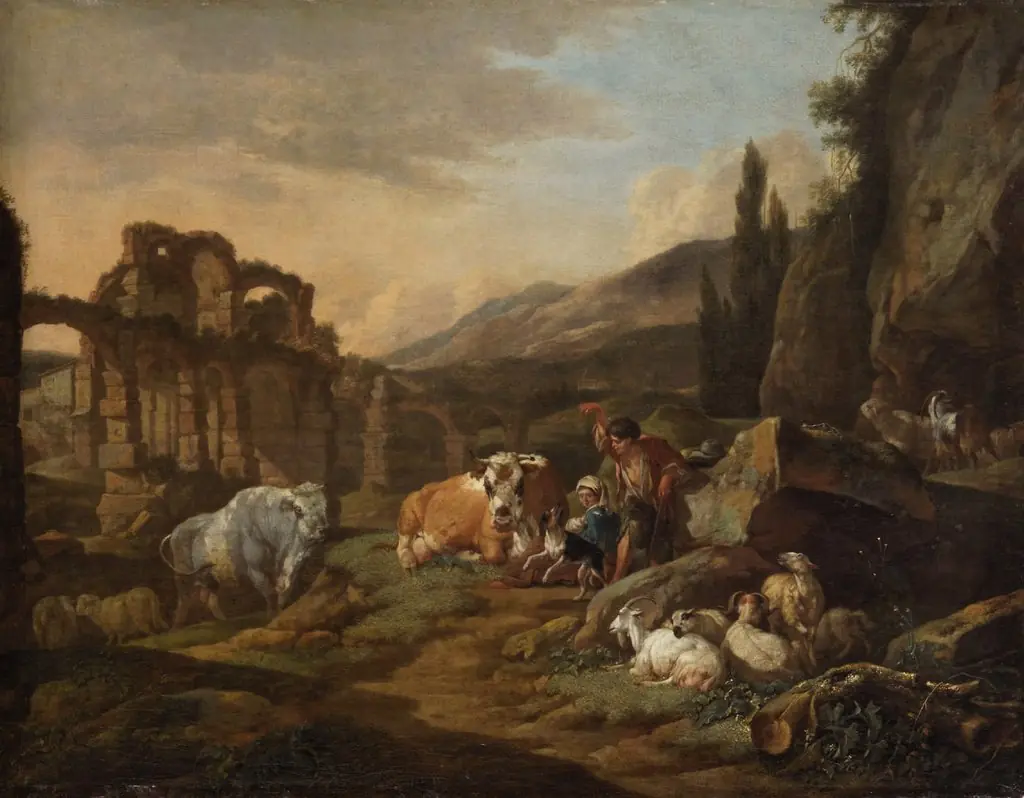
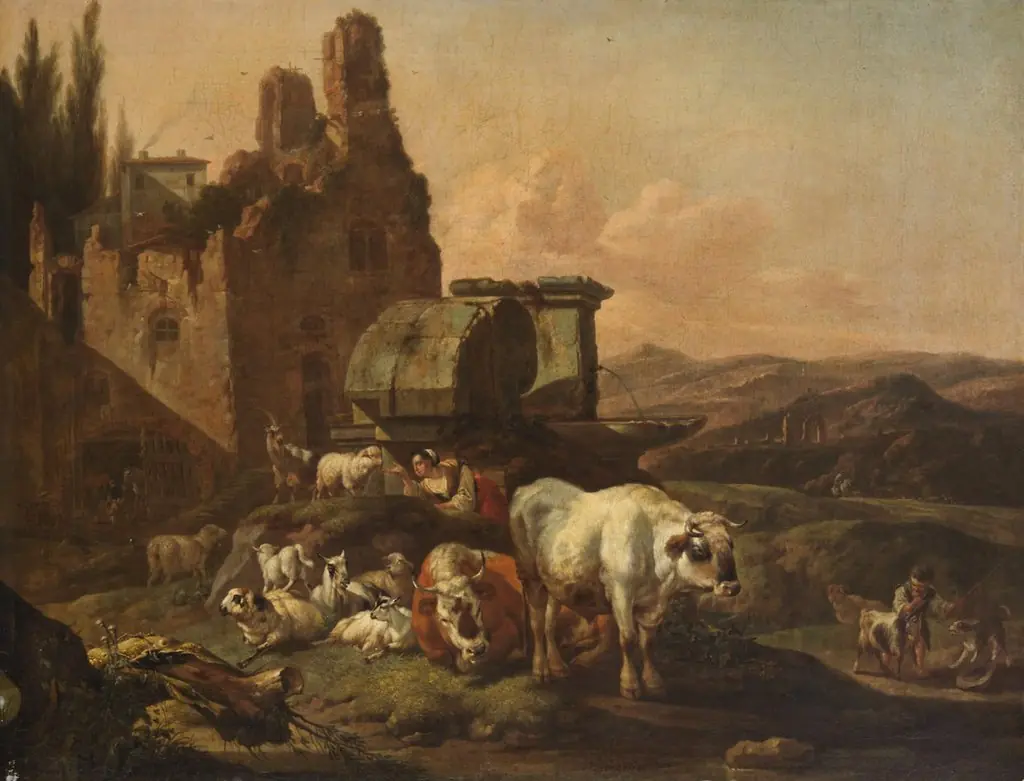
Shepherds and Cattle at he foot of Ruins is an oil painting by the Dutch Golden Age artist Johann Heinrich Roos. It is held in the collection of the Staatliche Kunstsammlungen Dresden.
About this work
Overview
Painted in 1691, this oil-on-canvas landscape by Johann Heinrich Roos portrays a quiet pastoral scene nestled among ancient ruins.
Painted in 1691, this oil-on-canvas landscape by Johann Heinrich Roos portrays a quiet pastoral scene nestled among ancient ruins. The work belongs to the collection of the Gemäldegalerie Alte Meister in Dresden. Roos captures a moment of stillness, where human activity and natural elements coexist gently amid the remnants of a bygone era. The composition balances foreground figures with distant architecture, creating a sense of spatial depth and temporal layering.
Subject & Meaning
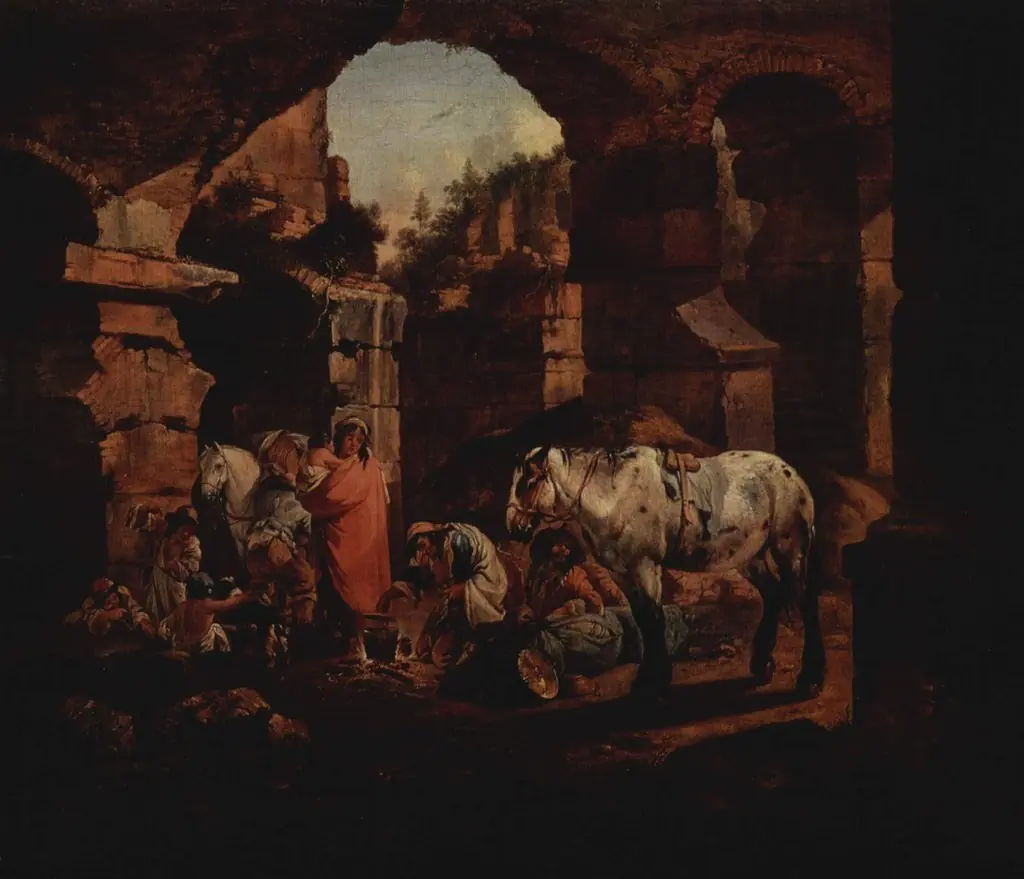
The painting centers on shepherds and their livestock resting near crumbling stone structures, likely inspired by Roman antiquities. The figures engage in quiet, routine tasks, emphasizing harmony between daily life and the enduring presence of the past. The ruins, though decaying, are not portrayed as tragic but as natural components of the landscape, suggesting a contemplative view of time’s quiet erosion rather than its grand collapse.
Technique & Style
Roos employs oil paint to render subtle variations in light and texture, particularly in the weathered stone and the soft fur of the animals. His brushwork is precise yet unobtrusive, allowing naturalistic details to emerge without theatricality. Light falls gently across the scene, enhancing the tactile quality of foliage and rock while avoiding dramatic contrasts. The palette remains muted, reinforcing the calm, unhurried mood of the composition.
History & Provenance
Created in the final decade of Roos’s life, the painting entered the collection of the Gemäldegalerie Alte Meister in Dresden during the 18th or early 19th century. It was likely acquired as part of broader efforts to assemble a representative survey of German and Dutch landscape traditions. Its provenance reflects the sustained interest in pastoral themes among European collectors of the period, particularly those drawn to quiet, observational scenes.
Context
Roos worked within a tradition of German and Dutch landscape painting that favored intimate, detailed views over grand narratives. In late 17th-century Germany, such scenes resonated with growing interest in naturalism and the moral value of rural life. The inclusion of ruins aligns with a broader European fascination with antiquity, though Roos treats them as ambient elements rather than symbols of fallen glory.
Legacy
This painting exemplifies Roos’s consistent focus on tranquil, observed moments rather than dramatic or allegorical content. While not widely known outside specialist circles, his work influenced later German landscape painters who valued quiet realism. The piece remains a quiet testament to the aesthetic preference for understated harmony between nature, animals, and the traces of human history.
Artist & collection