Artwork
View of a Manor House
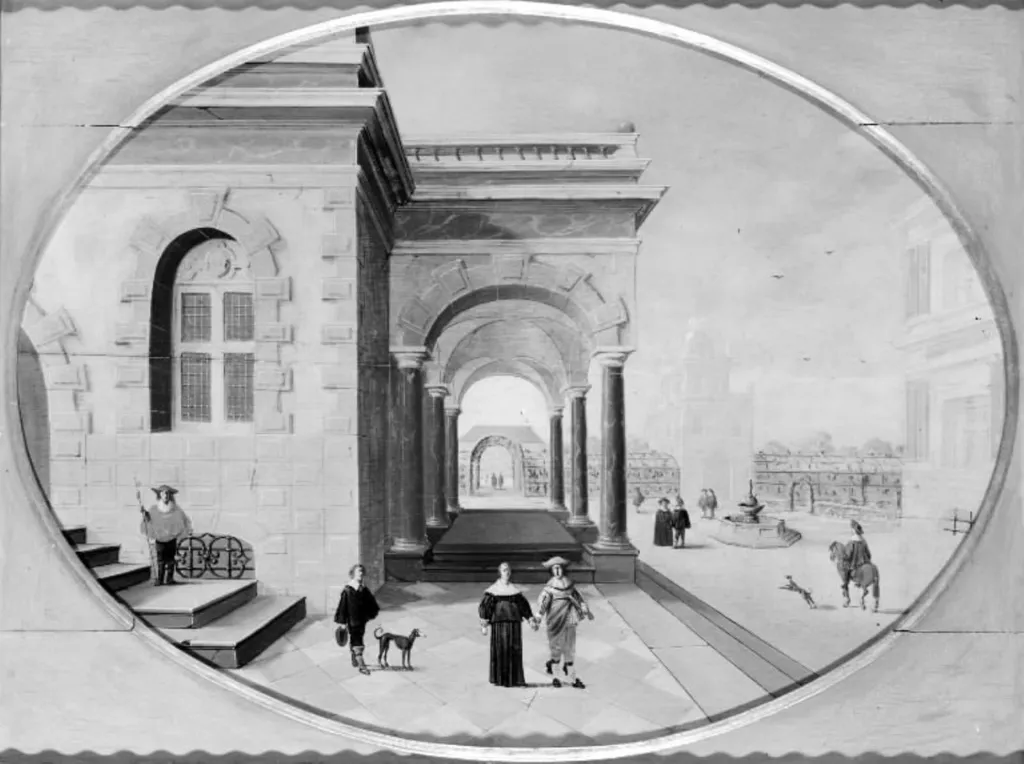
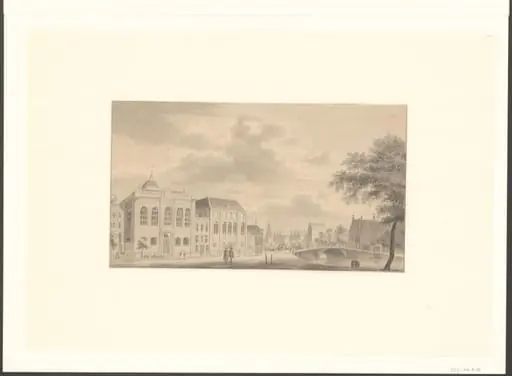
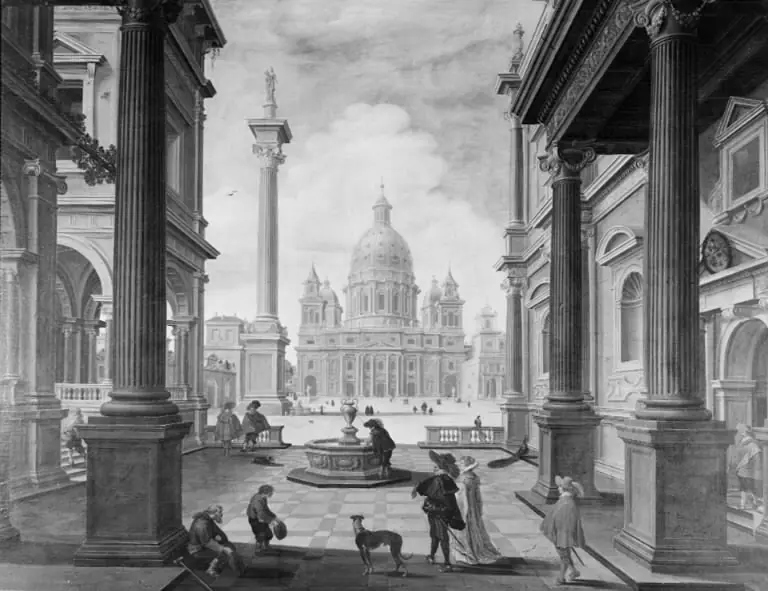
View of a Manor House is a photography by the Baroque artist Unknown. It dates from 1638 and is held in the collection of the Statens Museum for Kunst. Painted in 1638, this cityscape depicts a substantial stone manor house surrounded by an active courtyard.
About this work
Overview
Painted in 1638, this cityscape depicts a substantial stone manor house surrounded by an active courtyard. The work is attributed to 21971_person and resides in the Museum of Ethnography. It presents an architectural subject with careful attention to spatial depth and environmental detail, reflecting a period interest in documenting domestic structures and daily life within them.
Subject & Meaning
The scene centers on a stately residence, likely a noble or affluent estate, with figures engaged in ordinary activities—walking, tending to animals, moving through the yard. The presence of a horse and dog suggests functionality and domestic rhythm. The architecture and attire of the figures anchor the image in a specific social and temporal context, conveying quiet dignity rather than grandeur.
Technique & Style
The artist employs precise brushwork to render stone textures, shadowed arches, and the play of light across surfaces. Windows, rooflines, and courtyard paving are rendered with observational accuracy. While not overtly theatrical, the handling of light and depth aligns with Baroque tendencies toward realism and atmospheric nuance, avoiding idealization in favor of tangible presence.
History & Provenance
The painting has been held by the Museum of Ethnography since at least the early 20th century. Its acquisition history prior to that is undocumented, though its subject matter suggests it may have originated in a regional collection focused on architectural heritage. No records indicate it was commissioned or widely exhibited during the artist’s lifetime.
Context
In the mid-17th century, depictions of private residences were uncommon in public art, often reserved for portraiture or estate records. This work stands as a rare example of a secular architectural study, possibly made for personal or local use. It reflects a growing interest in documenting everyday environments, distinct from religious or mythological themes dominant in the period.
Legacy
Though not widely known outside institutional circles, the painting contributes to a small corpus of Dutch and Northern European works that treat architecture as a subject worthy of quiet observation. Its preservation in an ethnographic collection underscores its value as a record of material culture, offering insight into domestic life rather than artistic innovation.
Artist & collection

 Domestic Scene
 Giacomo and Cardinal Marco, investing Andrea, Abbot of San Zeno, with his Benefice
 The Nymph of Fontainebleau
 Portrait of a Woman
 Madonna and Child with Saints in the Enclosed Garden
 Venus and Minerva
 Family Group of Four on Sofa
 Wall painting from Room H of the Villa of P. Fannius Synistor at Boscoreale
 Elegant Company in Front of a Palace
 Elegant Company in Front of a Palace
 The Vestibule of Christiansborg Palace
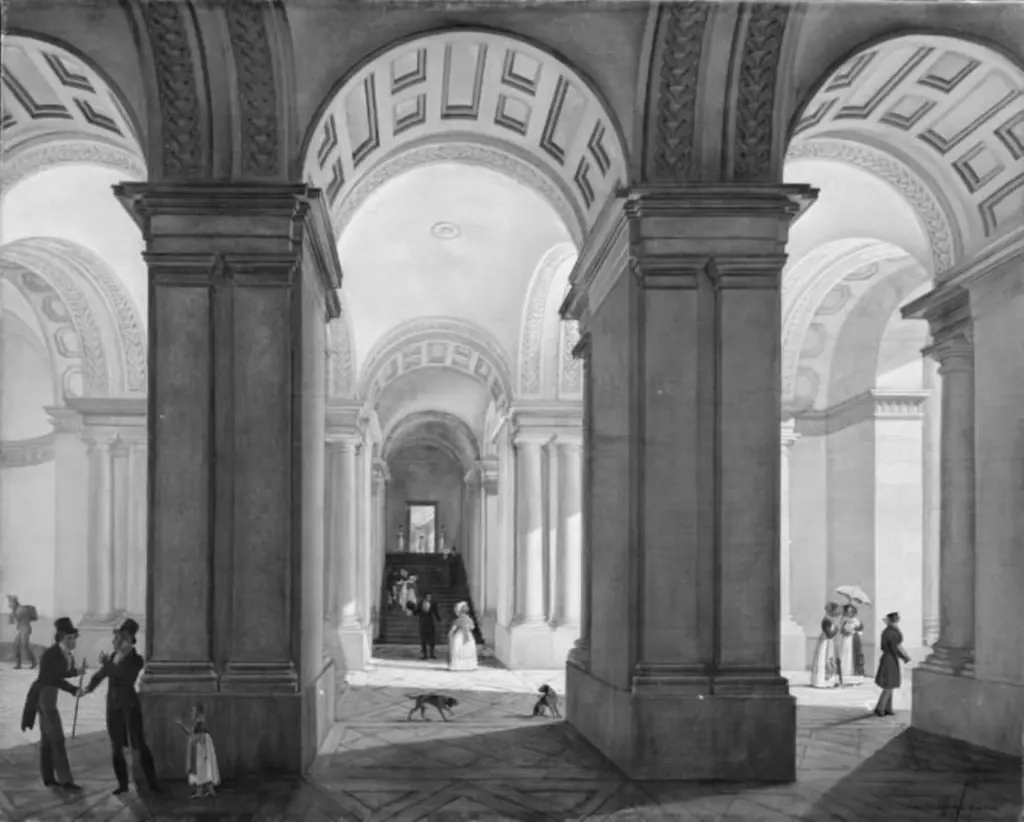 Christiansborg Slots vestibule
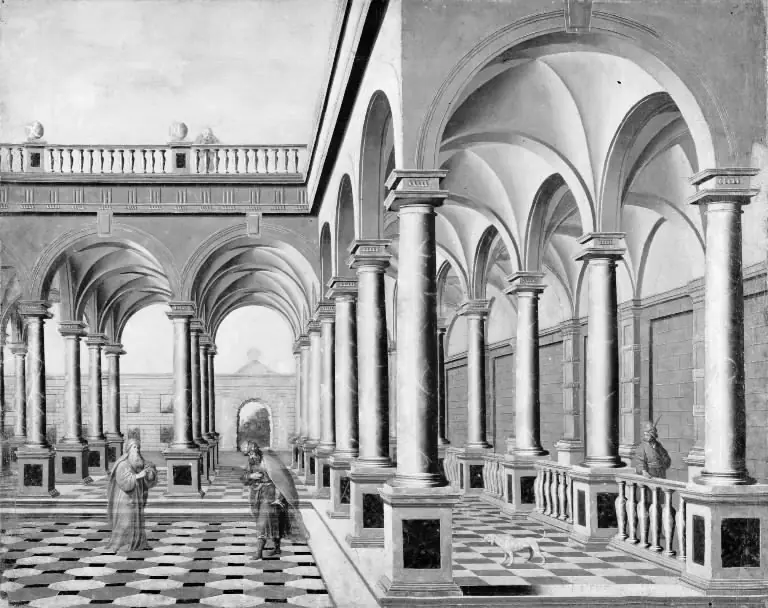 Old Man Received by a Gentleman in an Oriental Costume
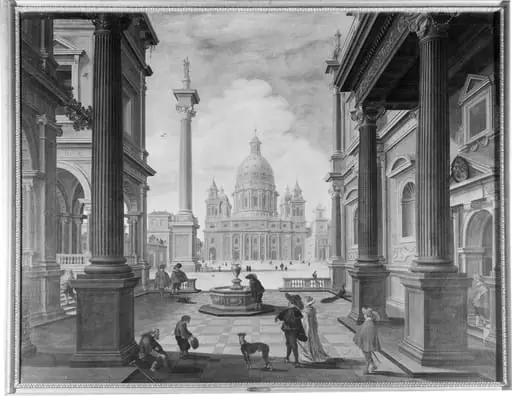 Square in front of a Magnificent Church
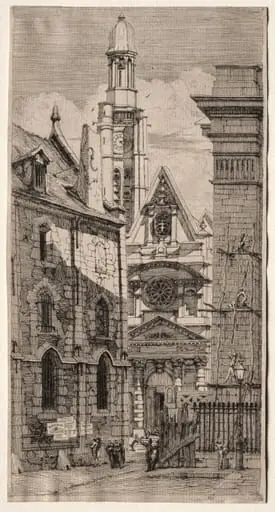 Etchings of Paris: Church of St. Stephen of the Mount
 Nächtliches Interieur einer Kirche im Renaissancestil
 Untitled
 Portico of the Château d'Anet, now at the École des Beaux-Arts, Paris
 Sankt Peter, Rom
 Square in front of a Magnificent Church