Artwork
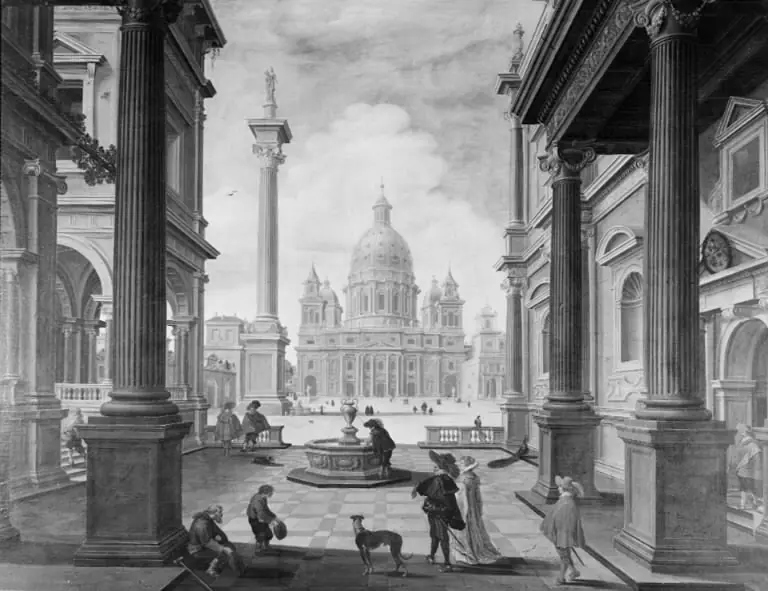
Square in front of a Magnificent Church
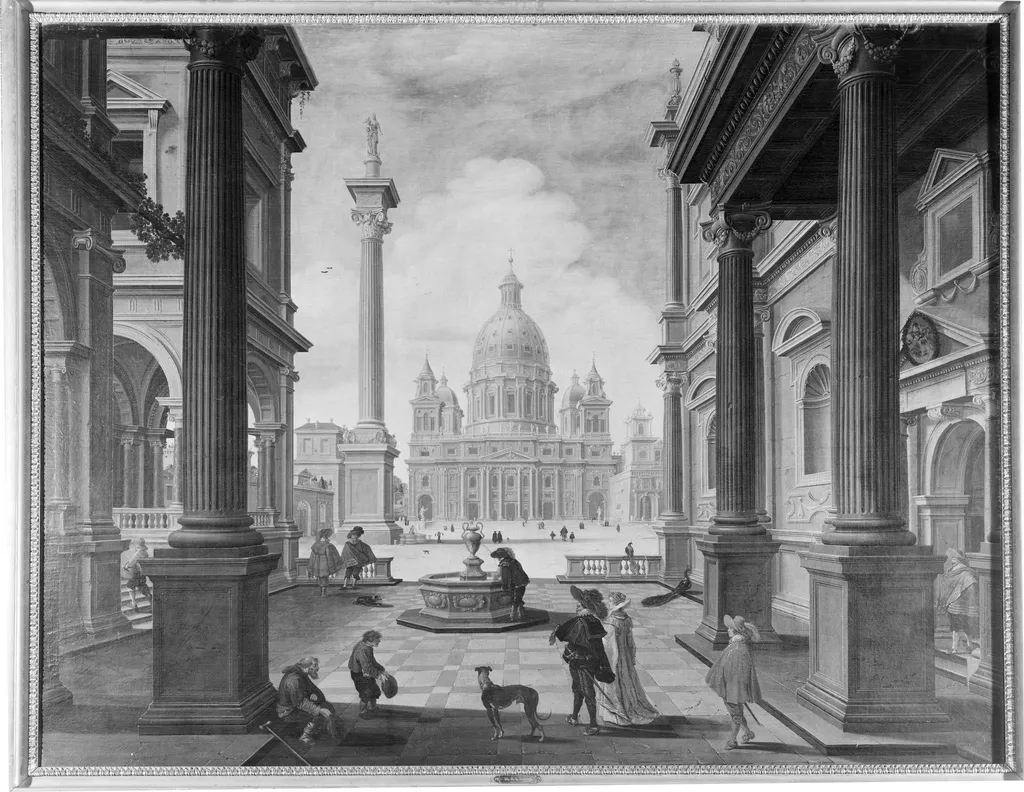
Square in front of a Magnificent Church is a photography by the Baroque artist Unknown. It dates from 1623 and is held in the collection of the Statens Museum for Kunst. This painting, dated 1623, portrays a public square adjacent to a monumental church, capturing daily life in a European urban setting.
About this work
Overview
The work is part of the Museum of Ethnography’s collection, where it serves as a record of civic space and social behavior during the period.
This painting, dated 1623, portrays a public square adjacent to a monumental church, capturing daily life in a European urban setting. Executed with meticulous attention to architectural detail and human activity, it reflects the observational rigor of early 17th-century Northern European painting. The work is part of the Museum of Ethnography’s collection, where it serves as a record of civic space and social behavior during the period.
Subject & Meaning
The scene centers on a large fountain, a common focal point in public squares, around which figures gather in varied postures—some seated, others standing or moving. A dog adds an unposed, spontaneous element, reinforcing the painting’s documentary quality. The architecture suggests civic pride and religious authority, with the church dominating the background. The composition implies a quiet harmony between communal life and institutional presence.
Technique & Style
The artist employs chiaroscuro to model forms and enhance spatial depth, particularly in the play of light across stone surfaces and fabric folds. Details in brickwork, column capitals, and clothing are rendered with precision, suggesting familiarity with contemporary Flemish and Dutch realism. Brushwork remains controlled, avoiding theatricality; the focus is on observed texture and atmospheric coherence rather than idealized grandeur.
History & Provenance
The painting entered the Museum of Ethnography’s holdings in the late 19th or early 20th century, likely as part of a broader collection of European genre scenes. Its attribution to a 1460_person appears to be an error; the style and date align with early Baroque practitioners active in the Low Countries or Germany around 1623. The original commission or owner remains undocumented.
Context
In the early 1600s, public squares in Northern Europe were increasingly depicted as sites of civic identity, not merely religious or ceremonial spaces. This work aligns with a growing trend among artists to record everyday life in urban environments, often commissioned by local elites or institutions seeking to document their towns. The inclusion of ordinary people and animals reflects a shift toward secular observation in painting.
Legacy
Though not widely exhibited or studied, the painting contributes to a body of work that documents pre-modern urban life with quiet accuracy. Its preservation in an ethnographic museum underscores its value as a cultural artifact, offering insight into architecture, dress, and social interaction rather than artistic innovation. It remains a quiet testament to the ordinary rhythms of early modern European cities.
Artist & collection

 Domestic Scene
 Giacomo and Cardinal Marco, investing Andrea, Abbot of San Zeno, with his Benefice
 The Nymph of Fontainebleau
 Portrait of a Woman
 Madonna and Child with Saints in the Enclosed Garden
 Venus and Minerva
 Family Group of Four on Sofa
 Wall painting from Room H of the Villa of P. Fannius Synistor at Boscoreale
 Architekturbild (Art des)
 Monument at a Harbour
 Monument at a Harbour
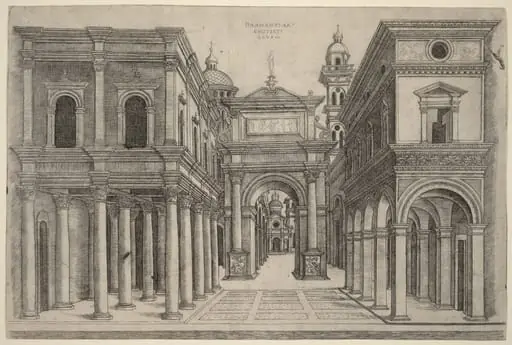 A Street with Various Buildings, Colonnades and an Arch
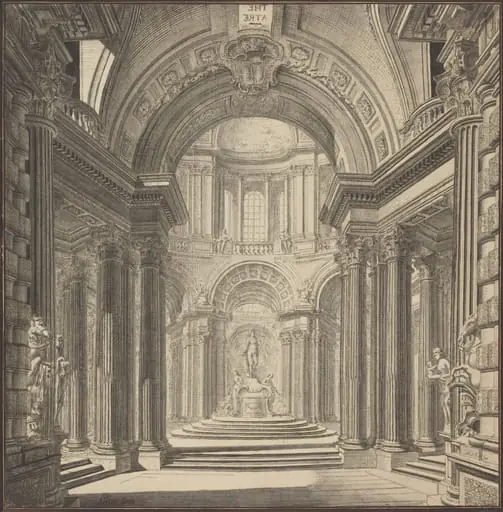 Interior of a Temple
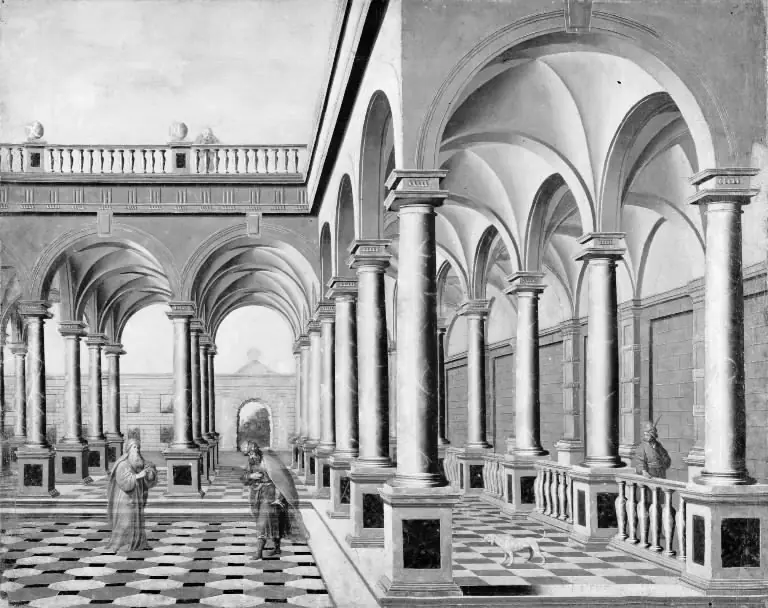 Old Man Received by a Gentleman in an Oriental Costume
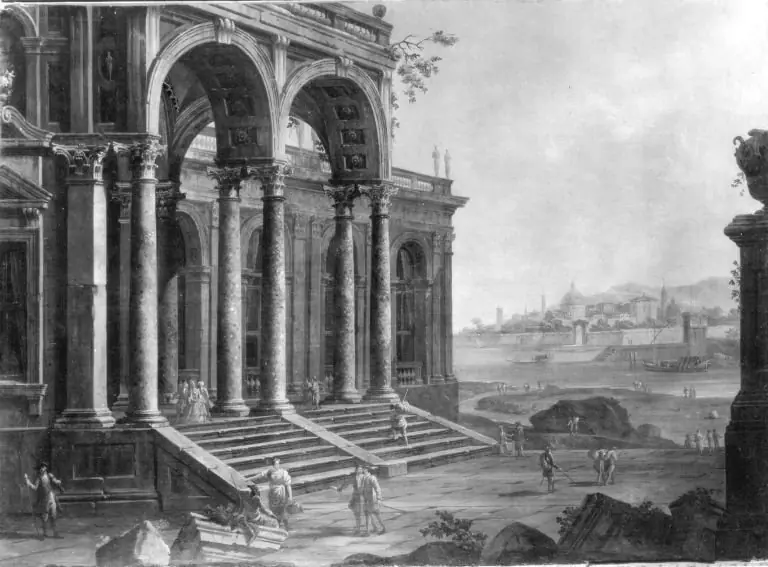 Architekturbild
 A Colonnade
 A Colonnade
 Church Interior
 Piazettaen i Venezia
 Square in front of a Magnificent Church