Artwork
Portico of the Château d'Anet, now at the École des Beaux-Arts, Paris
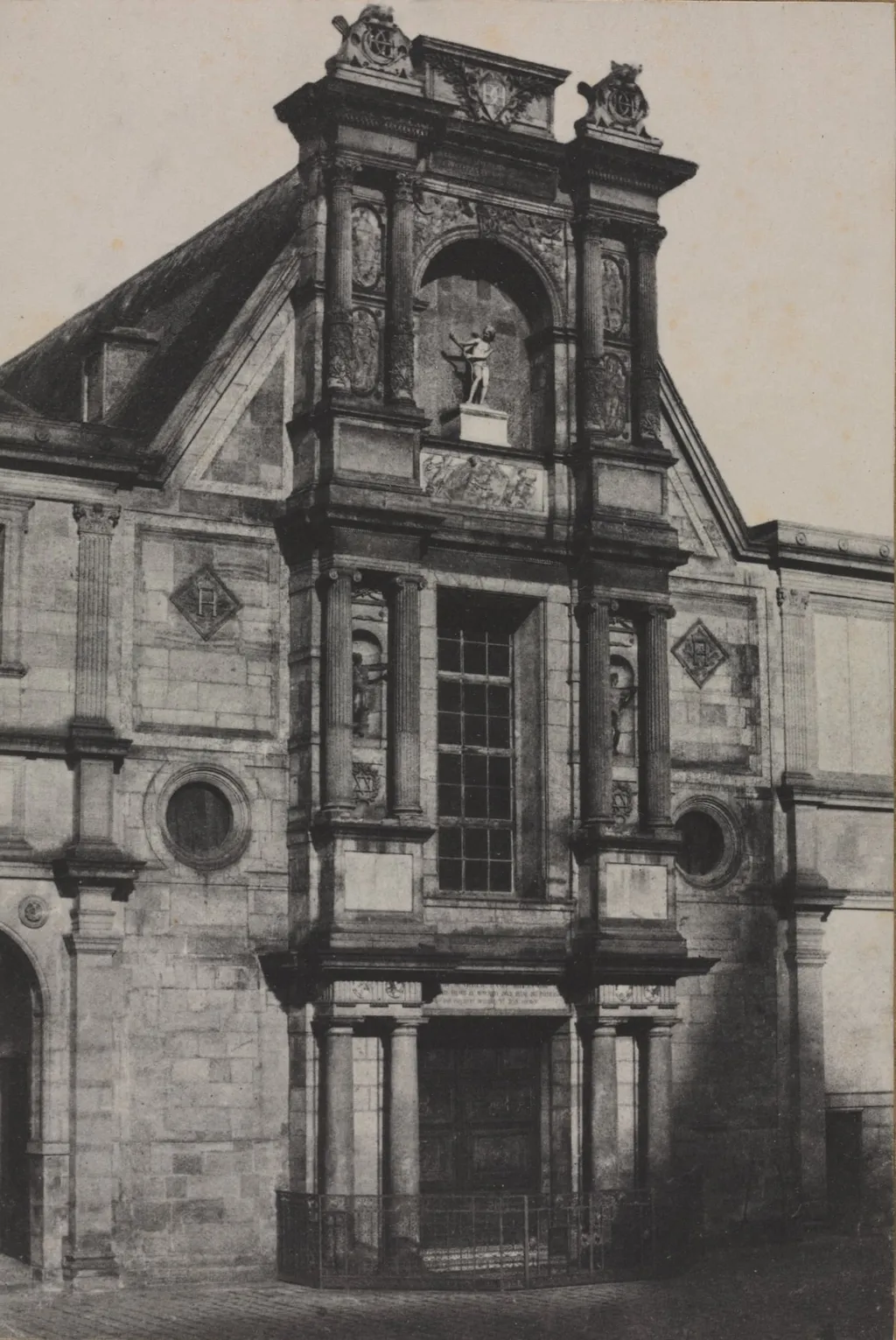
Portico of the Château d'Anet, now at the École des Beaux-Arts, Paris is a photography by the Impressionist artist Charles Marville. It dates from 1851 and is held in the collection of the Cleveland Museum of Art. This photograph captures a stone portico originally part of the Château d’Anet, constructed between 1548 and 1550.
About this work
Overview
It now forms part of the École des Beaux-Arts, embedded in the school’s architectural fabric after a 19th-century expansion.
This photograph captures a stone portico originally part of the Château d’Anet, constructed between 1548 and 1550. The structure was relocated to Paris during the French Revolution to preserve it from demolition. It now forms part of the École des Beaux-Arts, embedded in the school’s architectural fabric after a 19th-century expansion. Its survival reflects a shift in cultural values, from royal symbol to preserved heritage.
Subject & Meaning
The portico served as the ceremonial entrance to a château commissioned by King Henri II for Diane de Poitiers, his influential mistress. Its classical design, with central arch, flanking columns, and sculpted balcony, conveyed both aristocratic authority and Renaissance humanist ideals. After the Revolution, its relocation transformed its meaning: from emblem of monarchy to artifact of national memory, preserved as cultural continuity rather than political assertion.
Technique & Style
The photograph renders the portico with precise attention to texture and light, emphasizing the carved stone surfaces and the play of shadow across its relief. The composition frames the central statue and arched opening to highlight symmetry and verticality, typical of Renaissance architectural photography. The medium’s clarity captures fine details—moldings, foliage motifs, and weathering—without embellishment, aligning with documentary intent rather than artistic interpretation.
History & Provenance
Built for Diane de Poitiers at Anet in Normandy, the portico survived the Revolution’s anti-monarchical purges due to its recognized artistic value. It was moved to Paris in the late 18th century and stored among other salvaged architectural fragments. In the 1860s, during the École des Beaux-Arts’ expansion, it was reinstalled as a permanent feature, integrating historical monument with institutional identity.
Context
The portico reflects the French Renaissance’s fusion of Italian classical forms with native traditions, favored by the Valois court. Its survival mirrors broader 18th-century efforts to preserve architectural heritage amid revolutionary upheaval. Its placement at the École des Beaux-Arts—France’s premier art academy—reinforced its role as a pedagogical model for students studying classical composition and ornamentation.
Legacy
Today, the portico stands as a physical link between Renaissance patronage and 19th-century institutional preservation. It continues to inform architectural education at the École des Beaux-Arts, offering direct study of proportion, carving, and spatial hierarchy. Its presence underscores how cultural institutions in France have historically absorbed and recontextualized symbols of power into tools of artistic training.
Artist & collection

Artist
Charles Marville, the pseudonym of Charles François Bossu, was a French photographer, who mainly photographed architecture, landscapes and the urban environment.

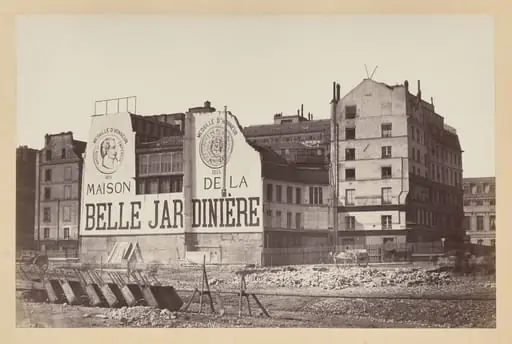 La Belle Jardinère: le magasin de la rue de la Cité pendant sa demolition, Paris
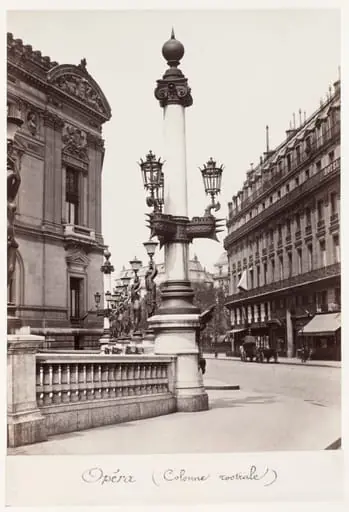 Opéra (Rostral Column)
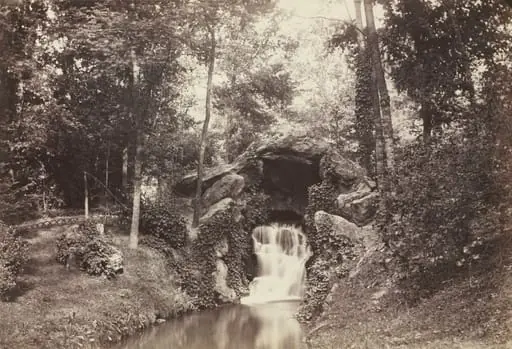 View of the Small Grotto toward the Deer Pond, Bois de Boulogne
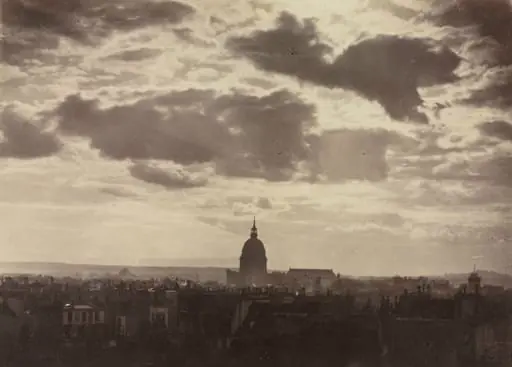 Sky Study, Paris
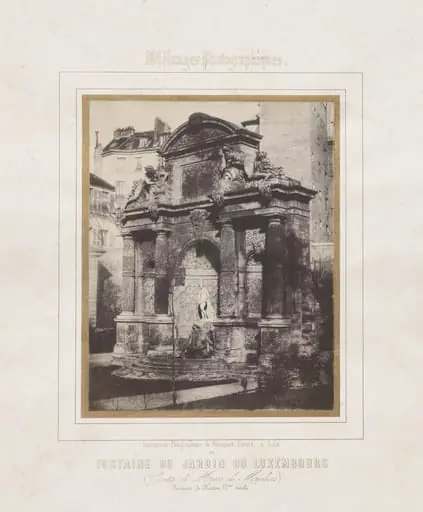 Fontaine du Jardin du Luxembourg (grotte de Marie de Médécis)
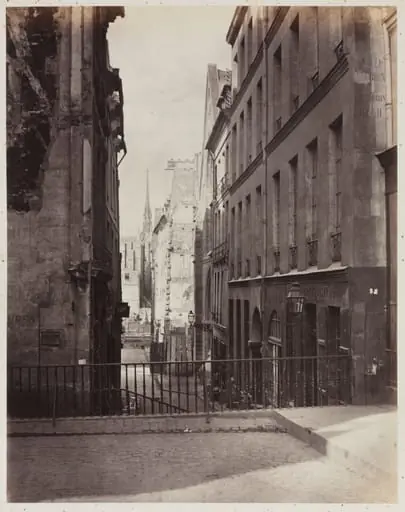 Rue Jean-de-Beauvais. Vue prise de la rue des Écoles vers la boulevard Saint-Germain, en travaux
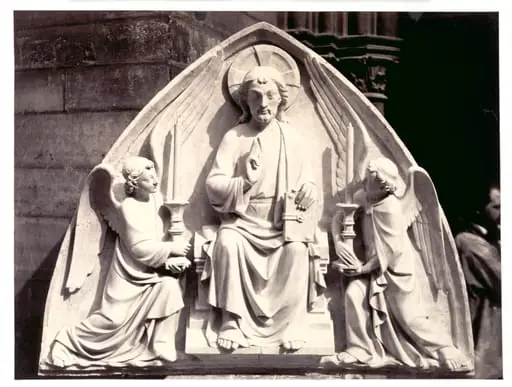 Tympanum, Strasbourg Cathedral
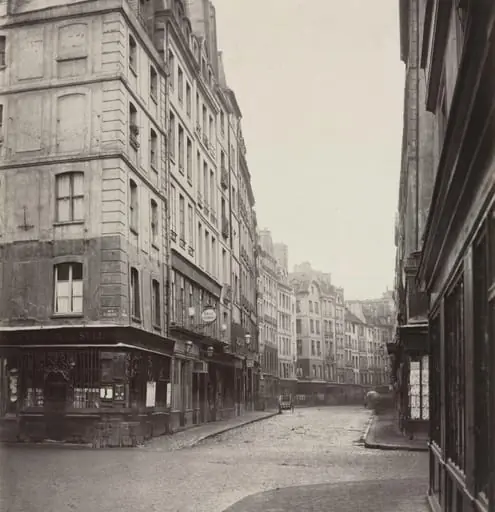 Rue de la Ferronnerie
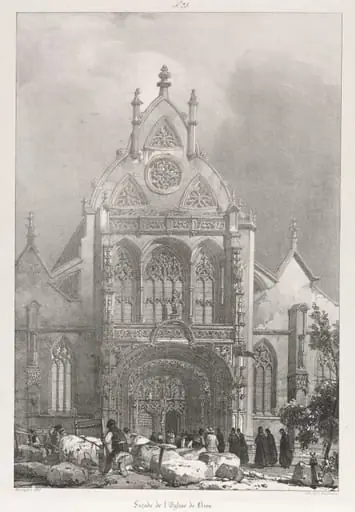 Picturesque and Romantic Trips in Old France, Franche-Compté: Front of the Church at Brou
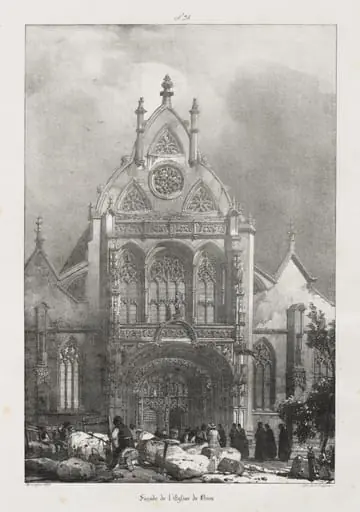 Voyages pittoresques et romantiques dans l'ancienne France, Franche-Comté: Façade de l'église de Brou
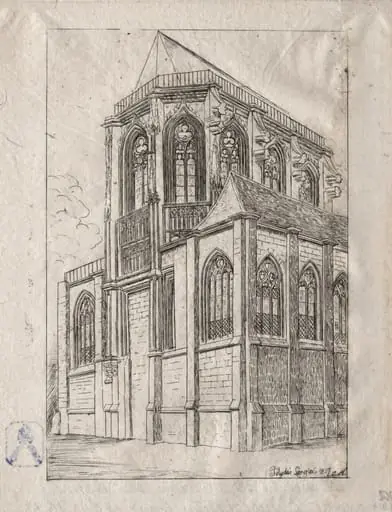 The Apse of the Church of St. Martin-sur-Renelle
 Porte Bachelier, Eglise Saint-Sernin, Toulouse (Haute-Garonne)
 St. Jean de Lateran, Rome
 Mont Saint-Michel, St. Michel
 Façade de l'Église de Brou (Facade of the Church at Brou)
 The Misericordia Church and part of the Senate House, Macao
 Chevet de St. Martin-sur-Renelle (The Apsis of the Church of St. Martin-sur-Renelle)
 Etchings of Paris: Church of St. Stephen of the Mount
 Old Museum, Beauvais
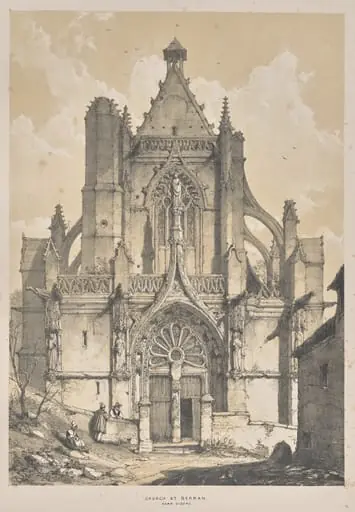 Architecture of the Middle Ages: Church at Serran, near Gisore