Artwork
Landskab med strand, til venstre noget af en søjlegang; foran et skib, til højre folk i færd med at sætte båd i vandet.
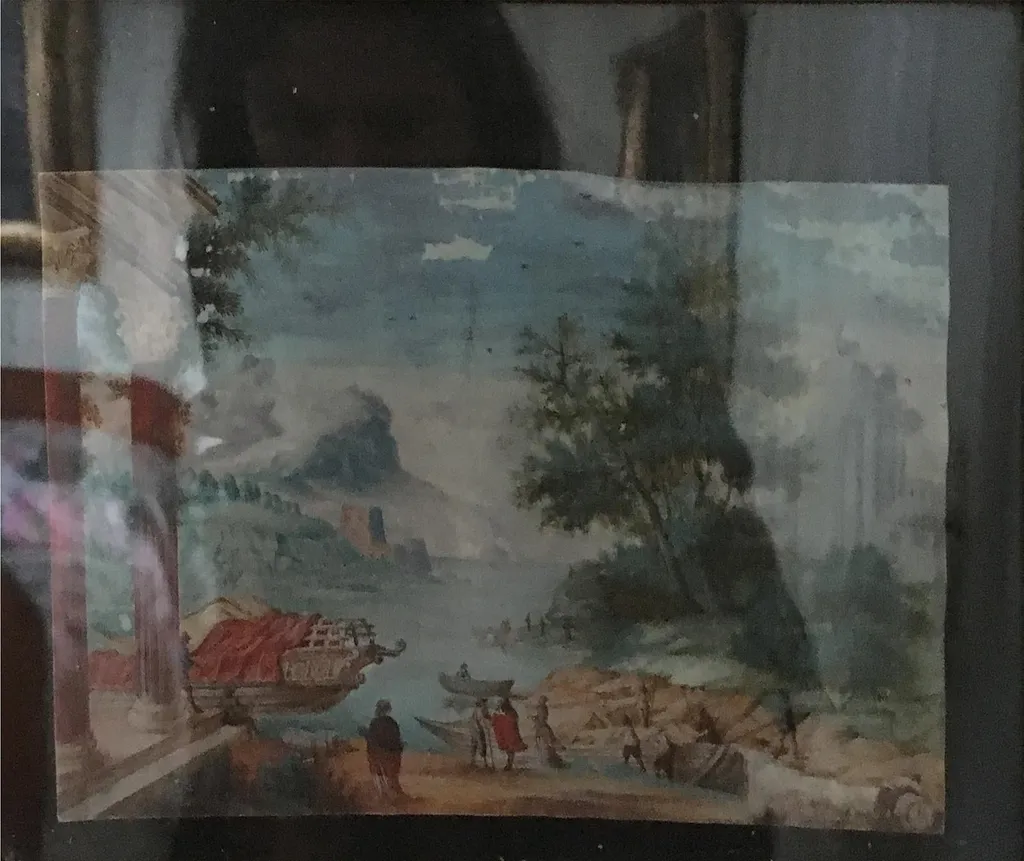
Landskab med strand, til venstre noget af en søjlegang; foran et skib, til højre folk i færd med at sætte båd i vandet. is an unspecified work on paper by Unknown. It dates from 1750 and is held in the collection of the Statens Museum for Kunst. This watercolor landscape, dated around 1750, depicts a quiet coastal scene with elements of both natural and human activity.
About this work
Overview
This watercolor landscape, dated around 1750, depicts a quiet coastal scene with elements of both natural and human activity.
This watercolor landscape, dated around 1750, depicts a quiet coastal scene with elements of both natural and human activity. A partial stone colonnade appears on the left, while figures on the right are engaged in launching a small boat. An anchored ship rests in the distance, framed by rolling hills and trees beneath a soft, overcast sky. The work is held in the collection of the Museum of Ethnography.
Subject & Meaning
The scene captures a moment of daily labor along a shoreline, suggesting a coastal community’s relationship with the sea. The figures preparing the boat imply routine maritime activity, while the colonnade hints at architectural remnants, possibly of classical or colonial origin. The presence of the anchored vessel and the calm setting evoke a sense of quiet continuity rather than drama or event.
Technique & Style
Executed in watercolor, the painting employs loose, fluid brushwork to suggest atmosphere and movement. Colors are subdued overall, with the exception of a red boat and garments that draw subtle attention without dominating the composition. The delicate handling of light and texture creates a hazy, contemplative mood, characteristic of watercolor’s ability to blend tone and transparency.
History & Provenance
The work is attributed to an artist identified as 22314_person, though little is known about their background. It entered the Museum of Ethnography’s collection at an unknown date, likely as part of a broader acquisition of regional or colonial-era visual materials. Its origins may be tied to travel or documentation efforts in coastal regions during the mid-18th century.
Context
Created during a period when European artists increasingly turned to landscape and everyday scenes, this work reflects a growing interest in observational realism. The inclusion of architectural fragments alongside local activity suggests an interest in cultural hybridity or the remnants of colonial presence. Watercolor was a favored medium for travelers and ethnographers seeking portable, quick records of foreign environments.
Legacy
Though not widely exhibited or studied, the painting contributes to a lesser-known body of 18th-century watercolor works that document coastal life beyond grand historical narratives. Its quiet composition and attention to mundane detail offer insight into how ordinary moments were visually recorded during an era of expanding global observation and record-keeping.
Artist & collection

 Domestic Scene
 Giacomo and Cardinal Marco, investing Andrea, Abbot of San Zeno, with his Benefice
 The Nymph of Fontainebleau
 Portrait of a Woman
 Madonna and Child with Saints in the Enclosed Garden
 Venus and Minerva
 Family Group of Four on Sofa
 Wall painting from Room H of the Villa of P. Fannius Synistor at Boscoreale
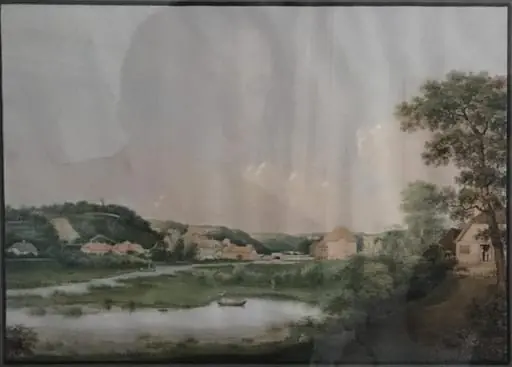 Parti fra Kiels omegn; ved åen der løber i skrå retning gennem billedet og udbreder sig noget mere i forgrunden ligger en lille landsby ved foden af en bakke, hvorigennem åen snor sig
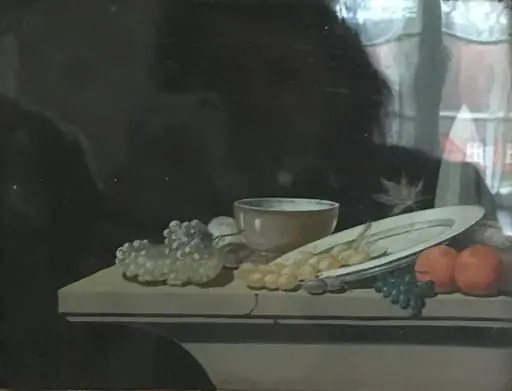 Fremstilling af det stille liv: en terrin, et fad druer, appelsiner, blommer, en sukkertop m. m.
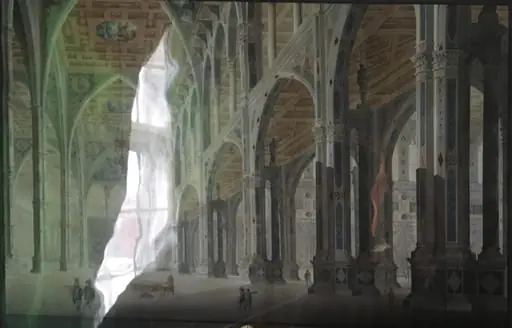 Teaterdekoration: En stor sal, hvori et bord i midten med underskrift: Grande Salle Royale Gothigue d'Audience.
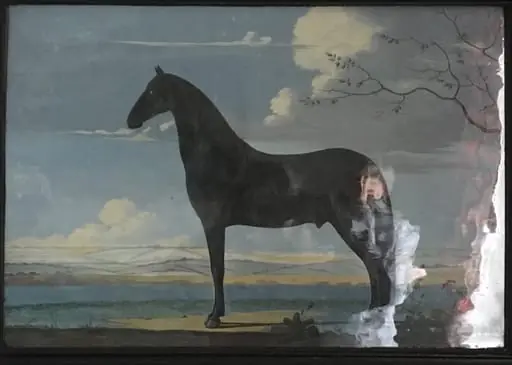 Portræt af en sort hingst
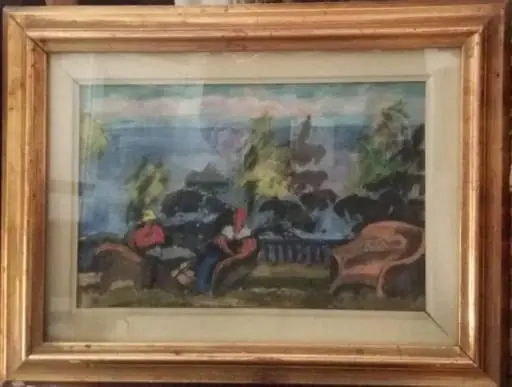 Eforie: Buvetă
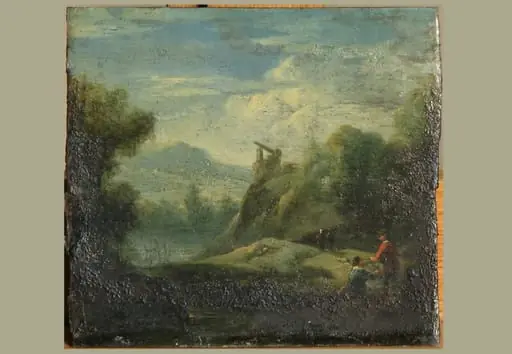 Mic peisaj cu cetate. Pandant: Mic peisaj cu pod
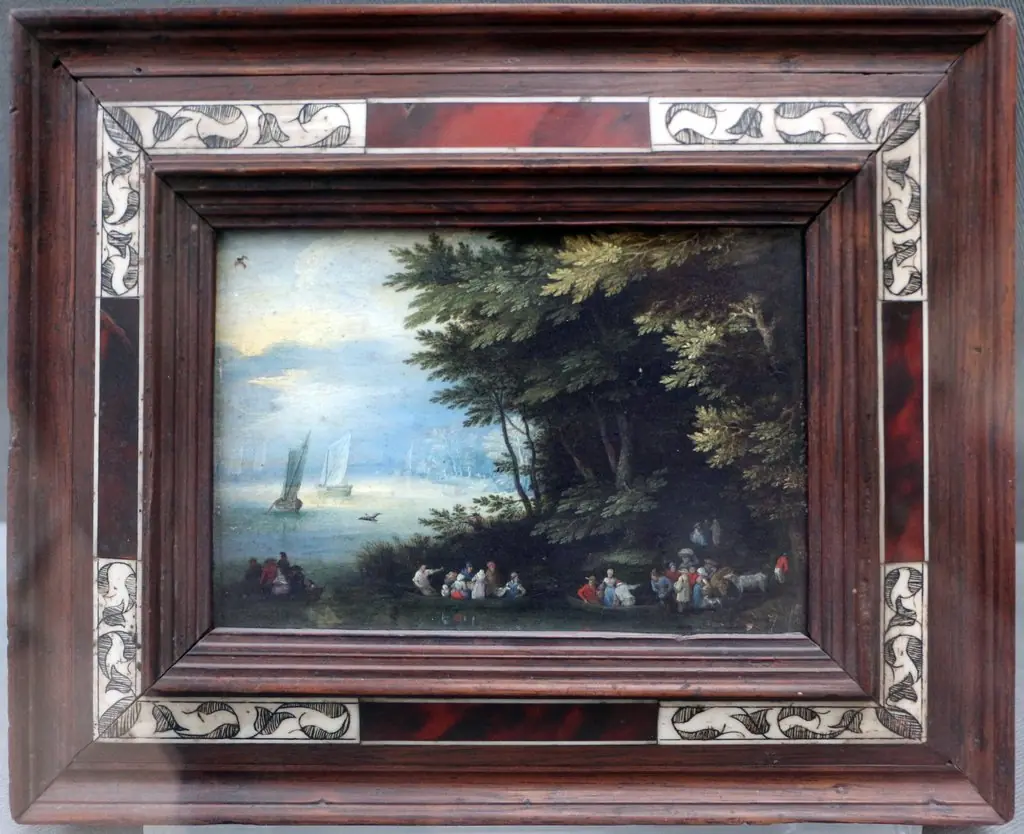 a woody landscape on a river
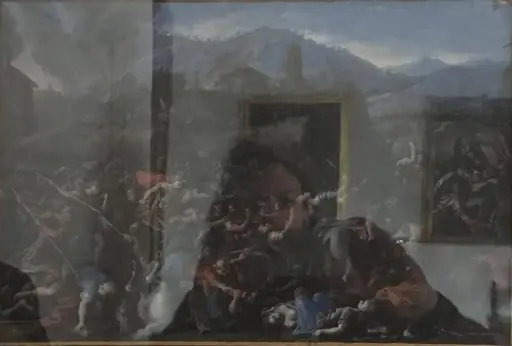 Amazonslaget: Kampen føres heftigt i forgrunden; på højden bagved ligger en brændende by og t. h. ses en stor bro, hvorpå kampen fortsættes. I baggrunden høje bjerge.
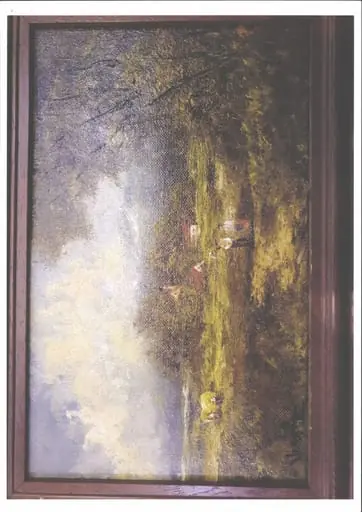 Peisaj campestru
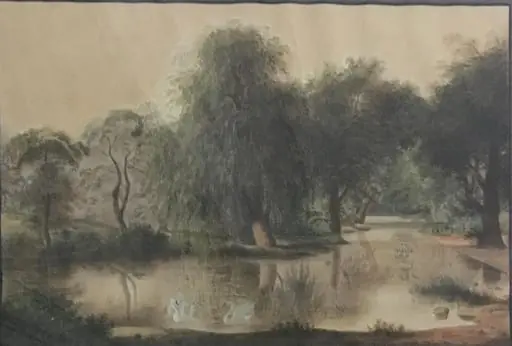 Parti fra Kiels omegn. En skyggefuld lund eller have; en bred å bugter sig mellem trægrupperne og taber sig i dybden til højre i billedet; i forgrunden to svaner.
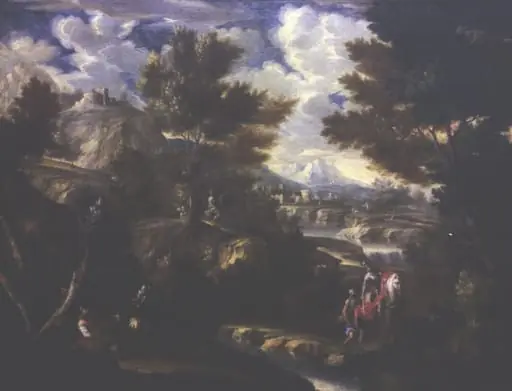 Peisaj cu Sfântul Martin
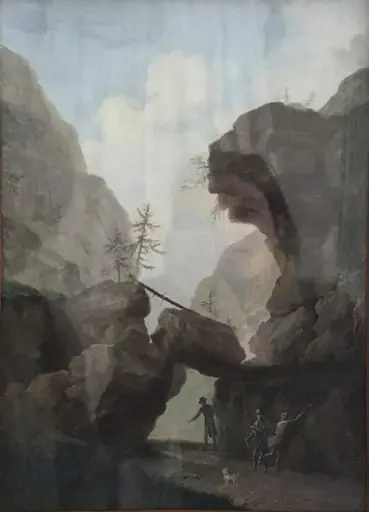 Parti af Planische Grund ved Dresden. klipper højne sig til begge sider, en fjeldblok væltet ned over kløften, forbinde tvende sider. Netop derunder er atter en kløft, belagt m. brædder. Staffage tre personer og en hund.