Artwork
Burgomaster Cornelis Damasz. van der Gracht and his Wife, Jopken Jacobs, in a Landscape
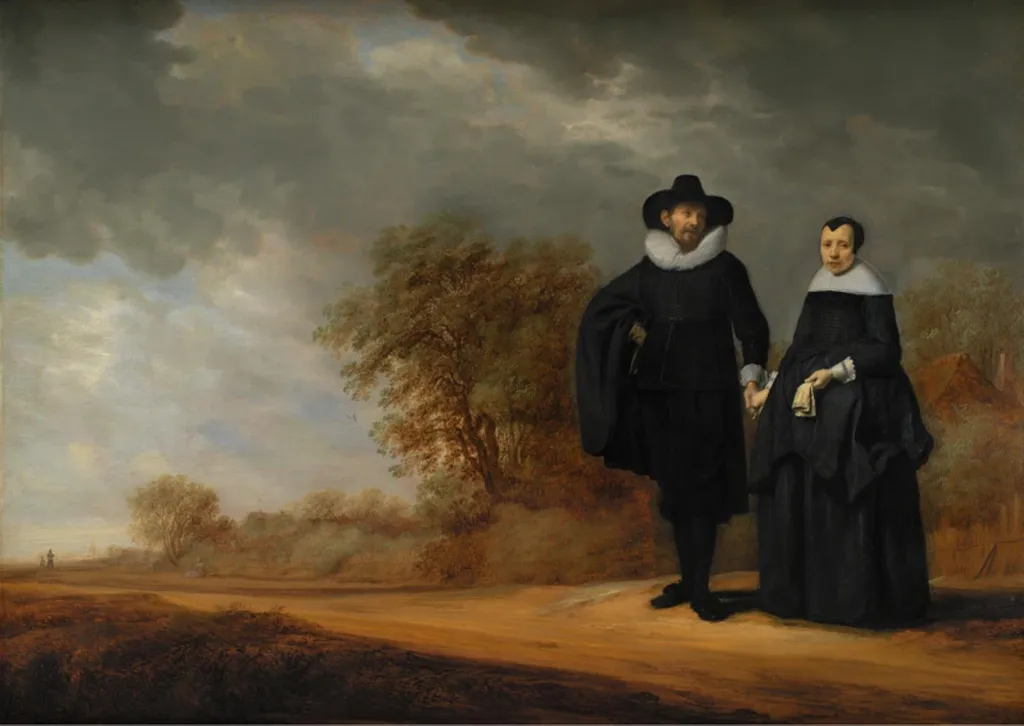
Burgomaster Cornelis Damasz. van der Gracht and his Wife, Jopken Jacobs, in a Landscape is an unspecified painting by Unknown. It dates from 1637 and is held in the collection of the Statens Museum for Kunst. The work, titled *Burgomaster Cornelis Damasz.
About this work
Overview
The composition places a civic official and his spouse within a tranquil countryside scene, framed by a winding path, leaf‑less trees and an overcast sky.
The work, titled *Burgomaster Cornelis Damasz. van der Gracht and his Wife, Jopken Jacobs, in a Landscape*, is an oil painting dating from around 1637. Executed by an anonymous Dutch artist, it is part of the collection of the Museum of Ethnography. The composition places a civic official and his spouse within a tranquil countryside scene, framed by a winding path, leaf‑less trees and an overcast sky.
Subject & Meaning
The figures are presented side by side, both dressed in sober black garments typical of the period. The man’s coat features a broad collar and a black hat, while the woman’s simple dress is accented by a white collar and a white cloth she holds. Their restrained expressions and the gentle proximity of their hands convey a moment of shared solemnity, reflecting the social status and modest piety of a 17th‑century burgomaster’s household.
Technique & Style
The painter employs a muted palette of earth tones for the landscape, allowing the darker attire of the couple to stand out. Subtle modeling of light across the figures and the background creates a modest chiaroscuro effect, giving volume without dramatic contrast. The brushwork is smooth in the clothing, while the foliage and sky are rendered with softer, blended strokes that suggest atmospheric depth.
History & Provenance
Created circa 1637, the painting entered the Museum of Ethnography’s holdings through a 20th‑century acquisition, though the exact chain of ownership before that remains undocumented. The work has been catalogued as an example of Dutch portraiture integrated into a landscape format, a genre popular among civic leaders seeking to assert both personal identity and connection to the land.
Context
In the Dutch Golden Age, it was common for municipal officials to commission portraits that combined portraiture with bucolic settings, symbolizing governance rooted in local prosperity. The inclusion of a winding path and barren trees may allude to the passage of time or the responsibilities of public service, situating the couple within a broader narrative of civic duty and rural stability.
Artist & collection

 Domestic Scene
 Giacomo and Cardinal Marco, investing Andrea, Abbot of San Zeno, with his Benefice
 The Nymph of Fontainebleau
 Portrait of a Woman
 Madonna and Child with Saints in the Enclosed Garden
 Venus and Minerva
 Family Group of Four on Sofa
 Wall painting from Room H of the Villa of P. Fannius Synistor at Boscoreale
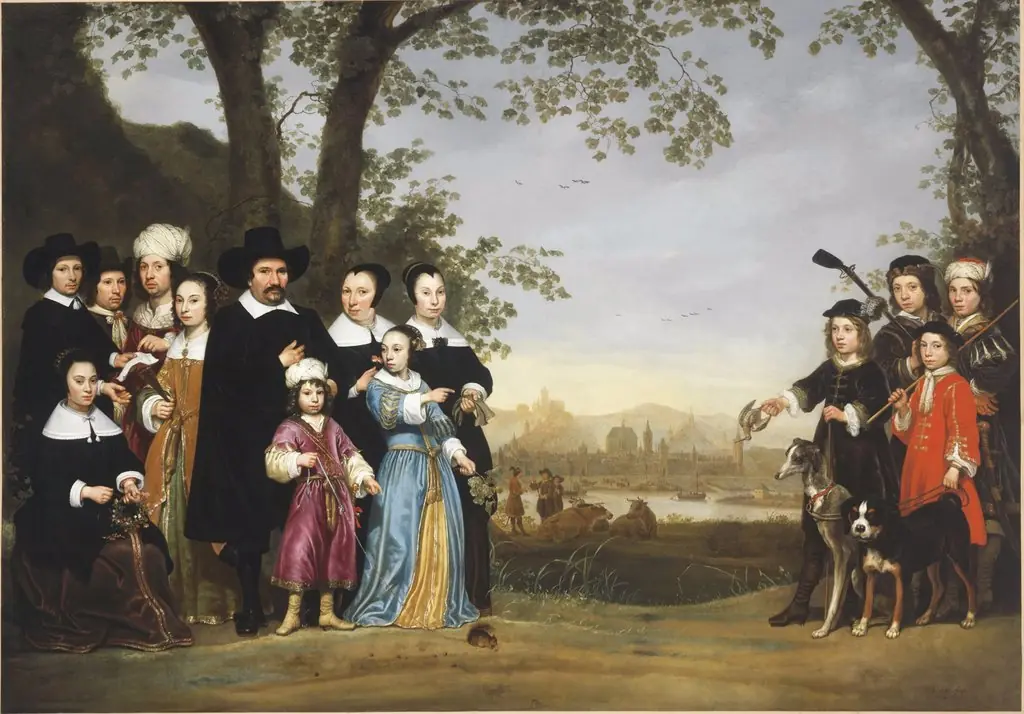 Portrait of the Sam Family
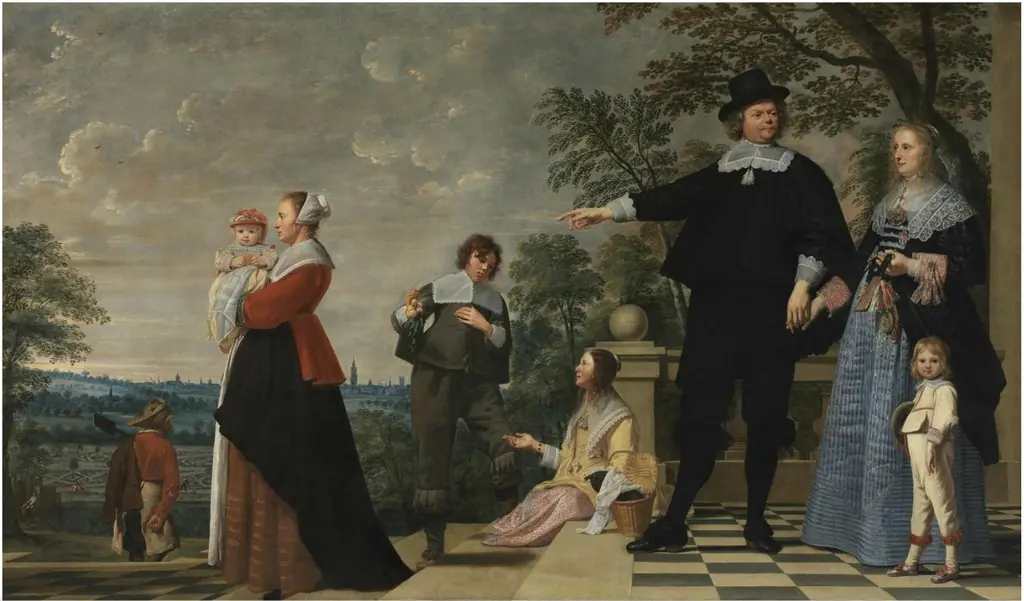 Portrait of a Bruges family
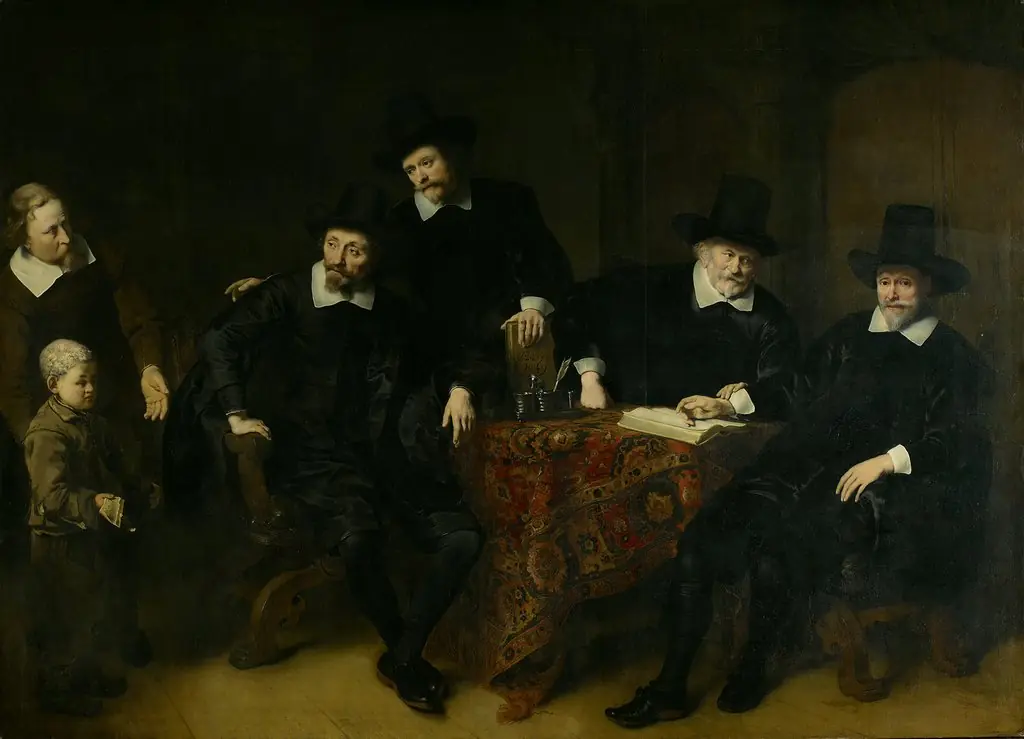 The Regents of the Leper's house in Amsterdam in 1649
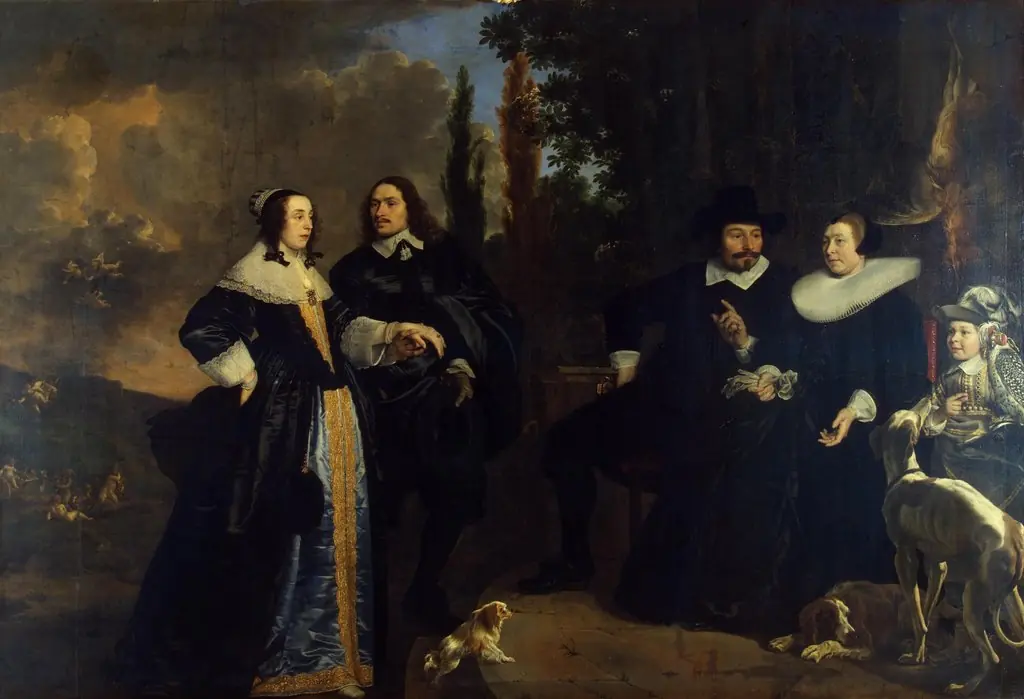 Family Portrait
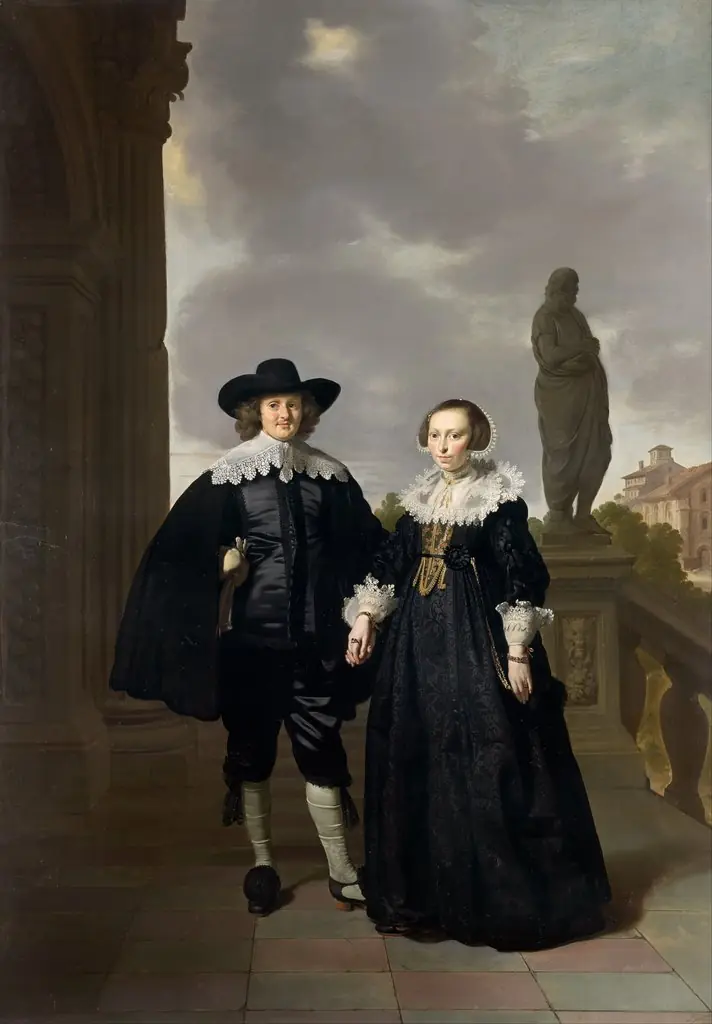 Frederick van Velthuysen and his wife, Josina
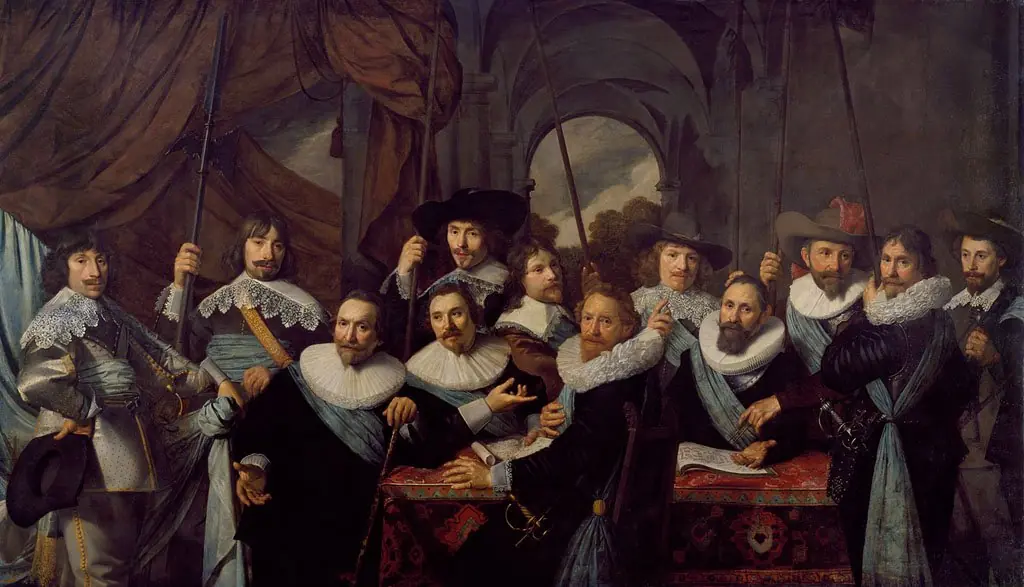 Members of the civic guard company of Captain Dirck Tholinx and Lieutenant Pieter Adriaenszn Raep
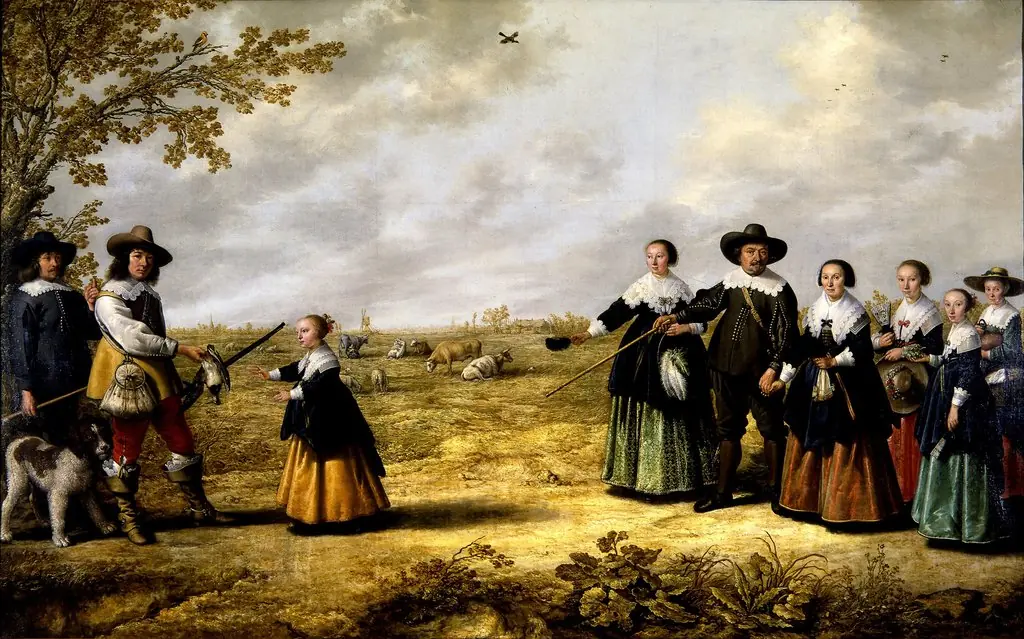 Portrait of a Family in a Landscape
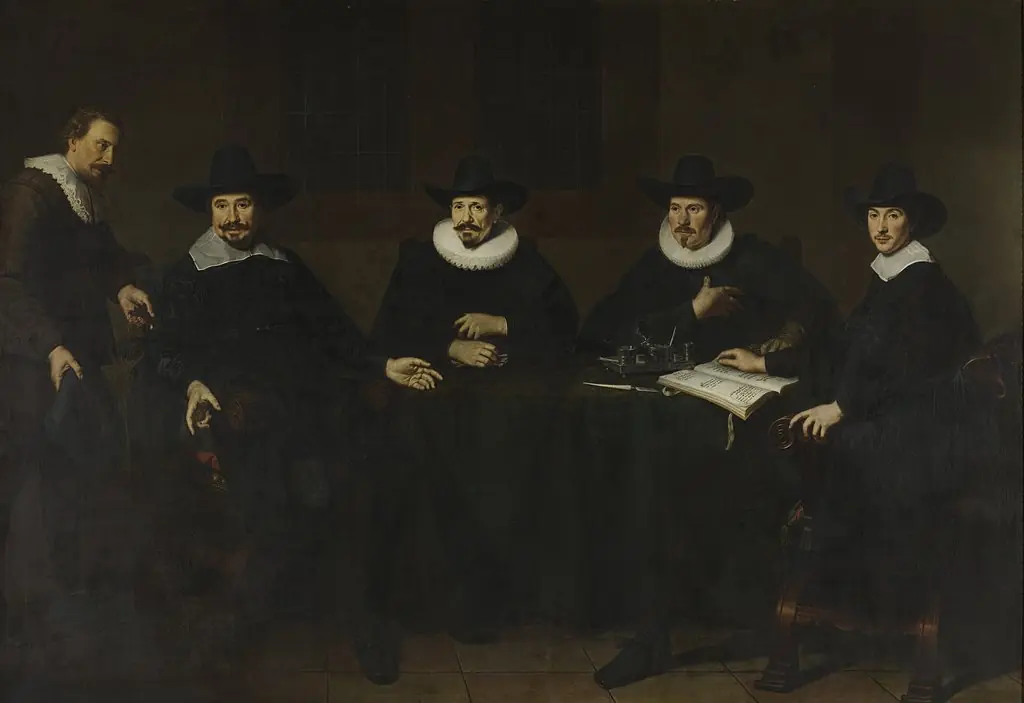 The directors of the serge cloth industry, Amsterdam, 1643
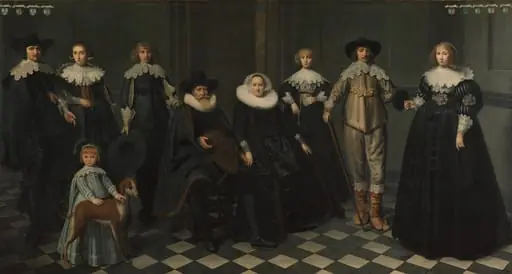 Portrait of the Family of Dirck Bas Jacobsz, Burgomaster of Amsterdam