Artwork
En kårde med laurbærkrans
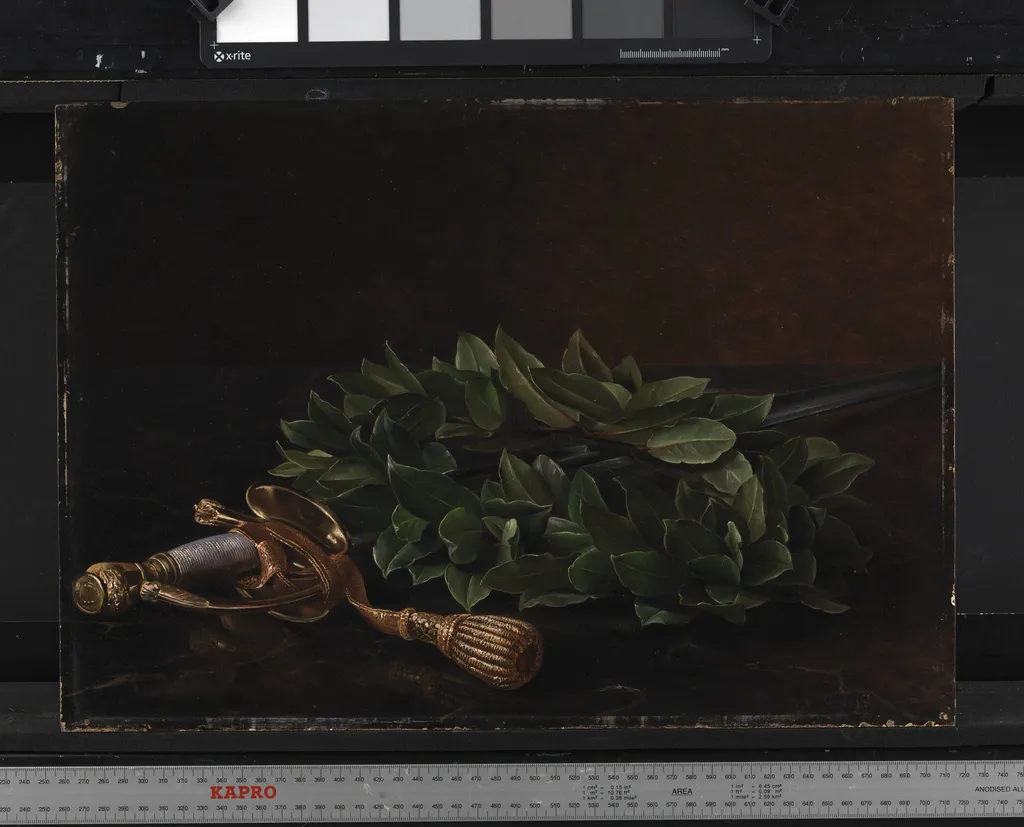
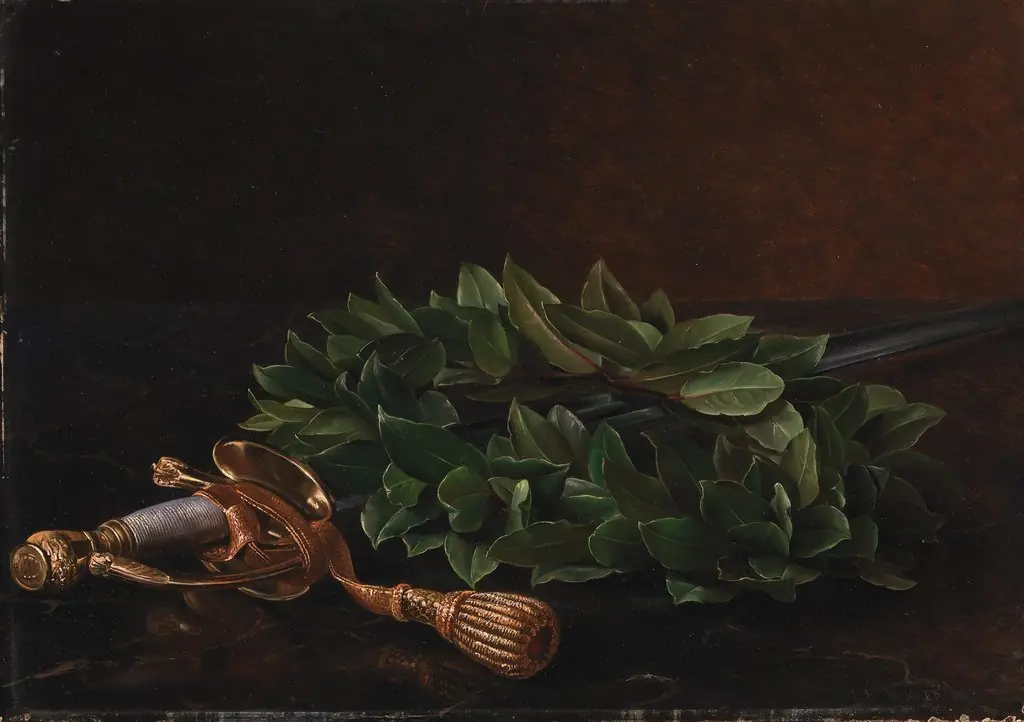
En kårde med laurbærkrans is a photography by the Romanticist artist Unknown. It dates from 1848 and is held in the collection of the Statens Museum for Kunst. Created in 1848 by 234_person, this painting depicts a ceremonial sword encircled by a laurel wreath.
About this work
Overview
Created in 1848 by 234_person, this painting depicts a ceremonial sword encircled by a laurel wreath. Rendered on a dark ground, the objects are isolated to emphasize their form and symbolism. The work resides in the Museum of Ethnography, where it is cataloged as part of a collection exploring cultural symbols through visual art.
Subject & Meaning
The sword and laurel wreath together suggest a fusion of martial honor and civic achievement. The laurel, traditionally linked to victory and distinction in classical antiquity, encircles the blade as a symbol of earned prestige. The composition avoids narrative, instead presenting these objects as emblems of elevated status, likely reflecting 19th-century ideals of valor and refinement.
Technique & Style
The gold of the sword and the green of the laurel leaves are rendered with subtle tonal shifts, enhancing their material presence.
The painting employs precise, quiet realism with minimal detail beyond the objects themselves. The gold of the sword and the green of the laurel leaves are rendered with subtle tonal shifts, enhancing their material presence. The dark background eliminates context, focusing attention on texture and form. The style aligns with a quiet, object-centered approach common in mid-19th-century Nordic still-life traditions.
History & Provenance
The work was completed in 1848 and entered the collection of the Museum of Ethnography shortly thereafter. Its origin as a personal or institutional commission remains undocumented. It has remained in the museum’s holdings since its acquisition, with no record of public exhibition prior to the 20th century.
Context
Produced during a period of heightened interest in national identity and classical symbolism, the painting reflects broader European trends of reviving ancient motifs to express contemporary values. While not overtly political, its imagery resonates with Romantic-era fascination with heroism, antiquity, and the symbolic power of objects.
Legacy
The painting is not widely reproduced or studied outside institutional archives. It serves as a quiet example of how symbolic objects were used in Nordic art to convey abstract ideals without overt narrative. Its preservation in an ethnographic context underscores its role as a cultural artifact rather than a purely aesthetic object.
Artist & collection

 Domestic Scene
 Giacomo and Cardinal Marco, investing Andrea, Abbot of San Zeno, with his Benefice
 The Nymph of Fontainebleau
 Portrait of a Woman
 Madonna and Child with Saints in the Enclosed Garden
 Venus and Minerva
 Family Group of Four on Sofa
 Wall painting from Room H of the Villa of P. Fannius Synistor at Boscoreale
 Flori de liliac
 En vase med blomster
 Fruit pendants
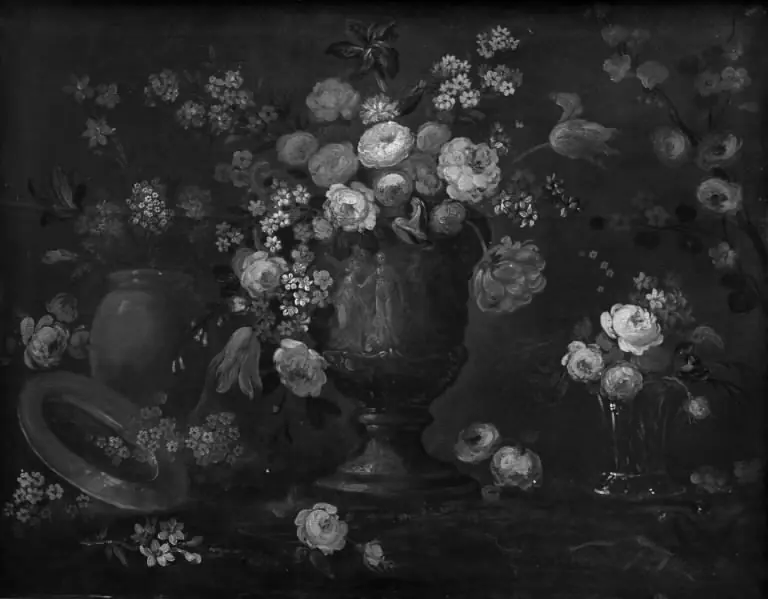 Flowers in a Stone Vase
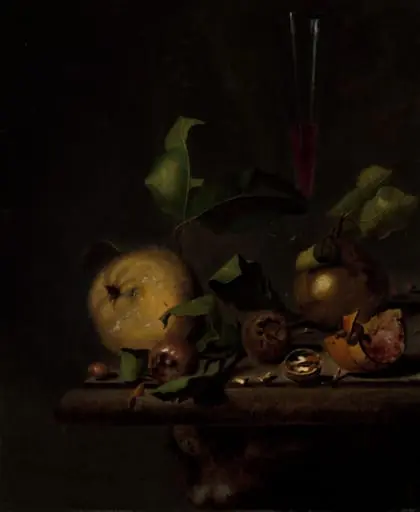 Still Life with Quinces, Medlars and a Glass
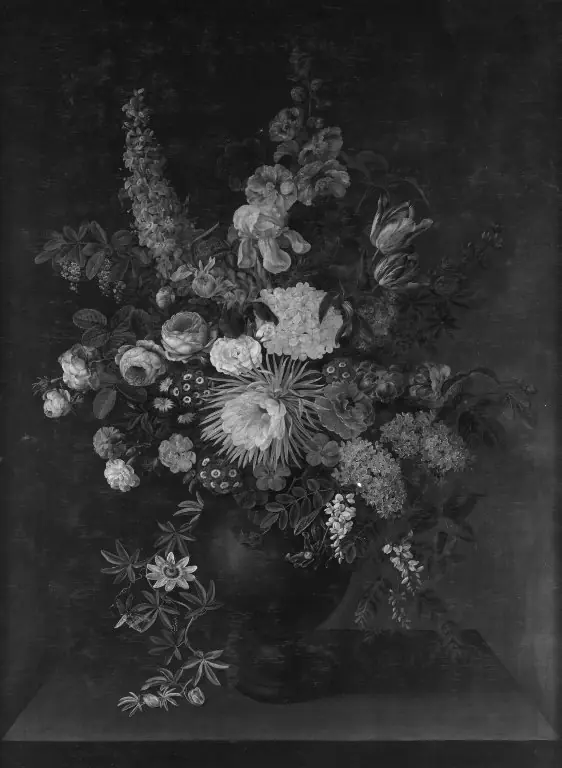 En vase med blomster
 Cana roșie
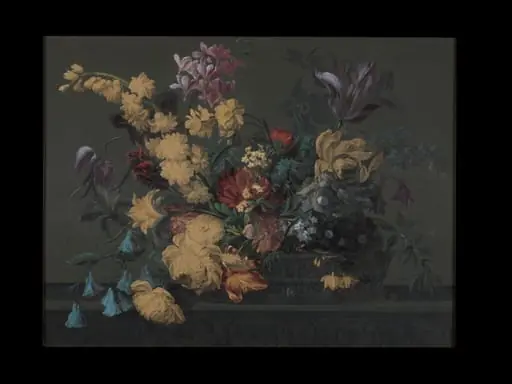 Spring flowers in a basket
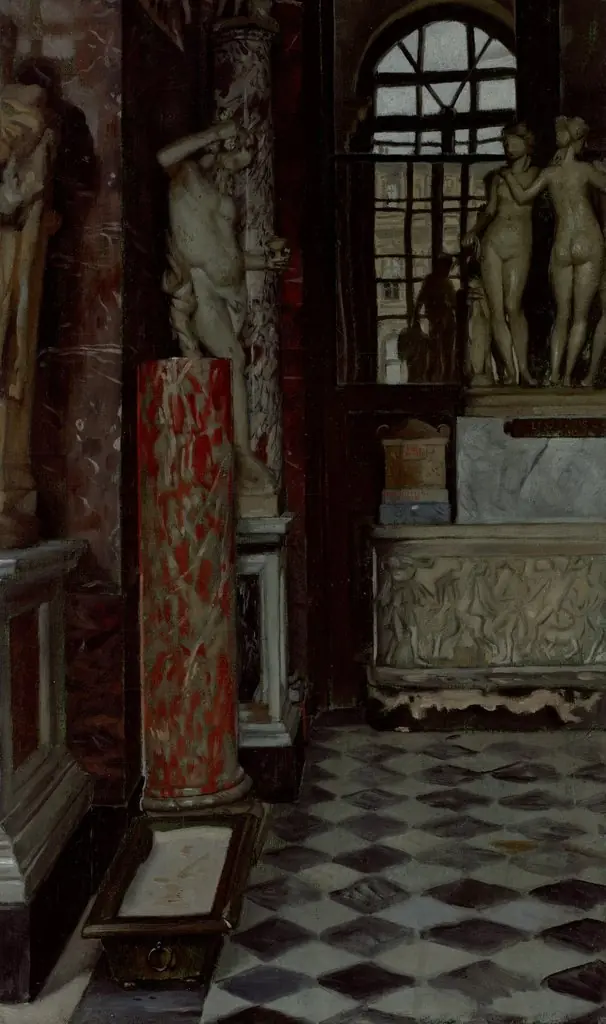 A View of a Room of Greek, Roman and Etruscan Antiquities (Salle no. 9) in the Louvre
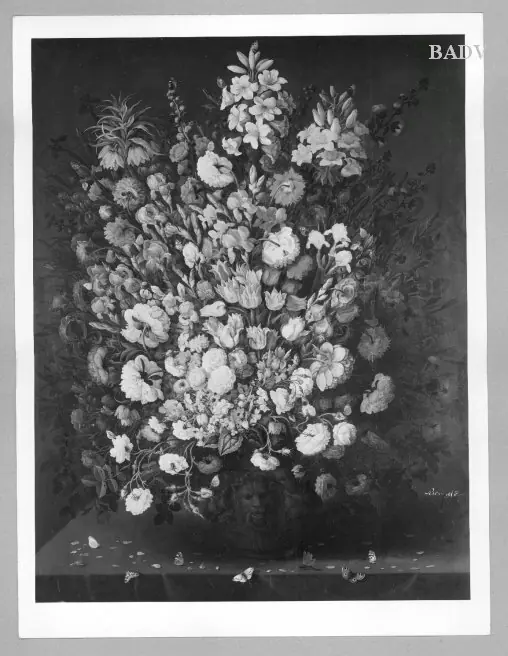 flowers
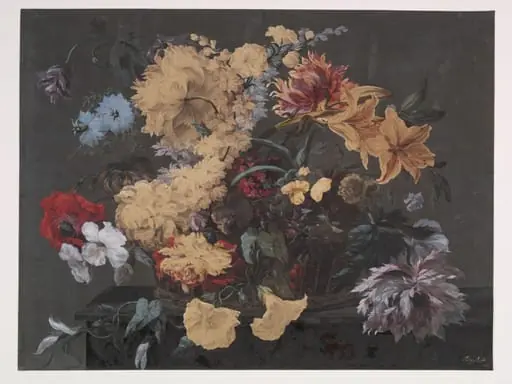 Flowers in a basket
 En kårde med laurbærkrans