Artwork
An Egyptian Fellah Woman with her Baby
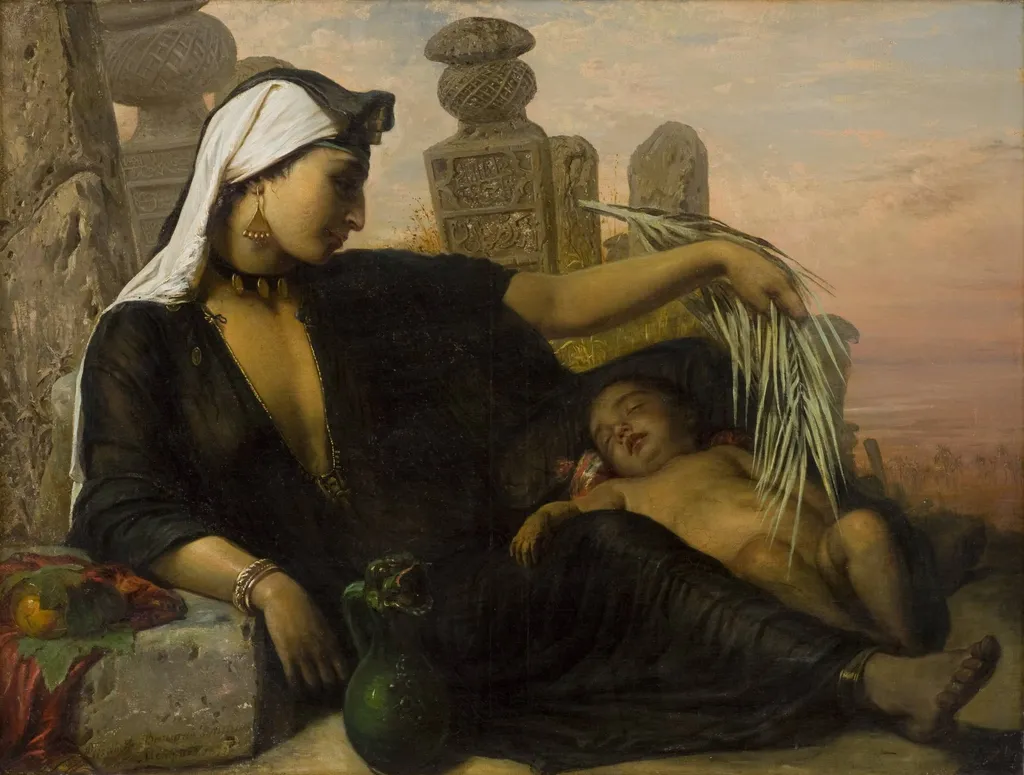
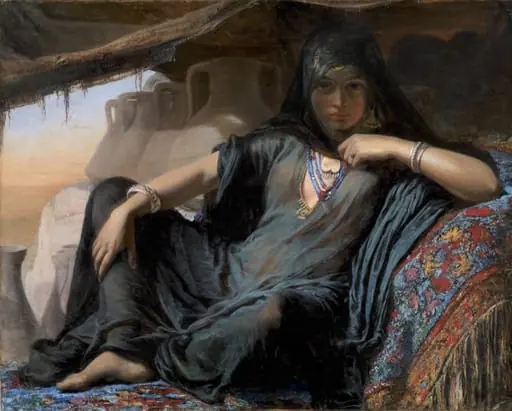
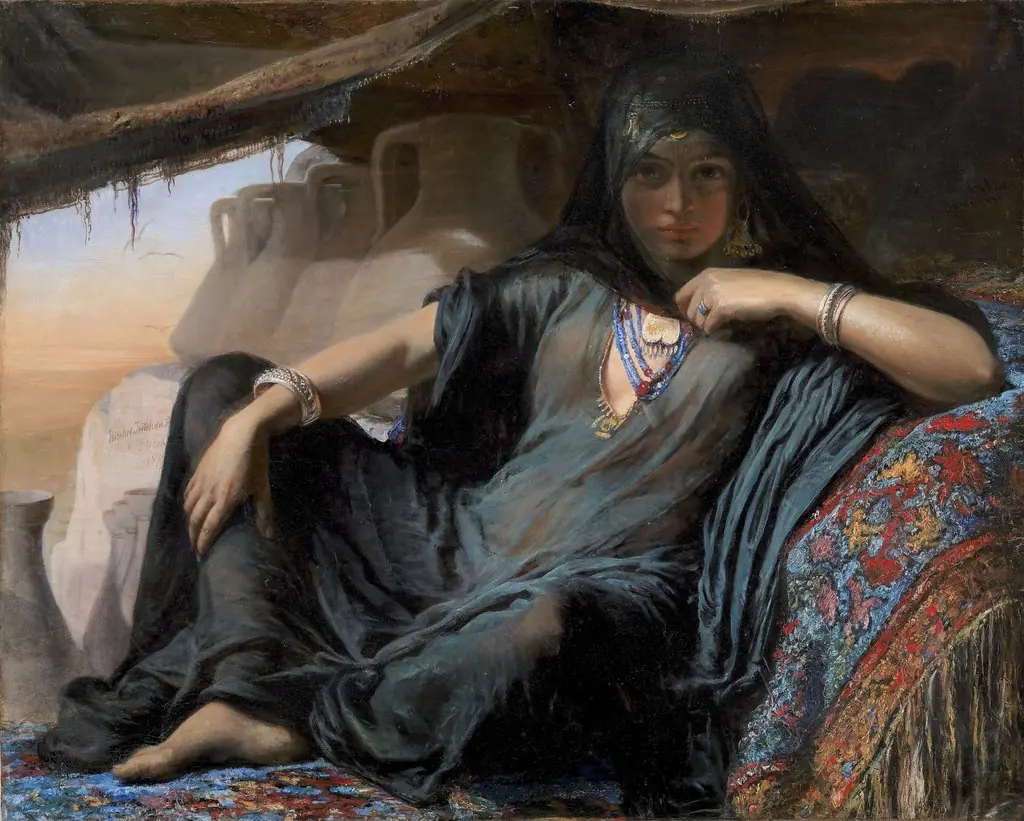
An Egyptian Fellah Woman with her Baby is a photography by the Impressionist artist Unknown. It dates from 1872 and is held in the collection of the Statens Museum for Kunst. Painted in 1872, this work depicts an Egyptian peasant woman seated outdoors with her infant.
About this work
Overview
The artist’s focus on ordinary domesticity distinguishes it from grand historical or mythological subjects common in contemporary European art.
Painted in 1872, this work depicts an Egyptian peasant woman seated outdoors with her infant. Executed in oil, it belongs to the collection of the Museum of Ethnography. The scene captures a quiet, unidealized moment of daily life, emphasizing stillness and care. The artist’s focus on ordinary domesticity distinguishes it from grand historical or mythological subjects common in contemporary European art.
Subject & Meaning
The woman, identified as a fellah, embodies rural labor and maternal endurance. Her fatigue is evident in her expression, yet her gentle touch on the baby conveys quiet devotion. The absence of narrative drama or symbolic embellishment grounds the image in realism. The basket and bottle suggest practicality, reinforcing the subject’s connection to everyday needs rather than ceremonial or exoticized roles.
Technique & Style
Thick, tactile brushwork defines the textures of her dress and the woven basket, lending physical presence to mundane objects. The background recedes with loose, muted strokes, creating depth without detail. The contrast between the richly rendered foreground and the hazy, indistinct pillars behind underscores the woman’s centrality. Light falls softly, avoiding dramatic contrast, enhancing the scene’s subdued, intimate tone.
History & Provenance
The painting entered the Museum of Ethnography’s collection shortly after its creation, likely acquired during a period of increased European interest in North African and Middle Eastern cultures. Its preservation reflects institutional efforts to document non-European daily life. No record of prior ownership or exhibition prior to its museum acquisition is documented.
Context
Created during the height of Orientalist painting, the work aligns with European artists’ fascination with the 'exotic' East. Yet it diverges from sensationalized depictions by focusing on quiet realism. The artist avoids romanticizing poverty or exoticizing the subject, instead presenting a restrained, observational portrait that resonates with emerging trends in naturalism.
Legacy
Though not widely exhibited beyond ethnographic circles, the painting contributes to a quieter strand of 19th-century visual anthropology. It stands as a counterpoint to more theatrical Orientalist works, offering a model of empathetic observation. Its preservation in a museum of ethnography signals its role in shaping early scholarly approaches to representing non-Western communities.
Artist & collection

 Domestic Scene
 Giacomo and Cardinal Marco, investing Andrea, Abbot of San Zeno, with his Benefice
 The Nymph of Fontainebleau
 Portrait of a Woman
 Madonna and Child with Saints in the Enclosed Garden
 Venus and Minerva
 Family Group of Four on Sofa
 Wall painting from Room H of the Villa of P. Fannius Synistor at Boscoreale