Artwork
At the Nile
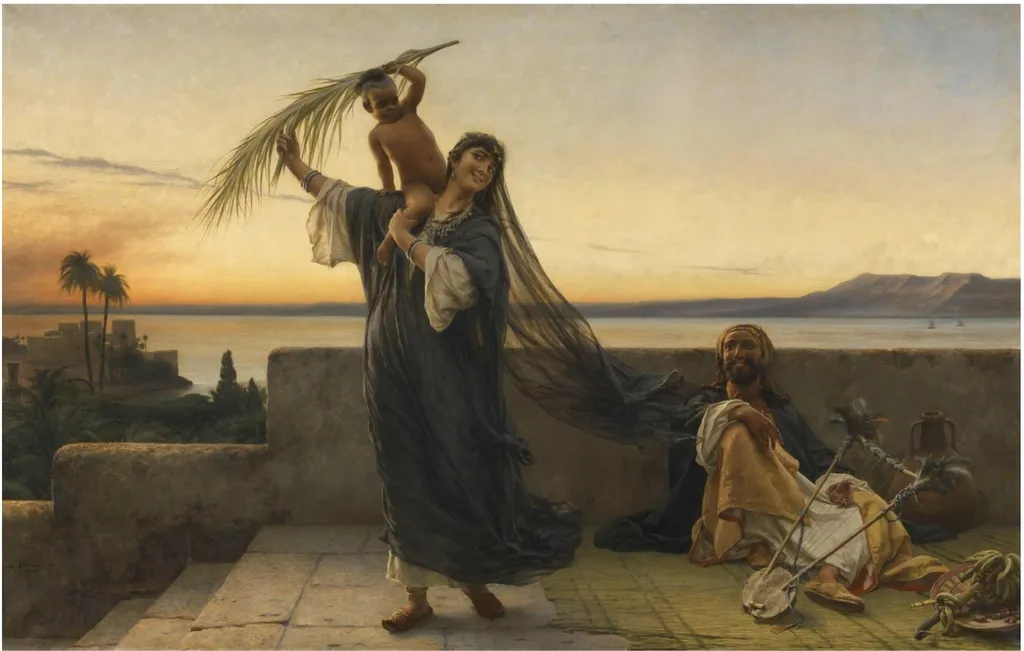
At the Nile is an oil painting by the Orientalist artist Karel Ooms. It dates from 1898 and is held in the collection of the Royal Museum of Fine Arts Antwerp.
About this work
Overview
The work belongs to the Orientalist tradition, which European artists used to interpret scenes from North Africa and the Middle East.
Karel Ooms, a Belgian artist active in the late 19th century, painted *At the Nile* in 1898 using oil on canvas. The work belongs to the Orientalist tradition, which European artists used to interpret scenes from North Africa and the Middle East. It is held in the collection of the Royal Museum of Fine Arts Antwerp, where it represents a broader fascination with Eastern landscapes and figures during the period.
Subject & Meaning
The painting portrays a woman in a dark, flowing garment, cradling a child and holding a palm frond, standing on a stone ledge beside water. A seated man in a yellow robe, staff in hand, observes from behind. The figures appear contemplative, their stillness enhanced by the quiet landscape. The imagery evokes a sense of quiet dignity, though it reflects 19th-century European ideals rather than documented local life.
Technique & Style
Ooms employed warm, golden tones to suggest the glow of dawn or dusk, casting soft light across the figures and water. The brushwork is smooth, with subtle transitions between shadow and highlight, creating a calm, atmospheric effect. While not overtly dramatic, the composition uses chiaroscuro to define form and depth, guiding the viewer’s eye toward the central figures against the hazy horizon.
History & Provenance
Completed in 1898, *At the Nile* entered the Royal Museum of Fine Arts Antwerp’s collection shortly after its creation. Ooms, known for his historical and genre scenes, produced several Orientalist works during this phase of his career. The painting remained in institutional hands, with no record of private ownership or public exhibition beyond museum displays in Belgium.
Context
The painting emerged during a period when European artists frequently depicted the Middle East and North Africa through a romanticized lens. These works often prioritized aesthetic harmony and exoticism over ethnographic accuracy. Ooms’s depiction aligns with this trend, offering a serene, idealized vision of a foreign landscape shaped more by imagination than firsthand observation.
Legacy
Though not widely reproduced or studied today, *At the Nile* remains a representative example of late 19th-century Belgian Orientalism. It contributes to the understanding of how European artists interpreted non-European cultures through stylized, emotionally muted compositions. Its presence in a major Belgian museum underscores its role in the national collection of colonial-era visual narratives.
Artist & collection
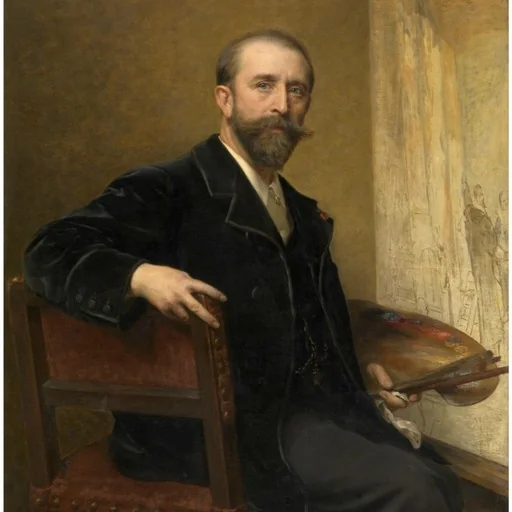
Artist
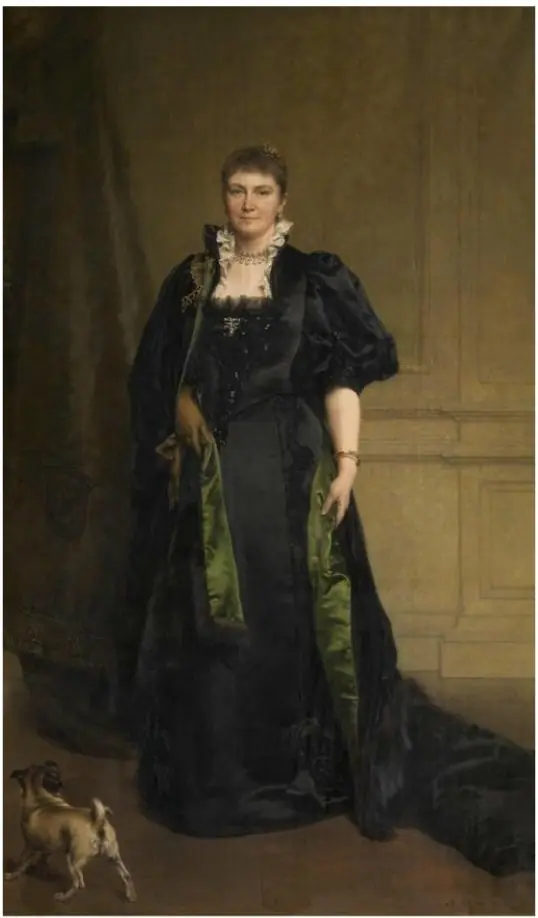
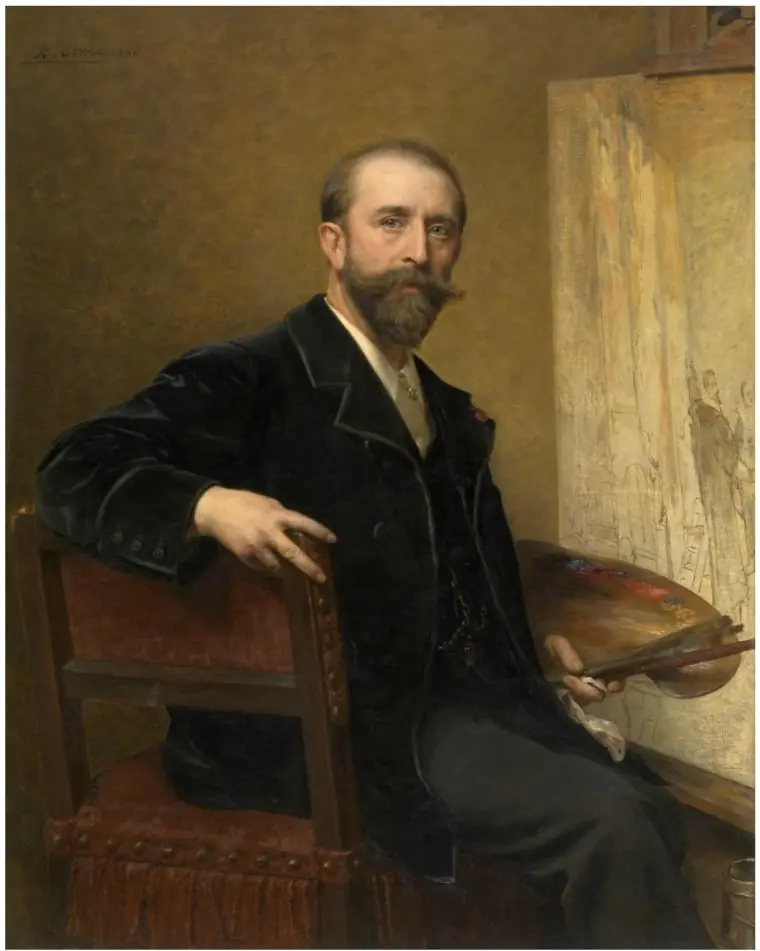
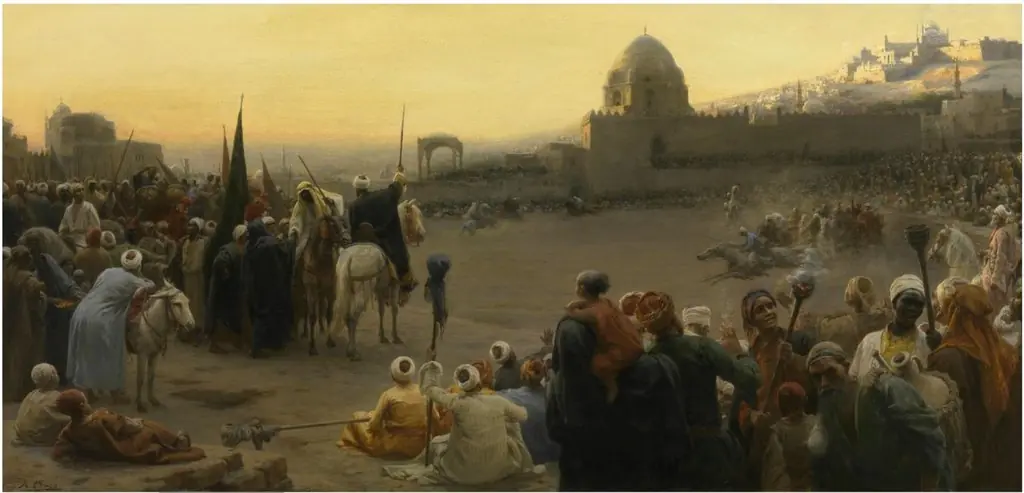
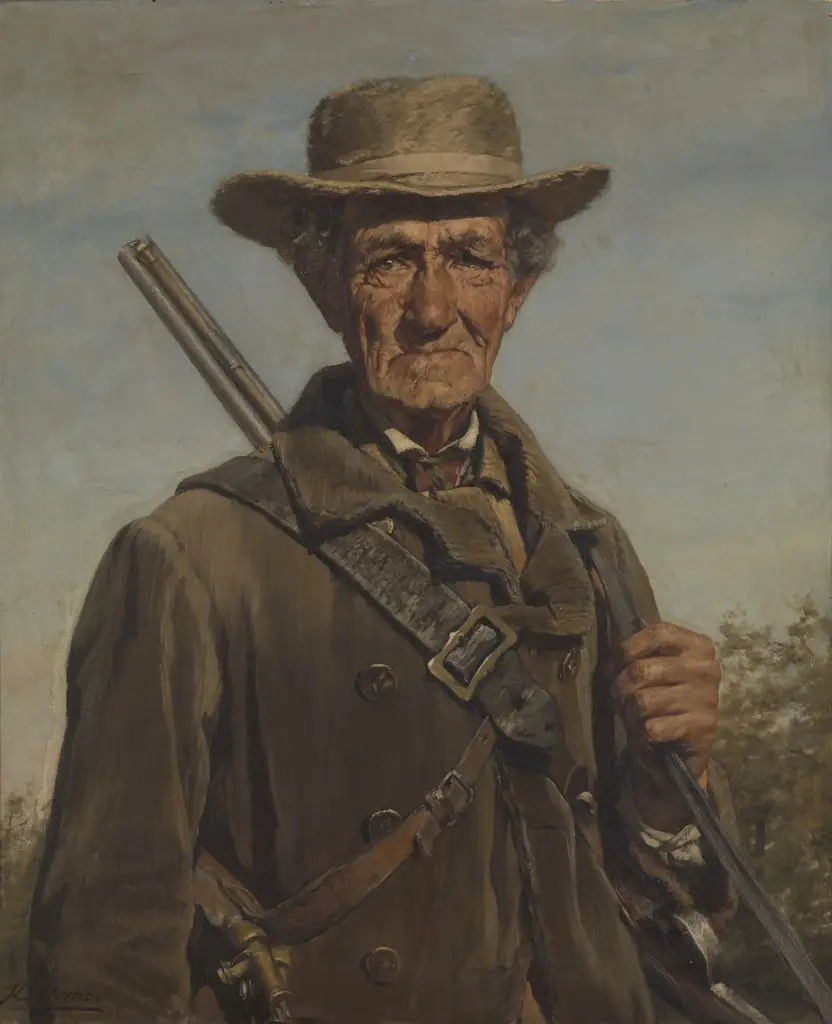
Karel Ooms (27 January 1845 — 18 March 1900) was a Belgian painter of portraits, genre paintings and history paintings. He was also known for his Orientalist scenes and Oriental landscapes.

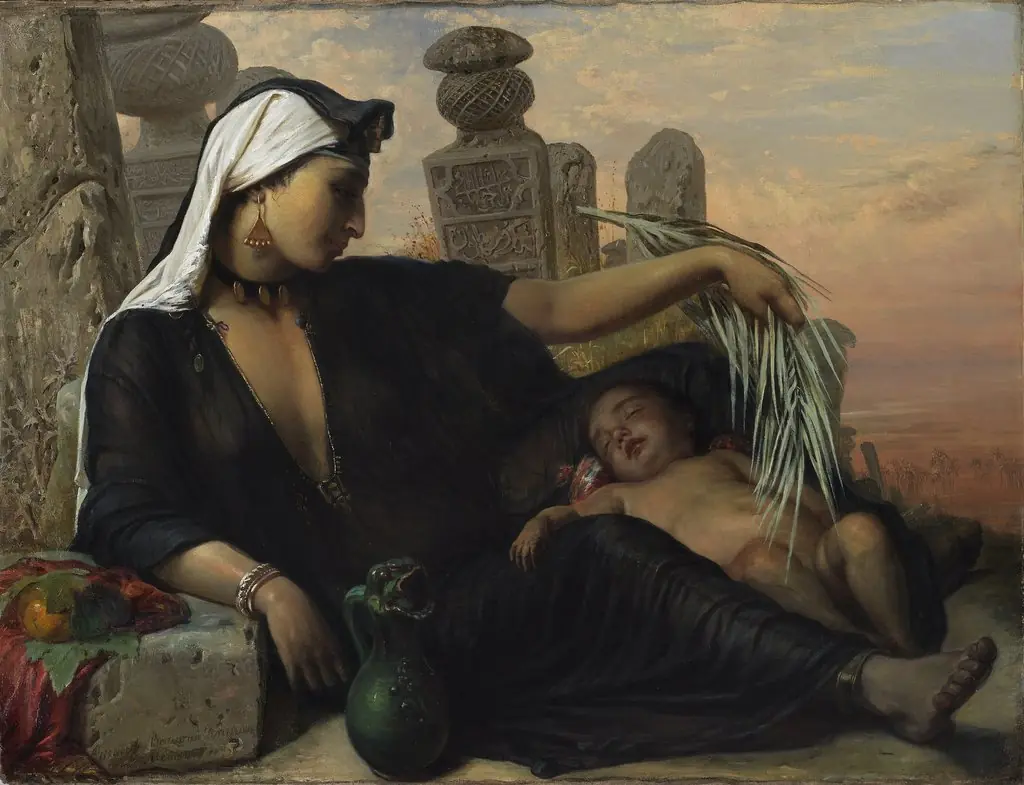 An Egyptian Fellah Woman with her Baby
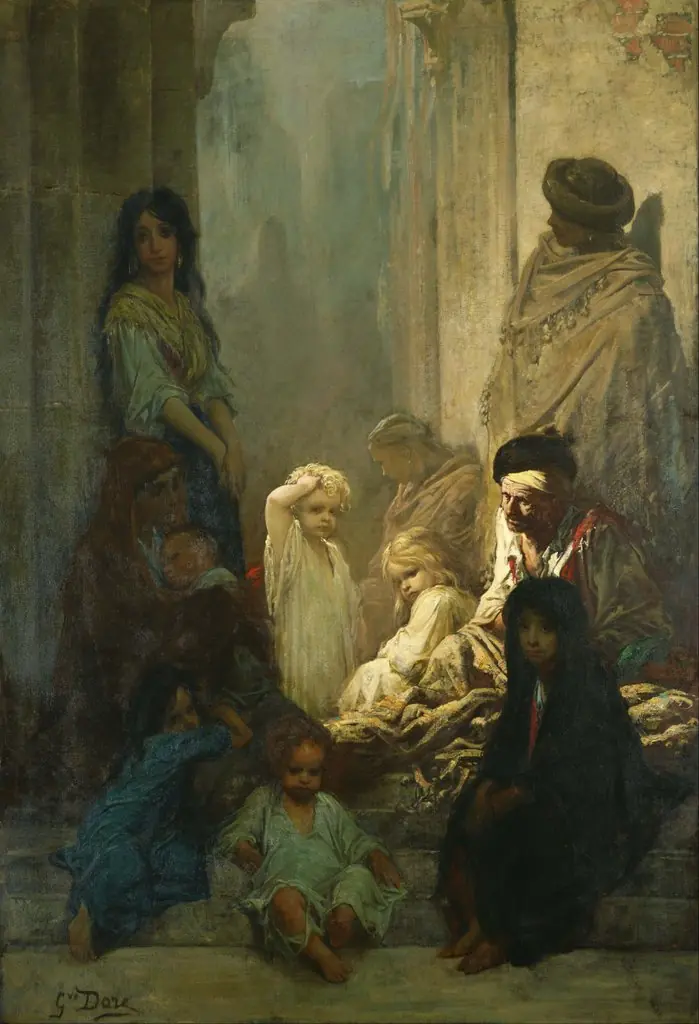 La Siesta, Memory of Spain
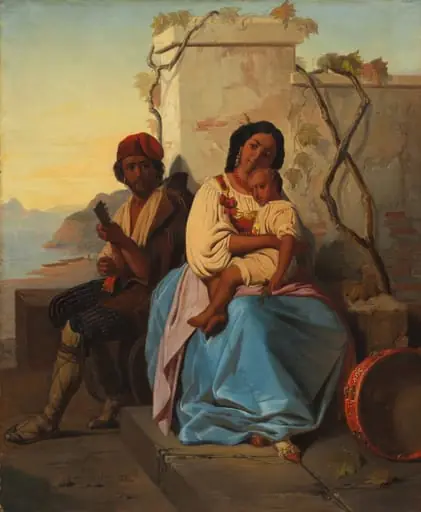 Italian Scene
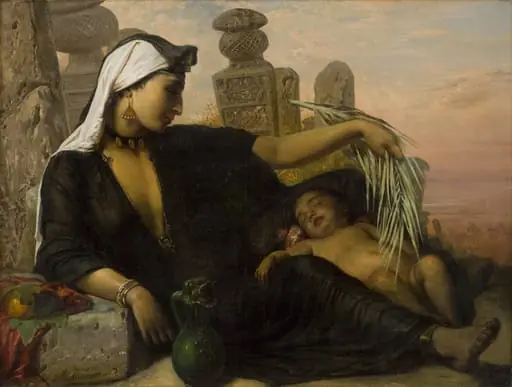 An Egyptian Fellah Woman with her Baby
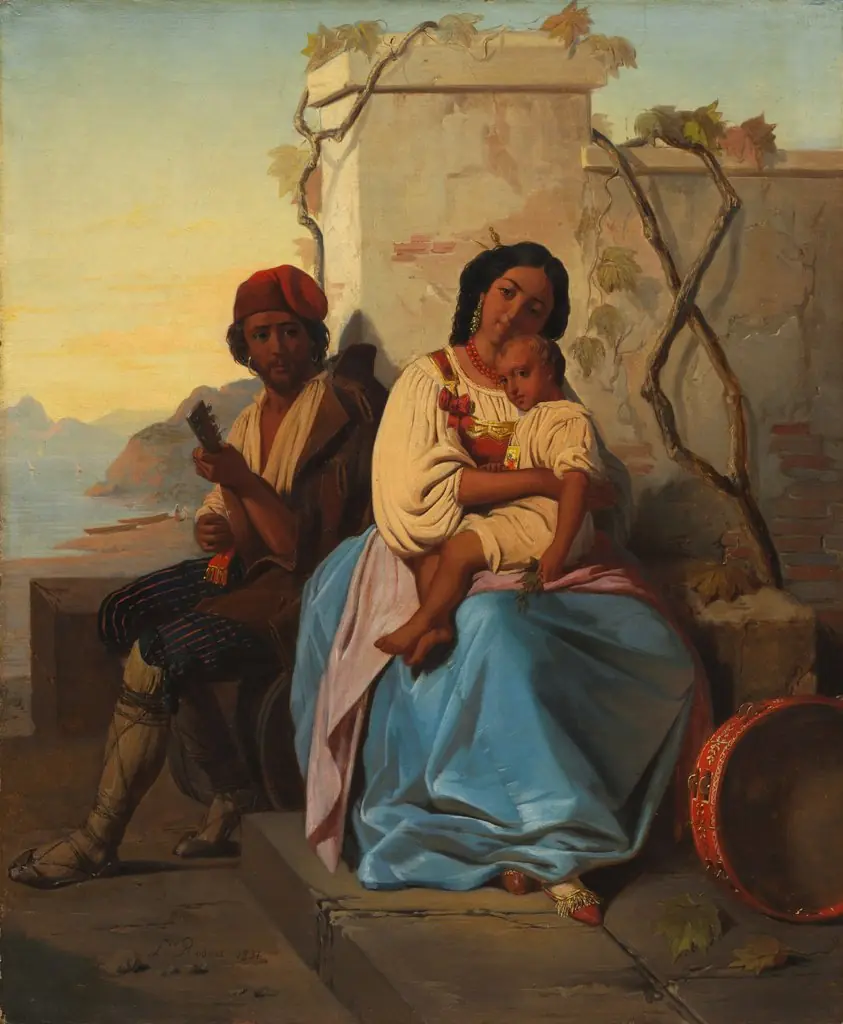 Italian Scene
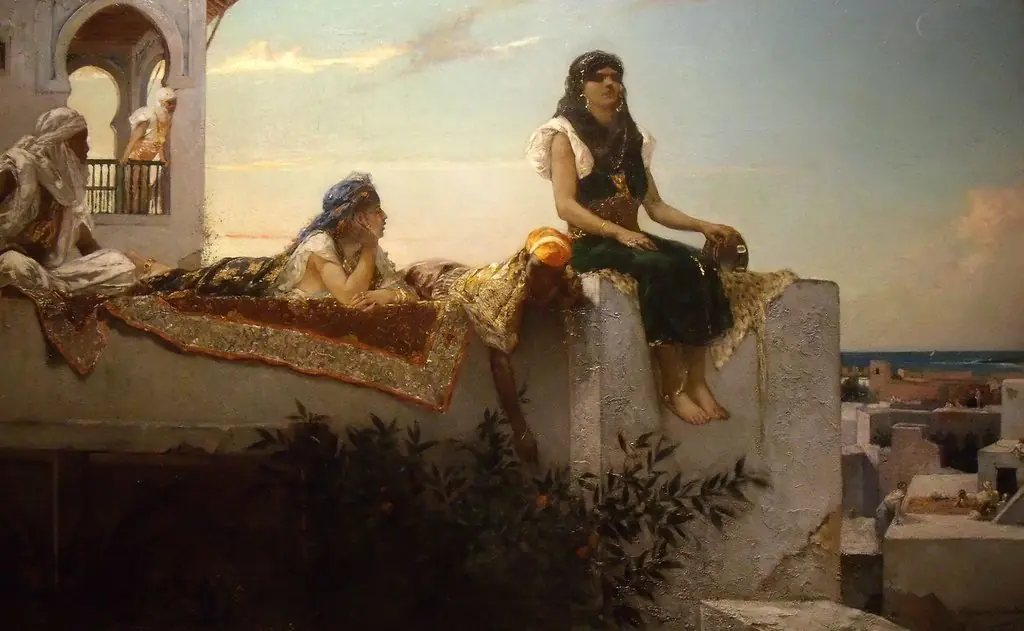 Evening on Terraces (Morocco)
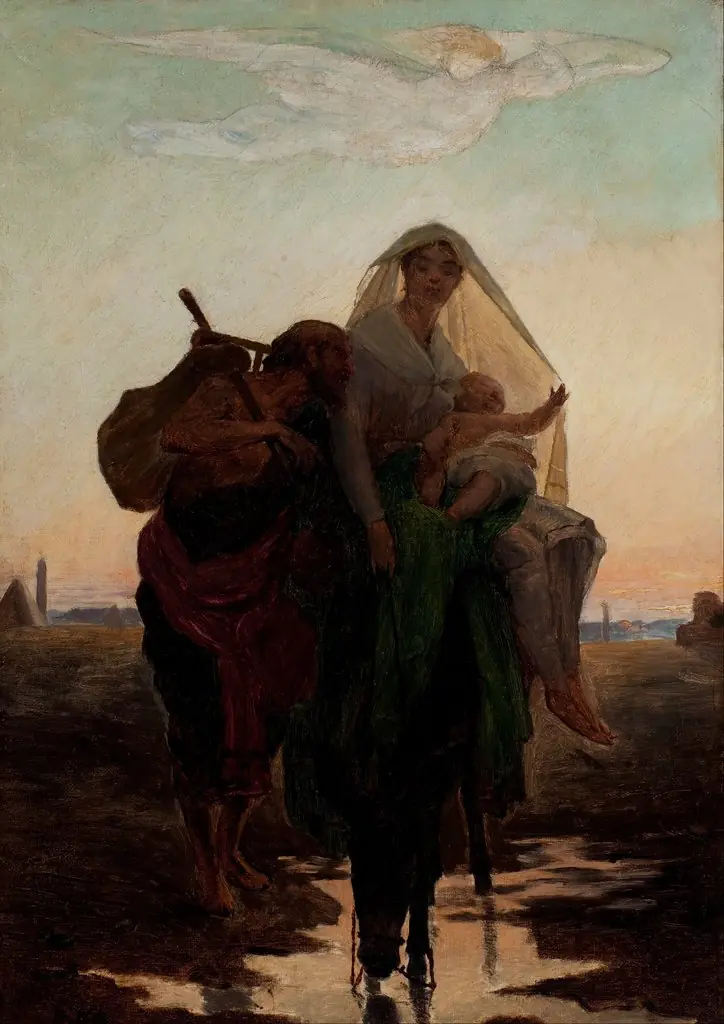 Study for "Flight of the Holy Family to Egypt"
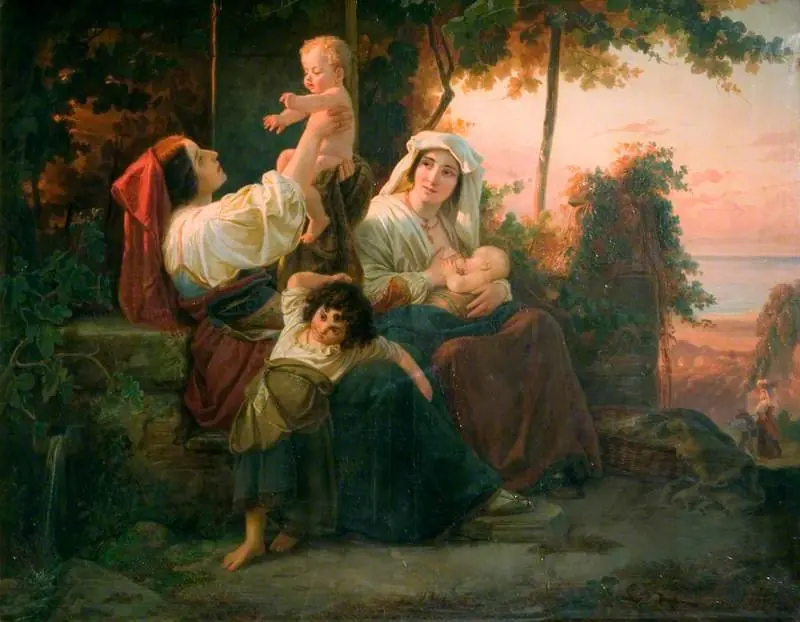 Italian Women in a Vineyard near Rome
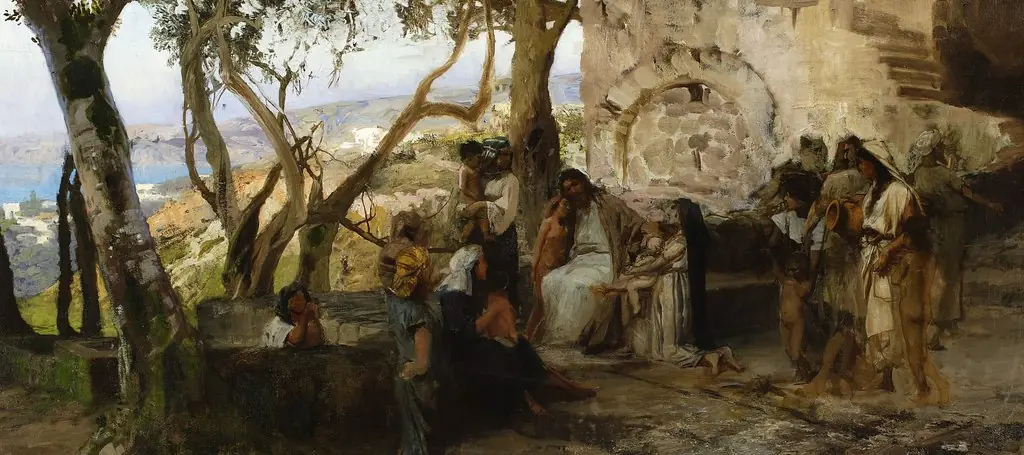 Christ among children
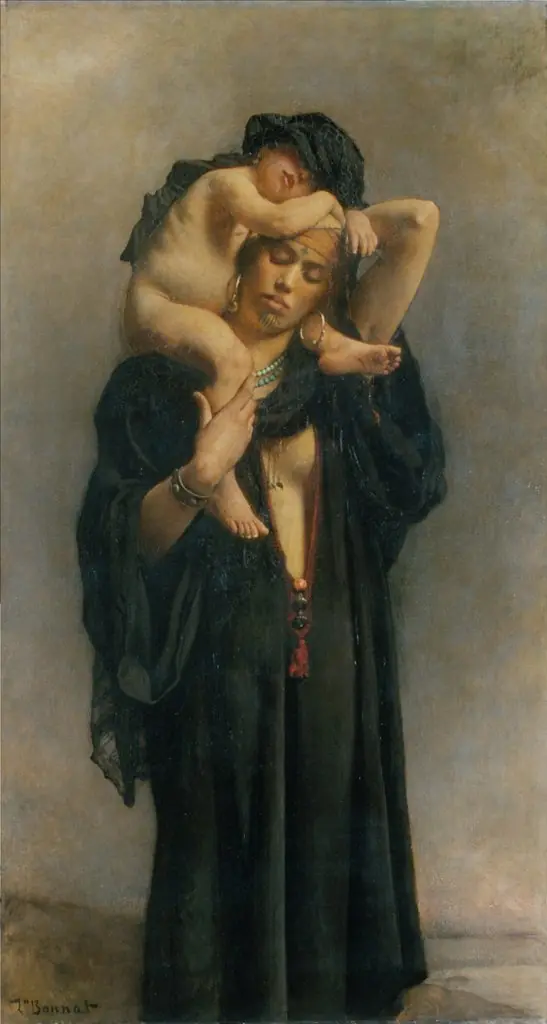 An Egyptian Peasant Woman and Her Child