Artwork
A Crew Rescued
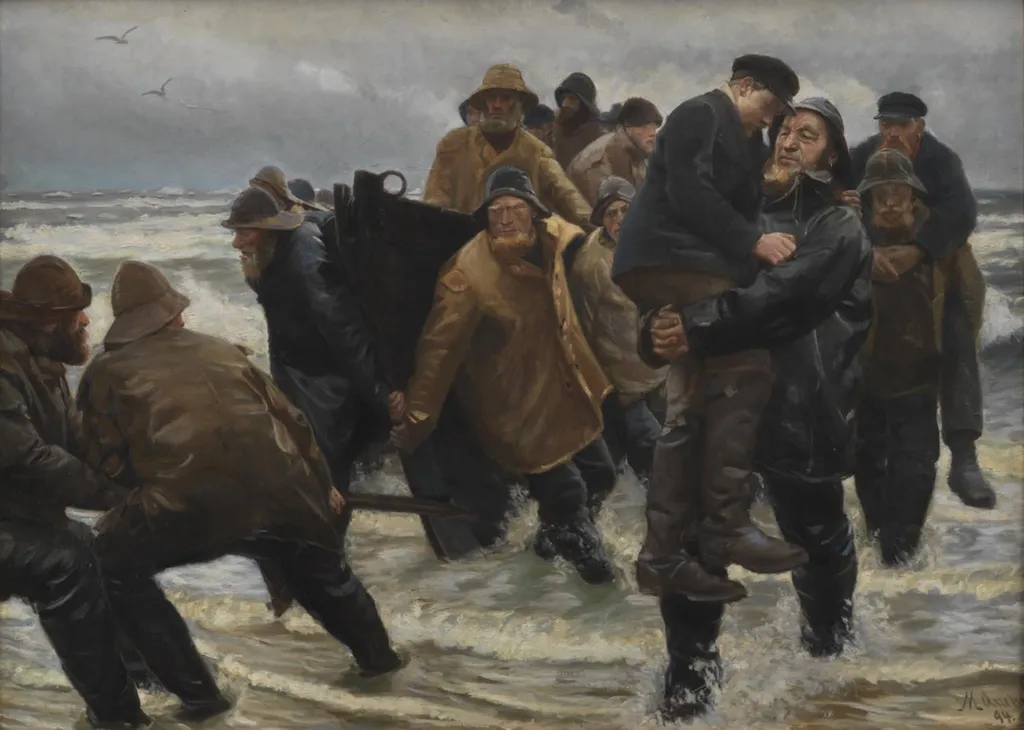
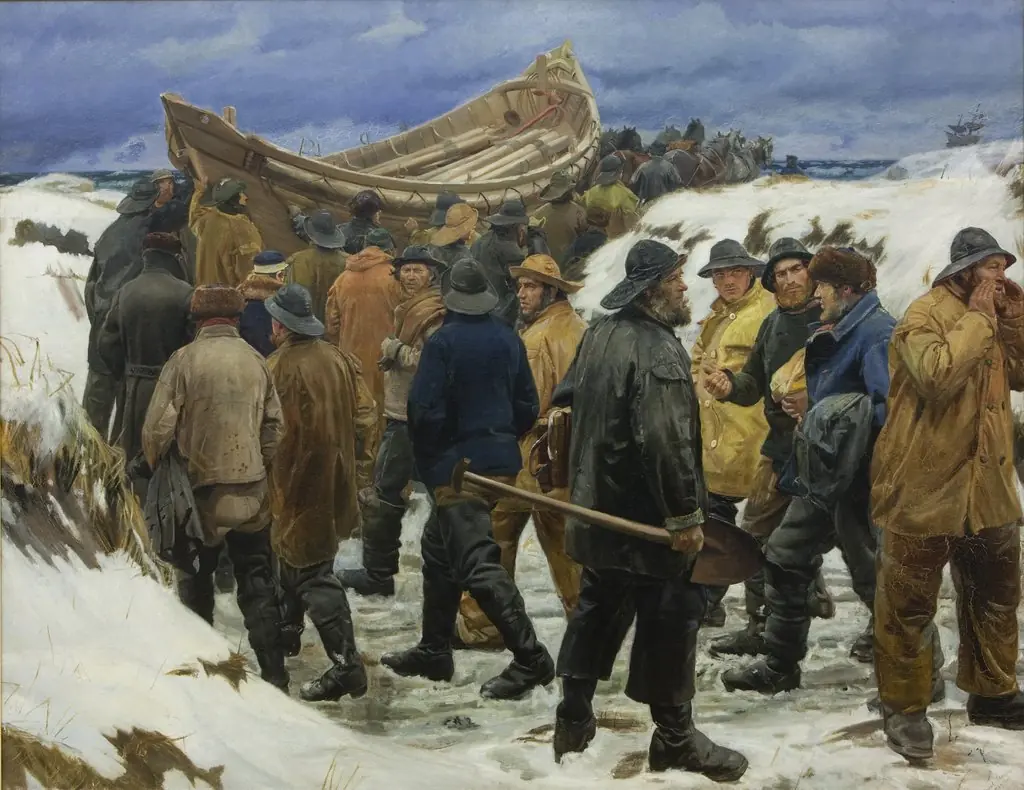
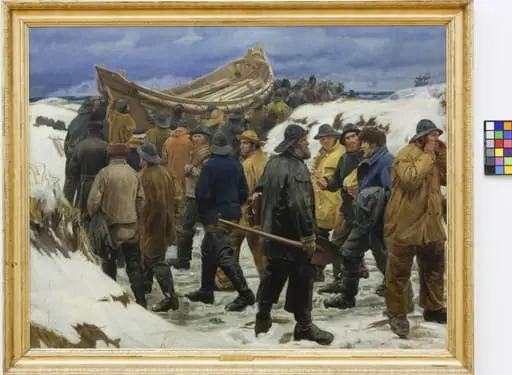
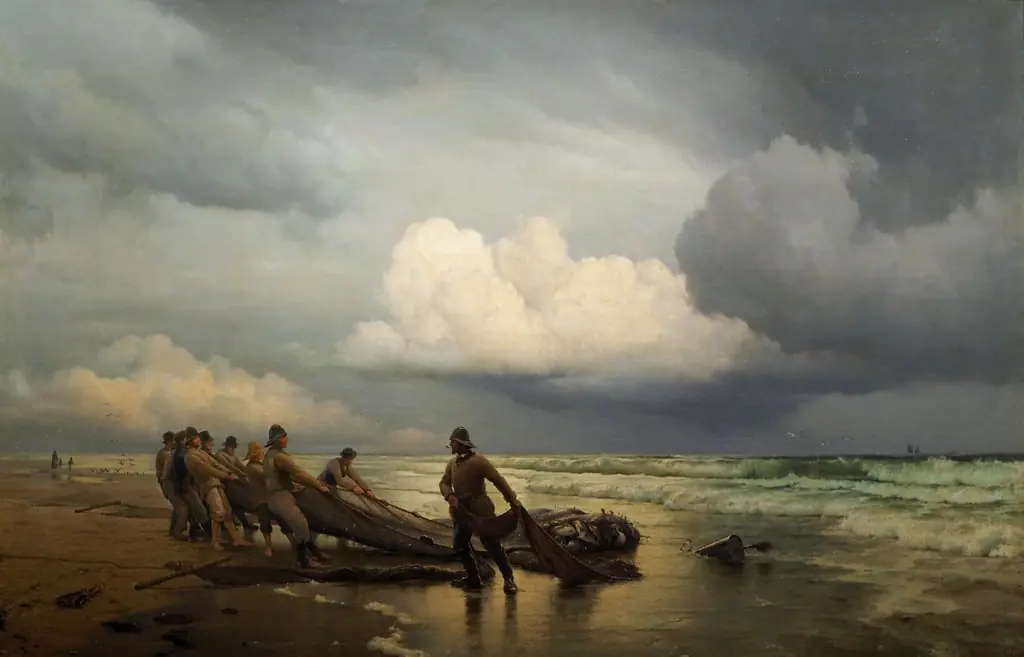
A Crew Rescued is a photography by the Impressionist artist Unknown. It dates from 1894 and is held in the collection of the Statens Museum for Kunst. Created in 1894 by 250_person, this image depicts a group of men navigating shallow, turbulent water near a stormy coastline.
About this work
Overview
The figures, dressed in thick clothing and bearing tools, move with weary determination through the surf, suggesting a scene drawn from maritime work.
Created in 1894 by 250_person, this image depicts a group of men navigating shallow, turbulent water near a stormy coastline. The work is part of the Museum of Ethnography’s collection and captures a moment of collective labor under harsh conditions. The figures, dressed in thick clothing and bearing tools, move with weary determination through the surf, suggesting a scene drawn from maritime work.
Subject & Meaning
The painting portrays a crew engaged in post-storm recovery, likely fishermen or coastal laborers returning from a dangerous day at sea. Their focused expressions and coordinated movement emphasize resilience and mutual reliance. The absence of dramatic heroism underscores the quiet endurance of working-class life, presenting labor not as spectacle but as an unvarnished daily reality.
Technique & Style
Rendered with muted tones and textured brushwork, the image favors naturalistic detail over idealization. The dark, overcast sky and choppy water are rendered with restrained contrast, enhancing the sense of chill and fatigue. Figures are grouped in loose, rhythmic clusters, their postures and clothing rendered with attention to weight and dampness, reinforcing the physical toll of their environment.
History & Provenance
The work entered the Museum of Ethnography’s holdings shortly after its creation, likely acquired as part of a broader effort to document coastal labor practices. Its preservation reflects early institutional interest in ethnographic representation of everyday life, though little is documented about its exhibition history or the artist’s intentions beyond its visual record.
Context
Produced during the late 19th century, the image aligns with Realist traditions that turned attention to laboring communities often overlooked in academic art. Coastal regions across Europe saw increased documentation of maritime livelihoods amid industrialization, and this work contributes to that visual archive, capturing the rhythms of subsistence work before modern safety or technology altered such scenes.
Legacy
Though not widely reproduced, the painting remains a quiet testament to the dignity of collective labor in harsh environments. It continues to serve as a reference for studies of working-class representation in visual culture, offering a grounded alternative to romanticized depictions of the sea. Its enduring value lies in its unembellished observation of human endurance.
Artist & collection

 Domestic Scene
 Giacomo and Cardinal Marco, investing Andrea, Abbot of San Zeno, with his Benefice
 The Nymph of Fontainebleau
 Portrait of a Woman
 Madonna and Child with Saints in the Enclosed Garden
 Venus and Minerva
 Family Group of Four on Sofa
 Wall painting from Room H of the Villa of P. Fannius Synistor at Boscoreale