Artwork
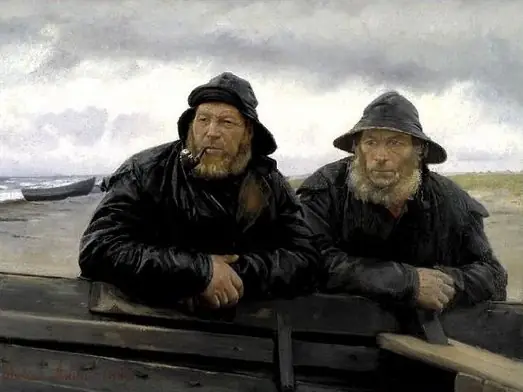
Two Fishermen beside a Boat
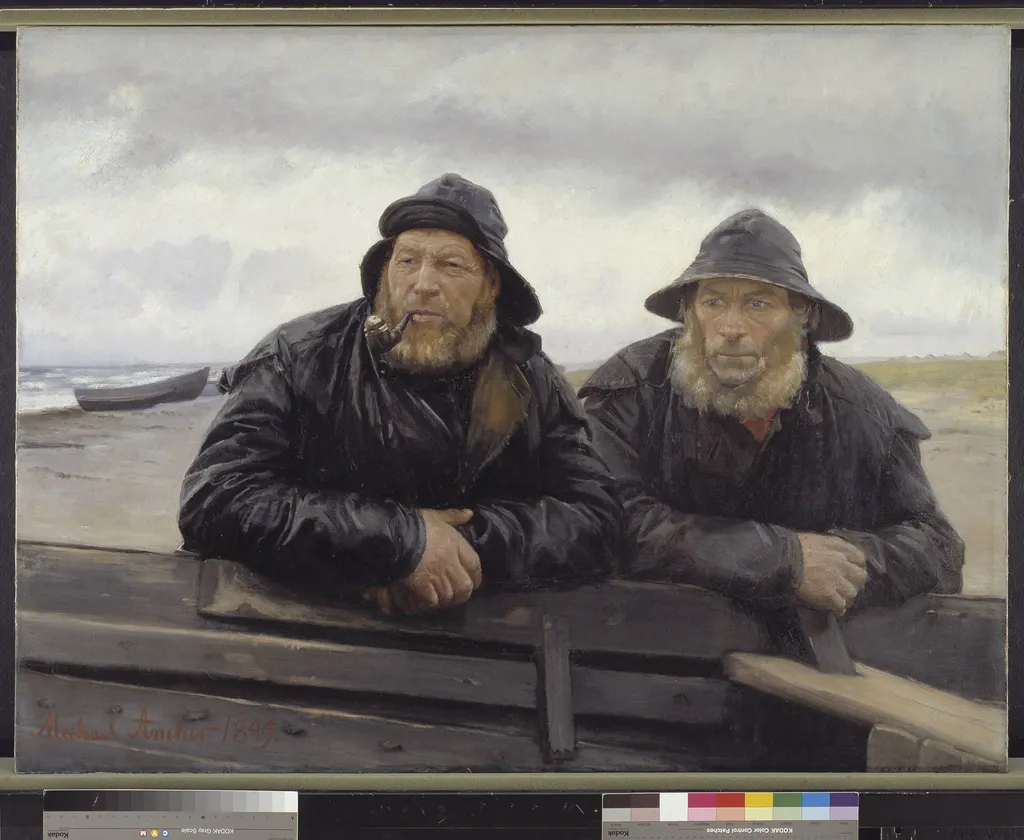
Two Fishermen beside a Boat is a photography by the Impressionist artist Unknown. It dates from 1889 and is held in the collection of the Statens Museum for Kunst. Created in 1889 by 250_person, this painting portrays two fishermen beside a wooden vessel on a coastal shore.
About this work
Overview
Created in 1889 by 250_person, this painting portrays two fishermen beside a wooden vessel on a coastal shore. It is part of the collection at the Museum of Ethnography. The scene is quiet and unadorned, emphasizing the physical presence of the figures and their environment. The composition avoids dramatic action, instead focusing on stillness and endurance.
Subject & Meaning
The two men, their faces marked by exposure to the elements, represent the quiet labor of coastal communities. Their postures suggest fatigue or respite, not celebration. The pipe held by one figure hints at a moment of pause amid routine work. The painting does not idealize their lives but presents them with unembellished dignity, reflecting the rhythms of subsistence fishing.
Technique & Style
The artist employs a restrained palette of grays, browns, and muted blues to evoke the overcast coastal atmosphere. Brushwork is deliberate, emphasizing the coarse textures of woolen garments and weathered timber. Light is diffused, avoiding sharp contrasts, which enhances the painting’s somber realism. Details are rendered with attention to materiality rather than narrative drama.
History & Provenance
The work entered the Museum of Ethnography’s collection in the early 20th century, likely through acquisition or donation tied to regional cultural documentation efforts. Its provenance before that is not well recorded. It has remained in institutional care since, with no known public exhibitions prior to the 1950s.
Context
Painted during a period when European artists increasingly turned to rural and working-class subjects, this piece aligns with broader trends in social realism. Coastal communities in northern Europe were being documented as industrialization reshaped traditional livelihoods. The painting reflects an interest in preserving visual records of laborers whose ways of life were changing rapidly.
Legacy
Though not widely reproduced, the painting is cited in scholarly studies of regional realism in late 19th-century art. It contributes to a body of work that values ordinary lives without sentimentality. Its preservation in an ethnographic museum underscores its role as a cultural artifact, valued for its documentation of material and social conditions rather than aesthetic innovation.
Artist & collection

 Domestic Scene
 Giacomo and Cardinal Marco, investing Andrea, Abbot of San Zeno, with his Benefice
 The Nymph of Fontainebleau
 Portrait of a Woman
 Madonna and Child with Saints in the Enclosed Garden
 Venus and Minerva
 Family Group of Four on Sofa
 Wall painting from Room H of the Villa of P. Fannius Synistor at Boscoreale
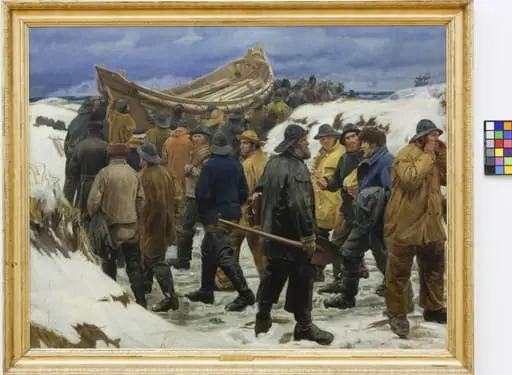 The Lifeboat is Taken through the Dunes
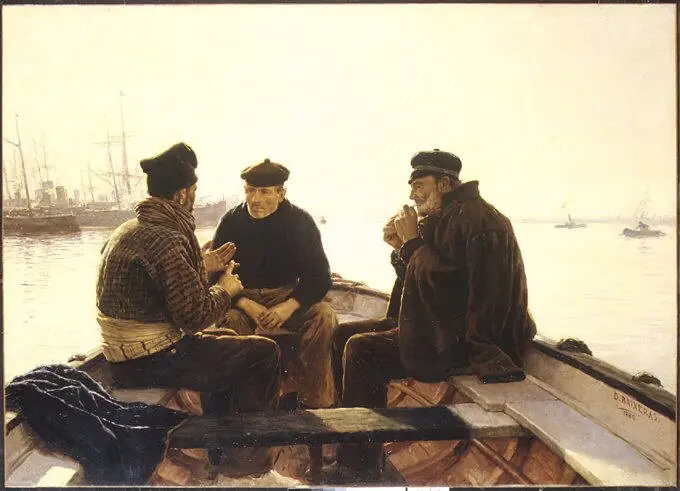 Boatmen of Barcelona
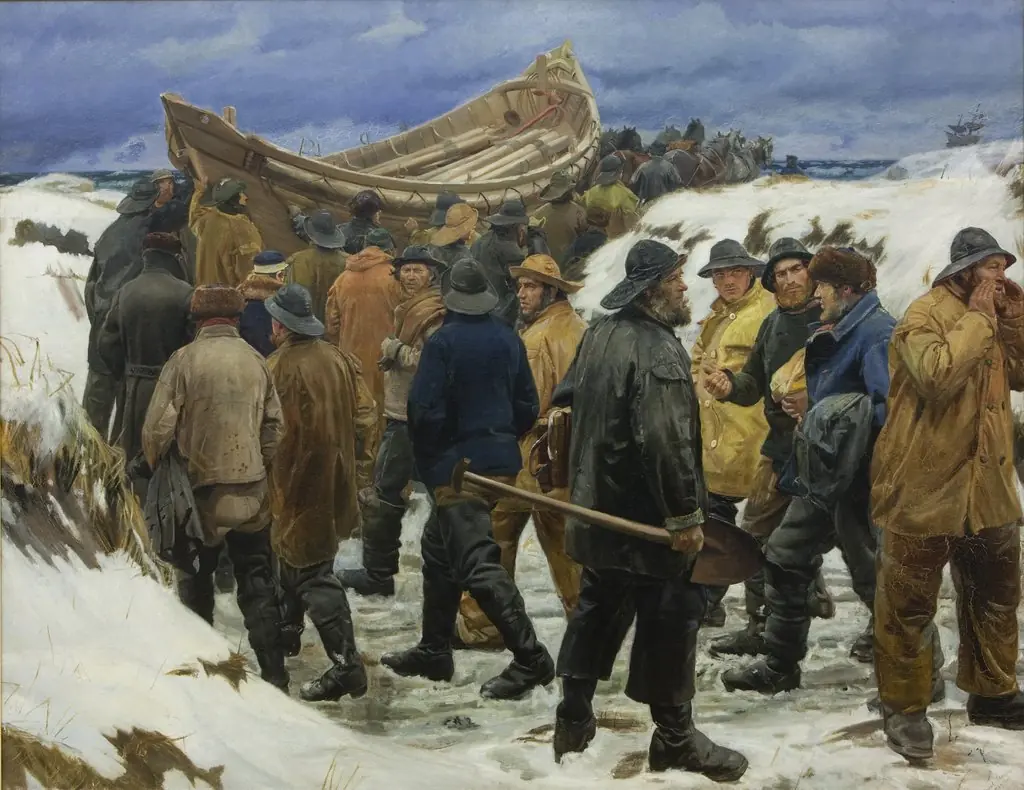 The Lifeboat is Taken through the Dunes
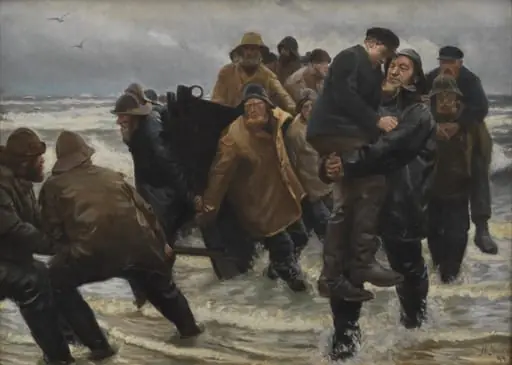 A Crew Rescued
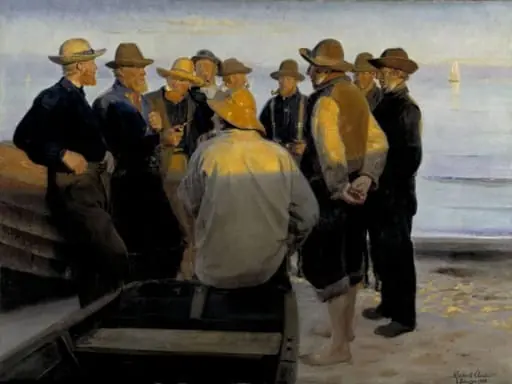 Fishermen by the Sea on a Summer's Evening
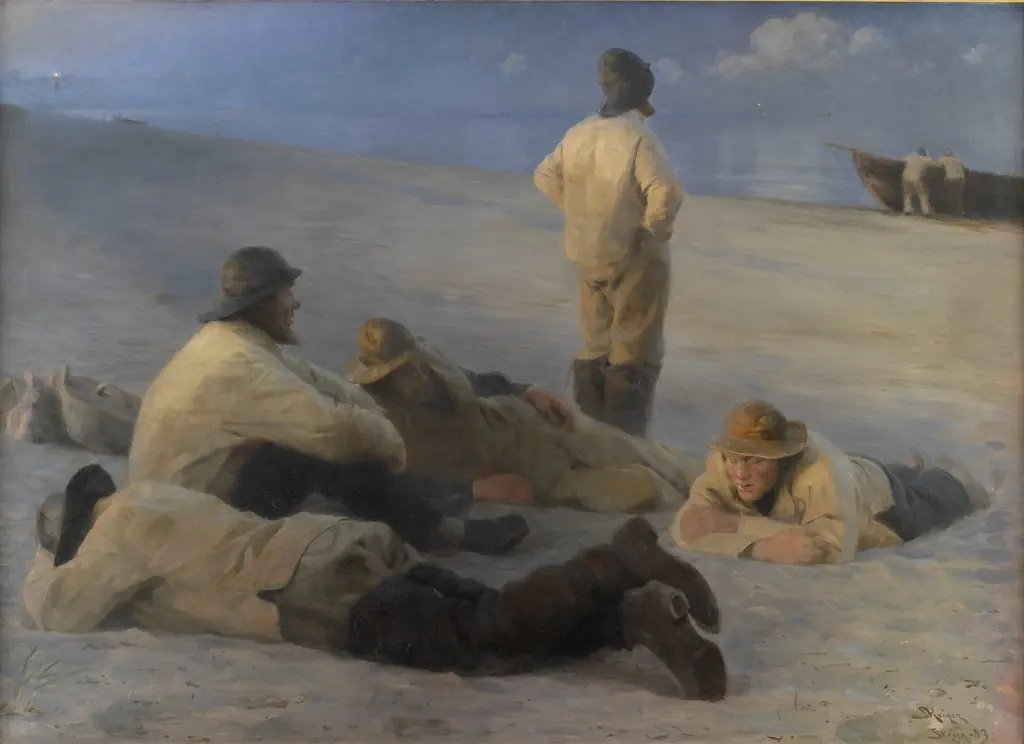 Fishermen at Skagen Beach
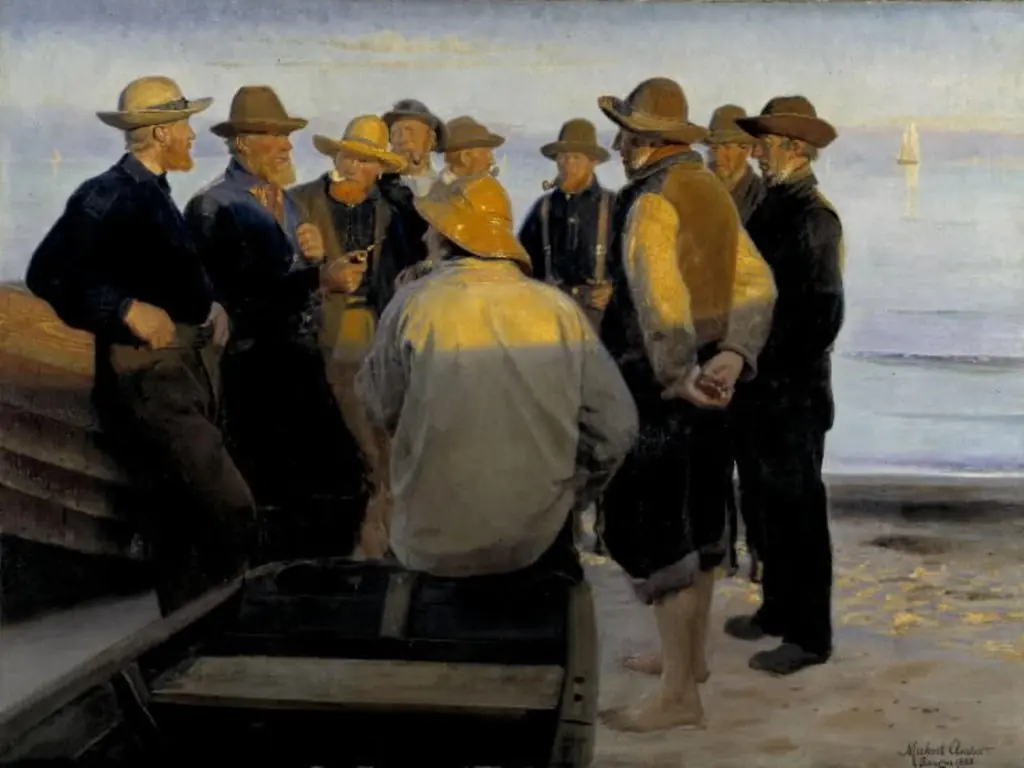 Fishermen by the Sea on a Summer's Evening
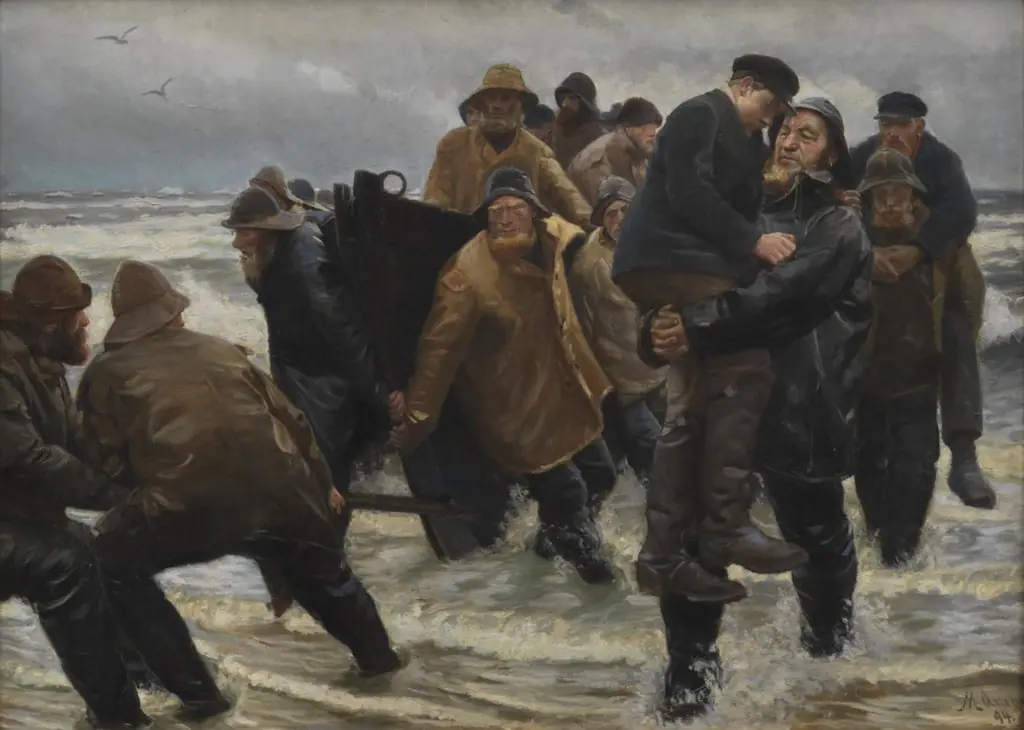 A Crew Rescued
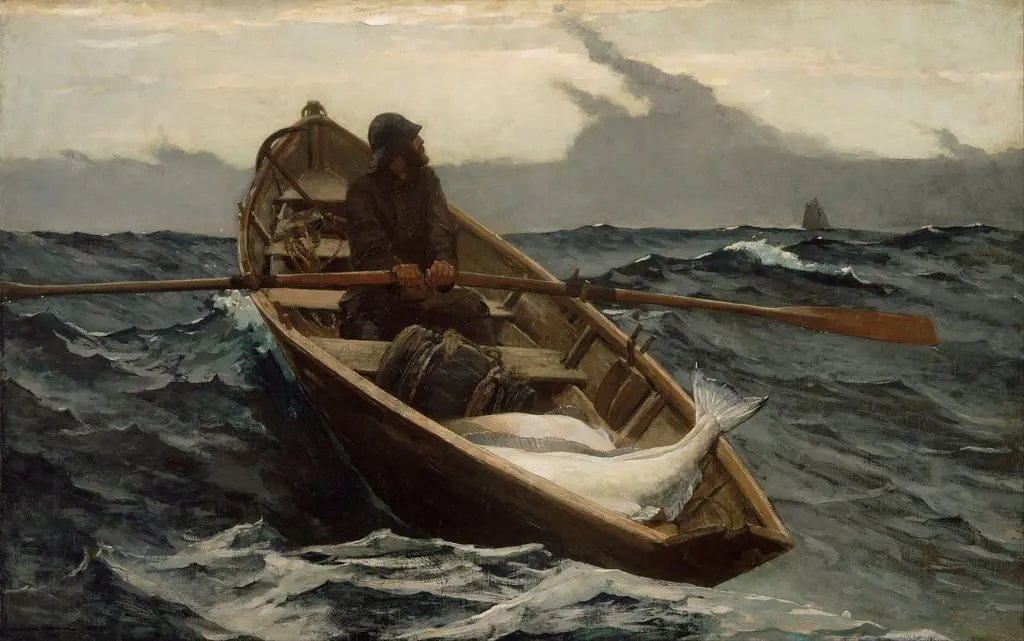 The Fog Warning
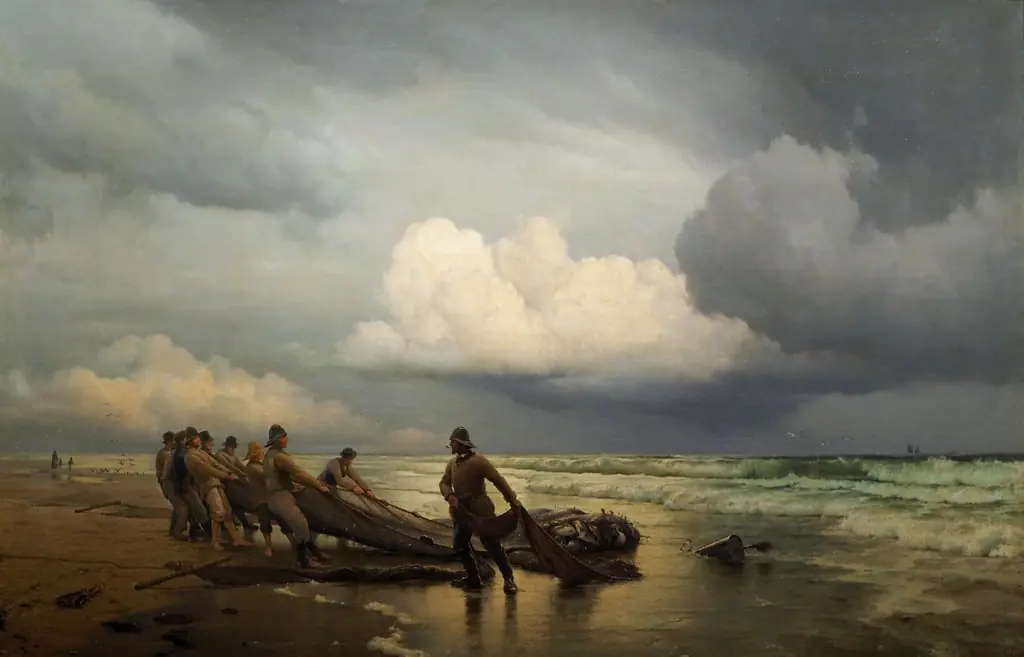 Fiskere trækker våd på Skagen Nordstrand
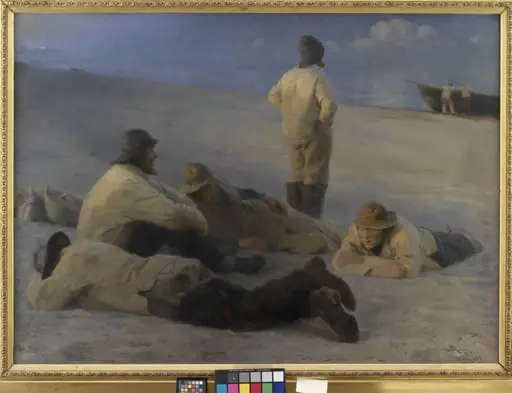 Fishermen at Skagen Beach
 Two Fishermen beside a Boat