Artwork
A Painter's Studio
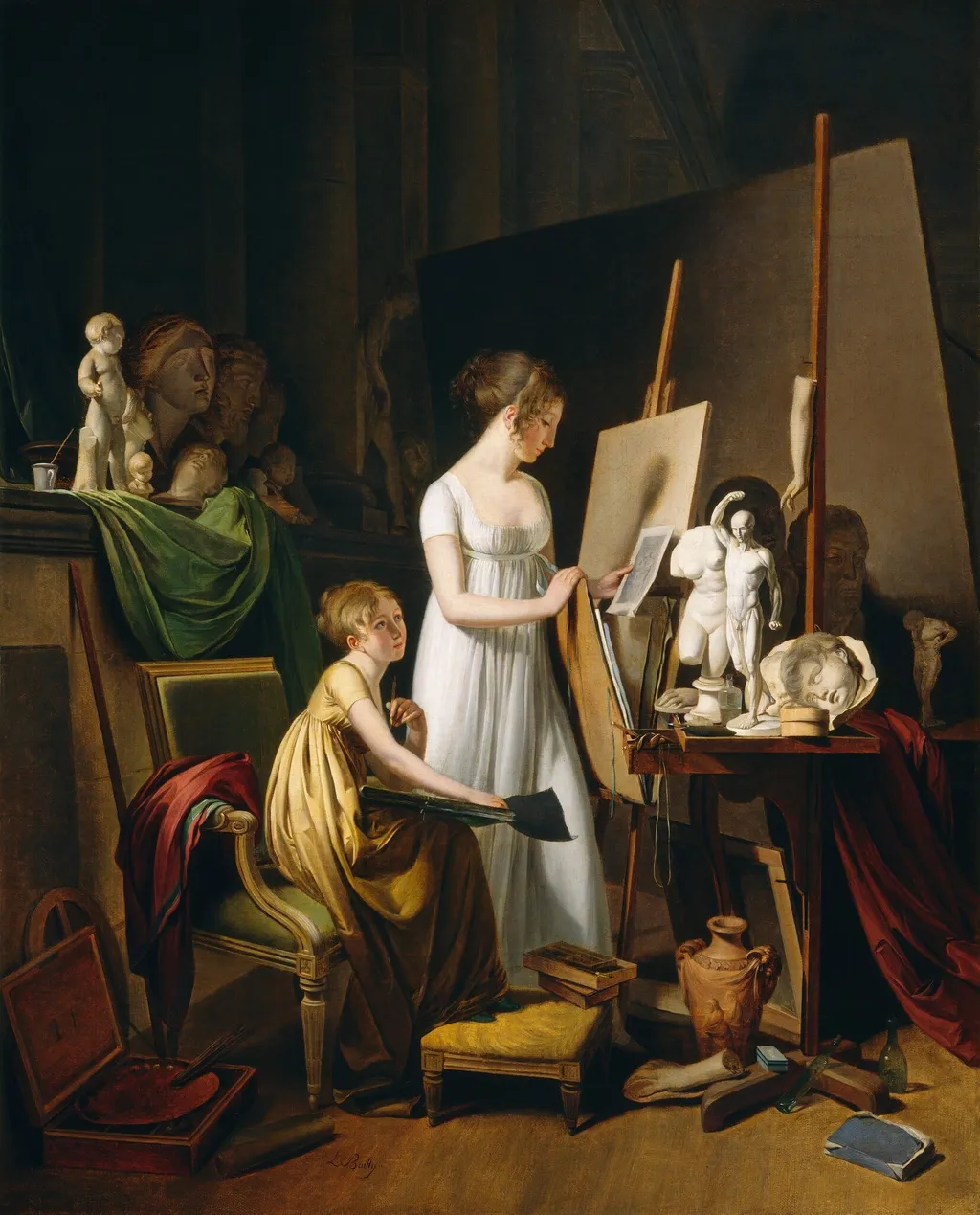
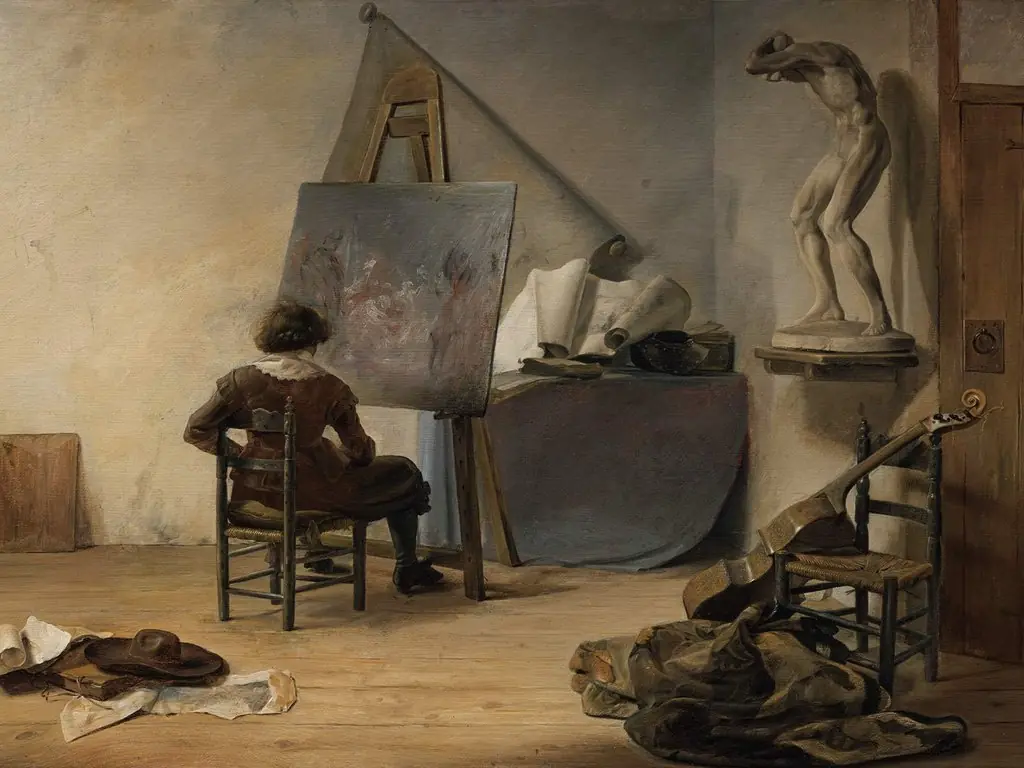
A Painter's Studio is an oil painting by the Romanticist artist Louis-Léopold Boilly. It dates from 1800 and is held in the collection of the National Gallery of Art.
About this work
Overview
The scene is rendered in subdued lighting, with warm illumination falling across the floor and deep shadows defining the room’s corners.
Louis-Léopold Boilly’s oil on canvas, dated around 1800, depicts an interior space that appears to be an artist’s workshop. The composition is populated by a woman in a white dress holding a sketch, a young boy with a drawing pad, and a variety of unfinished sculptures, vases, and aged furniture. The scene is rendered in subdued lighting, with warm illumination falling across the floor and deep shadows defining the room’s corners.
Subject & Meaning
The central figures suggest a quiet moment of artistic practice: the woman, absorbed in her drawing, and the boy, perhaps an apprentice, engaged with his own pad. The surrounding objects—half‑completed statues and studio paraphernalia—underscore the everyday labor of creation, presenting the studio as a lived, working environment rather than a staged tableau.
Technique & Style
Boilly employs chiaroscuro to model forms, using contrasts of light and shadow to give depth to the cluttered space. The oil medium allows for subtle gradations of tone, while the warm light creates a sense of intimacy. The brushwork captures both the texture of fabrics and the rough surfaces of sculptural fragments, contributing to a realistic yet atmospheric rendering.
History & Provenance
Created circa 1800, the work belongs to Boilly’s early‑nineteenth‑century output, a period when he frequently portrayed contemporary urban and domestic scenes. The painting’s provenance prior to its current location is not extensively documented, but it has been identified as an authentic example of Boilly’s interest in everyday professional settings.
Context
At the turn of the nineteenth century, French painters increasingly turned to genre scenes that highlighted ordinary life and work. Boilly’s focus on an artist’s studio aligns with this trend, offering insight into the material conditions of artistic production during the post‑Revolutionary era.
Legacy
While not among Boilly’s most widely reproduced works, the painting contributes to the broader understanding of studio interiors as a subject in French art. It serves as a visual record of the tools, materials, and collaborative atmosphere that shaped artistic practice at the time.
Own this work as a print
Artist & collection