Artwork
Satyr Spying on Sleeping Nymph, Antiope
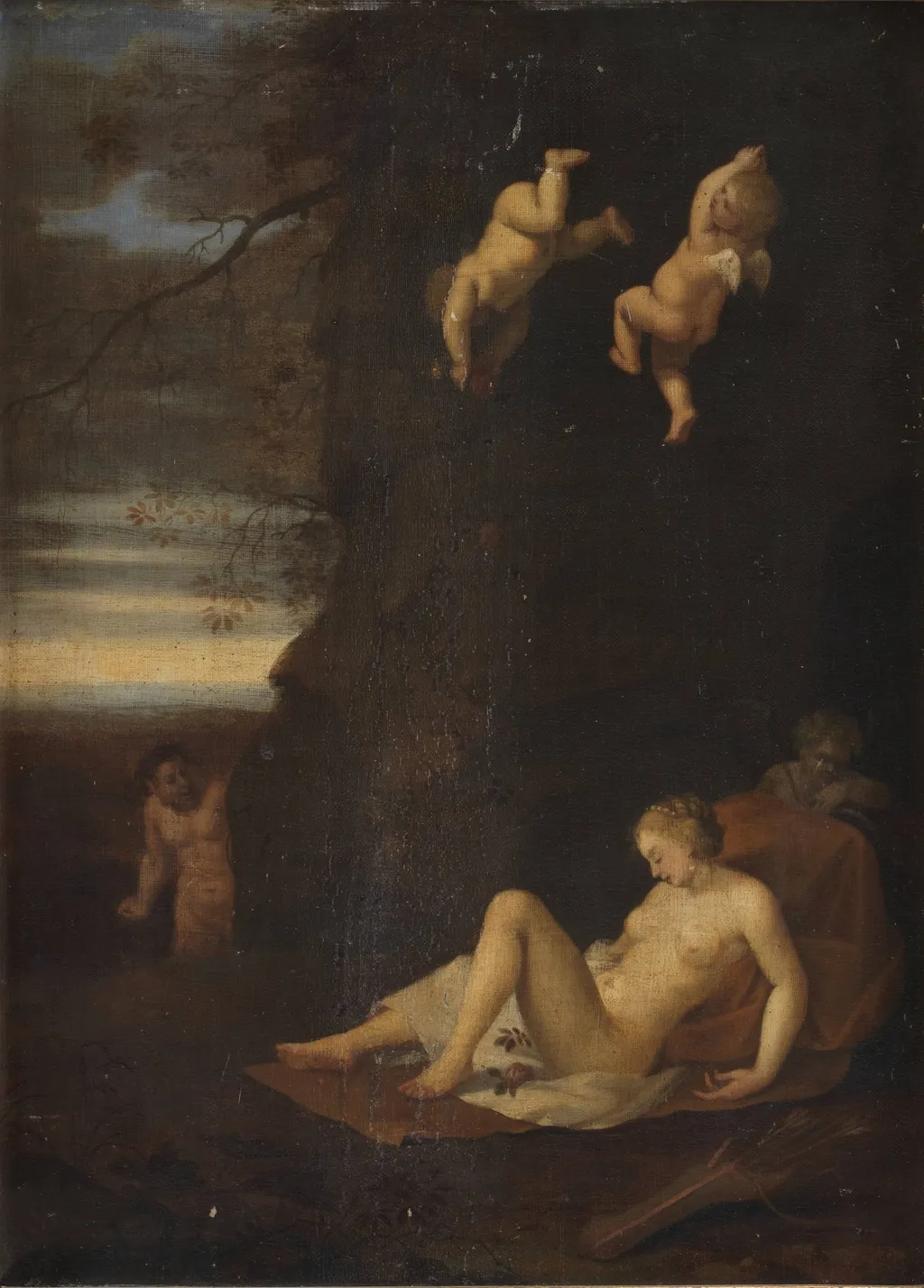
Satyr Spying on Sleeping Nymph, Antiope is a photography by Unknown. It dates from 1662 and is held in the collection of the Statens Museum for Kunst. Created around 1662, this painting depicts a moment of quiet tension in a wooded setting.
About this work
Overview
The scene is rendered with a focus on subtle illumination and deep shadow, drawing attention to the central figures without overt narrative clarity.
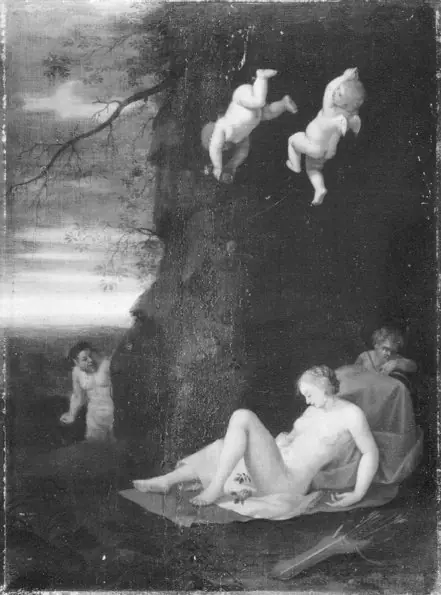
Created around 1662, this painting depicts a moment of quiet tension in a wooded setting. A sleeping woman lies on the ground, attended by two small airborne figures, while a hidden observer lurks in the darkness. The scene is rendered with a focus on subtle illumination and deep shadow, drawing attention to the central figures without overt narrative clarity. The work is held in the collection of the Museum of Ethnography.
Subject & Meaning
The imagery draws from classical myth, suggesting the nymph Antiope in a vulnerable state, watched by a satyr—a figure associated with wildness and desire. The floating children may represent spirits or symbolic attendants, adding an otherworldly layer. The presence of the unseen watcher introduces an undercurrent of intrusion, evoking themes of privacy, observation, and the boundary between the natural and the supernatural.
Technique & Style
The artist employs chiaroscuro to heighten emotional contrast: the sleeping nymph and the children are softly lit, emerging from the surrounding gloom, while the satyr remains indistinct in shadow. Brushwork is delicate where figures are illuminated, becoming looser and more atmospheric in the background. This interplay of light and dark isolates the central figures, guiding the viewer’s focus without explicit detail.
History & Provenance
The painting entered the Museum of Ethnography’s collection in the late 19th century, though its earlier ownership remains undocumented. Its attribution to a specific artist is uncertain, and no signed or dated versions are known. The work’s origins may lie in a private collection of mythological studies, possibly linked to northern European artistic circles of the mid-17th century.
Context
In the mid-1600s, mythological scenes were common in private collections, often used to explore human psychology through allegory. While Italian artists like Caravaggio popularized chiaroscuro for dramatic effect, northern painters adapted it with greater subtlety, favoring mood over spectacle. This work reflects that regional tendency, blending classical reference with intimate, nocturnal atmosphere.
Legacy
Though not widely reproduced or studied, the painting exemplifies a quiet strand of Baroque mythological painting that prioritized psychological nuance over grandeur. Its preservation in an ethnographic museum suggests an early interest in cultural representations of myth as expressions of human behavior, rather than purely aesthetic objects.
Artist & collection

 Domestic Scene
 Giacomo and Cardinal Marco, investing Andrea, Abbot of San Zeno, with his Benefice
 The Nymph of Fontainebleau
 Portrait of a Woman
 Madonna and Child with Saints in the Enclosed Garden
 Venus and Minerva
 Family Group of Four on Sofa
 Wall painting from Room H of the Villa of P. Fannius Synistor at Boscoreale