Artwork
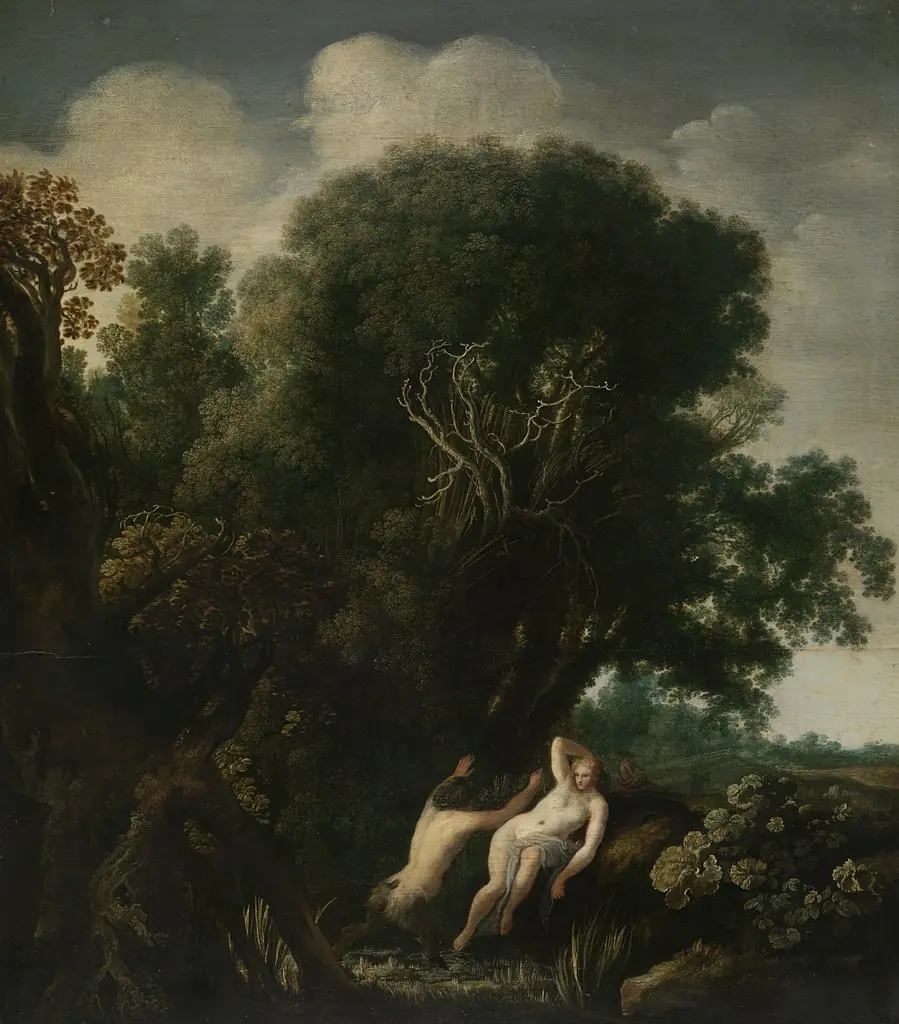
A Bathing Nymph Taken by Surprise by a Satyr
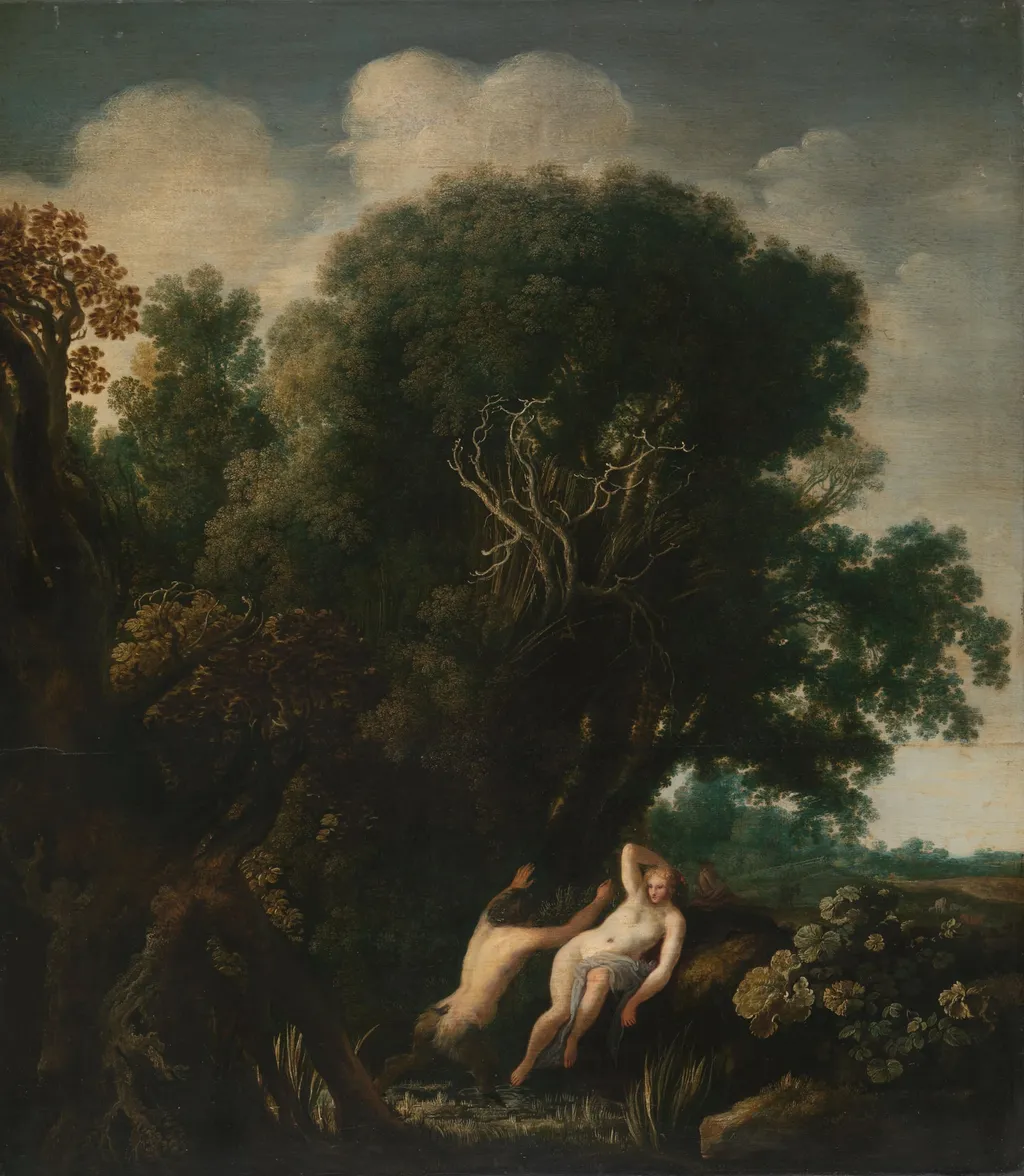
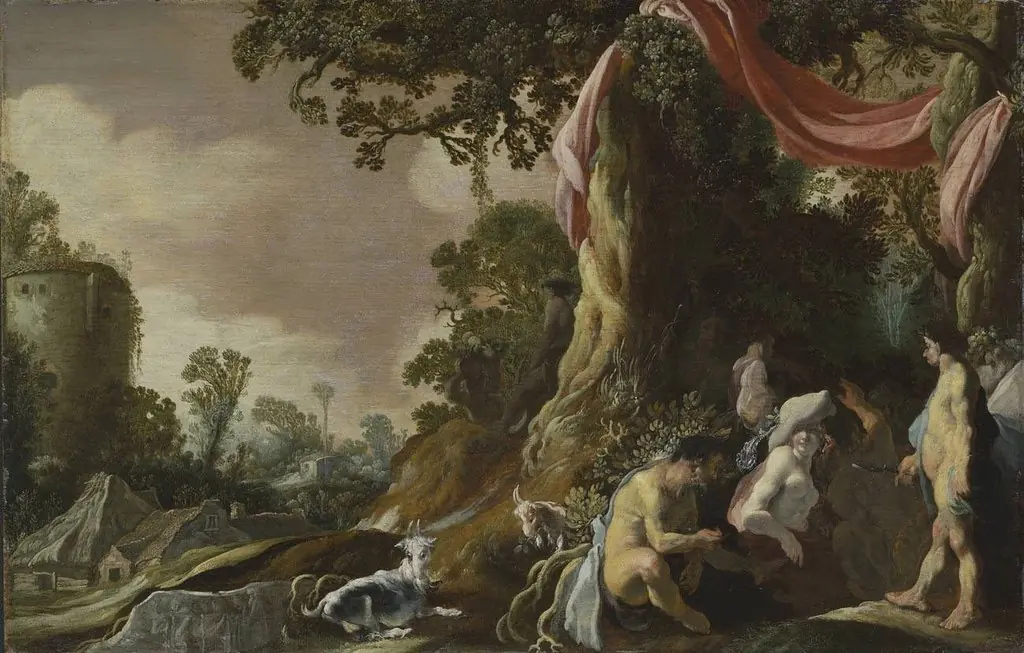
A Bathing Nymph Taken by Surprise by a Satyr is an unspecified painting by the Flemish Baroque painting artist Moses van Uyttenbroeck. It dates from 1630 and is held in the collection of the Rijksmuseum.
About this work
Overview
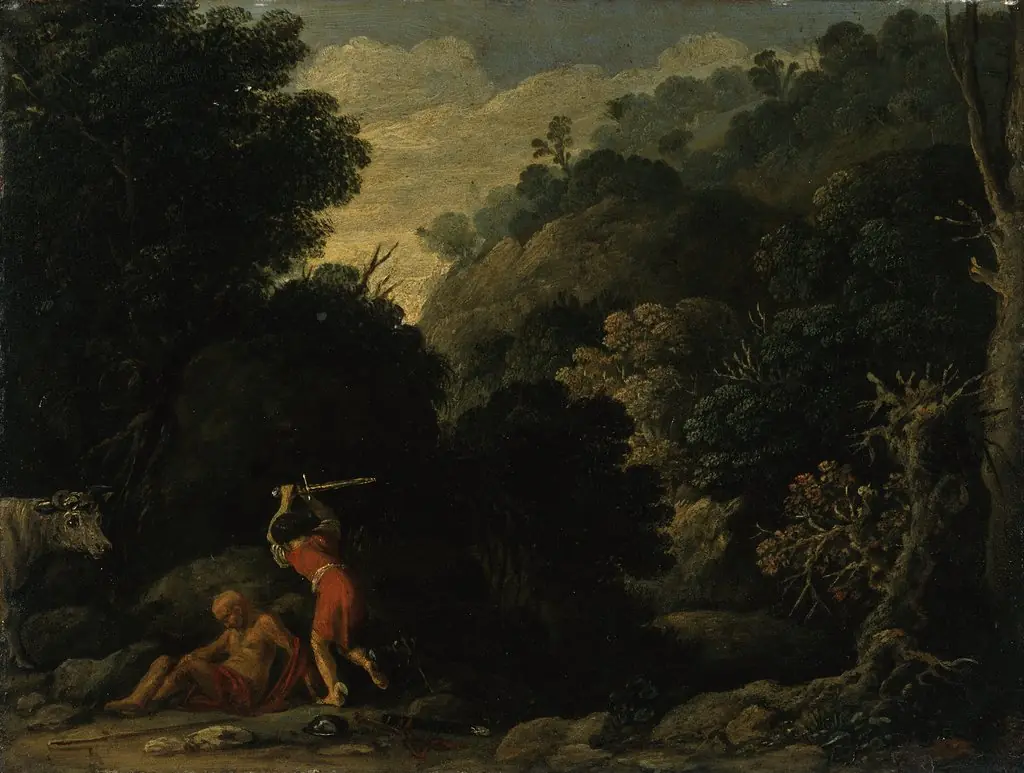
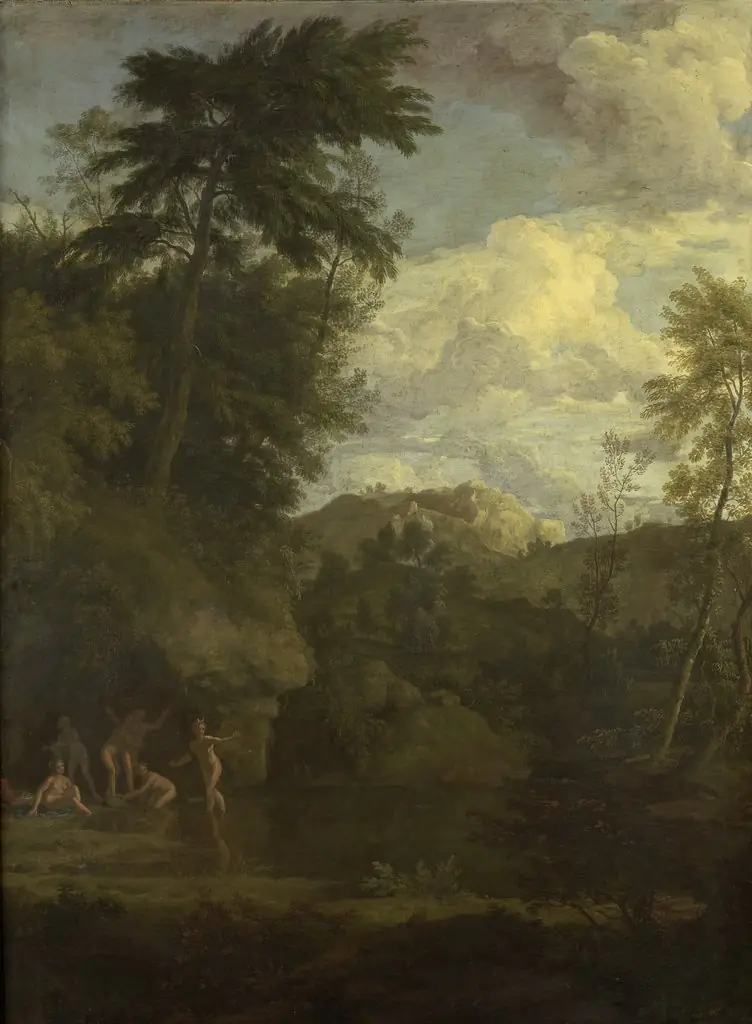
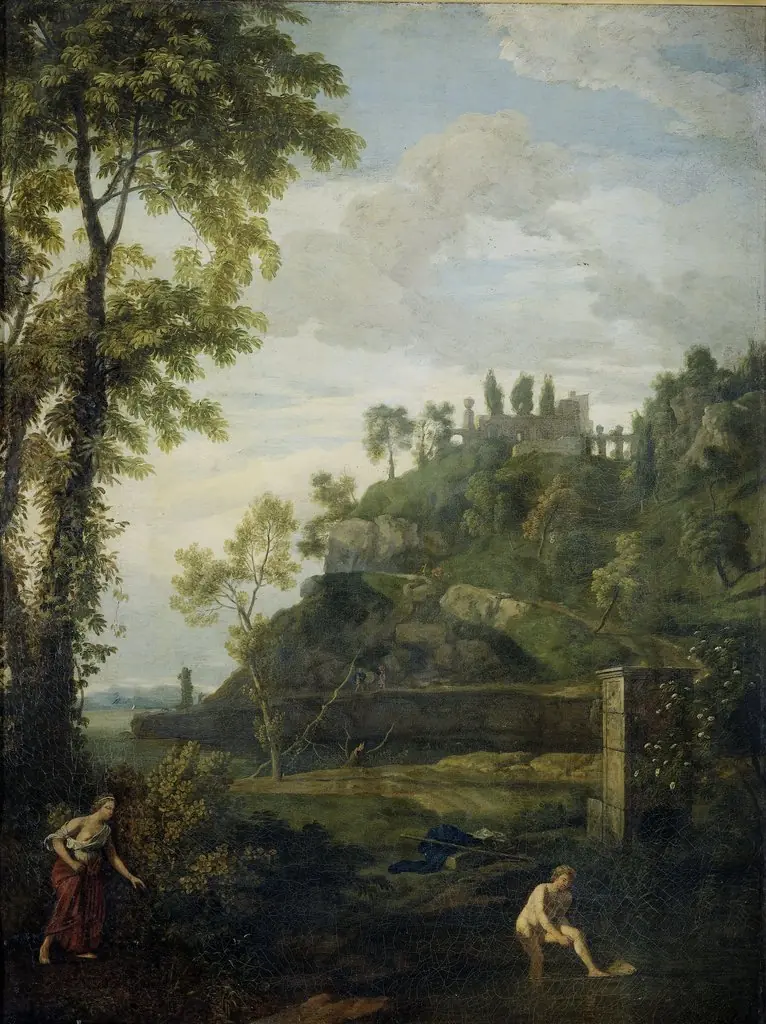
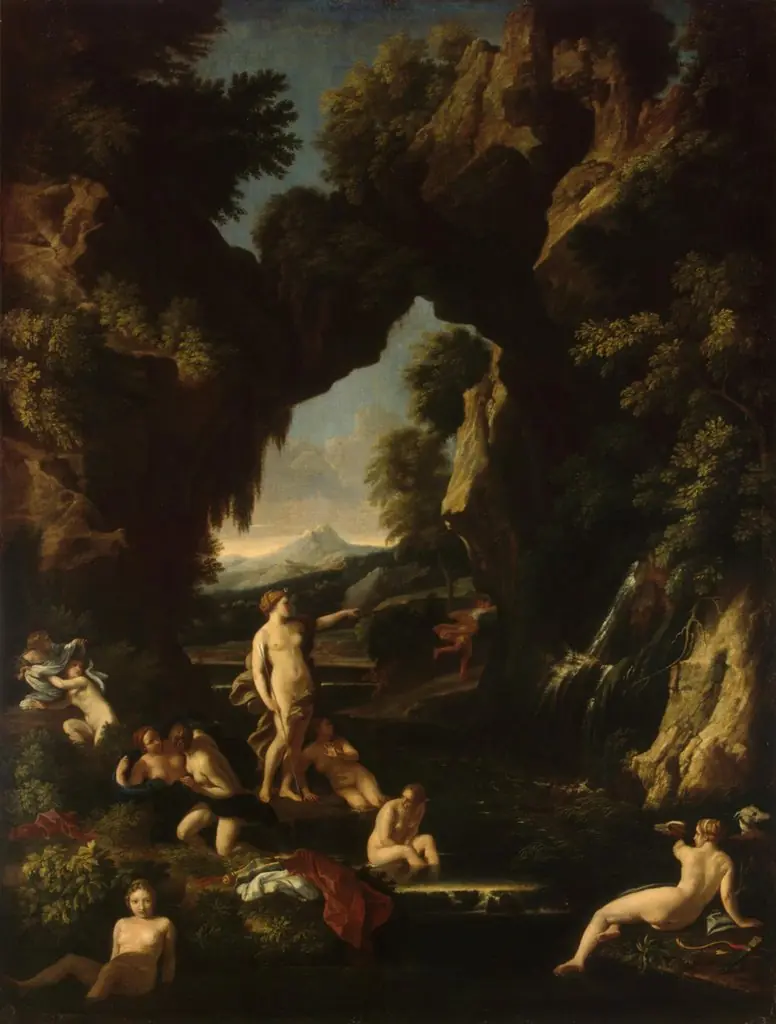
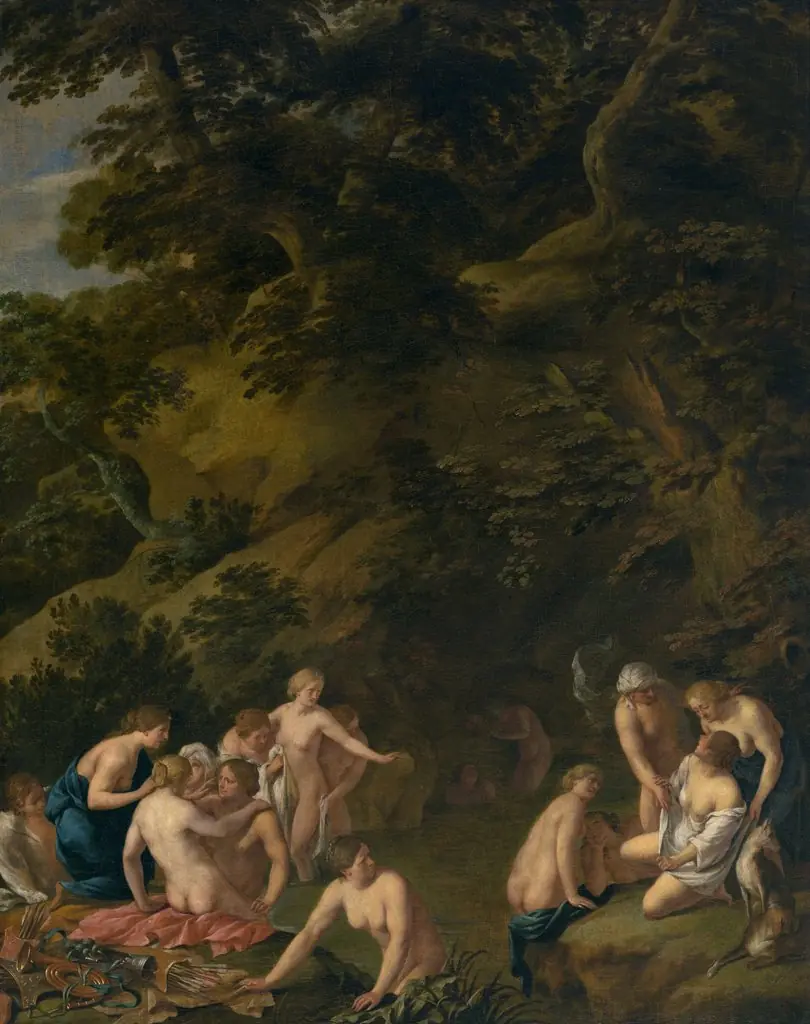
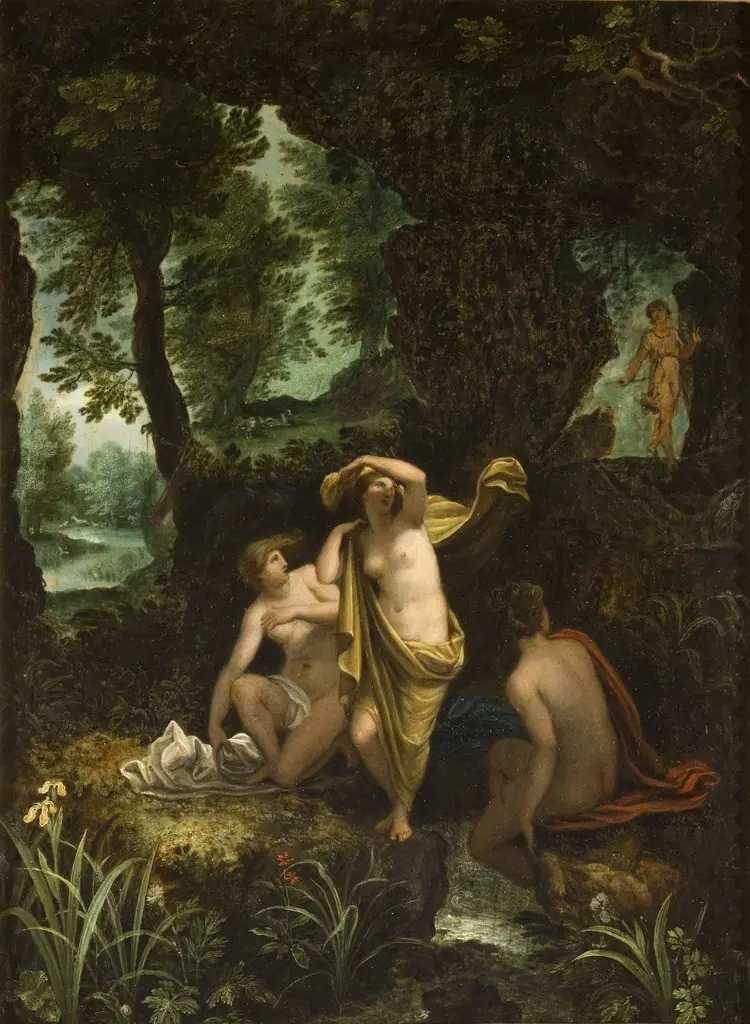
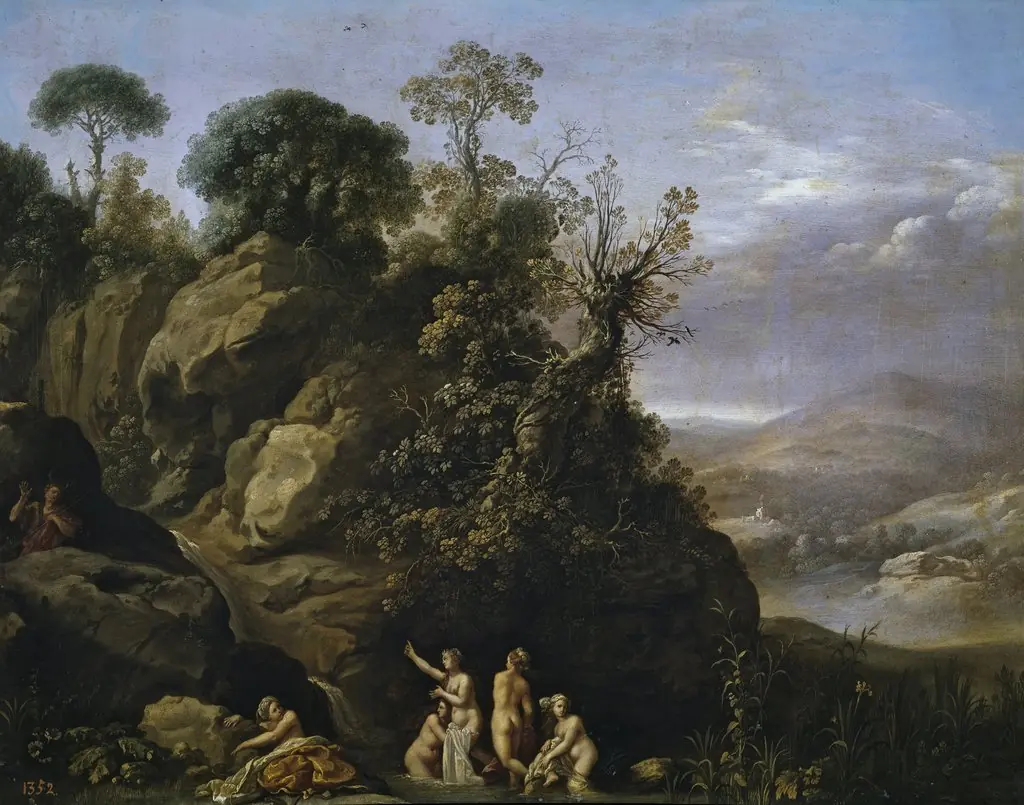
This painting depicts a mythological moment in a secluded woodland setting, where a nymph is startled mid-bath by a satyr emerging from the undergrowth.
This painting depicts a mythological moment in a secluded woodland setting, where a nymph is startled mid-bath by a satyr emerging from the undergrowth. A second satyr, partially obscured by foliage, plays a flute in the distance. The composition blends classical narrative with an atmospheric natural environment, characteristic of early 17th-century Dutch mythological landscapes favored by educated collectors.
Subject & Meaning
The scene draws from Greco-Roman mythology, portraying the nymph as a figure of nature’s innocence disrupted by the wild, untamed presence of the satyr. The second satyr’s musical gesture suggests a lingering, almost ritualistic atmosphere. The encounter evokes themes of vulnerability, surprise, and the tension between civilization and the untamed natural world, common in myth-inspired works of the period.
Technique & Style
The artist renders the forest with exaggerated, sinuous tree forms that resemble twisted limbs, lending an eerie, almost sentient quality to the landscape. Brushwork is detailed yet fluid, emphasizing texture in skin, water, and bark. The palette is muted, with earth tones dominating, allowing the figures to emerge subtly from the shadowed grove, enhancing the sense of quiet surprise.
History & Provenance
Attributed to Jan van Wtenbrouck, a Dutch painter active in the early 1600s, the work reflects the popularity of mythological subjects among urban patrons seeking refined, literate imagery. Though few of his works survive, this piece aligns with the broader trend of combining biblical and classical themes with naturalistic settings, a niche cultivated by collectors in the Dutch Republic.
Context
During the early Baroque period, Dutch collectors increasingly favored paintings that merged classical narratives with intimate, observed nature. Unlike grand Italian mythologies, these works emphasized quiet, personal moments in wooded or rural settings. Van Wtenbrouck’s approach catered to an audience well-versed in Ovid and other classical texts, offering visual allusions rather than dramatic spectacle.
Legacy
Though not widely known today, van Wtenbrouck’s work exemplifies a transitional phase in Dutch painting, where mythological subjects became domesticated within naturalistic landscapes. His treatment of trees as expressive, almost anthropomorphic forms influenced later artists exploring the psychological resonance of nature, contributing to the evolution of Dutch genre and landscape traditions.
Own this work as a print
Artist & collection