Artwork
Trompe l'oeil. A Cabinet in the Artist's Studio
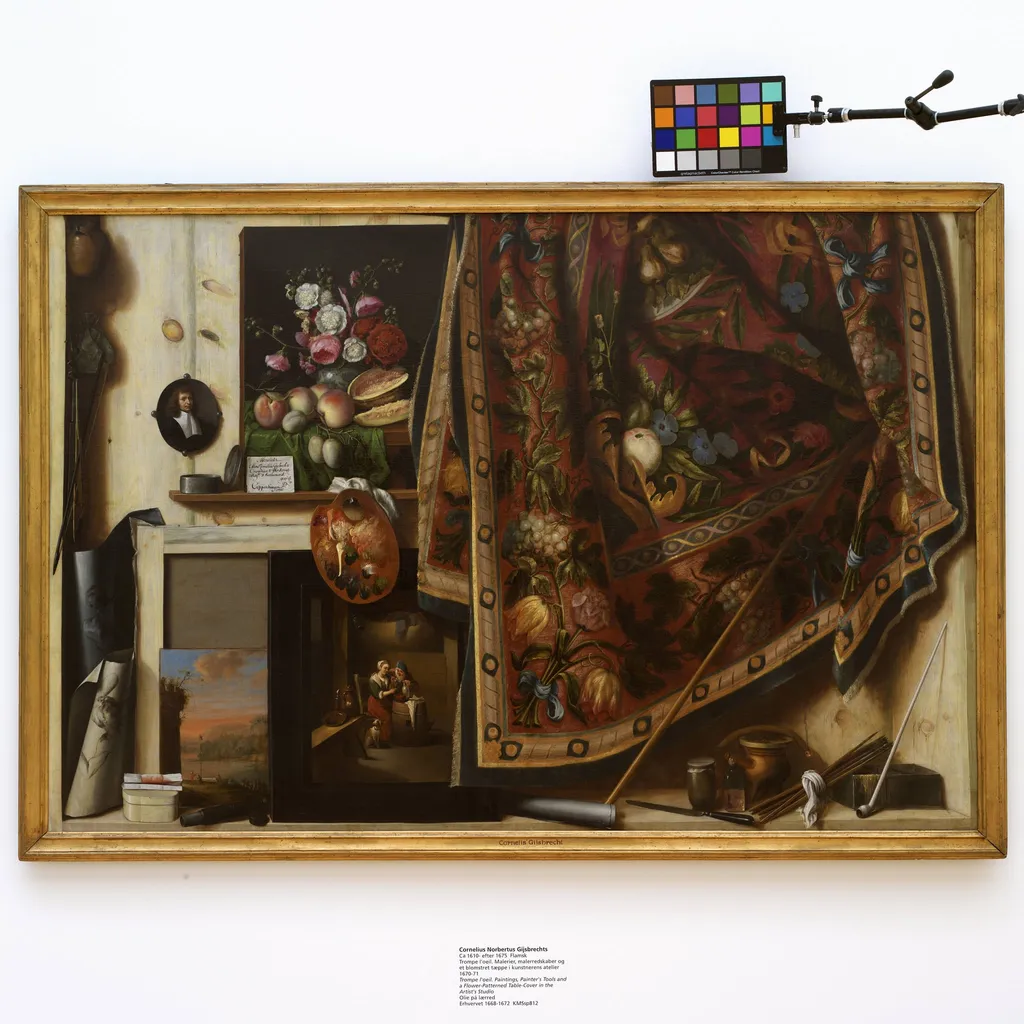
Trompe l'oeil. A Cabinet in the Artist's Studio is a photography by Unknown. It dates from 1670 and is held in the collection of the Statens Museum for Kunst. This circa 1670 painting by an unidentified artist presents a trompe l’oeil depiction of a studio cabinet.
About this work
Overview
The composition centers on a partially open cabinet, its shelves and surfaces cluttered with artistic tools and materials.
This circa 1670 painting by an unidentified artist presents a trompe l’oeil depiction of a studio cabinet. Rendered with meticulous precision, the work simulates three-dimensional space on a flat surface, inviting viewers to perceive the scene as a tangible interior rather than a painted illusion. The composition centers on a partially open cabinet, its shelves and surfaces cluttered with artistic tools and materials.
Subject & Meaning
The scene portrays a studio interior, focusing on a cabinet filled with implements of artistic production—palettes, brushes, sketches, and pigments. The arrangement suggests both the artist’s daily environment and the tools of their craft. By presenting these objects with lifelike realism, the work blurs the boundary between representation and reality, reflecting broader Baroque interests in perception and illusion.
Technique & Style
Executed in the trompe l’oeil tradition, the painting employs exacting detail and subtle gradations of light to create depth. Objects in the foreground appear sharply defined, while those receding into the background soften, enhancing the illusion of spatial recession. Chiaroscuro—the interplay of light and shadow—heightens the sense of volume, reinforcing the deception that the scene exists in physical space.
History & Provenance
The painting dates to approximately 1670 and is attributed to an artist designated as 2588_person. Its current location is the Museum of Ethnography, though details of its earlier ownership remain unrecorded. The work exemplifies the trompe l’oeil genre that gained prominence in seventeenth-century European art, particularly in still-life and studio scenes.
Context
Trompe l’oeil flourished during the Baroque period, when artists explored optical effects to challenge viewers’ perceptions. Such works often served as demonstrations of technical skill, appealing to patrons who valued both realism and ingenuity. This painting aligns with a broader tradition of studio interiors, where the depiction of artistic tools underscored the intellectual and manual labor of creation.
Artist & collection

 Domestic Scene
 Giacomo and Cardinal Marco, investing Andrea, Abbot of San Zeno, with his Benefice
 The Nymph of Fontainebleau
 Portrait of a Woman
 Madonna and Child with Saints in the Enclosed Garden
 Venus and Minerva
 Family Group of Four on Sofa
 Wall painting from Room H of the Villa of P. Fannius Synistor at Boscoreale
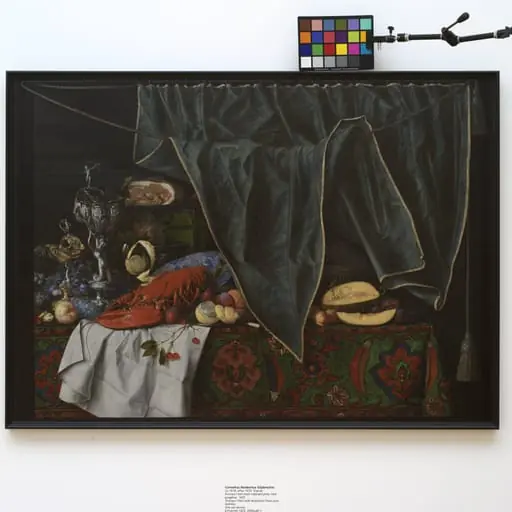 Trompe l'Oeil with Breakfast Piece and Goblets
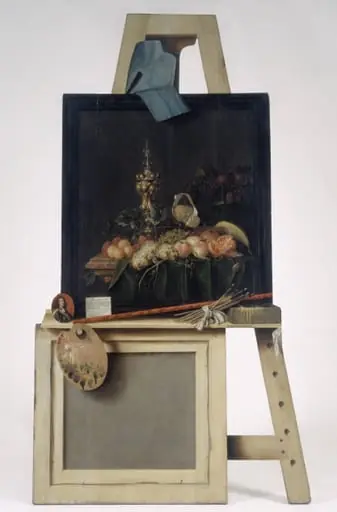 Cut-Out Trompe l'Oeil Easel with Fruit Piece
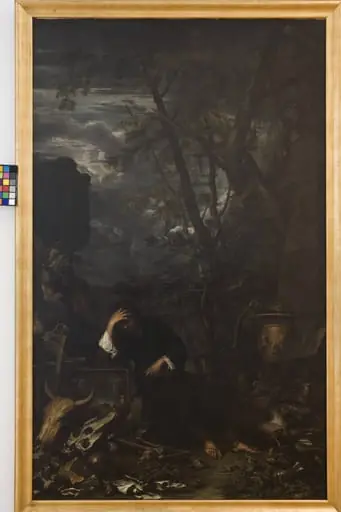 Democritus in Meditation
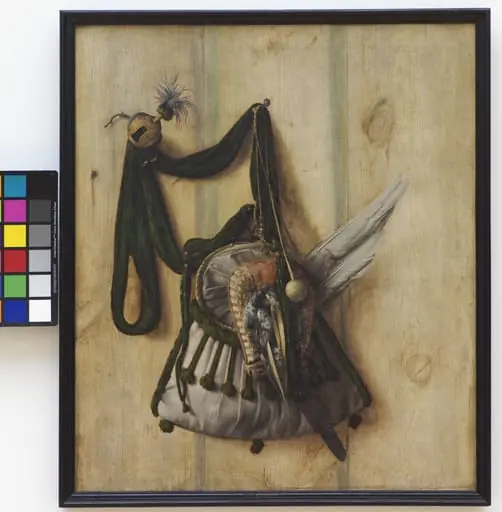 Trompe l'Oeil with Falconer's Bag and other Equipment for Falconry
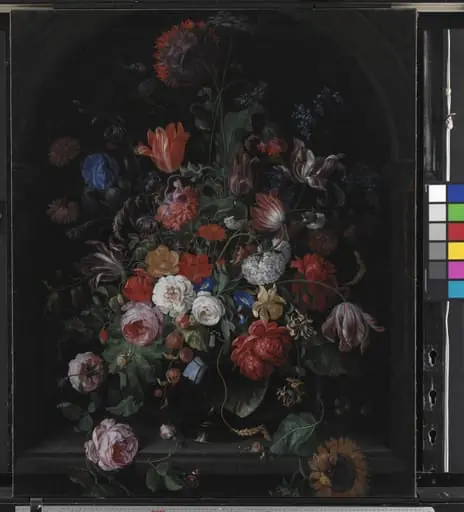 Flower Piece
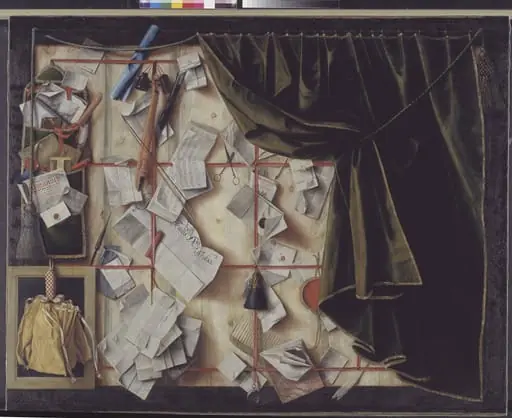 Trompe l'oeil of a Letter Rack with Proclamation by Frederik III
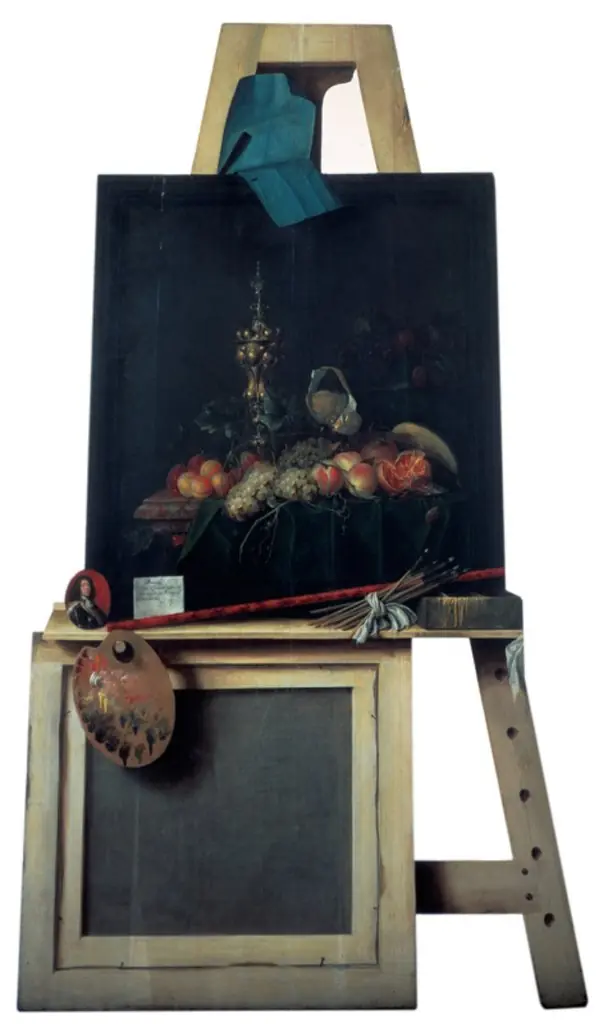 Cut-Out Trompe l'Oeil Easel with Fruit Piece
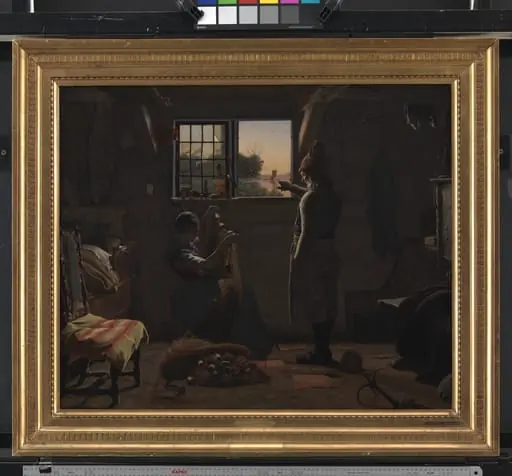 En fisker viser sin datter en bortsejlende båd
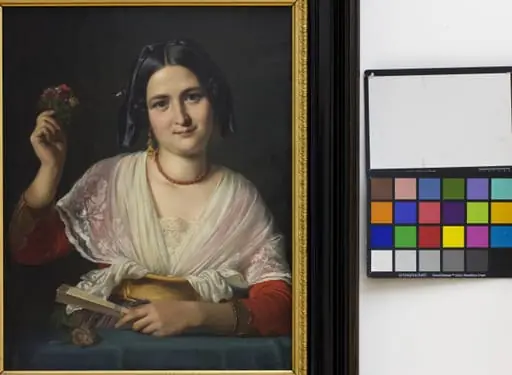 A Roman Woman in Fancy Dress