Artwork
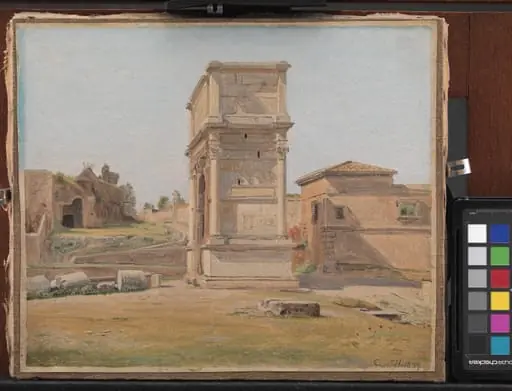
Ruiner. Caracallas termer i Rom?
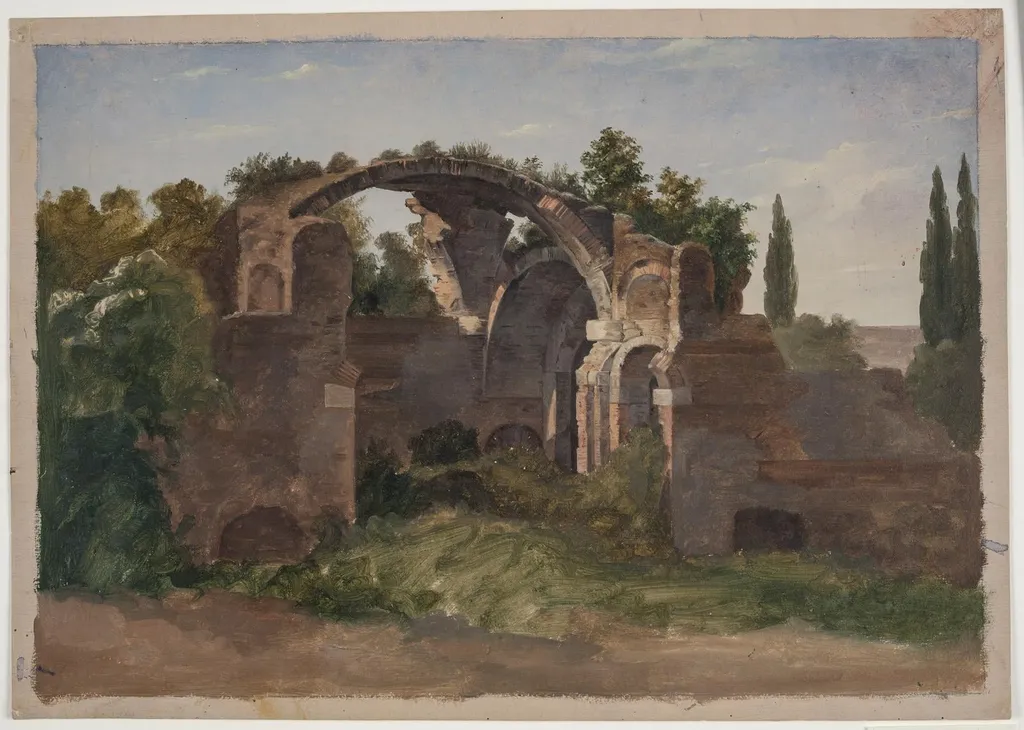
Ruiner. Caracallas termer i Rom? is a photography by Unknown. It dates from 1750 and is held in the collection of the Statens Museum for Kunst.
About this work
Overview
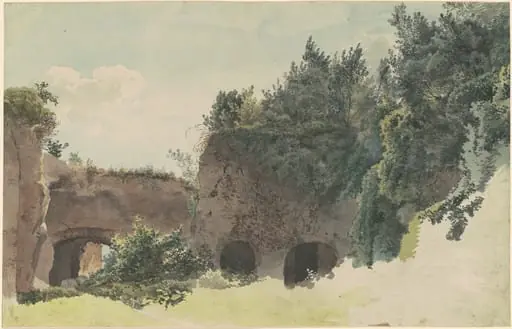
Created around 1750, this painting depicts the remains of ancient Roman architecture, likely the Baths of Caracalla, overgrown and partially consumed by nature.
Created around 1750, this painting depicts the remains of ancient Roman architecture, likely the Baths of Caracalla, overgrown and partially consumed by nature. The artist rendered the scene with a quiet, contemplative tone, emphasizing decay and time’s quiet passage. The work is held in the collection of the Museum of Ethnography, where it contributes to a broader interest in antiquity as a subject of visual reflection.
Subject & Meaning
The painting portrays the ruins of a monumental Roman bath complex, its arches and walls crumbling under the weight of centuries. Vegetation encroaches on the stonework, suggesting nature’s reclamation of human endeavor. The absence of figures or activity invites contemplation of impermanence, aligning with 18th-century sensibilities that viewed ancient ruins as symbols of civilizational transience.
Technique & Style
The artist employed loose, atmospheric brushwork to suggest form rather than define it, creating a sense of immediacy and ephemerality. Muted tones of ochre, gray, and soft green dominate, with subtle shifts in light modeling the ruins’ surfaces. The sky, pale and lightly clouded, enhances the somber mood, while the sketchlike quality implies the scene was observed directly, perhaps en plein air.
History & Provenance
The painting entered the Museum of Ethnography’s collection in the 19th century, likely as part of a broader European fascination with classical antiquity. Its attribution to '259_person' reflects incomplete documentation, common for lesser-known artists of the period. The work’s journey from studio to museum underscores its role as a cultural artifact rather than a celebrated artwork of its time.
Context
In mid-18th-century Europe, depictions of Roman ruins were popular among artists and travelers drawn to the ruins of antiquity as sites of historical and emotional resonance. This painting aligns with the picturesque tradition, where decay and natural integration were aestheticized. Unlike grand historical narratives, it offers a quiet, introspective view of the past, reflecting Enlightenment-era curiosity about time and memory.
Legacy
Though not widely exhibited or studied, the painting contributes to a quiet lineage of ruin imagery that influenced later landscape and archaeological documentation. Its unassuming style and focus on erosion over grandeur offer a counterpoint to more dramatic neoclassical treatments. Today, it remains a subtle record of how 18th-century observers engaged with the physical remnants of ancient Rome.
Artist & collection

 Domestic Scene
 Giacomo and Cardinal Marco, investing Andrea, Abbot of San Zeno, with his Benefice
 The Nymph of Fontainebleau
 Portrait of a Woman
 Madonna and Child with Saints in the Enclosed Garden
 Venus and Minerva
 Family Group of Four on Sofa
 Wall painting from Room H of the Villa of P. Fannius Synistor at Boscoreale
 Italian Ruins
 Ruins
Ruins The Basilica of Constantine, Rome
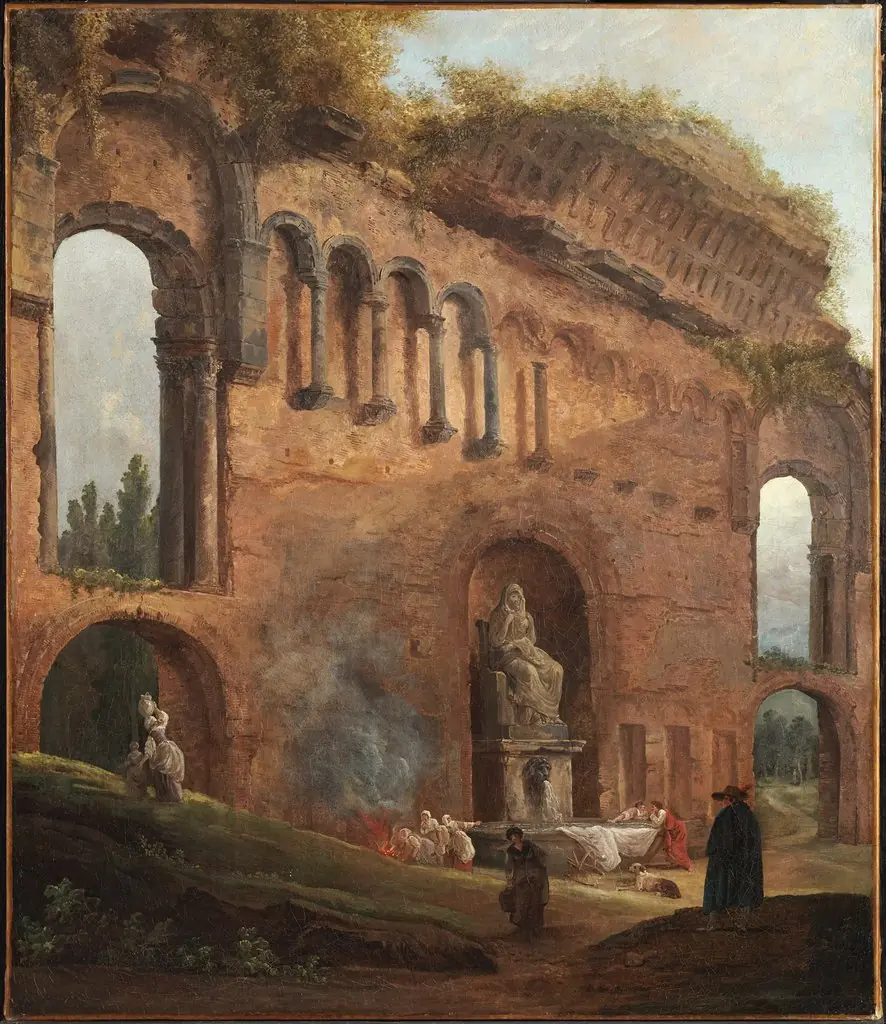 Roman Ruins with Laundresses
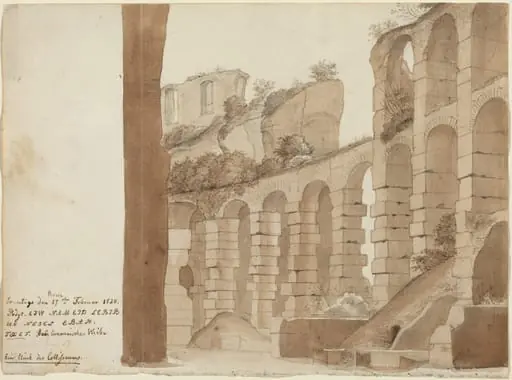 A Corner of the Colosseum
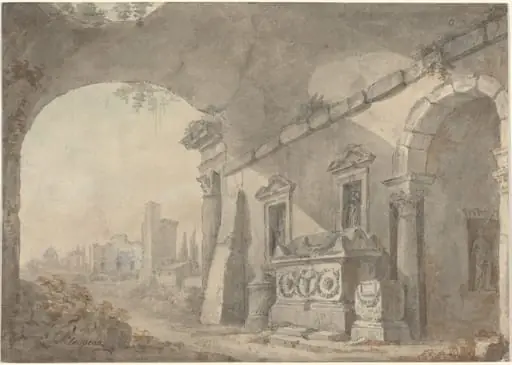 Roman Ruins with a Sepulchre
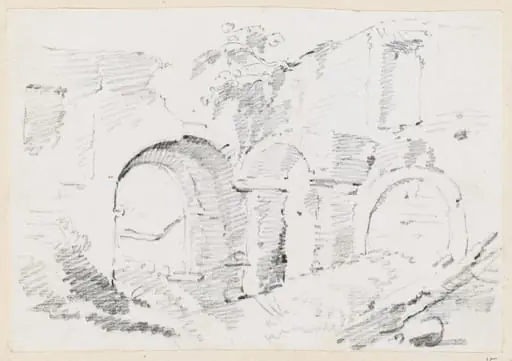 Roman Walls
 Ancient Roman Ruins Overgrown with Trees and Bushes
 Fra udgravning i Kejserpaladset, Rom 1864
 A View from Hadrian's Villa, Tivoli
 View of the Basilica of Constantine from the Palatine, Rome
 The Arch of Titus in Rome