Artwork
Jutta
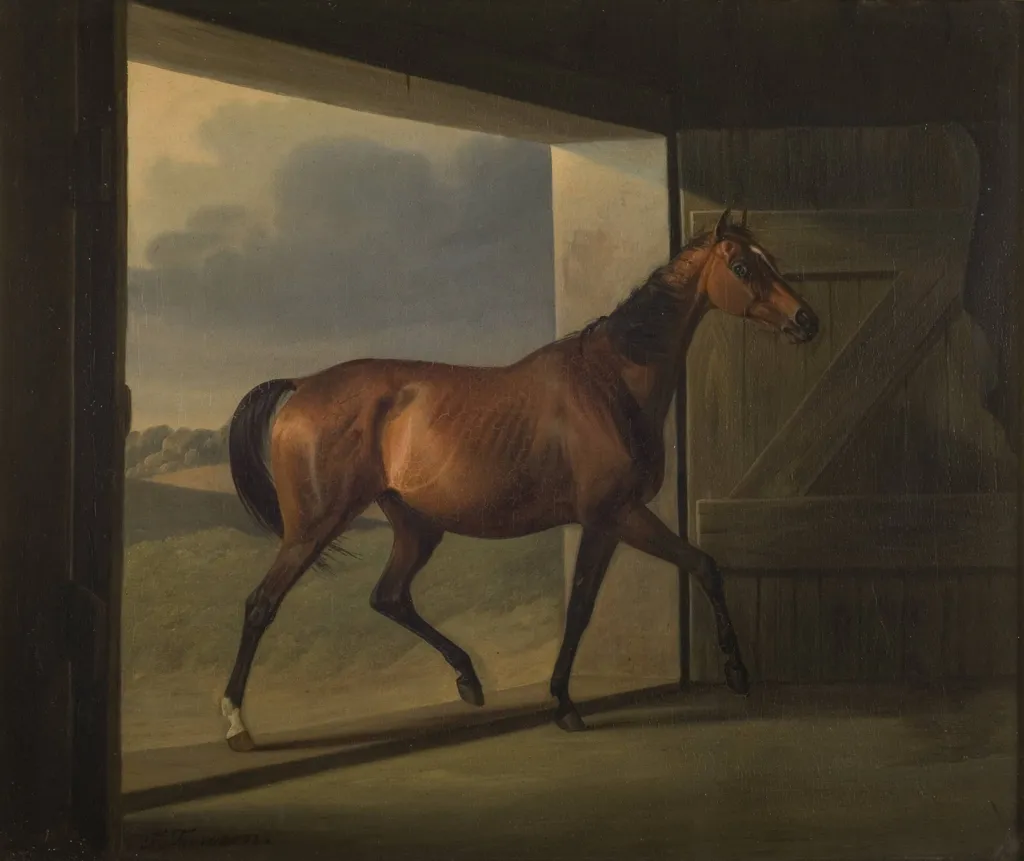
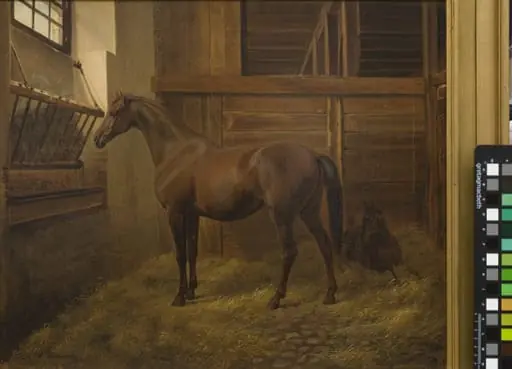
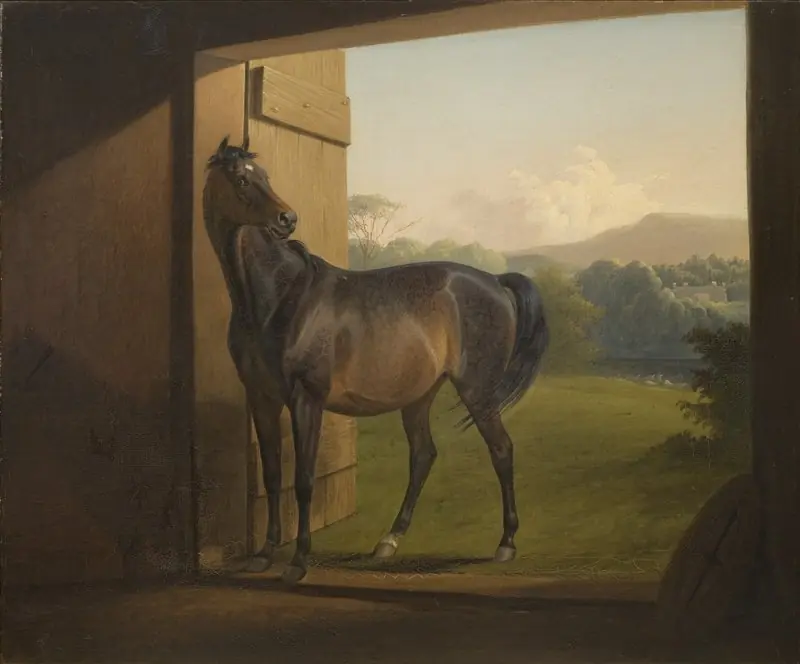
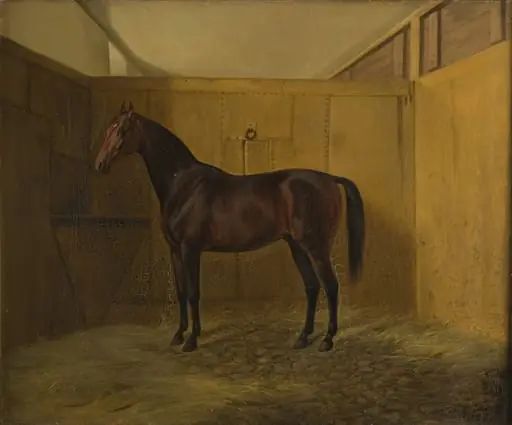
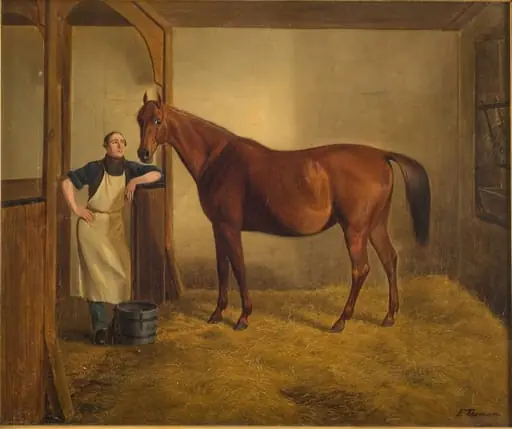
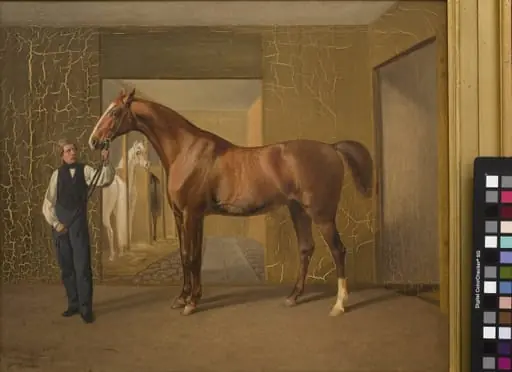
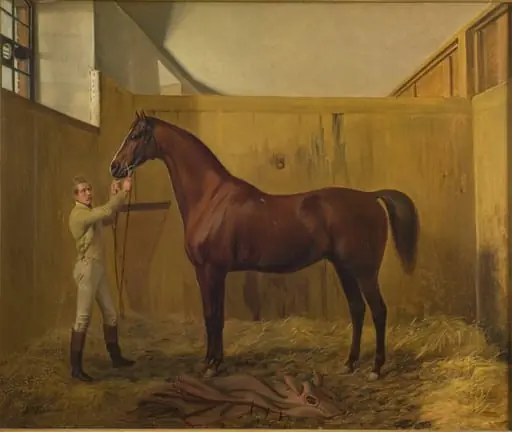
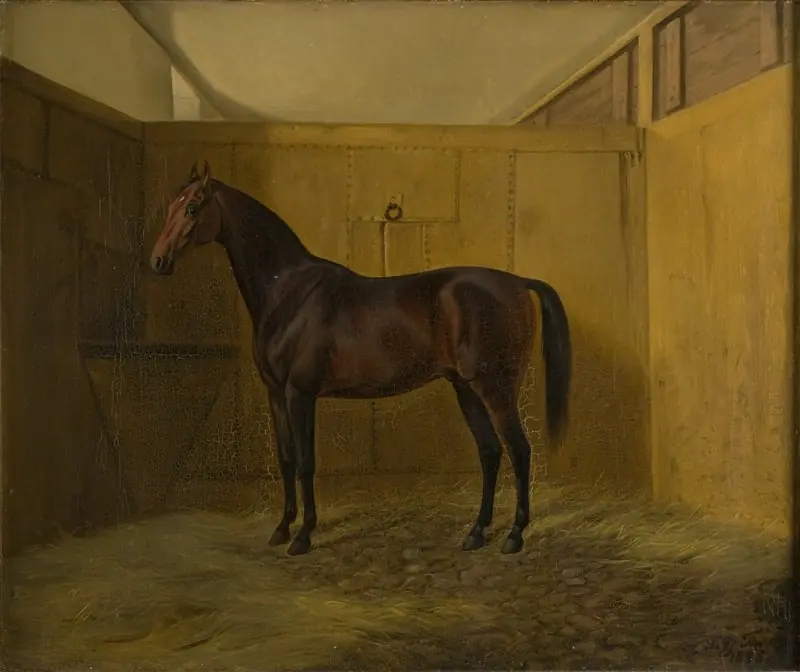
Jutta is a photography by Unknown. It dates from 1850 and is held in the collection of the Statens Museum for Kunst. Created around 1850, this painting portrays a single horse in a moment of stillness before movement.
About this work
Overview
Created around 1850, this painting portrays a single horse in a moment of stillness before movement.
Created around 1850, this painting portrays a single horse in a moment of stillness before movement. The subject is rendered with attention to naturalistic detail and spatial depth. The work is part of the collection at the Museum of Ethnography, where it is preserved as an example of 19th-century observational painting, though its cultural or regional origins remain unspecified in available records.
Subject & Meaning
The horse, positioned at a threshold, appears poised to step beyond the frame, its gaze meeting the viewer directly. This composition suggests a moment of transition—between interior and exterior, stillness and motion. The animal’s alert posture and direct eye contact may imply awareness or agency, inviting contemplation of the relationship between observer and observed, without overt symbolic or narrative context.
Technique & Style
The artist employs chiaroscuro to model the horse’s form, enhancing its three-dimensionality against a soft, atmospheric background of hills and clouds. Brushwork is restrained, favoring subtle gradations over bold strokes. The bridle and mane are rendered with precision, while the doorway’s edges remain slightly blurred, reinforcing the horse’s centrality and the sense of an unframed, open space beyond.
History & Provenance
The painting’s origin and early ownership are undocumented. It entered the Museum of Ethnography’s collection in the late 19th or early 20th century, likely as part of a broader acquisition of visual materials related to rural life or animal representation. No records confirm the artist’s identity beyond the placeholder '2708_person,' suggesting the work may have been collected without attribution.
Context
Created during a period when European artists increasingly turned to everyday subjects, this image reflects a quiet shift away from grand historical or mythological themes. Its focus on a solitary animal in a mundane setting aligns with emerging interests in realism and the natural world, though its placement in an ethnographic museum hints at its possible association with regional or folk traditions.
Legacy
Though not widely exhibited or studied, the painting contributes to a lesser-known corpus of 19th-century animal portraiture that emphasizes presence over narrative. Its retention in an ethnographic context underscores how visual artifacts of ordinary life were later reclassified as cultural documents, offering insight into how non-elite subjects were perceived and preserved in institutional settings.
Artist & collection

 Domestic Scene
 Giacomo and Cardinal Marco, investing Andrea, Abbot of San Zeno, with his Benefice
 The Nymph of Fontainebleau
 Portrait of a Woman
 Madonna and Child with Saints in the Enclosed Garden
 Venus and Minerva
 Family Group of Four on Sofa
 Wall painting from Room H of the Villa of P. Fannius Synistor at Boscoreale