Artwork
Queen of Saba
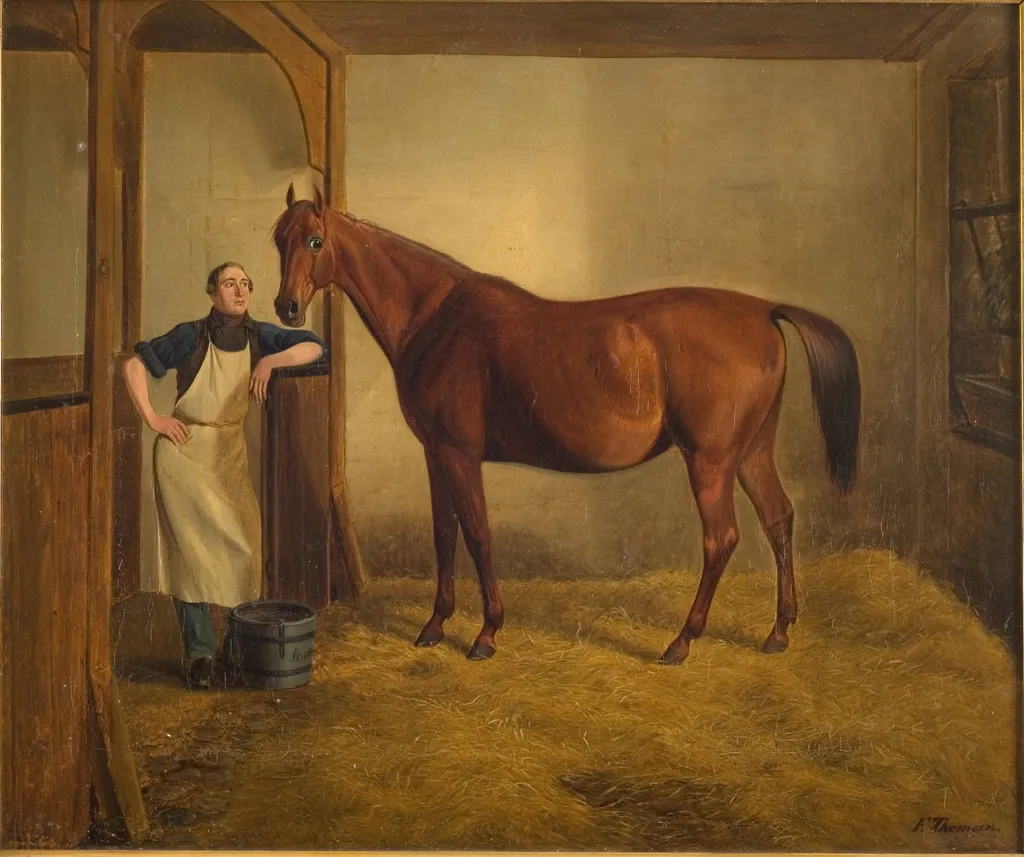
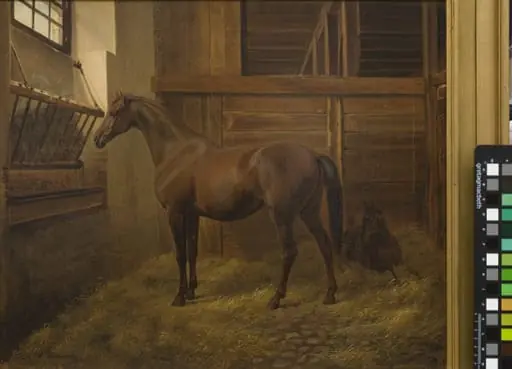
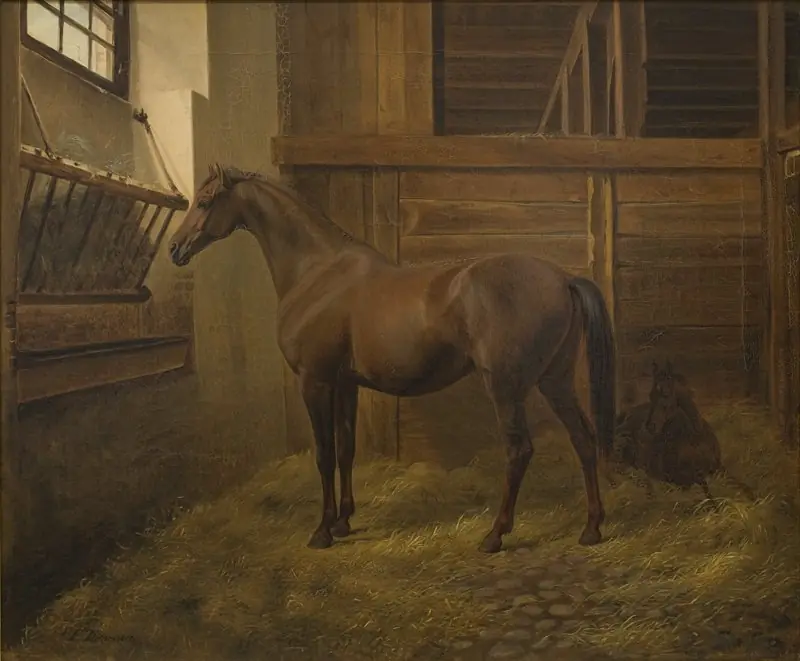
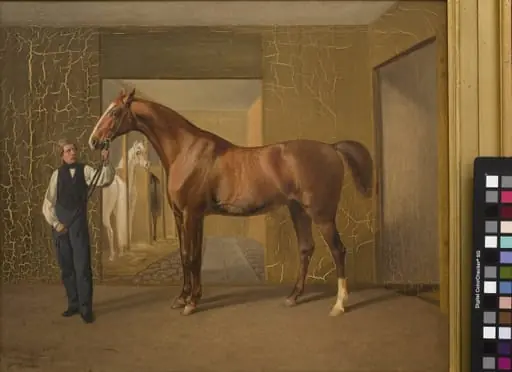
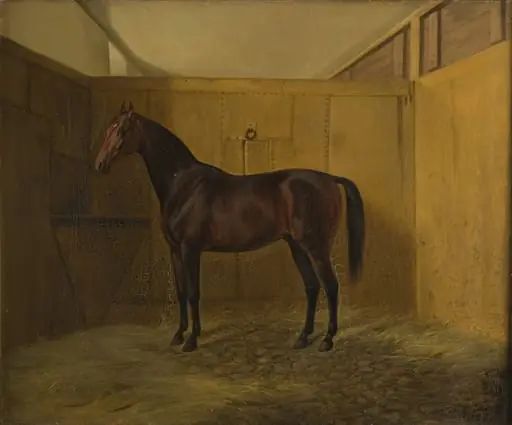
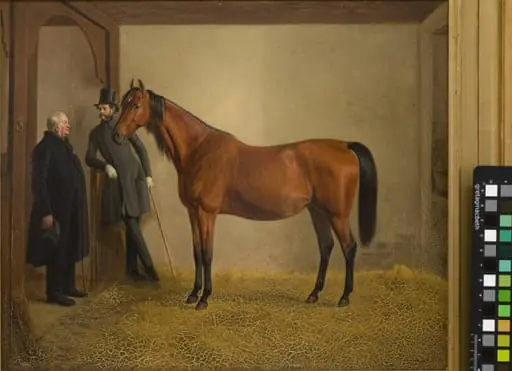
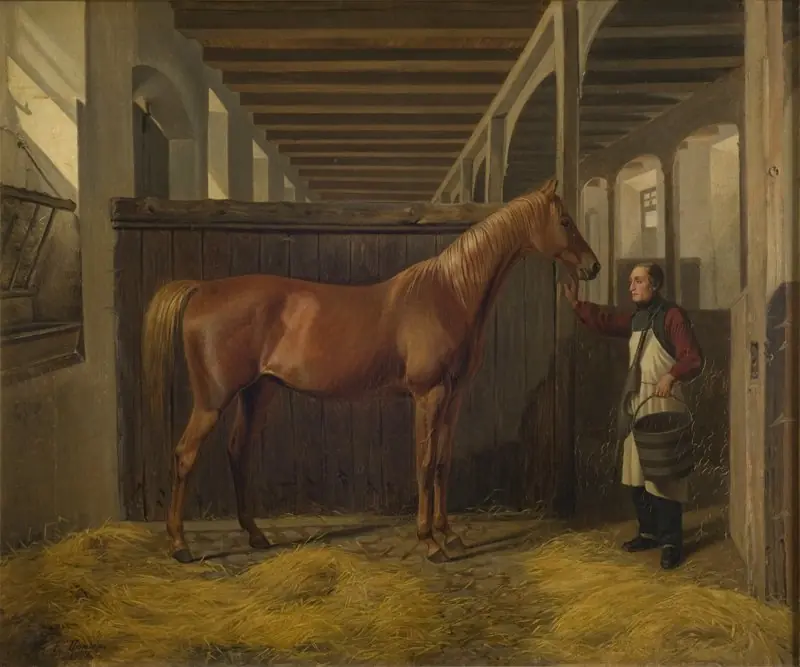
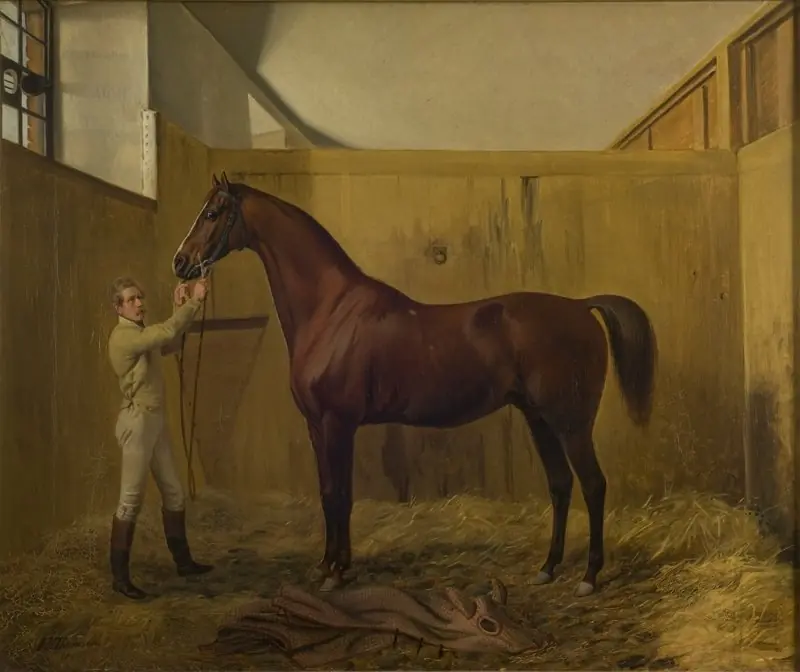
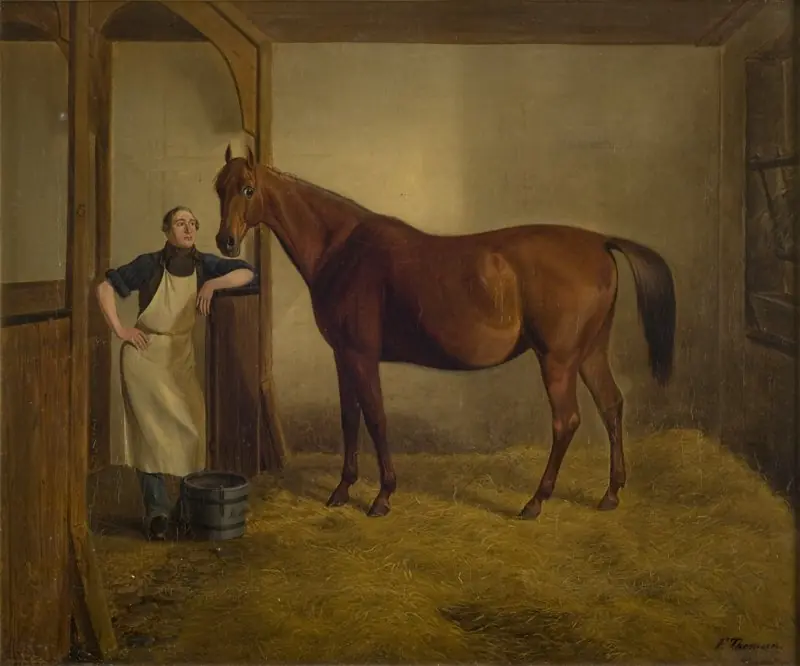
Queen of Saba is a photography by Unknown. It dates from 1850 and is held in the collection of the Statens Museum for Kunst. Created around 1850, this photograph depicts a figure in a rural stable, standing beside a horse.
About this work
Overview
The lighting is gentle, enhancing texture without dramatic contrast, suggesting a moment of ordinary stillness rather than staged performance.
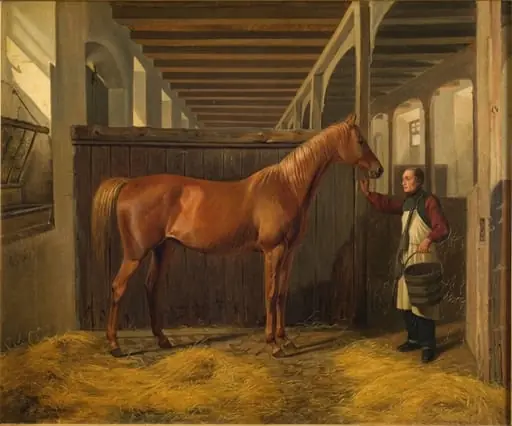
Created around 1850, this photograph depicts a figure in a rural stable, standing beside a horse. The image is held in the collection of the Museum of Ethnography. The setting is unadorned, with worn wooden walls and hay-strewn flooring. The subject, dressed in a white apron and dark vest, faces the animal with quiet composure. The lighting is gentle, enhancing texture without dramatic contrast, suggesting a moment of ordinary stillness rather than staged performance.
Subject & Meaning
The figure, though labeled as the 'Queen of Saba,' bears no clear connection to historical or biblical narratives. The title may reflect a romanticized or exoticizing impulse common in 19th-century ethnographic photography. The calm interaction between person and horse suggests a relationship rooted in daily labor, not myth. The image’s power lies in its unembellished intimacy, contrasting with the grandeur implied by its name.
Technique & Style
The photograph employs natural, diffused light to model form subtly. Shadows deepen along the stable’s wooden beams, while the horse’s coat appears smooth under even illumination. The composition centers the pair near a doorframe, using the structure to frame the scene without intrusion. Focus is evenly distributed, avoiding sharp detail in favor of atmospheric cohesion. The absence of overt staging points to an observational approach.
History & Provenance
The photograph entered the Museum of Ethnography’s collection in the late 19th or early 20th century, likely acquired during a period of expanding ethnographic documentation. Its origin remains undocumented beyond the date and location of its current holding. The attribution to '2708_person' is a placeholder identifier, indicating the photographer’s identity is lost or unverified in institutional records.
Context
Produced during a time when photography was increasingly used to classify and document cultural types, this image reflects the era’s tendency to assign exotic titles to ordinary subjects. Similar photographs from the period often paired rural laborers with animals to suggest 'authentic' or 'primitive' life. The stable setting, common in agricultural regions, was chosen for its perceived simplicity, reinforcing colonial-era assumptions about non-Western or rural societies.
Legacy
Though not widely exhibited, the photograph serves as a quiet example of how 19th-century ethnographic practices blurred observation with imagination. Its enduring presence in the museum collection invites critical reflection on the naming and framing of marginalized subjects. The image’s quiet dignity, unintentionally preserved, now challenges the very labels once imposed upon it.
Artist & collection

 Domestic Scene
 Giacomo and Cardinal Marco, investing Andrea, Abbot of San Zeno, with his Benefice
 The Nymph of Fontainebleau
 Portrait of a Woman
 Madonna and Child with Saints in the Enclosed Garden
 Venus and Minerva
 Family Group of Four on Sofa
 Wall painting from Room H of the Villa of P. Fannius Synistor at Boscoreale