Artwork
View of Paris seen from the Place Dauphine
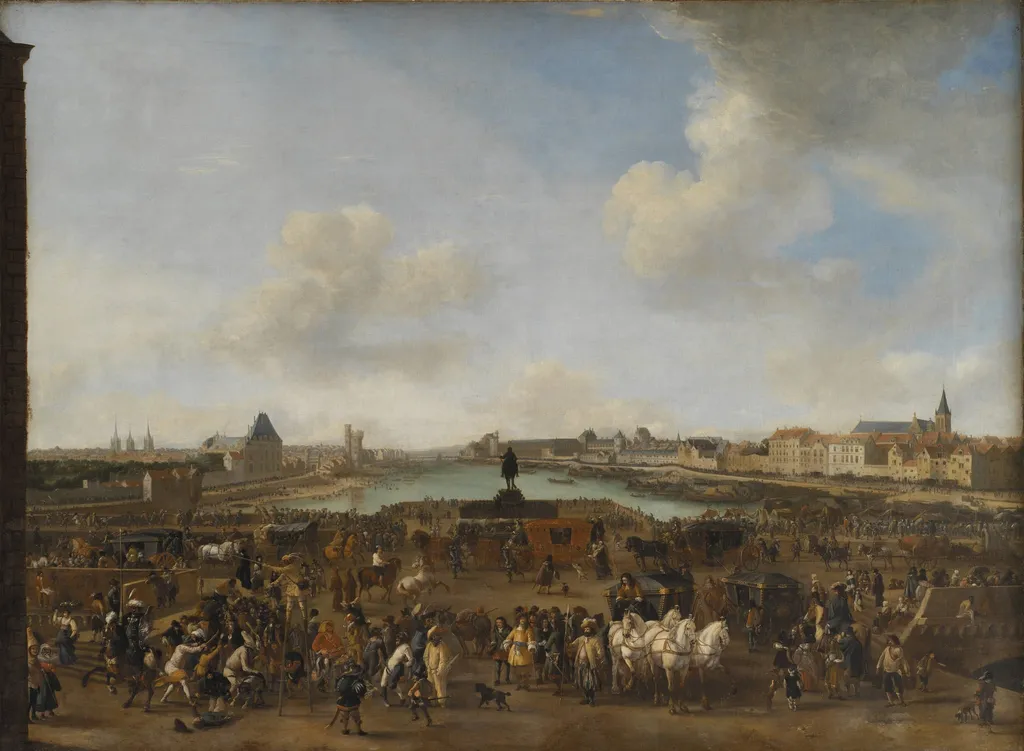
View of Paris seen from the Place Dauphine is a photography by Unknown. It dates from 1650 and is held in the collection of the Statens Museum for Kunst. This cityscape, dated around 1650, depicts Paris as seen from the Place Dauphine.
About this work
Overview
This cityscape, dated around 1650, depicts Paris as seen from the Place Dauphine. Rendered in a detailed, observational style, it captures the urban rhythm of the mid-seventeenth century with attention to movement and spatial depth. The work is held in the collection of the Museum of Ethnography, though its origins and artist remain unidentified.
Subject & Meaning
The scene presents a bustling riverside with pedestrians, horseback riders, and carriages along the Seine. Distant buildings, bridges, and church spires frame the horizon, suggesting the city’s growing administrative and religious presence. The orderly arrangement of figures and architecture implies a vision of Paris as a functioning, harmonious capital rather than a chaotic metropolis.
Technique & Style
The artist employs chiaroscuro to define forms through subtle contrasts of light and shadow, distinguishing figures from architecture and sky. Soft, diffused lighting enhances the sense of atmosphere, while precise brushwork renders textures of stone, fabric, and water. The composition is balanced, with horizontal bands of land, river, and sky creating a calm, measured perspective.
History & Provenance
The painting’s origin is undocumented, and the artist’s identity is unknown. It entered the Museum of Ethnography’s collection in the late nineteenth or early twentieth century, likely through a broader acquisition of European topographical works. Its classification as an ethnographic object reflects historical practices of categorizing urban scenes as cultural records.
Context
Painted during Louis XIV’s early reign, the image aligns with a growing interest in documenting Paris’s urban expansion. The Place Dauphine, built in the early 1600s, was a planned residential square, and its view toward the river reflected contemporary ideals of order and civic pride. Similar views were produced by artists seeking to capture the city’s evolving identity.
Legacy
Though not widely exhibited, the painting contributes to a modest corpus of early modern Parisian views that predate more famous depictions by later artists. Its preservation offers insight into how urban life was visually recorded before the rise of print culture and photography, serving as a quiet testament to everyday observation in the 1650s.
Artist & collection

 Domestic Scene
 Giacomo and Cardinal Marco, investing Andrea, Abbot of San Zeno, with his Benefice
 The Nymph of Fontainebleau
 Portrait of a Woman
 Madonna and Child with Saints in the Enclosed Garden
 Venus and Minerva
 Family Group of Four on Sofa
 Wall painting from Room H of the Villa of P. Fannius Synistor at Boscoreale
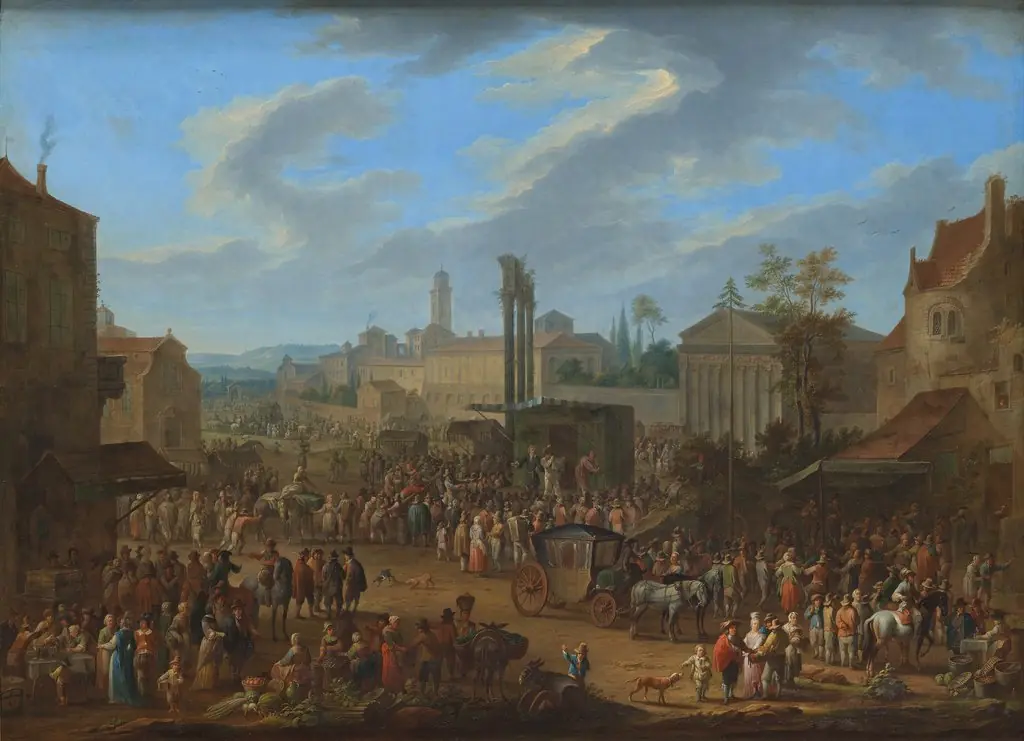 Market with temple and maypole
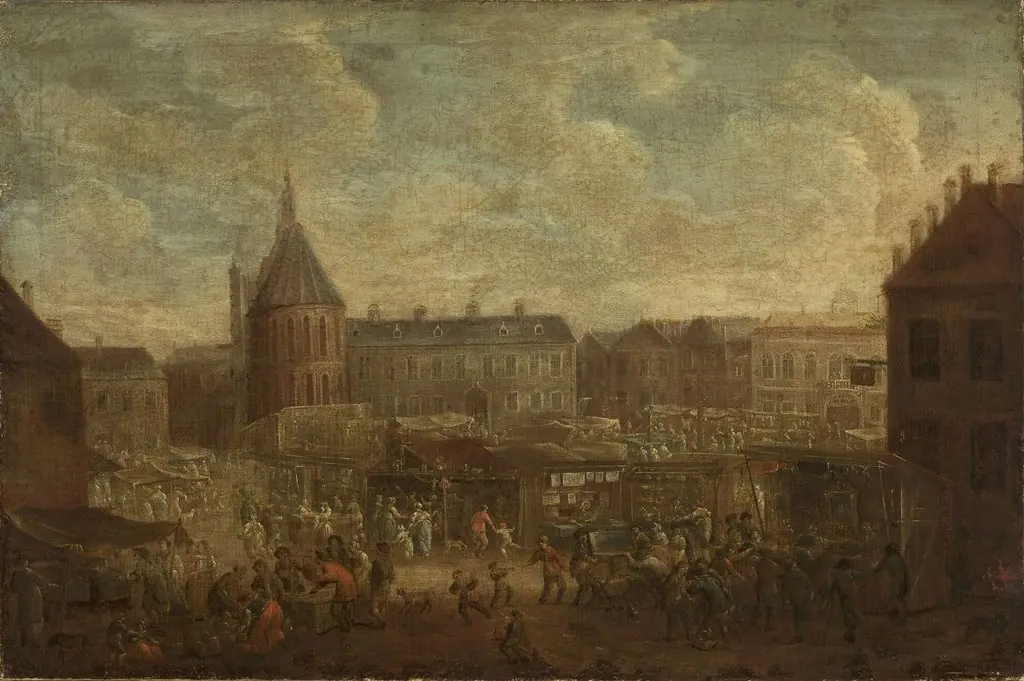 Marketplace in a town
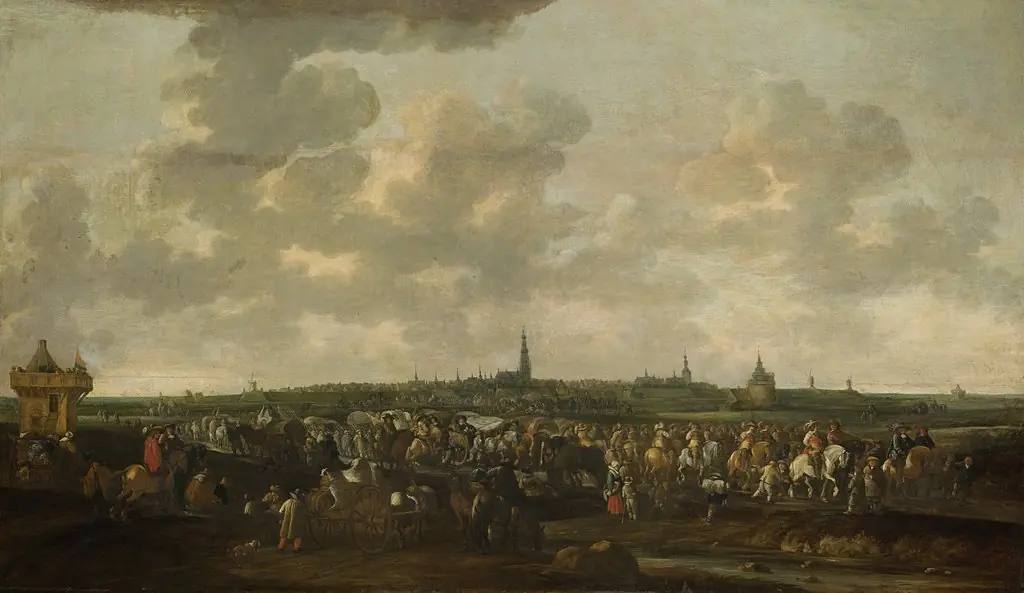 Departure of Spanish Occupation Troops from Breda, October 10, 1637
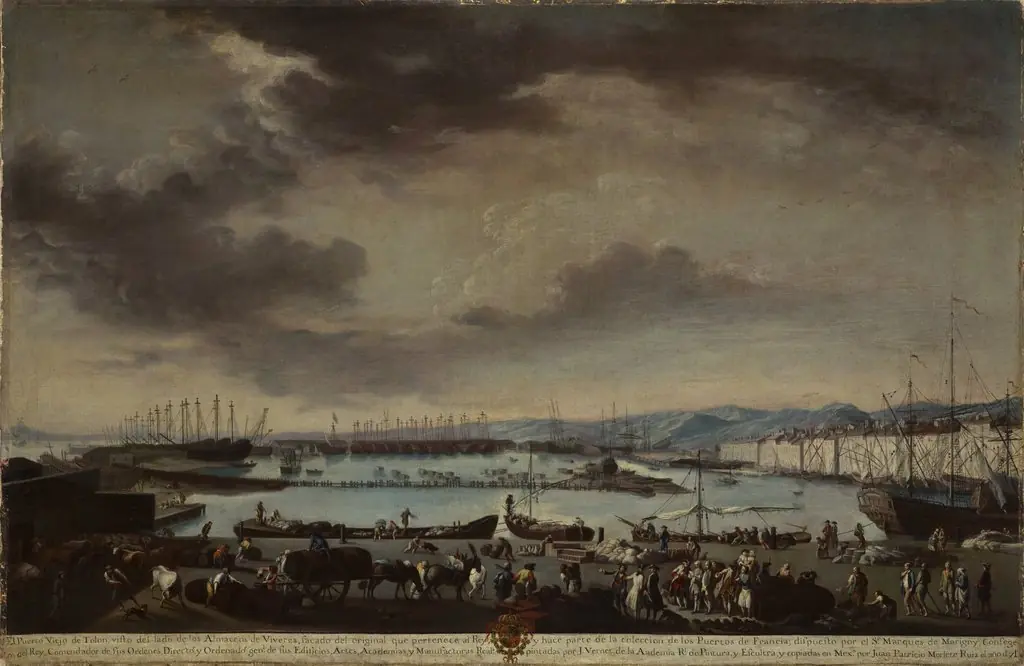 View of the Old Port of Toulon (El puerto viejo de Tolón)
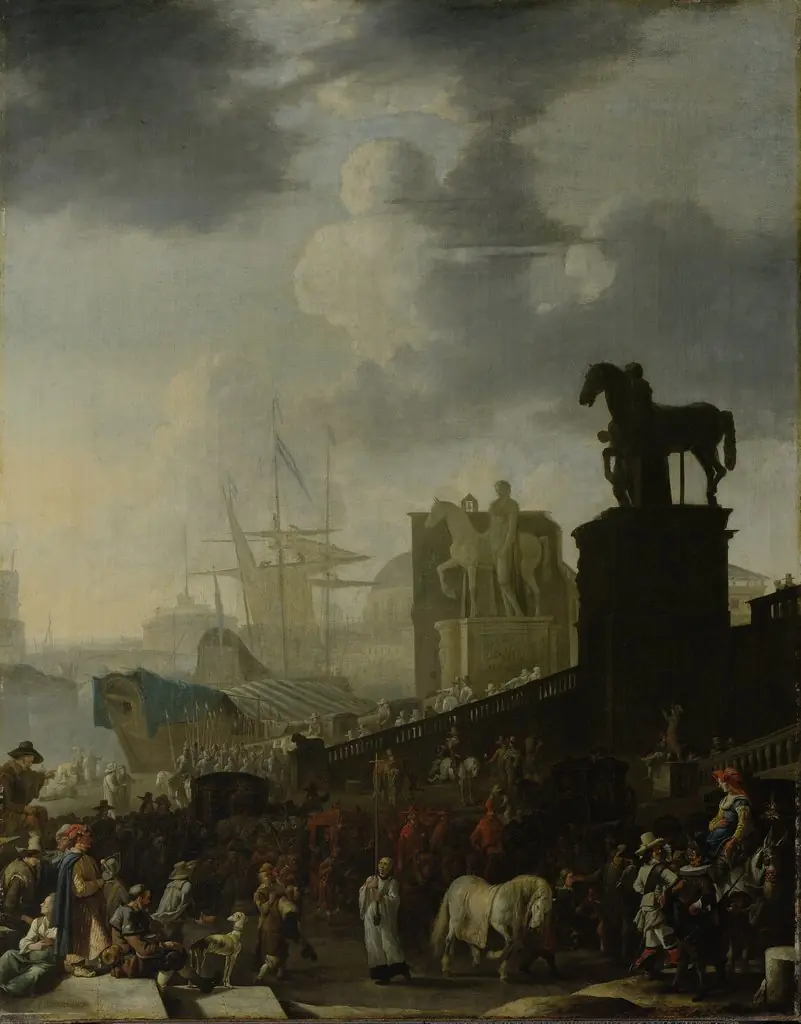 The climbing of the Capitol with the gray horse of the newly elected pope
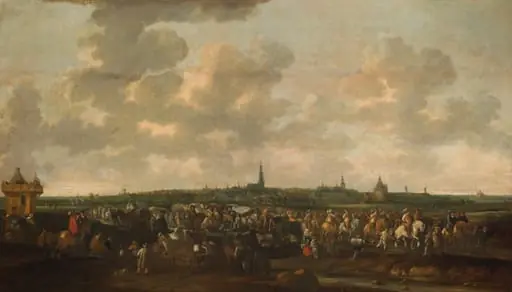 Untitled
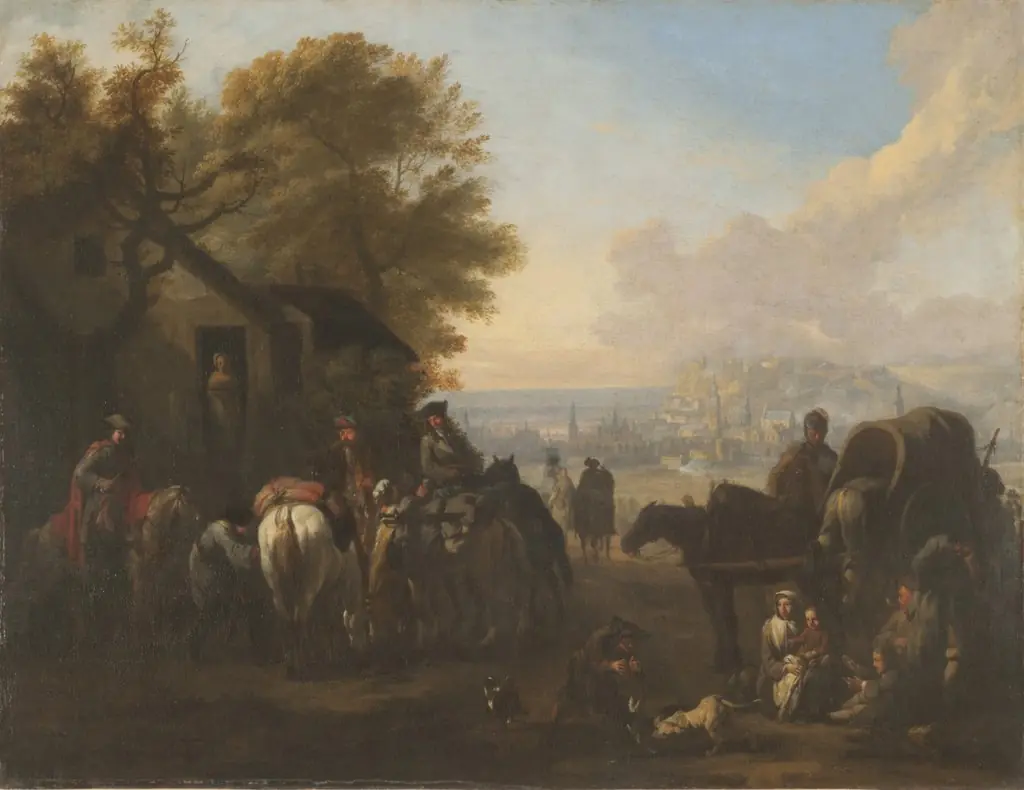 Travelers in Front of the Inn
 The Outer Harbor of Brest
 The Siege and Capture of the City of Hulst from the Spaniards, November 5, 1645