Artwork
Untitled
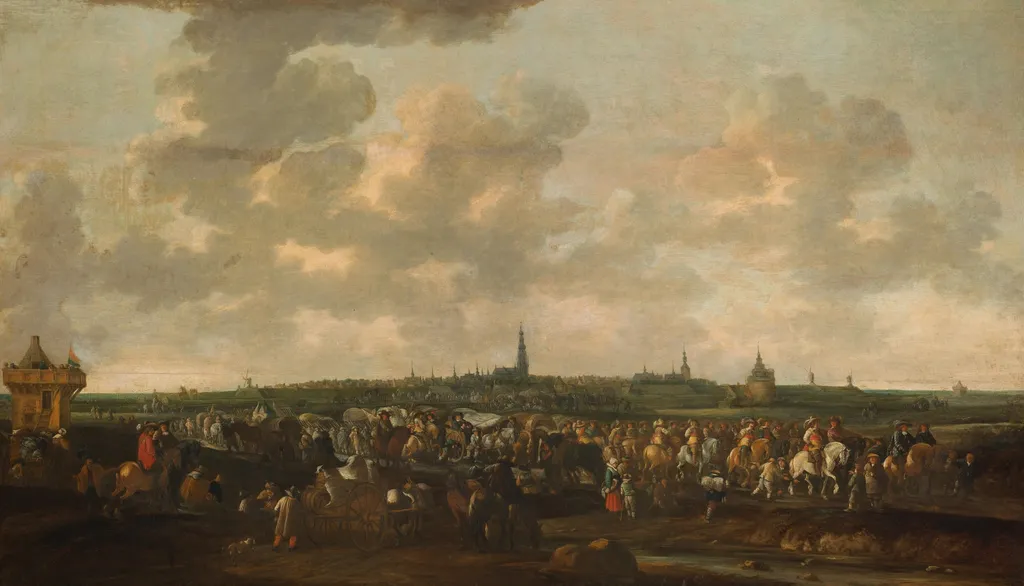
Untitled is an unspecified painting by the Dutch Golden Age artist Hendrick de Meijer. It dates from 1665 and is held in the collection of the Rijksmuseum.
About this work
You see a busy city square at night, torches flickering on armor and flags.
This painting shows the Spanish army leaving Breda in 1637—years after the real event. The artist signed it in 1663, so it’s a memory, not a news photo. Look at the tiny faces: some soldiers glance back, as if they don’t want to go.
To see more scenes like this, visit the Rijksmuseum.
Overview
Painted in 1663 by Hendrik de Meyer, this work depicts the withdrawal of Spanish forces from Breda, an event that occurred twenty-six years earlier.
Painted in 1663 by Hendrik de Meyer, this work depicts the withdrawal of Spanish forces from Breda, an event that occurred twenty-six years earlier. Though dated to the year of its completion, the scene is not a contemporary record but a retrospective rendering. The composition captures a nocturnal urban square illuminated by torchlight, with figures in armor and banners moving through the shadows, suggesting a moment of quiet transition rather than dramatic confrontation.
Subject & Meaning
The painting portrays the departure of Spanish troops from the Dutch city of Breda in 1637, a symbolic retreat following years of occupation during the Eighty Years’ War. Rather than emphasizing victory or defeat, the scene focuses on the somber, human dimension of withdrawal—soldiers glancing backward, their expressions ambiguous, as if weighed by memory or loss. The absence of triumphalism suggests a contemplative tone, perhaps reflecting on the cost of prolonged conflict.
Technique & Style
De Meyer employs a muted nocturnal palette with concentrated torchlight to model forms and guide the viewer’s eye through the crowded square. Figures are rendered with careful attention to gesture and posture, their small scale enhancing the sense of atmosphere over individual narrative. The handling of light on metal and fabric conveys texture without overt realism, favoring a stylized, almost theatrical composition that prioritizes mood over topographical accuracy.
History & Provenance
The painting was completed in 1663, more than two decades after the event it depicts, indicating it was likely commissioned as a historical reflection rather than a contemporary record. Its original gilt lime frame has been preserved, suggesting it was valued as a significant work from the outset. The artist’s signature, possibly added later, aligns with the practice of commemorating civic or military transitions in the Dutch Republic’s postwar cultural climate.
Context
In the 1660s, the Dutch Republic was consolidating its independence, and historical scenes of Spanish withdrawal served as reminders of hard-won sovereignty. De Meyer’s painting fits within a broader trend of civic memory-making, where artists revisited recent conflicts to reinforce collective identity. Unlike propaganda, this work avoids overt nationalism, instead offering a quiet, humanized view of military departure that resonated with a society weary of war.
Legacy
The painting remains a rare example of a Dutch artist addressing the Spanish occupation from the perspective of its departure rather than its defeat. Its preservation in original framing and its focus on emotional nuance distinguish it from more celebratory war imagery of the period. It contributes to a quieter strand of Dutch historical painting that values introspection over spectacle.
Artist & collection

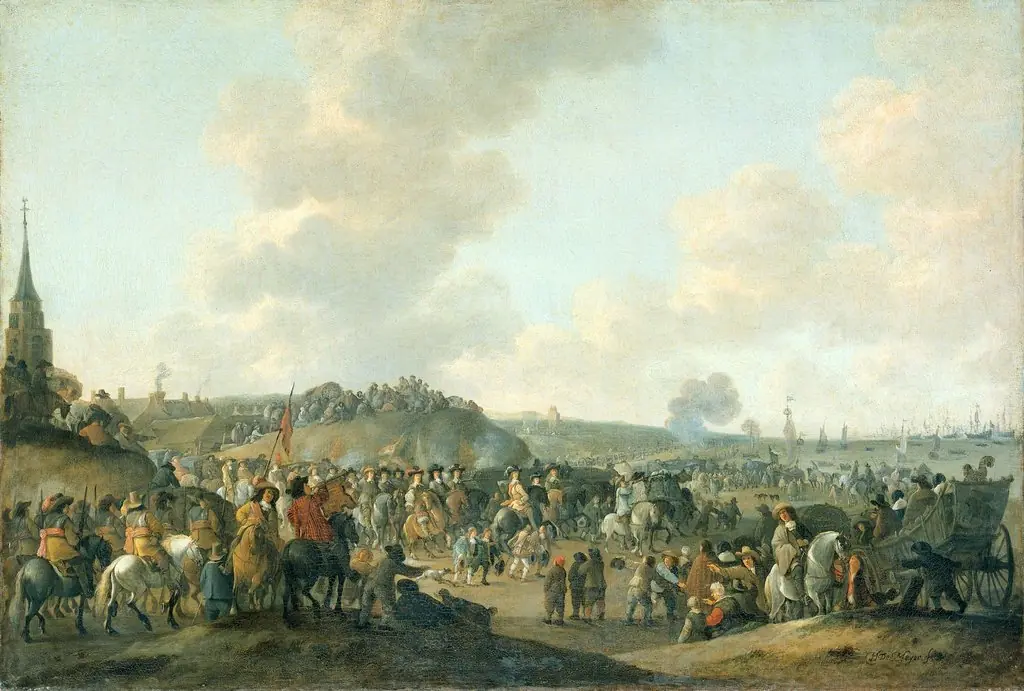 Departure of Charles II of England at Scheveningen, June 2, 1660
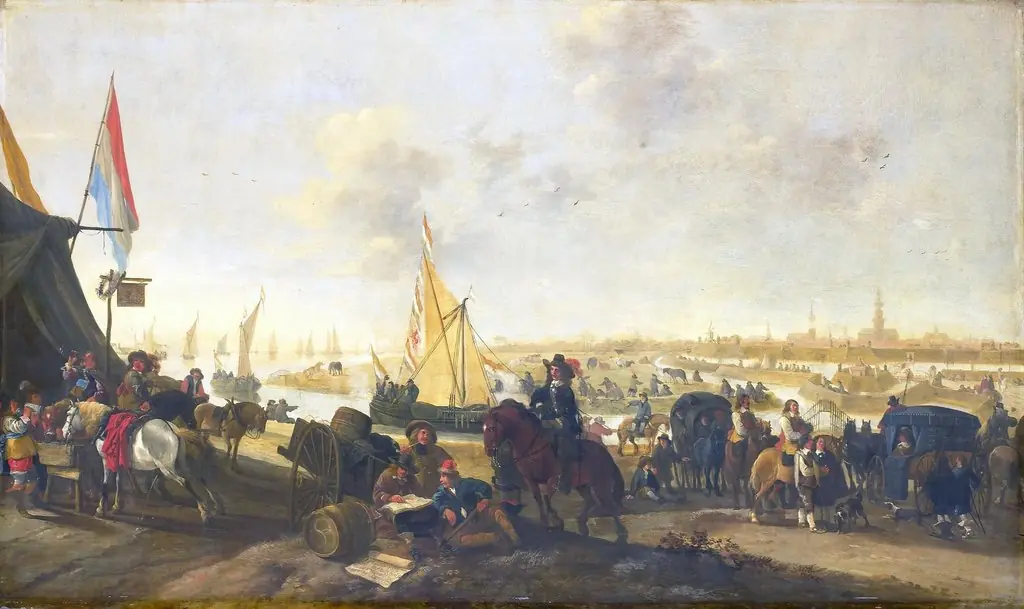 The Siege and Capture of the City of Hulst from the Spaniards, November 5, 1645
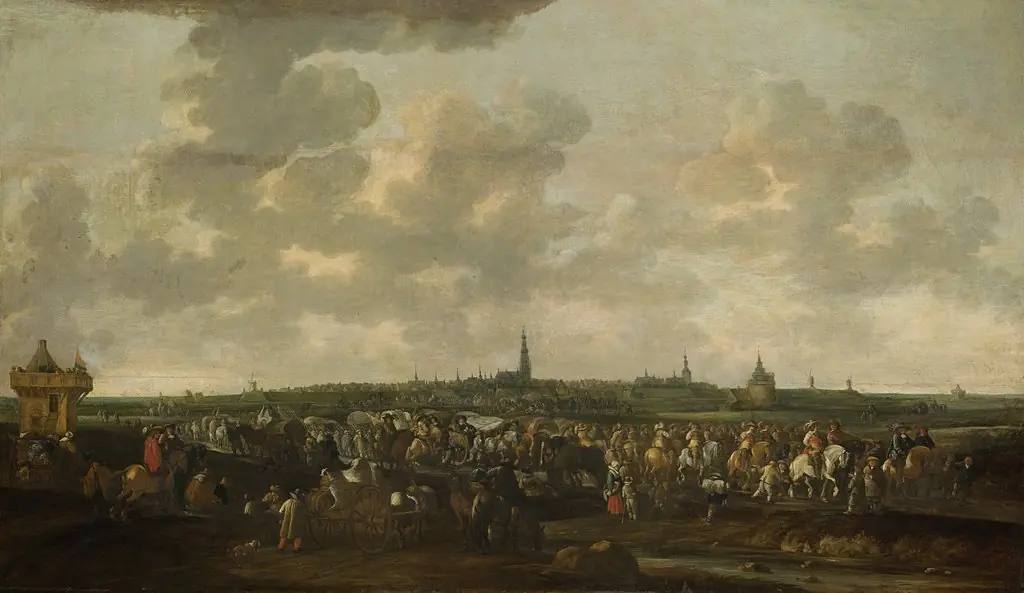 Departure of Spanish Occupation Troops from Breda, October 10, 1637
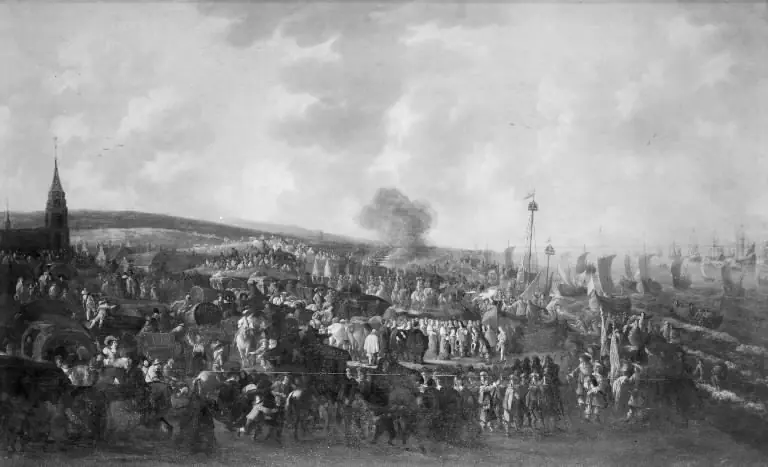 Charles II of England Embarking in Scheweningen May 23, 1660
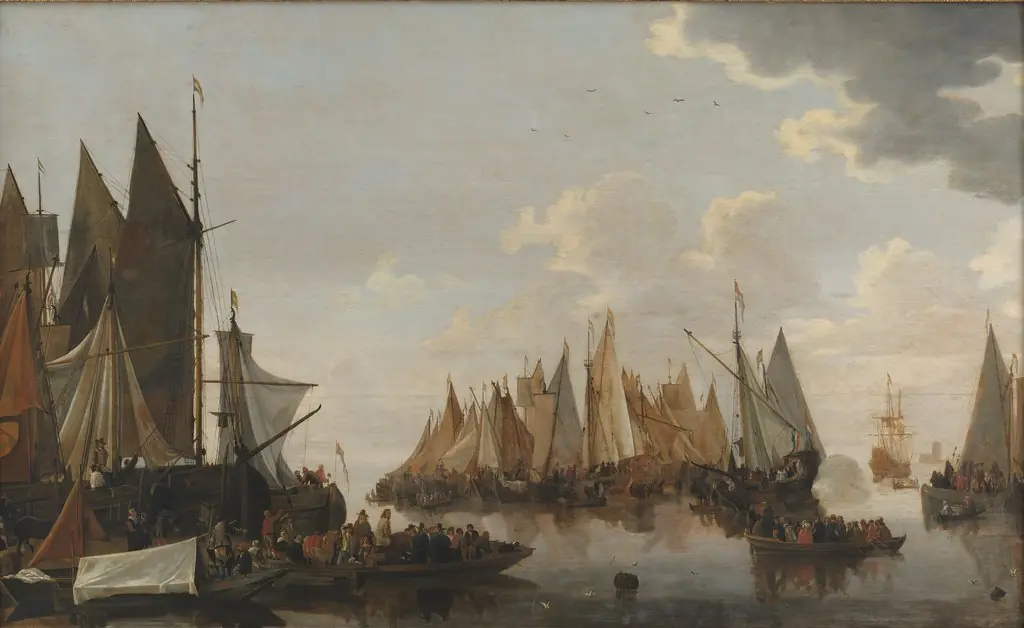 Embarkation of Troops on a Dutch River
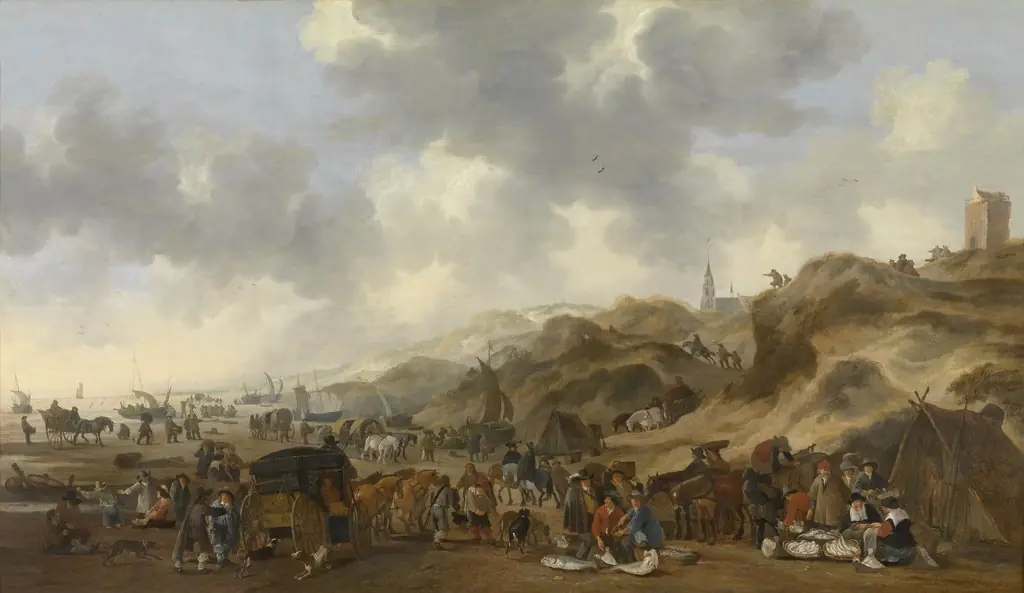 The Dunes at Scheveningen
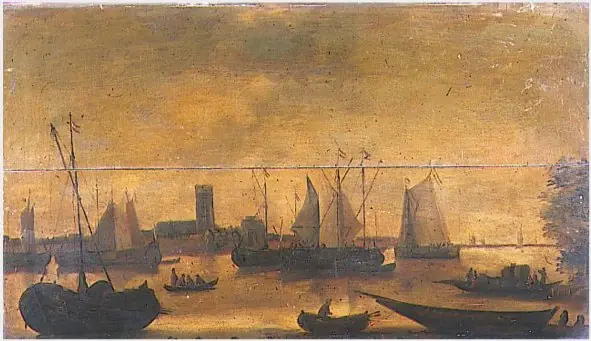 Shipping in Inland Waters (View of ?Dordrecht)
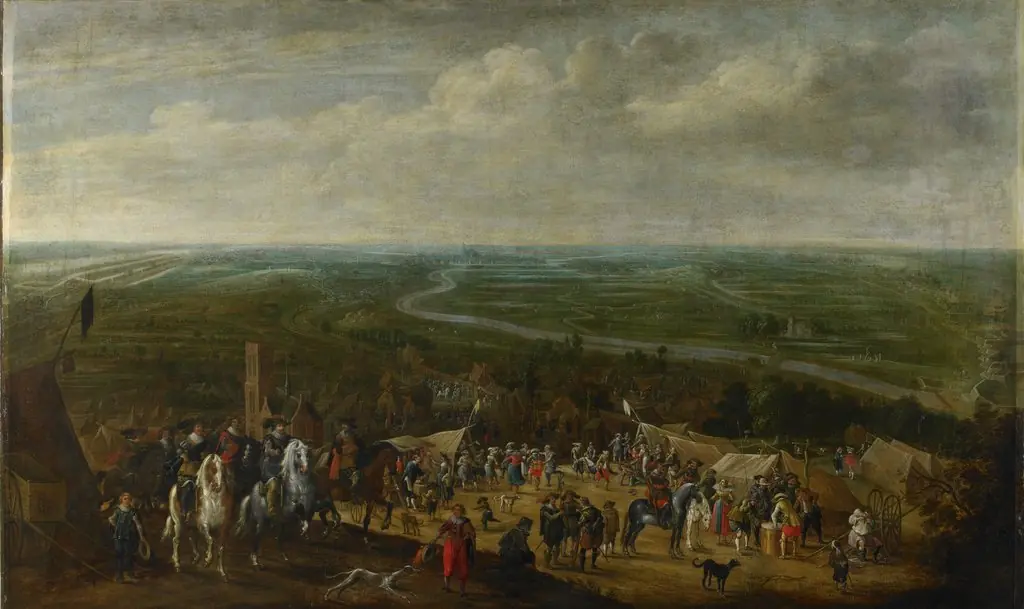 Prince Frederik Hendrik at the siege of 's-Hertogenbosch, 1629
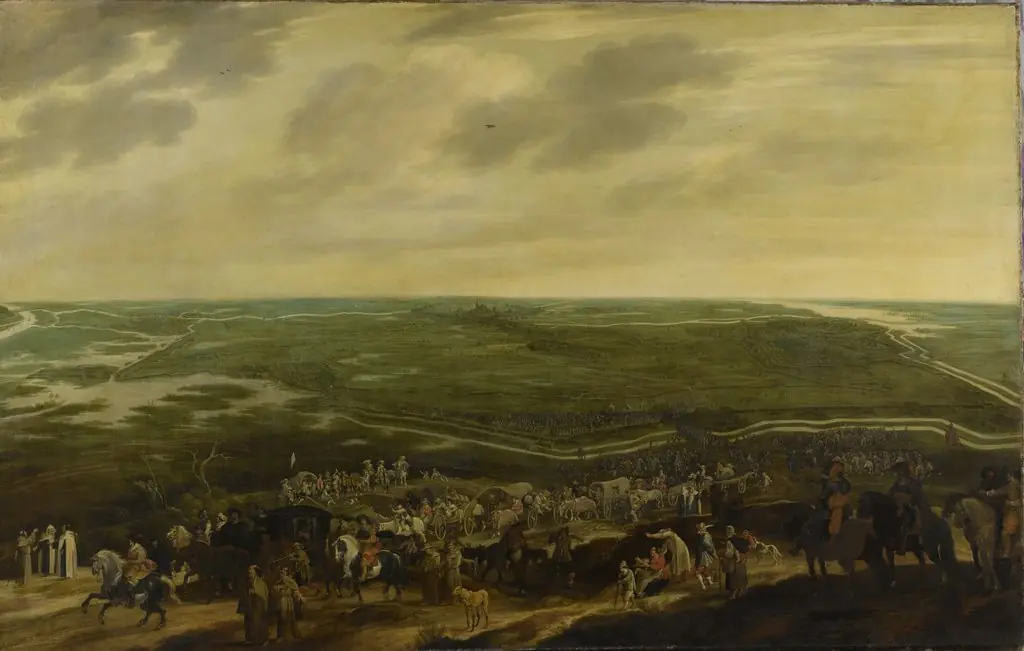 The defeated Spanish garrison leaving 's-Hertogenbosch, 17 September 1629
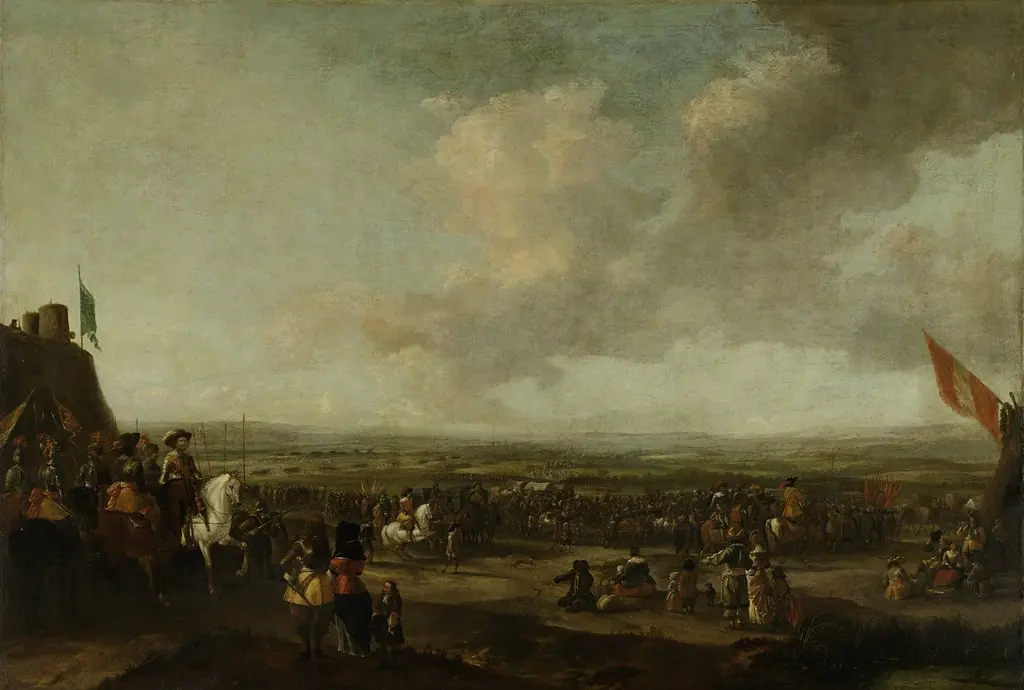 Frederik Hendrik at the surrender of Maastricht, 22 August 1632
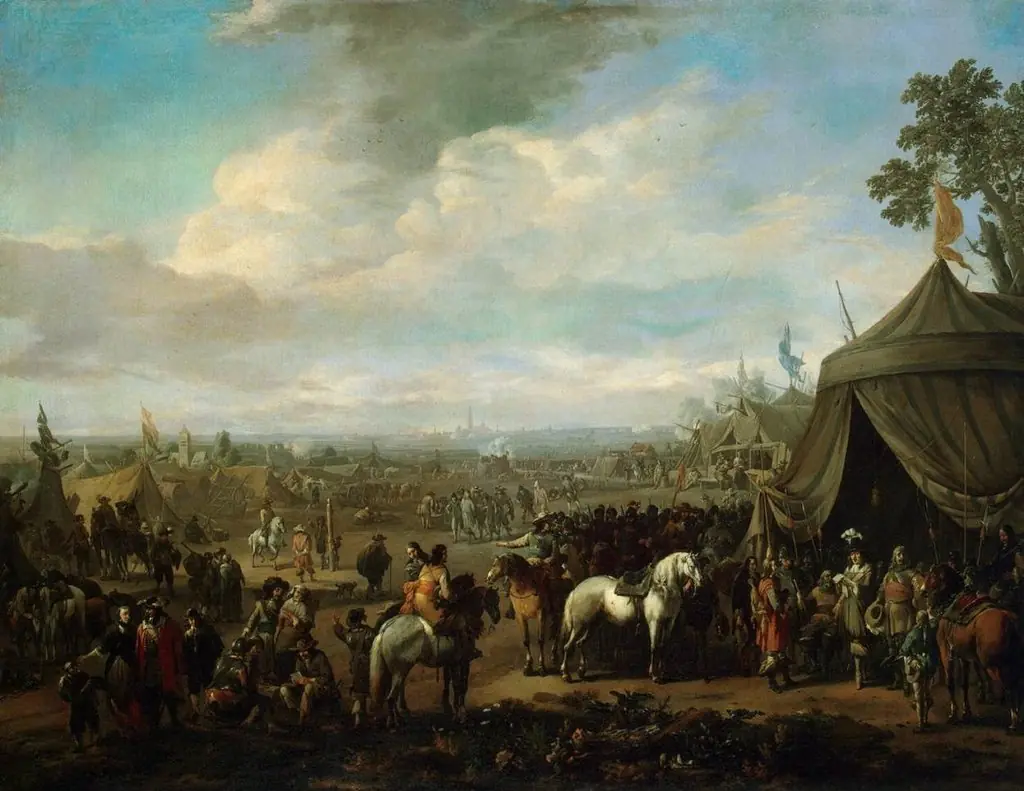 Flemish Town Sieged by the Spanish Soldiers
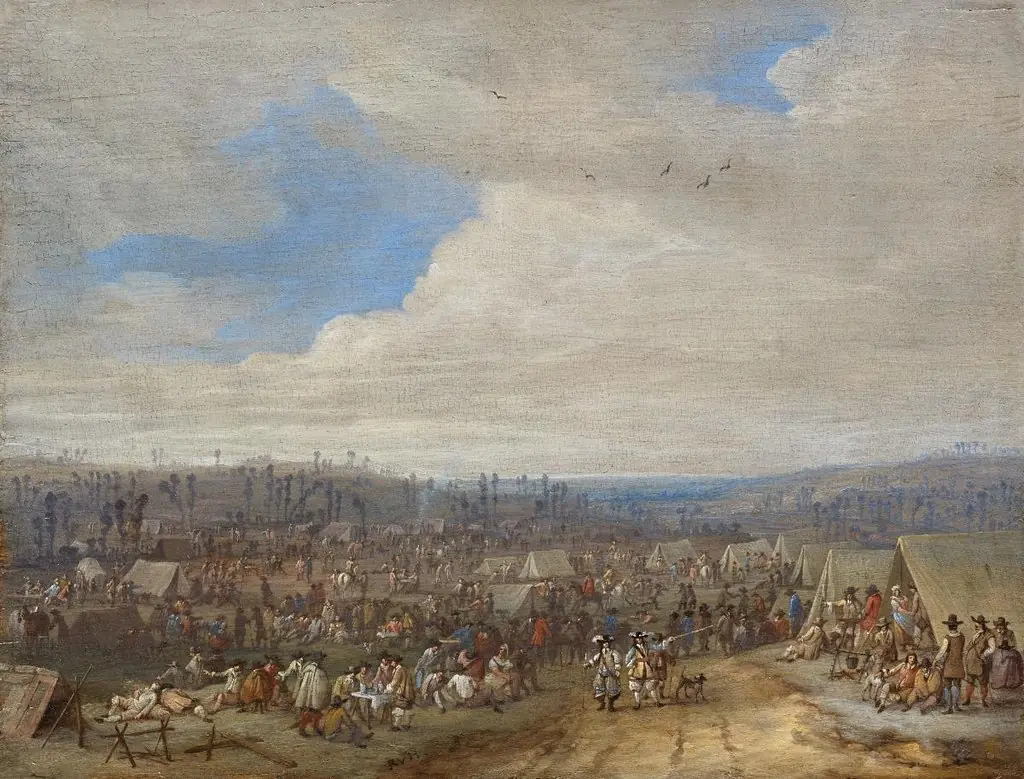 Soldaten im Lager
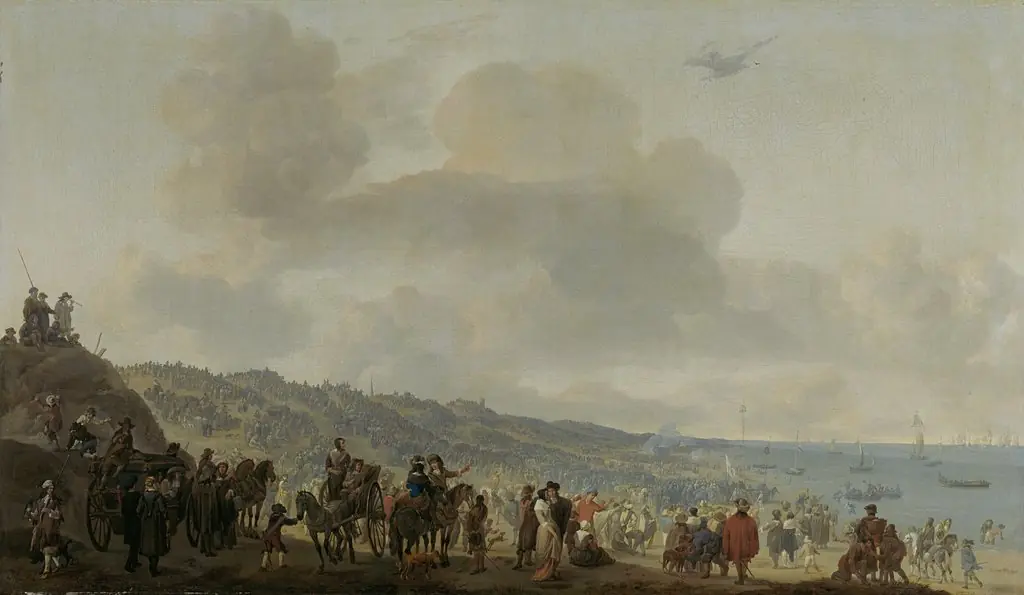 The Departure of Charles II (1630-1685) from Scheveningen, 2 June 1660
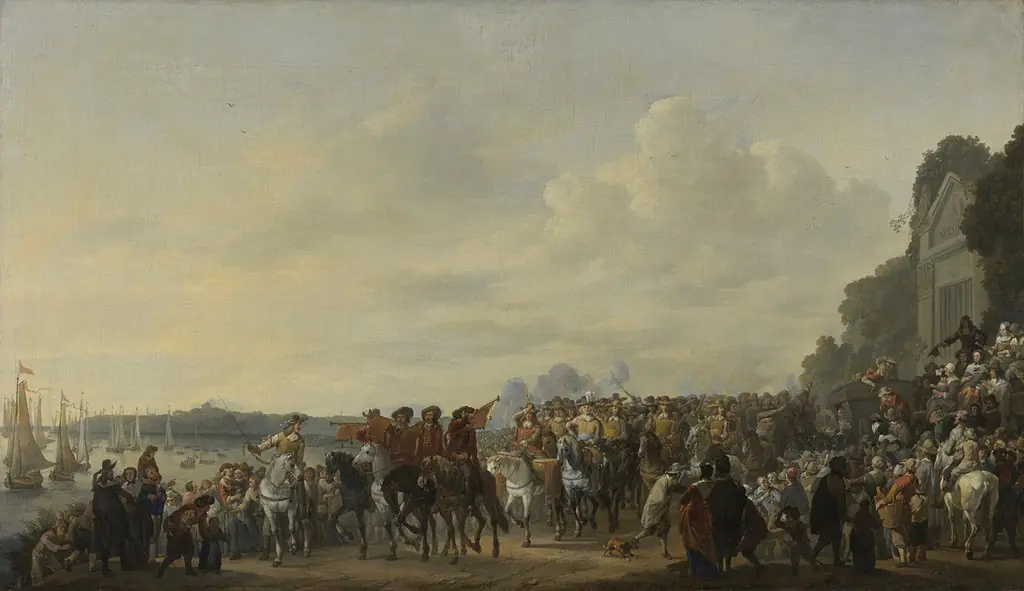 Charles II (1630-1685) stopping at the Estate of Wema on the Rotte on his Journey from Rotterdam to The Hague, 25 May 1660