Artwork
A Mill in Odense
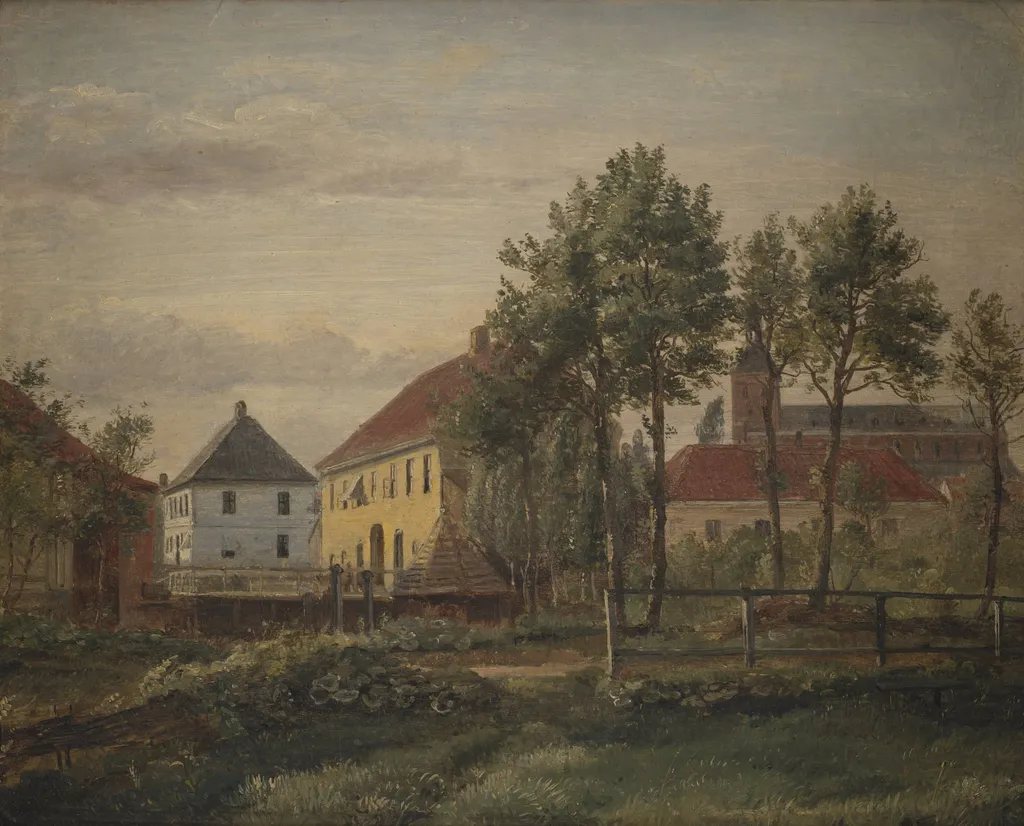
A Mill in Odense is a photography by Unknown. It dates from 1643 and is held in the collection of the Statens Museum for Kunst. Created around 1643, this painting depicts a modest riverside mill in Odense, Denmark.
About this work
Overview
It is attributed to an artist whose identity remains uncertain, though the work is often linked to regional Dutch or Danish landscape traditions of the period.
Created around 1643, this painting depicts a modest riverside mill in Odense, Denmark. It is attributed to an artist whose identity remains uncertain, though the work is often linked to regional Dutch or Danish landscape traditions of the period. The piece is part of the Museum of Ethnography’s collection, where it is preserved as an example of early Nordic topographical imagery rather than a grand historical narrative.
Subject & Meaning
The scene centers on a yellow-walled mill alongside a smaller gray structure, both nestled beside a quiet waterway. Fences trace the riverbank, and sparse trees frame the background. There is no human presence, and the absence of dramatic action suggests an emphasis on quiet daily life. The composition reflects a local, unidealized view of rural infrastructure, valuing stillness over spectacle.
Technique & Style
The artist employed loose, fluid brushwork that suggests spontaneity rather than meticulous finish. Colors are subdued—soft yellows, grays, and pale skies—creating a tranquil atmosphere. Forms are simplified, with minimal detail in architecture or foliage. The lack of sharp contours and the gentle blending of tones contribute to a hazy, atmospheric quality, aligning with observational rather than idealized landscape conventions.
History & Provenance
The painting entered the Museum of Ethnography’s holdings in the late 19th or early 20th century, likely through regional acquisitions or donations tied to Danish cultural preservation efforts. Its origins before that are undocumented, and no records of earlier ownership or exhibition history are known. Its attribution remains tentative due to the absence of signatures or contemporary documentation.
Context
In mid-17th century Denmark, landscape painting was not yet a dominant genre. Most artistic output focused on portraiture or religious themes. This work stands as a rare example of secular, localized scenery, possibly made for private or civic use. Its modest scale and unadorned subject reflect a regional interest in documenting everyday environments, distinct from the grander Dutch landscapes of the same era.
Legacy
Though not widely known outside Denmark, the painting contributes to understanding how local artists engaged with their surroundings during a time when landscape art was still emerging. Its unpretentious style and focus on ordinary structures offer insight into pre-modern visual culture, influencing later Danish artists who sought to capture national identity through humble, everyday scenes.
Artist & collection

 Domestic Scene
 Giacomo and Cardinal Marco, investing Andrea, Abbot of San Zeno, with his Benefice
 The Nymph of Fontainebleau
 Portrait of a Woman
 Madonna and Child with Saints in the Enclosed Garden
 Venus and Minerva
 Family Group of Four on Sofa
 Wall painting from Room H of the Villa of P. Fannius Synistor at Boscoreale
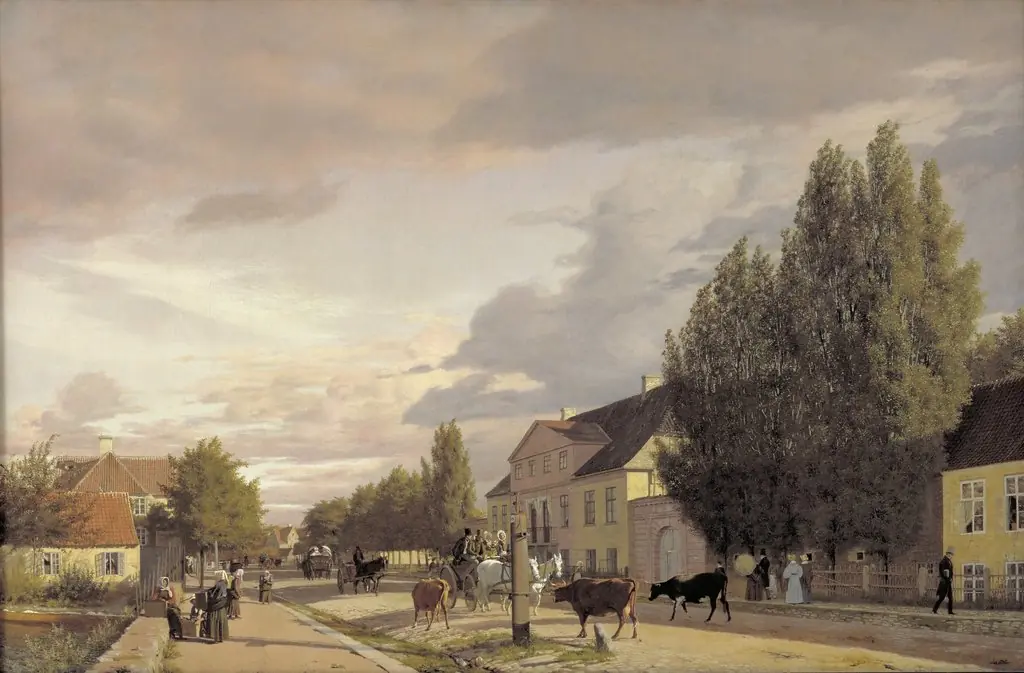 View of a Street in Østerbro outside Copenhagen. Morning Light
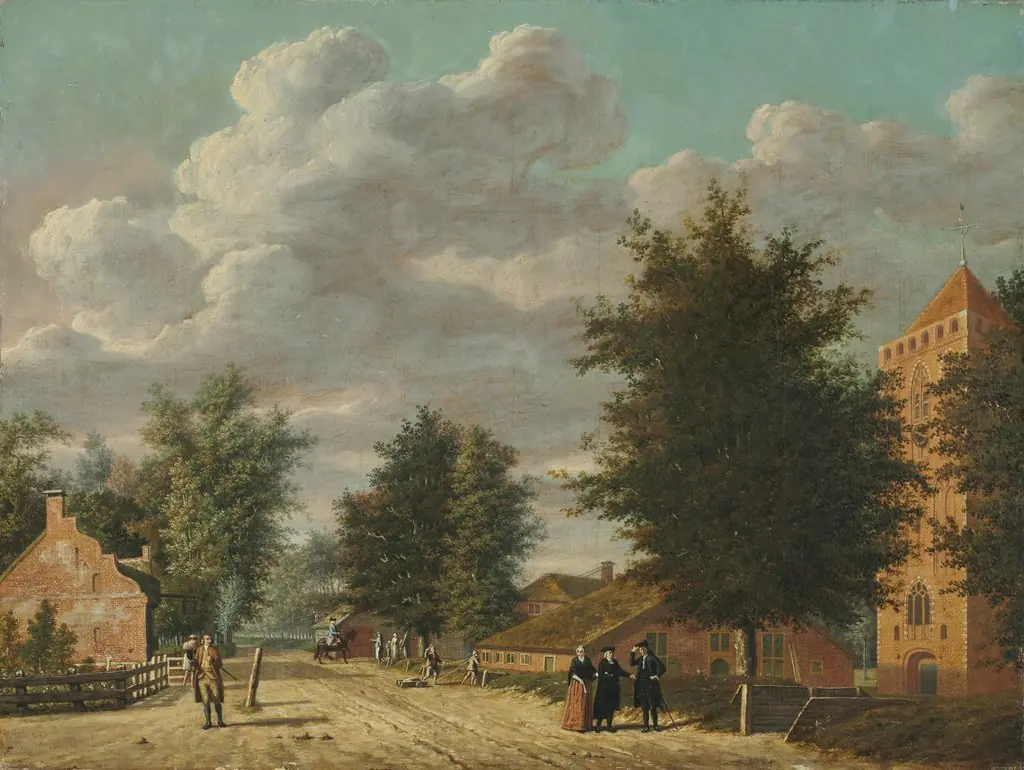 View of the Village of Eemnes
 View of the Village of Eemnes
 View of Falkonerallé outside Copenhagen
 View of Falkonerallé outside Copenhagen
 View of Pirna, from Sonnestein Castle
 The canal at 's-Graveland
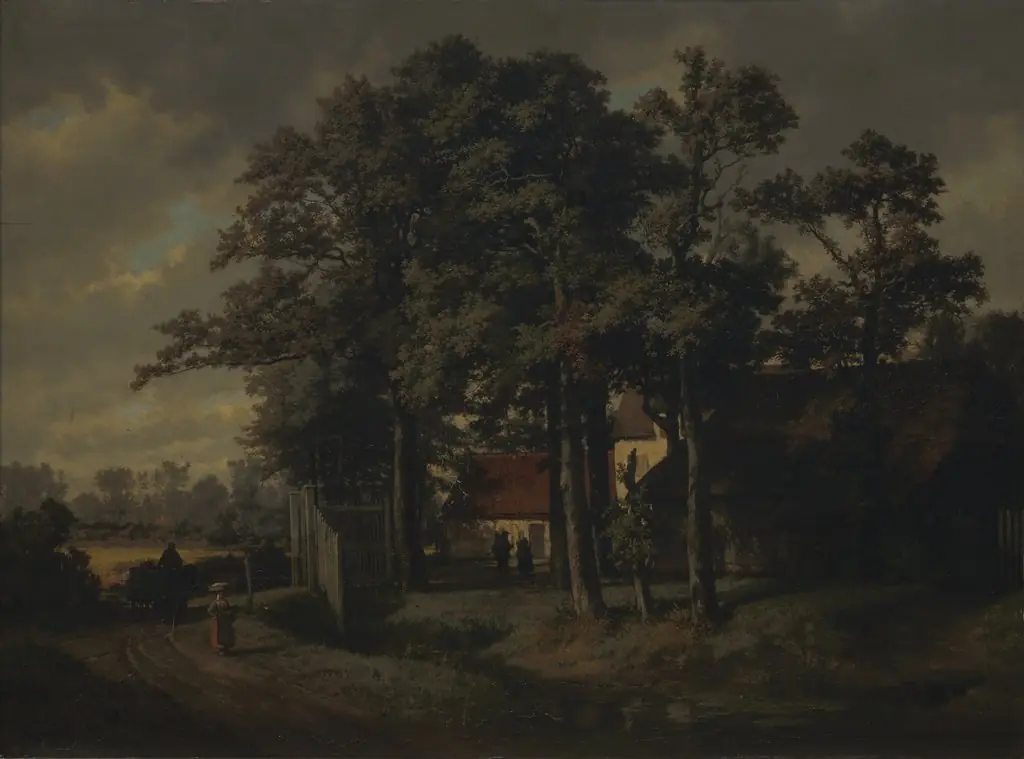 Farm in Merksem
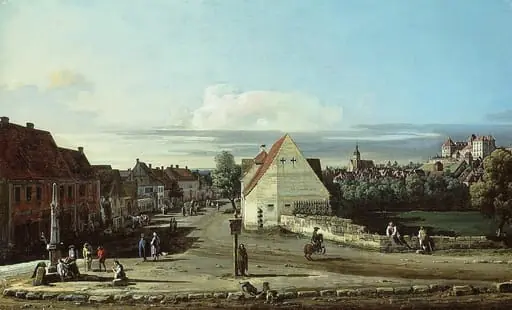 View of Pirna with the Fortress of Sonnenstein
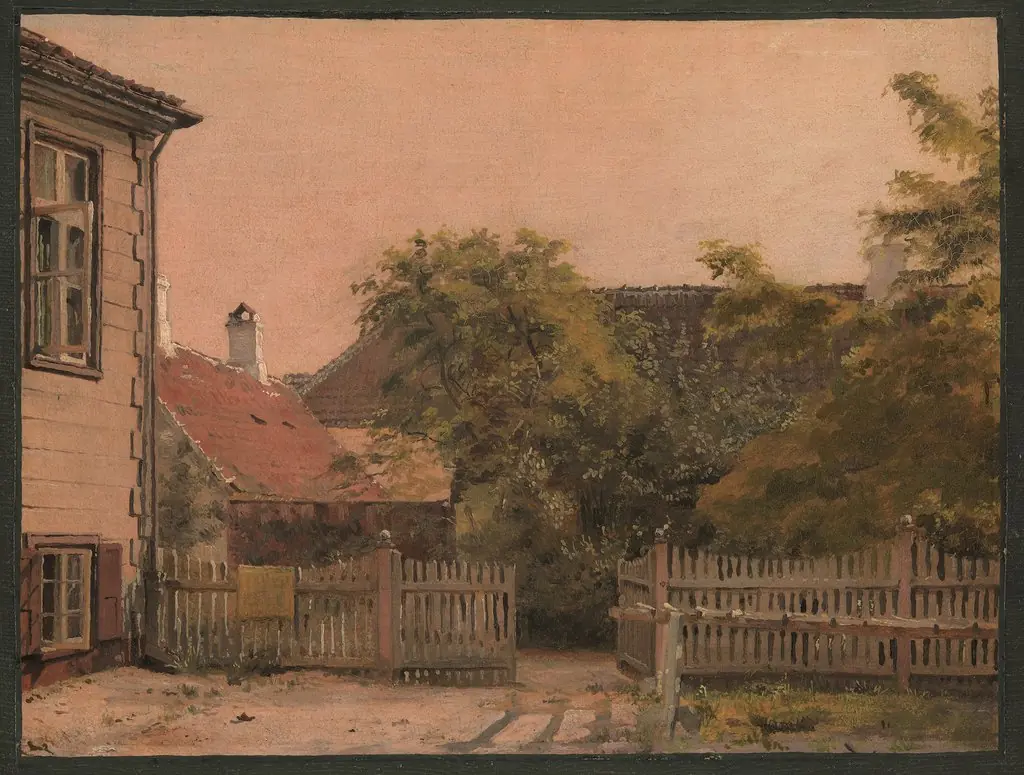 A Corner of the Artist´s Father's House