Artwork
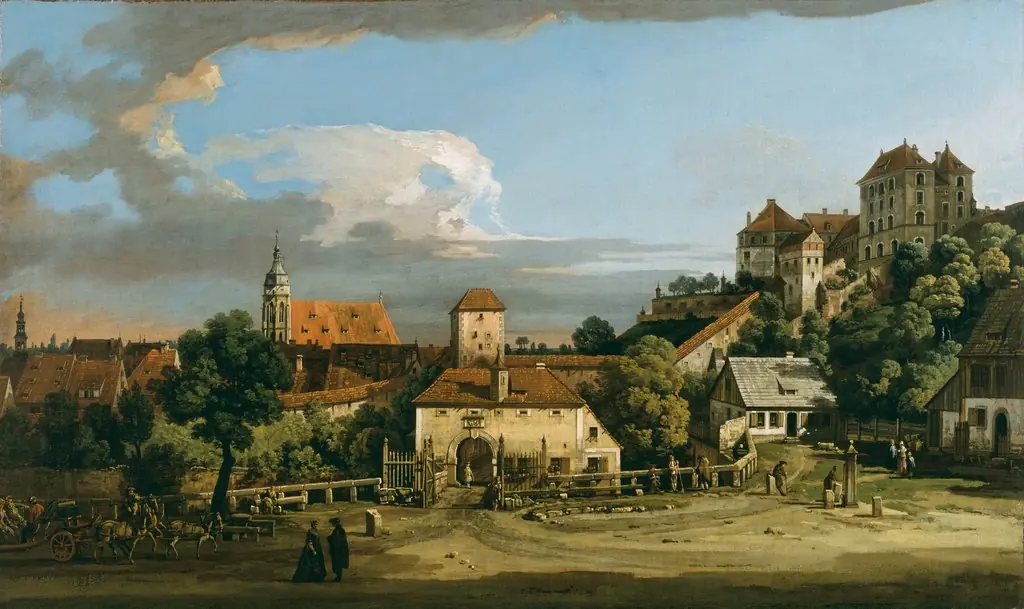
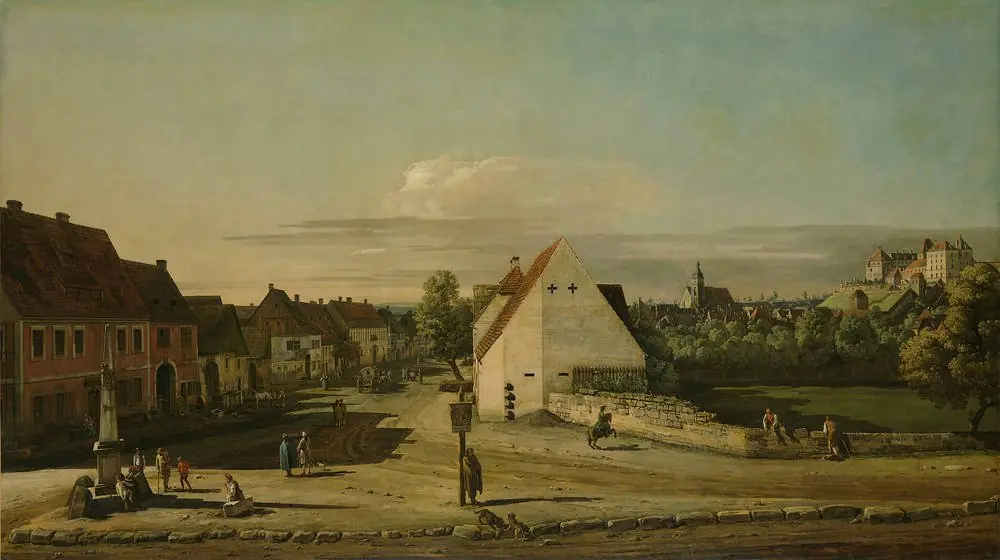
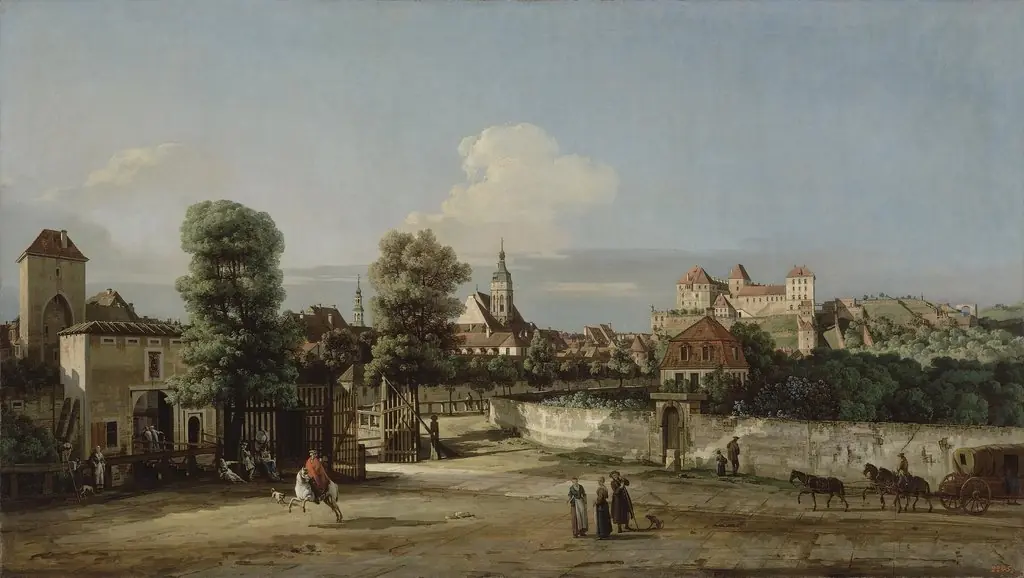
View of Pirna with the Fortress of Sonnenstein
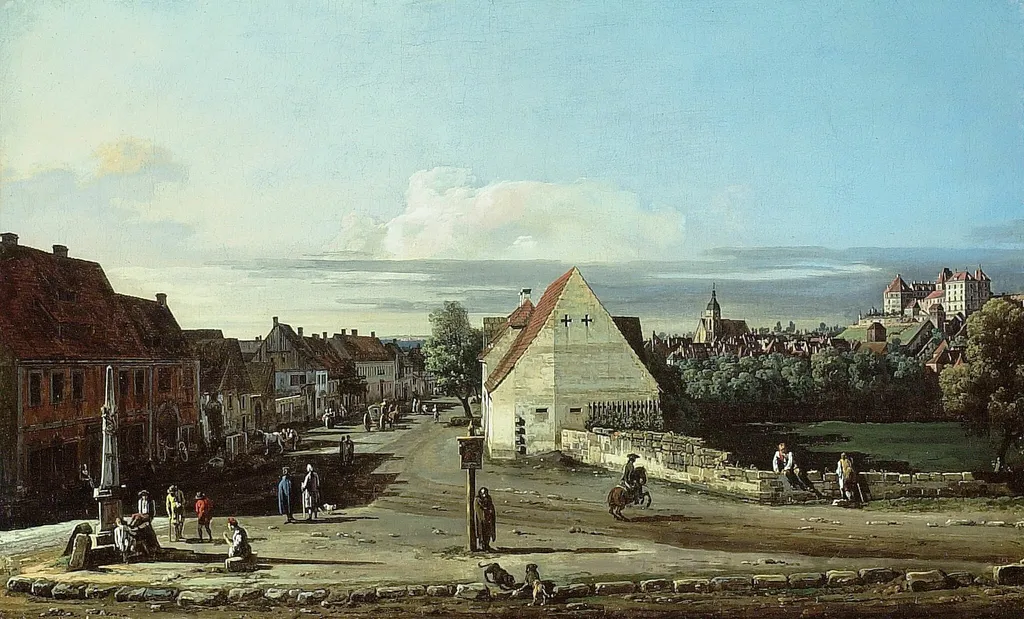
View of Pirna with the Fortress of Sonnenstein is an oil painting by the Rococo painting artist Bernardo Bellotto. It dates from 1760 and is held in the collection of the Art Institute of Chicago.
About this work
Overview
This oil on canvas painting by Bernardo Bellotto depicts the Saxon town of Pirna with the Sonnenstein Fortress rising prominently on a hill.
This oil on canvas painting by Bernardo Bellotto depicts the Saxon town of Pirna with the Sonnenstein Fortress rising prominently on a hill. Created as a smaller variant of one of eleven large-scale commissions for the Elector of Saxony, it retains the precision and compositional rigor of the original. Bellotto’s focus on topographical accuracy distinguishes it from idealized landscapes, grounding it in documented reality.
Subject & Meaning
The scene captures Pirna’s urban fabric alongside the imposing Sonnenstein Fortress, a symbol of Saxon authority. In the foreground, a group of townspeople gathers near an obelisk bearing the electoral coat of arms, subtly reinforcing political presence within daily life. The painting functions not as a romanticized view but as a record of place, blending civic identity with territorial power.
Technique & Style
Bellotto employs a cool, precise palette and meticulous brushwork to render architectural details with near-surveyor’s clarity. Light falls evenly yet deliberately, enhancing spatial depth without dramatic contrast. The absence of overt chiaroscuro gives the scene a detached, observational tone, characteristic of his Venetian-trained approach to topographical painting.
History & Provenance
Commissioned around 1747–1748 by Augustus III, Elector of Saxony, the series of eleven views of Pirna was intended to document key locations within his domain. This painting is a reduced replica of one of those works, likely made for private circulation or as a study. Its survival offers insight into Bellotto’s studio practices and the demand for accurate urban documentation in 18th-century courts.
Context
Bellotto worked within a tradition of veduta painting popular in Venice and Dresden, where rulers commissioned detailed cityscapes to assert cultural and political legitimacy. Unlike Canaletto’s luminous Venetian scenes, Bellotto’s northern views emphasize structural order and climatic restraint, reflecting the more austere aesthetic preferences of the Saxon court.
Legacy
Bellotto’s Pirna series remains a significant record of pre-industrial Saxon townscape. His method of exacting observation influenced later topographical artists and provided valuable reference for postwar reconstruction efforts in Dresden. Though less celebrated than his uncle’s work, his contributions to urban documentation are recognized for their historical fidelity and technical discipline.
Own this work as a print
Artist & collection

Artist
Bernardo Bellotto, was an Italian urban landscape painter or vedutista, and printmaker in etching famous for his vedute of European cities – Dresden, Vienna, Turin, and Warsaw.