Artwork
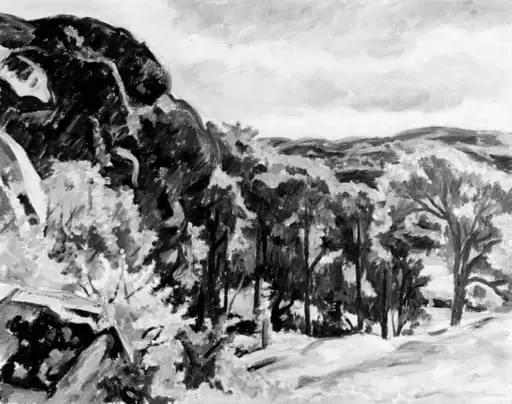
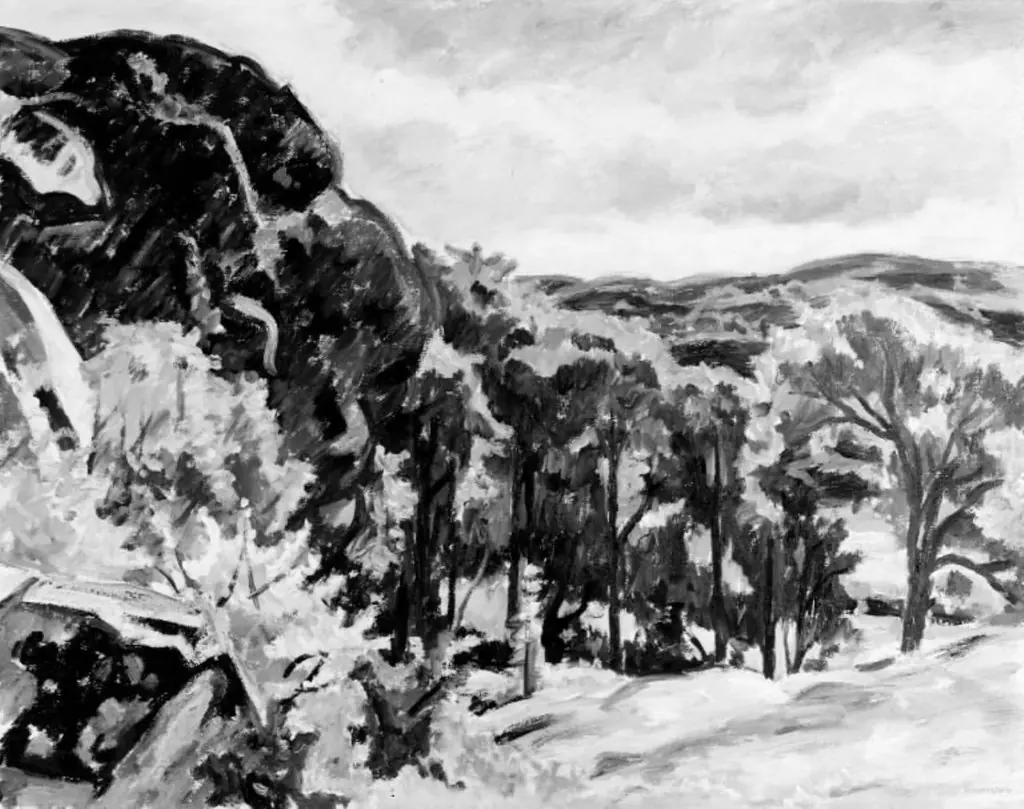
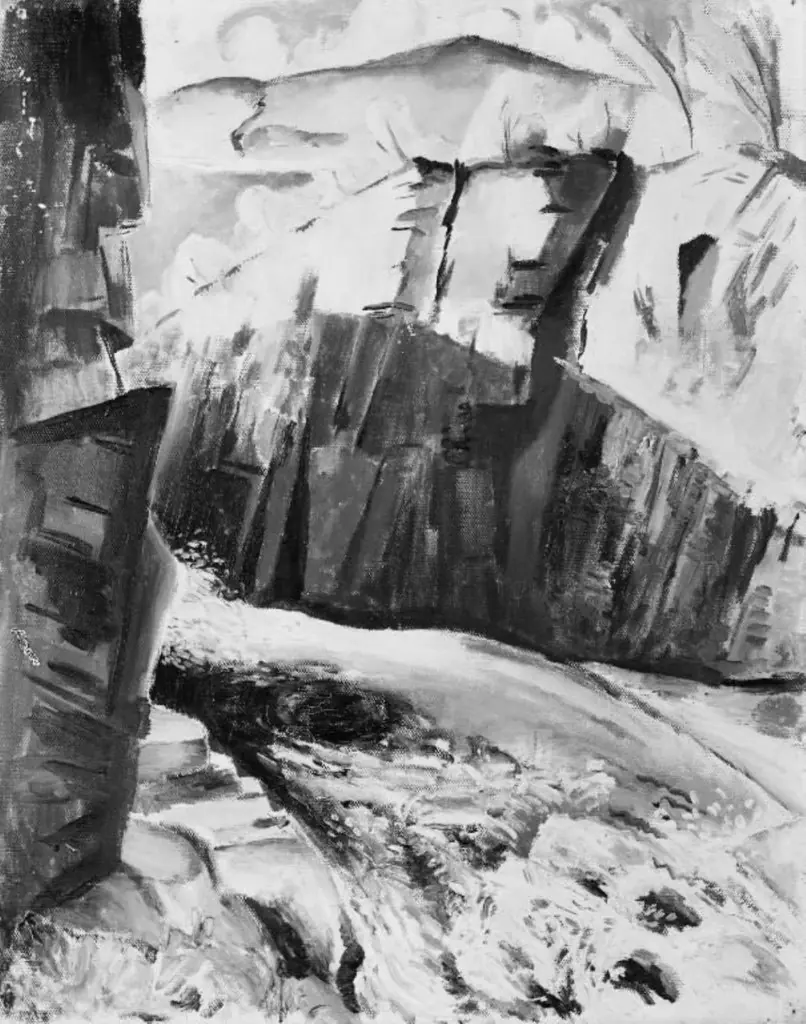
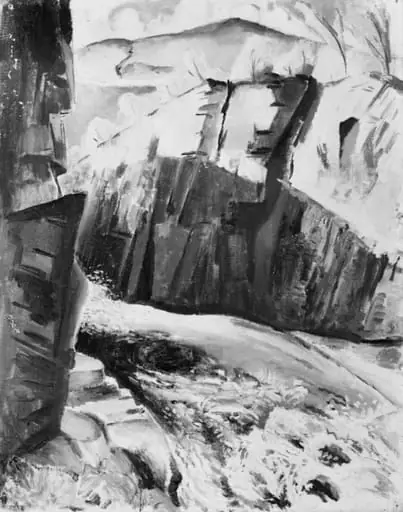
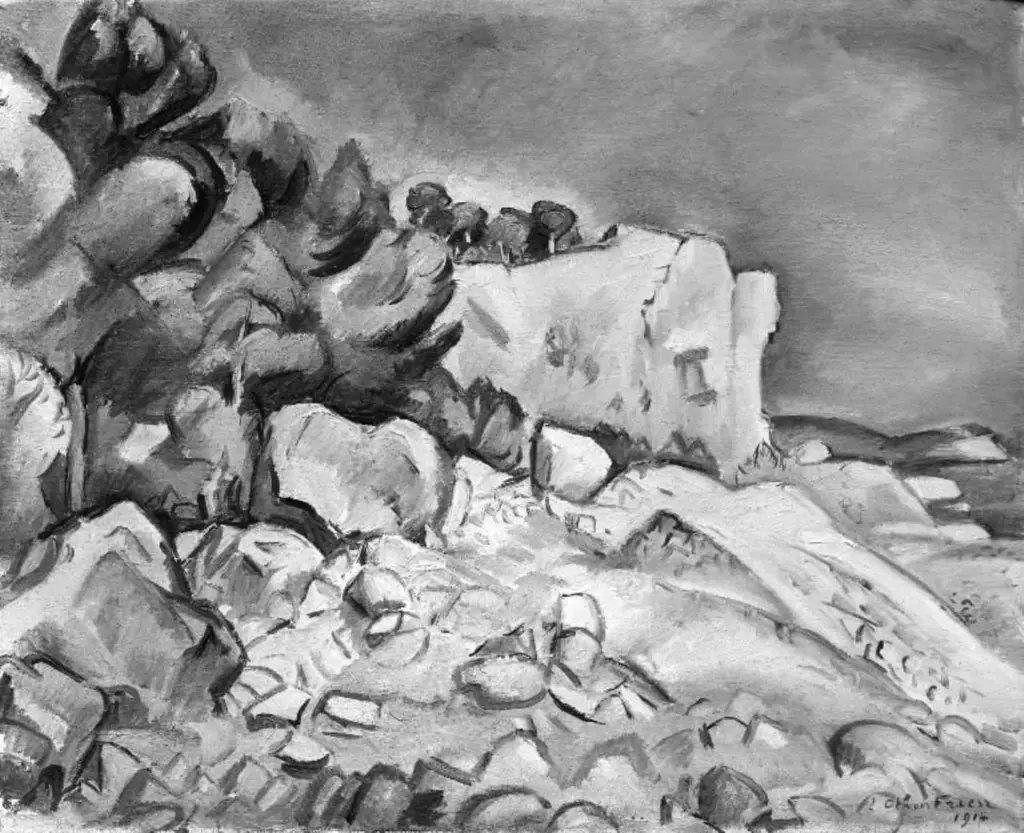
The Cliff at Sainte Marguerite
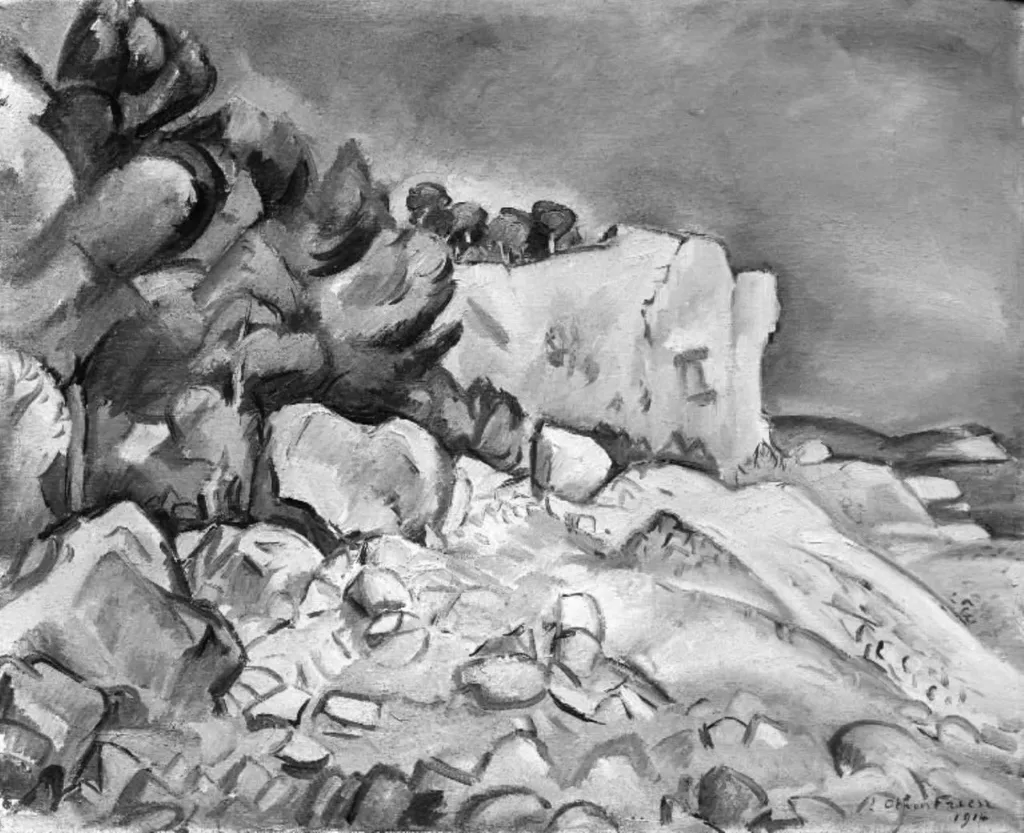
The Cliff at Sainte Marguerite is a photography by Unknown. It dates from 1914 and is held in the collection of the Statens Museum for Kunst.
About this work
Overview
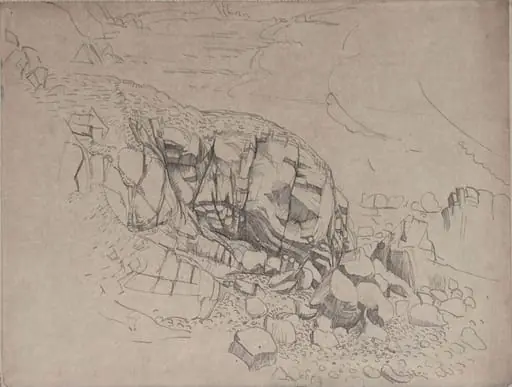
The Cliff at Sainte Marguerite is a black-and-white photograph taken in 1914 by an unknown artist.
The Cliff at Sainte Marguerite is a black-and-white photograph taken in 1914 by an unknown artist. It captures a rugged coastal cliff face composed of irregularly stacked boulders. The image is held in the collection of the Museum of Ethnography. Unlike painted landscapes, this work relies on the direct recording of light and form, emphasizing the natural texture and structure of the rock formation without artistic embellishment.
Subject & Meaning
The subject is a natural geological feature along the French Mediterranean coast, rendered without human presence or narrative. The composition focuses on the raw, untamed quality of the cliff, suggesting a quiet reverence for the land’s physical character. The absence of figures or signs of intervention invites contemplation of nature’s enduring forms, unaltered by time or human activity.
Technique & Style
The photograph employs tonal contrast to suggest depth and volume, using natural shadows to define the contours of the rocks. The lack of color and minimal compositional elements direct attention to texture and mass. The camera’s lens captures fine surface details, lending the image a tactile realism. This approach reflects early 20th-century photographic practices that valued direct observation over stylization.
History & Provenance
Created in 1914, the photograph entered the Museum of Ethnography’s collection shortly after its making. Its acquisition aligns with the institution’s interest in documenting global landscapes and material cultures. The photographer’s identity remains unrecorded, and no exhibition or publication history is documented prior to its inclusion in the museum’s holdings.
Context
In the early 1910s, photography was increasingly used by anthropologists and geographers to record terrain and cultural sites. This image fits within that trend, serving as a visual record rather than an artistic statement. It reflects a period when scientific documentation and aesthetic observation in photography often overlapped, particularly in studies of natural environments.
Legacy
The photograph endures as a quiet example of early documentary photography, valued for its unembellished representation of natural form. It contributes to the museum’s broader collection of visual records of the physical world. While not widely exhibited, it remains a reference point for studies on how photography captured landscape before the rise of modernist abstraction.
Artist & collection

 Domestic Scene
 Giacomo and Cardinal Marco, investing Andrea, Abbot of San Zeno, with his Benefice
 The Nymph of Fontainebleau
 Portrait of a Woman
 Madonna and Child with Saints in the Enclosed Garden
 Venus and Minerva
 Family Group of Four on Sofa
 Wall painting from Room H of the Villa of P. Fannius Synistor at Boscoreale