Artwork
The Crater, Iraq
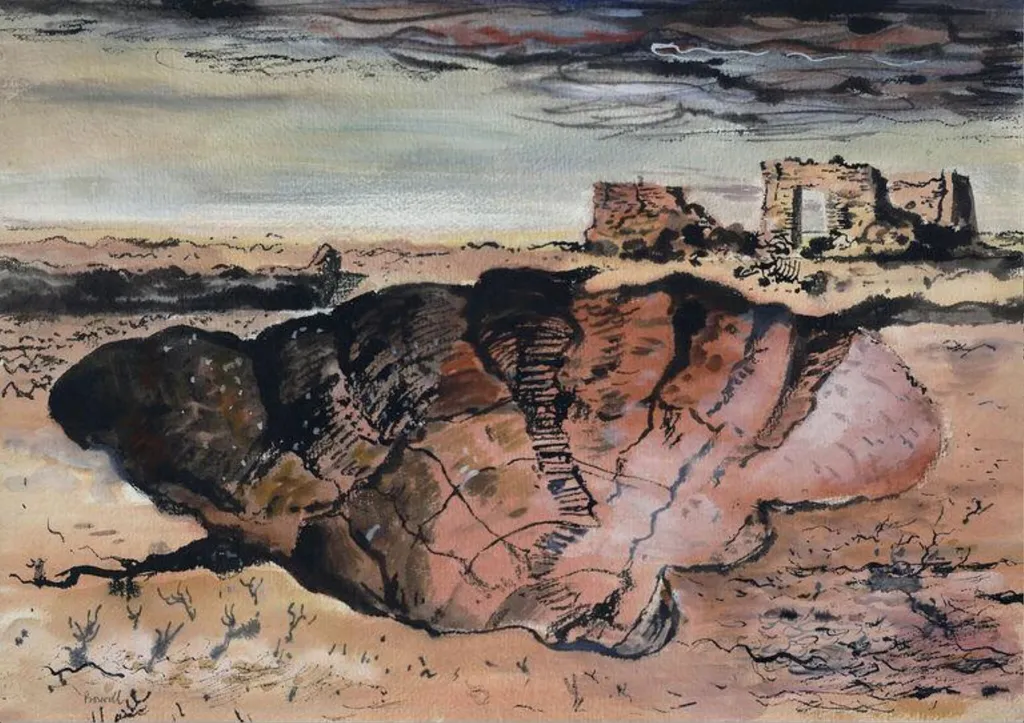
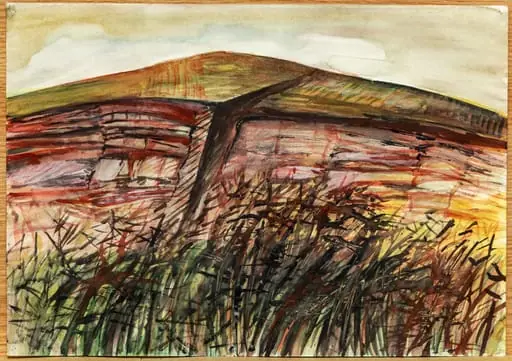
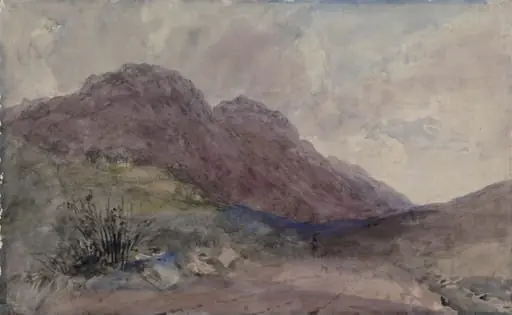
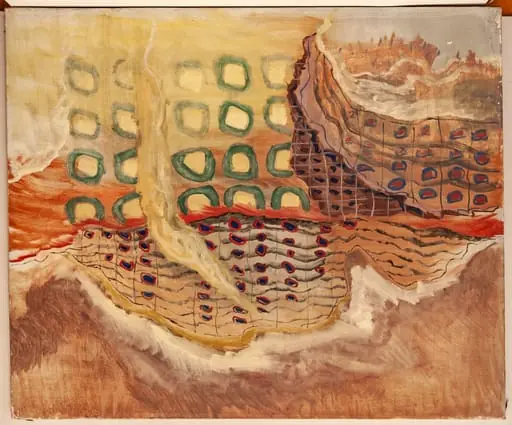
The Crater, Iraq is a watercolor work on paper by the Orientalist artist James Boswell. It dates from 1940 and is held in the collection of the Victoria and Albert Museum.
About this work
Overview
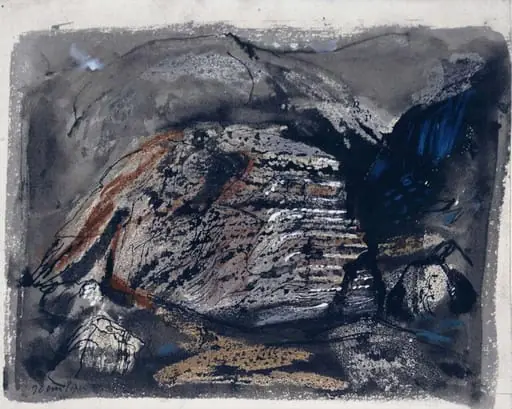
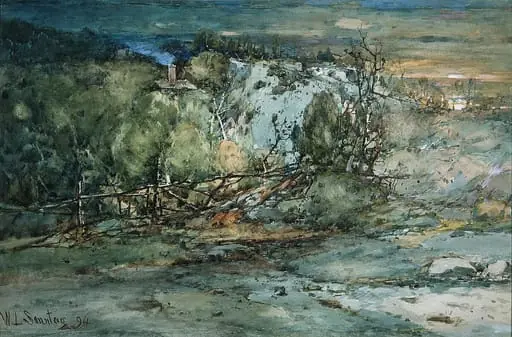
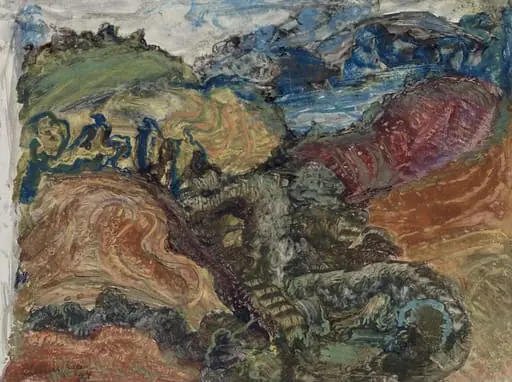
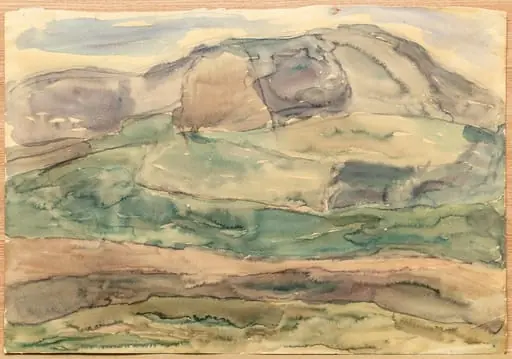
The Crater, Iraq is a 1940 watercolour and gouache painting by James Boswell, depicting a desolate, war-affected landscape in Iraq. The work is characteristic of Boswell's documentation of military life through art.
Subject & Meaning
The painting portrays a stark, damaged environment with a prominent crater, ruined buildings, and a harsh, cracked ground. This imagery conveys the devastating impact of war on the landscape, aligning with Boswell's broader anti-war themes.
Technique & Style
Boswell achieved a textured, rough appearance using watercolour, mirroring the landscape's barrenness. The piece's raw, unfinished quality intensifies its somber, war-torn subject matter.
History & Provenance
Created during Boswell's time in Iraq, this work is part of a collection of his military-themed artworks found in notable institutions like the Tate, The British Museum, and the Imperial War Museum.
Context
Boswell's wartime works from Iraq often incorporated surreal, symbolic critiques of warfare, sometimes depicting soldiers in grotesque, animalistic forms to express his strong anti-war sentiments.
Artist & collection
Artist
James Boswell painted landscapes of Iraq in watercolour between 1940 and 1970. His most recognizable scenes capture the vast crater at the edge of desert towns, where the land folds into deep, sunlit hollows. These…