Artwork
En gammel mand ifærd med at forsegle et brev
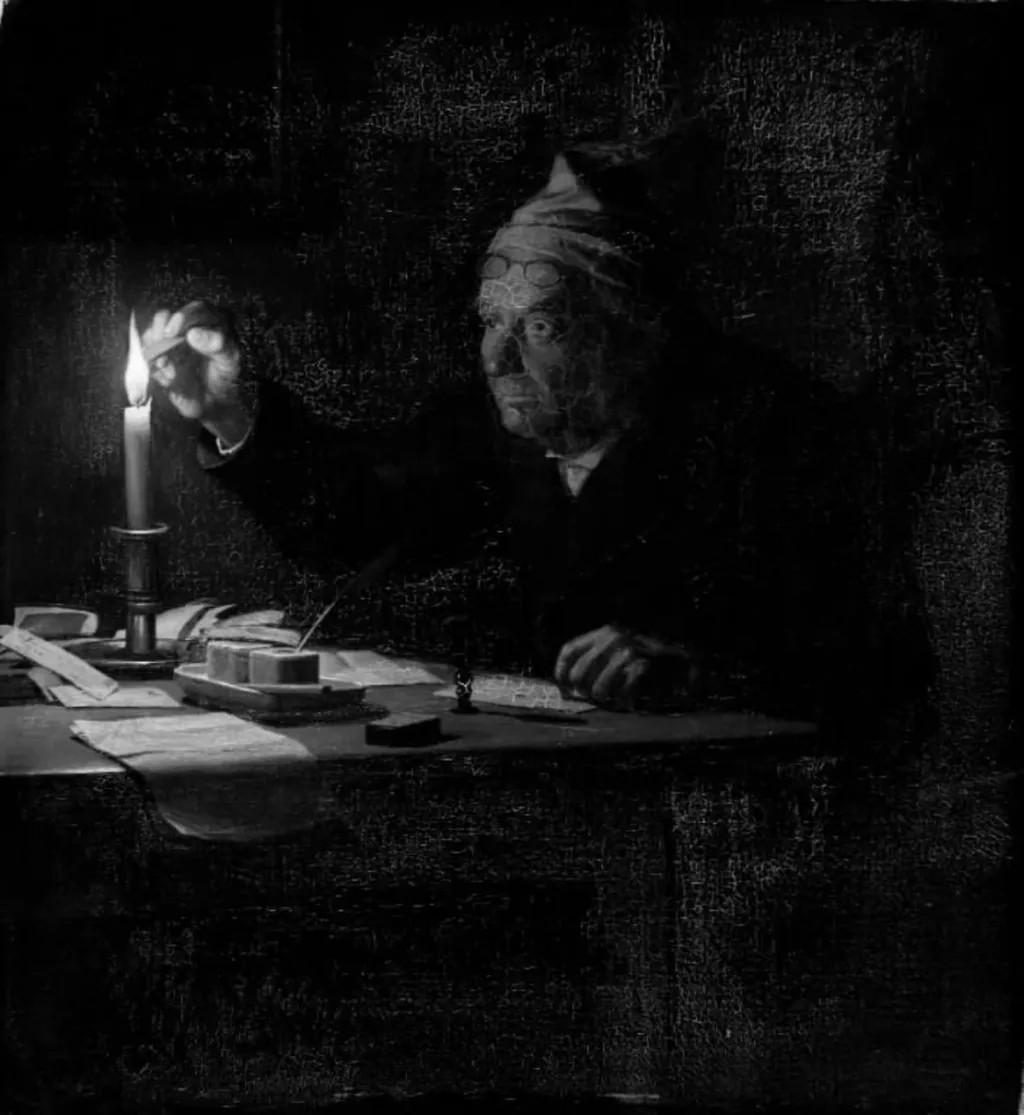
En gammel mand ifærd med at forsegle et brev is a photography by the Impressionist artist Unknown. It dates from 1882 and is held in the collection of the Statens Museum for Kunst.
About this work
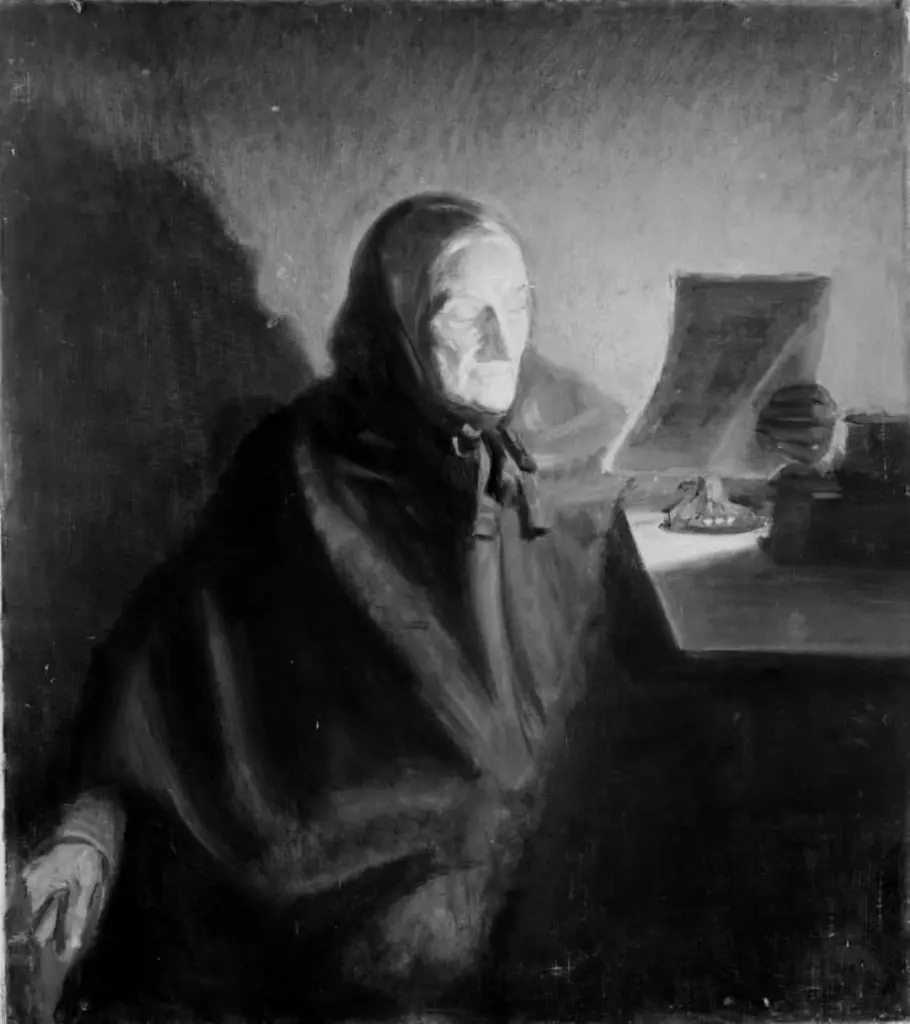
He’s wearing glasses and a cap, holding a piece of paper or a small book in one hand while resting his other hand on the desk.
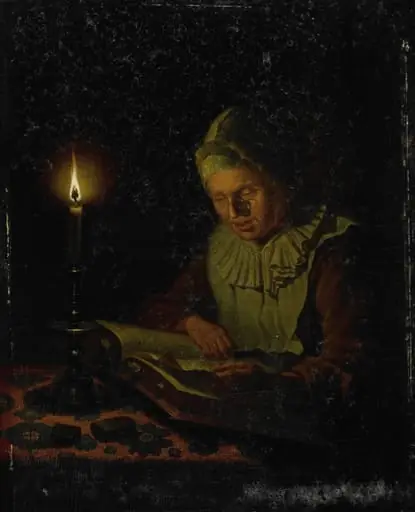
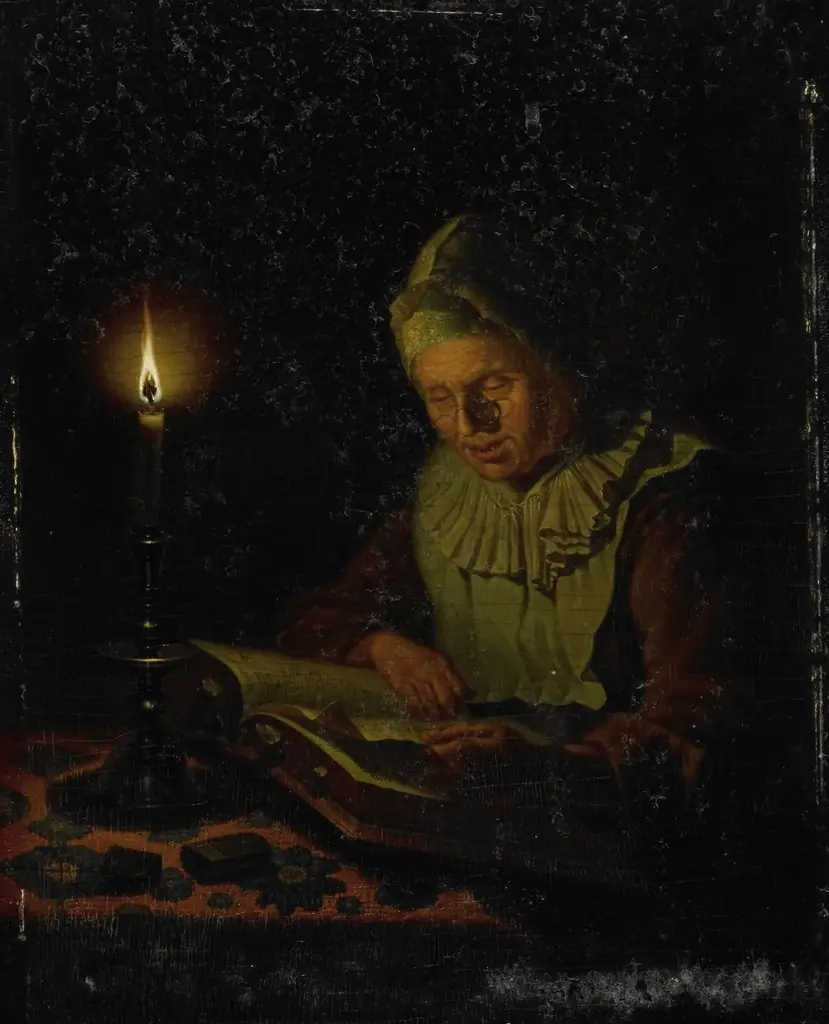
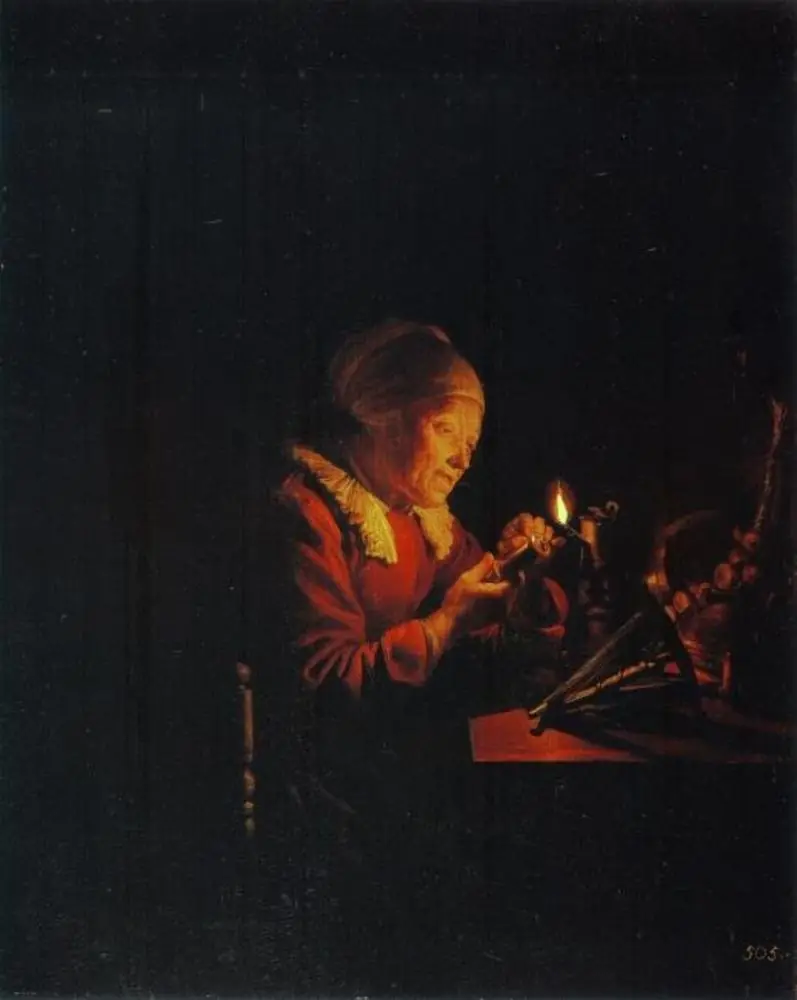
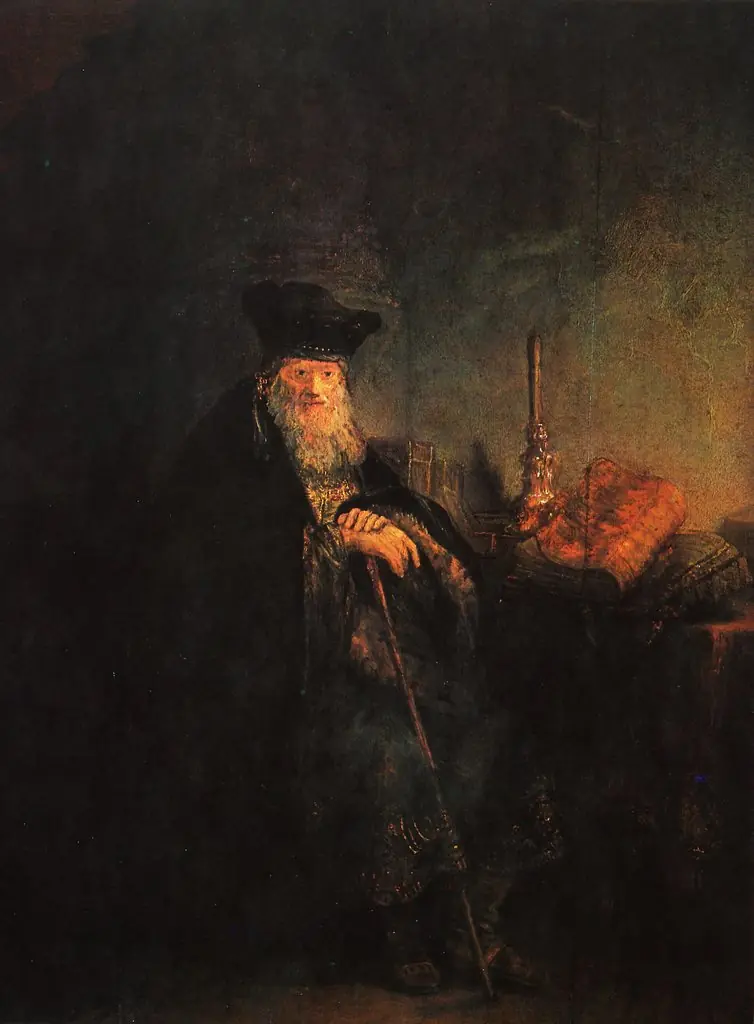
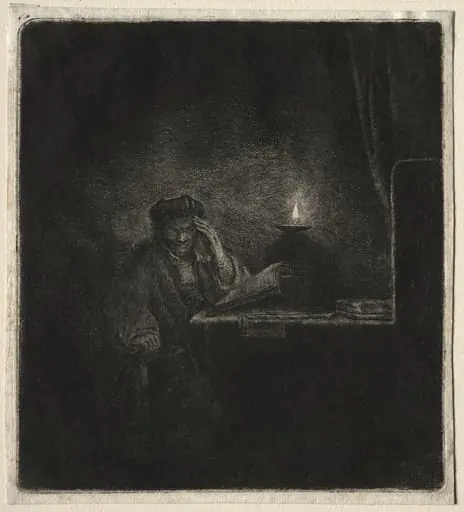
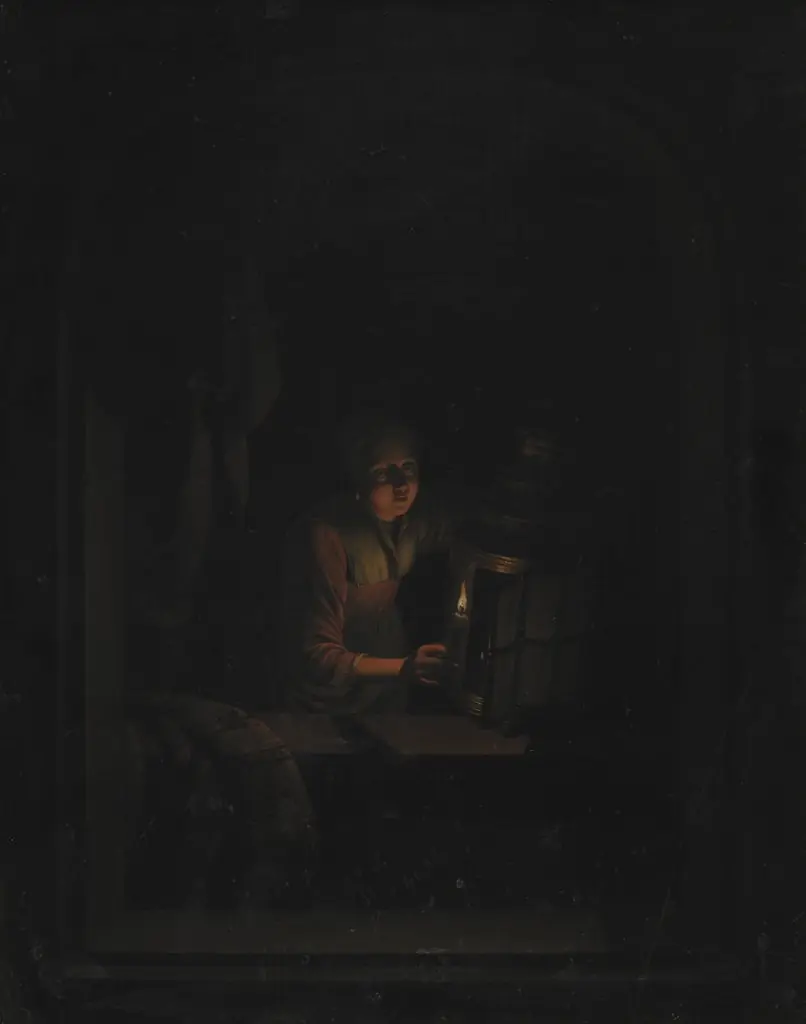
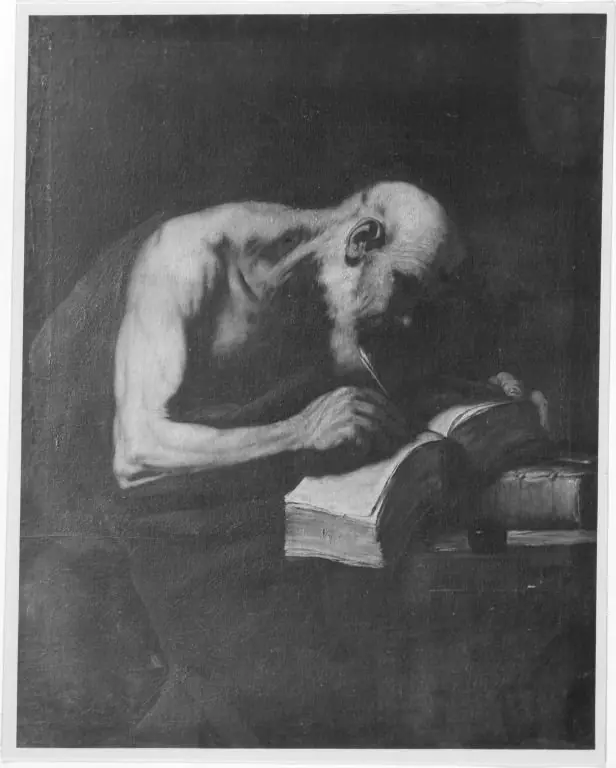
This black-and-white photo shows an older man sitting at a cluttered desk. He’s wearing glasses and a cap, holding a piece of paper or a small book in one hand while resting his other hand on the desk. A lit candle stands nearby, casting a soft glow. On the desk, you can see ink bottles, a quill, and some loose papers.
The candlelight creates strong shadows, making the scene feel quiet and focused. This photo was taken in 1882, and it’s part of a collection at the Museum of Ethnography.
Look up *chiaroscuro* next to see how artists use light and shadow like this.
Overview
The photograph, titled En gammel mand ifærd med at forsegle et brev, was produced in 1882 by the artist catalogued as 292_person. It is part of the permanent holdings of the Museum of Ethnography. The image captures a solitary, elderly figure at a desk, illuminated by a single candle, and presents a quiet, intimate domestic scene.
Subject & Meaning
The composition centers on an older man, dressed in a cap and spectacles, who appears to be sealing a letter or handling a small book. The presence of writing tools—ink bottles, a quill, and scattered papers—suggests a moment of careful correspondence, evoking themes of communication, diligence, and the passage of time.
Technique & Style
Executed in black‑and‑white, the photograph relies on strong chiaroscuro to model the figure and objects. The candlelight creates deep shadows that contrast with illuminated surfaces, emphasizing texture and form. This lighting approach heightens the sense of concentration and draws attention to the tactile details of the desk items.
History & Provenance
Created in 1882, the work entered the Museum of Ethnography’s collection, where it remains accessible for study. Its inclusion reflects the museum’s interest in documenting everyday cultural practices through visual media, preserving a snapshot of 19th‑century domestic life.
Artist & collection

 Domestic Scene
 Giacomo and Cardinal Marco, investing Andrea, Abbot of San Zeno, with his Benefice
 The Nymph of Fontainebleau
 Portrait of a Woman
 Madonna and Child with Saints in the Enclosed Garden
 Venus and Minerva
 Family Group of Four on Sofa
 Wall painting from Room H of the Villa of P. Fannius Synistor at Boscoreale