Artwork
The Virgin and Child with St Francis
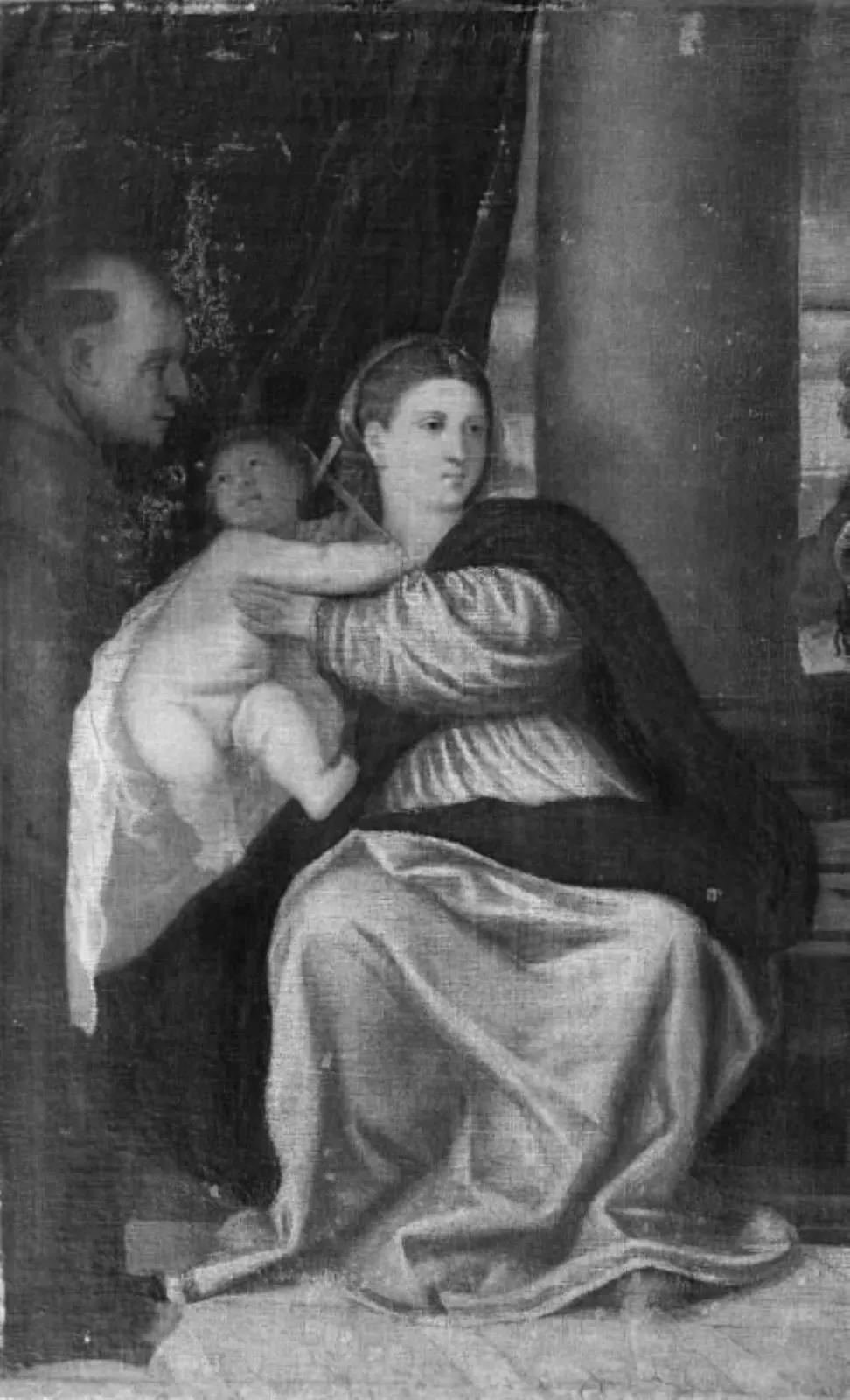
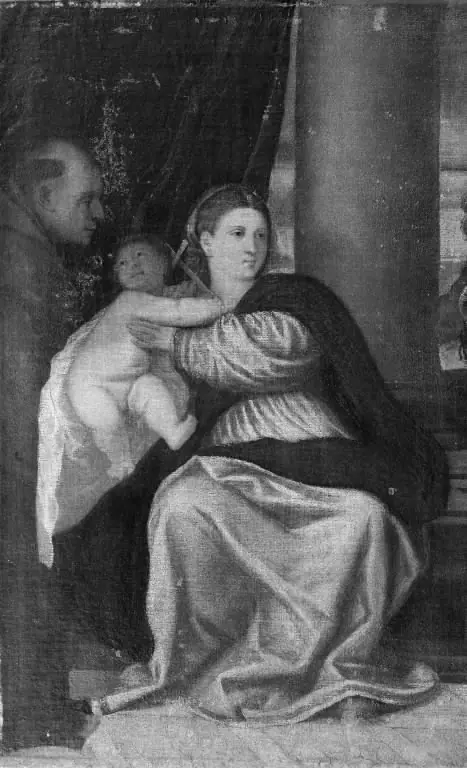
The Virgin and Child with St Francis is a photography by Unknown. It dates from 1450 and is held in the collection of the Statens Museum for Kunst. Painted around 1450, this work depicts the Virgin Mary with the infant Jesus alongside Saint Francis.
About this work
Overview
Painted around 1450, this work depicts the Virgin Mary with the infant Jesus alongside Saint Francis. Executed in tempera or oil on panel, it reflects the devotional priorities of mid-15th-century Italian religious art. The painting is currently held in the collection of the Museum of Ethnography, though its origins lie in a Christian context distinct from the museum’s usual ethnographic focus.
Subject & Meaning
The Virgin, seated with the Christ Child on her lap, embodies maternal tenderness and divine grace. Saint Francis, partially obscured in shadow behind her, signifies humility and spiritual witness. His subdued presence suggests contemplation rather than prominence, reinforcing the theological emphasis on Mary as the vessel of the divine and Francis as the devoted follower.
Technique & Style
The artist employs chiaroscuro to isolate the figures against a dark, unmodeled background, directing attention to the Virgin’s face and the child’s form.
The artist employs chiaroscuro to isolate the figures against a dark, unmodeled background, directing attention to the Virgin’s face and the child’s form. Soft modeling of flesh tones and flowing drapery suggest a familiarity with early Renaissance naturalism, while the flatness of the space and lack of perspective hint at lingering Gothic conventions. The limited palette enhances the solemnity of the scene.
History & Provenance
The painting’s early history is undocumented, but its style aligns with workshop production in central Italy during the mid-15th century. It entered the Museum of Ethnography’s collection in the late 19th or early 20th century, likely through acquisition or donation. Its presence there reflects historical collecting practices that sometimes grouped religious art with non-Western artifacts under broad categories of 'cultural expression.'
Context
Created during a period of intense Marian devotion in Italy, the image responds to Franciscan spiritual ideals that emphasized poverty, humility, and personal connection with Christ. Similar compositions were common in small-scale altarpieces for private prayer, often commissioned by lay patrons or religious communities seeking to foster contemplative piety through intimate imagery.
Legacy
Though not widely exhibited or studied as a major work, the painting offers insight into the persistence of devotional iconography beyond the courts and major urban centers. Its preservation in an ethnographic museum underscores shifting interpretations of religious art in modern institutional frameworks, where spiritual imagery is sometimes contextualized as cultural artifact rather than theological statement.
Artist & collection

 Domestic Scene
 Giacomo and Cardinal Marco, investing Andrea, Abbot of San Zeno, with his Benefice
 The Nymph of Fontainebleau
 Portrait of a Woman
 Madonna and Child with Saints in the Enclosed Garden
 Venus and Minerva
 Family Group of Four on Sofa
 Wall painting from Room H of the Villa of P. Fannius Synistor at Boscoreale
 The Virgin and Child
 The Virgin and Child
 The Madonna and Child with Saints
 Virgin and Child with St. John
 Heilige Familie
 The Holy Family with St Anne and Young St John the Baptist
 Madonna and Child
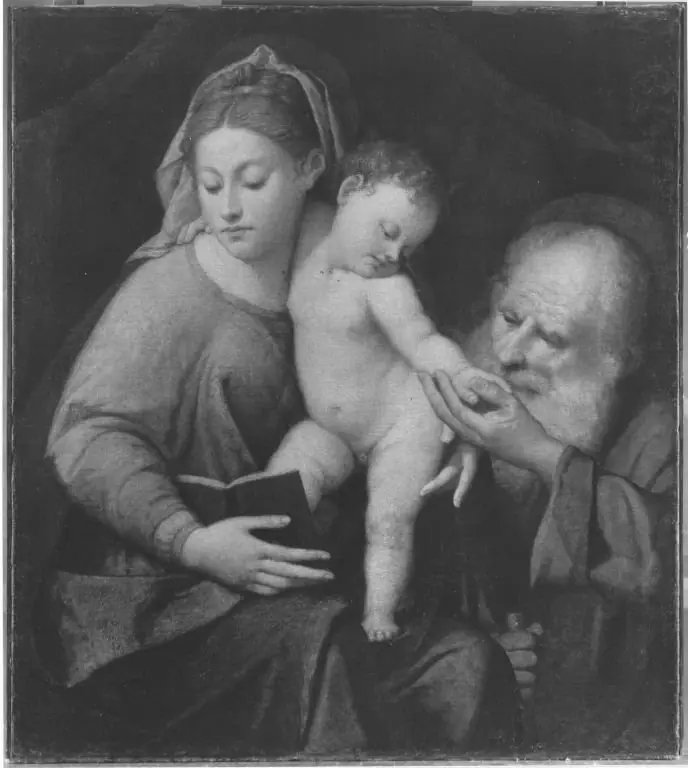 Holy Family
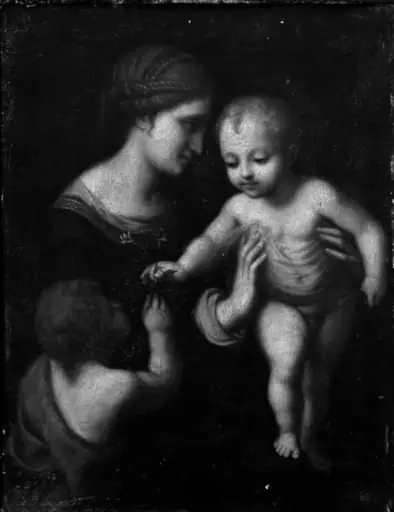 Virgin and Child with St. John
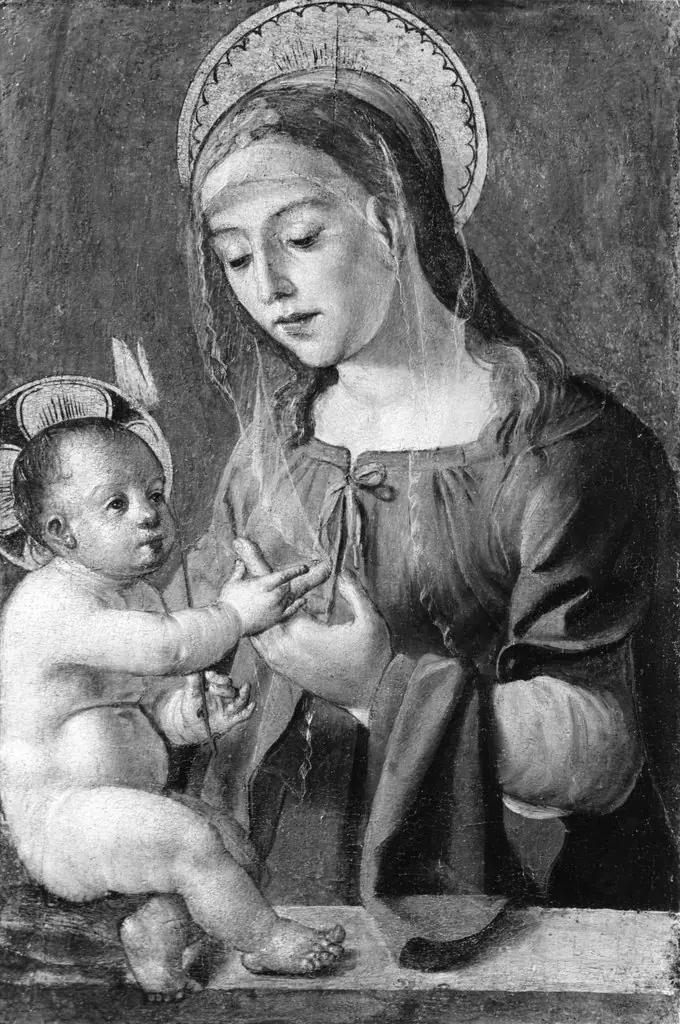 Virgin and Child
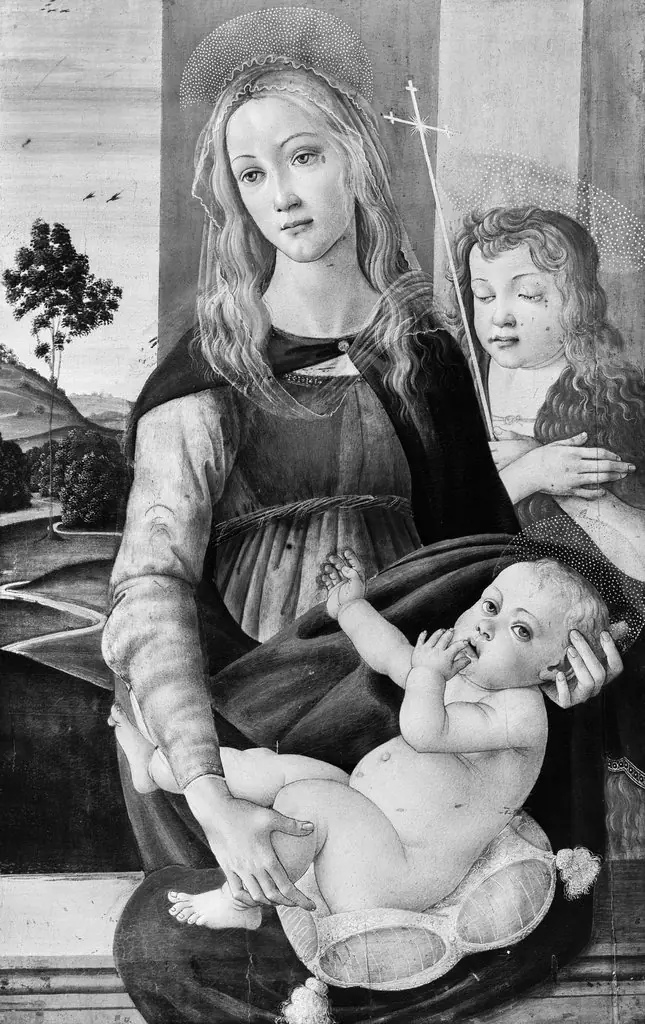 Virgin and Child with young st. John
 The Virgin and Child with St Francis