Artwork
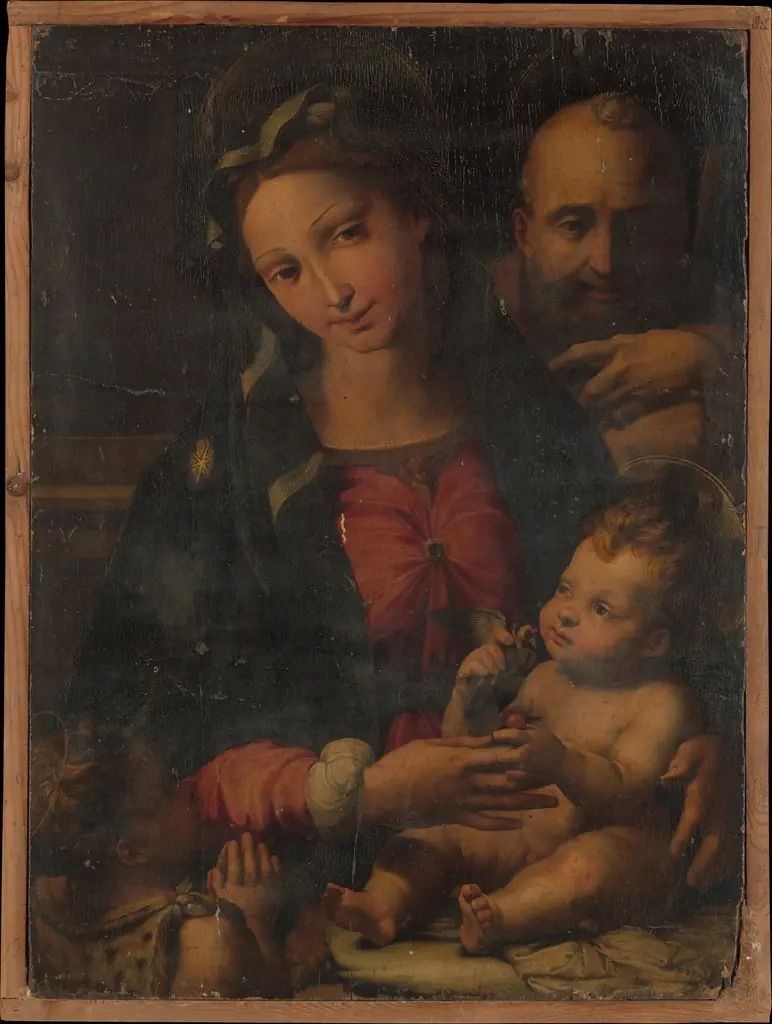
The Holy Family with St Anne and Young St John the Baptist
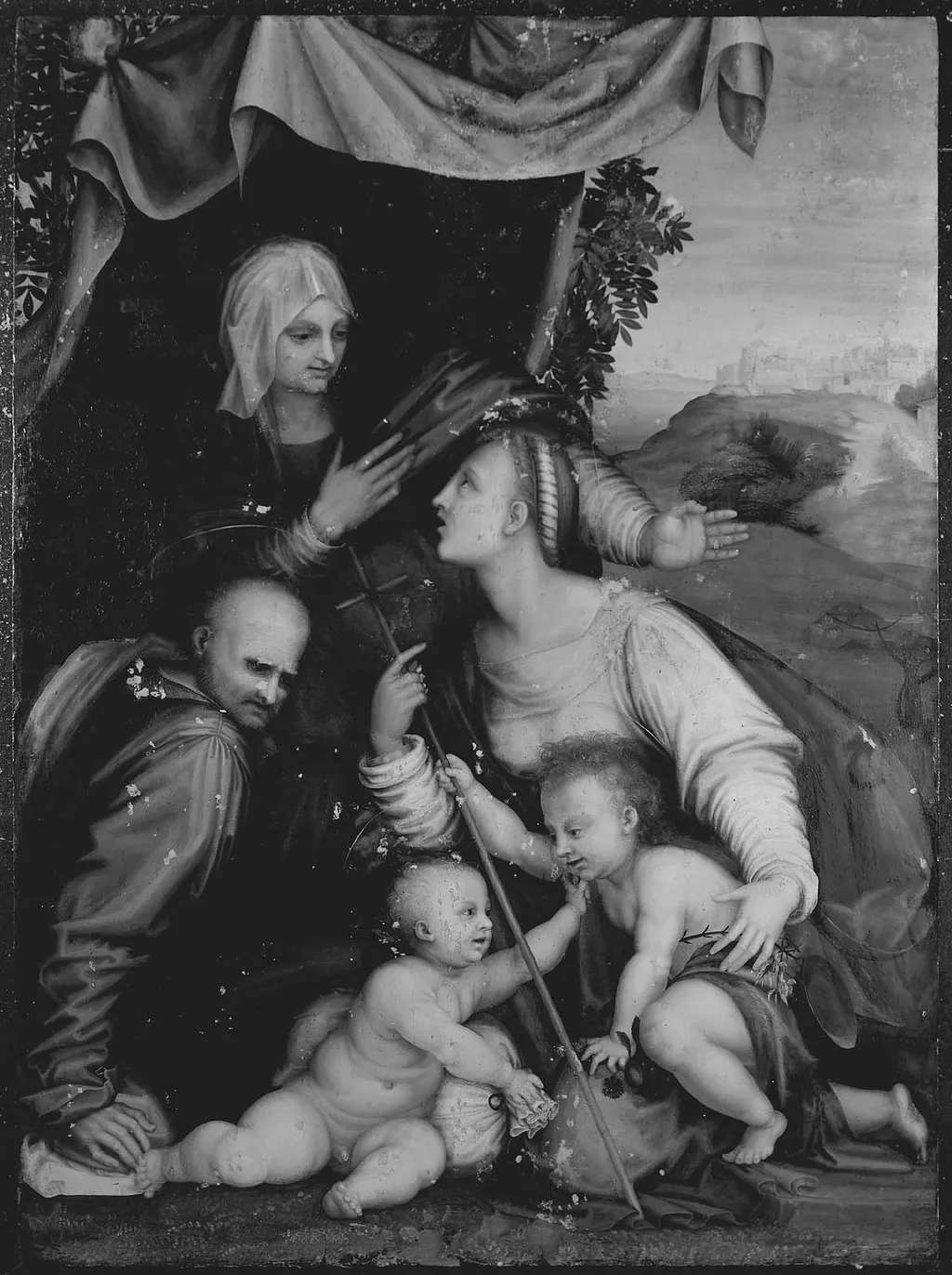
The Holy Family with St Anne and Young St John the Baptist is an unspecified painting by the Early Baroque Italian artist Unknown. It dates from 1525 and is held in the collection of the Museum of Fine Arts Boston.
About this work
Overview
An angelic figure with wings and a staff occupies the background, which is rendered in deep shadow with only a faint suggestion of landscape and draped fabric.
The work, titled *The Holy Family with St Anne and Young St John the Baptist*, presents a compact group of five figures arranged in a dark interior. A seated woman cradles an infant, flanked by a kneeling woman with a child, while a standing woman in a white headscarf watches from behind. An angelic figure with wings and a staff occupies the background, which is rendered in deep shadow with only a faint suggestion of landscape and draped fabric.
Subject & Meaning
The central seated figure is traditionally identified as the Virgin Mary holding the infant Jesus, accompanied by her mother St Anne and the young St John the Baptist, who is shown kneeling with his own child. The presence of the winged attendant underscores the sacred nature of the gathering, suggesting divine protection and the intergenerational link between holy figures.
Technique & Style
The composition relies on chiaroscuro, employing stark contrasts between illuminated faces and the surrounding gloom to model forms and direct attention. Soft, diffused light falls on the faces of Mary and the infant, while the background recedes into darkness, creating a three‑dimensional effect characteristic of Baroque devotional painting.
History & Provenance
The painting’s provenance is not detailed in the supplied information, and its date of creation, artist, and ownership history remain unspecified. Consequently, its journey through collections or exhibitions cannot be traced from the available data.
Context
Groupings of the Holy Family with St Anne and the infant St John were popular in Counter‑Reformation art, emphasizing familial piety and the sanctity of the Virgin’s lineage. The intimate arrangement reflects contemporary devotional practices that encouraged personal contemplation of the holy figures.
Legacy
While specific influence or critical reception of this particular work is not recorded, its use of chiaroscuro and the inclusion of multiple generations of saints align it with broader trends in religious painting that sought to engage viewers through dramatic lighting and emotive grouping.
Artist & collection

 Domestic Scene
 Giacomo and Cardinal Marco, investing Andrea, Abbot of San Zeno, with his Benefice
 The Nymph of Fontainebleau
 Portrait of a Woman
 Madonna and Child with Saints in the Enclosed Garden
 Venus and Minerva
 Family Group of Four on Sofa
 Wall painting from Room H of the Villa of P. Fannius Synistor at Boscoreale
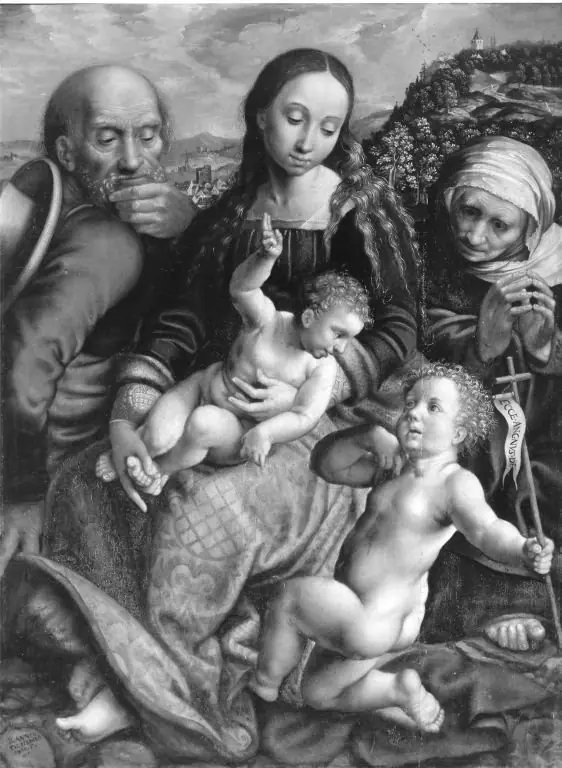 The Holy Family with Saint Elisabeth and the young St. John the Baptist
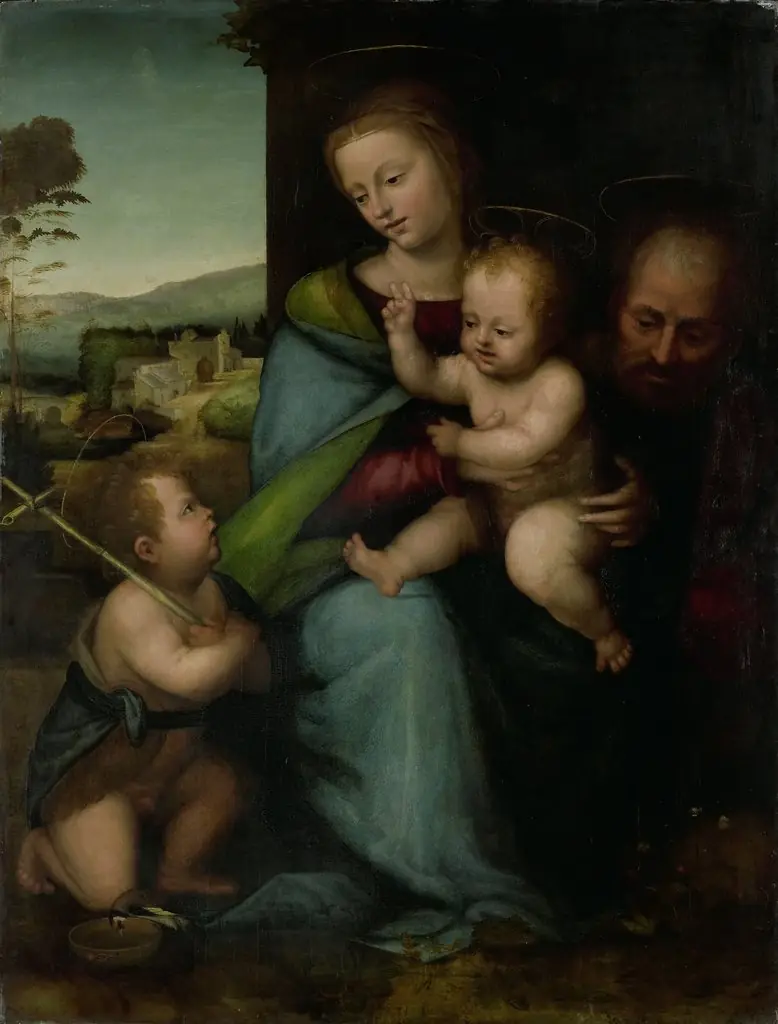 The Holy Family with the Infant John the Baptist
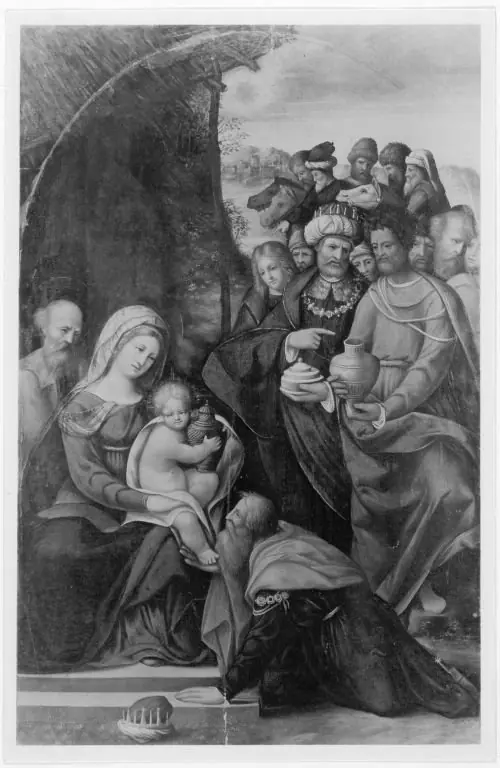 Anbetung der Könige
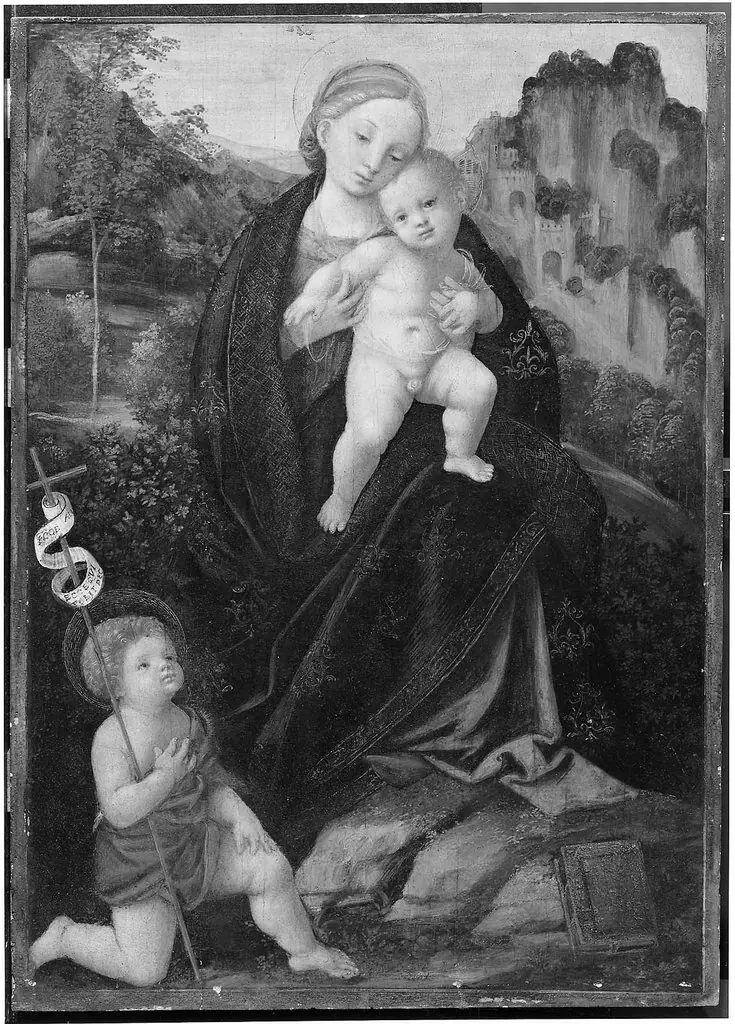 Virgin and Child with the Infant Saint John the Baptist
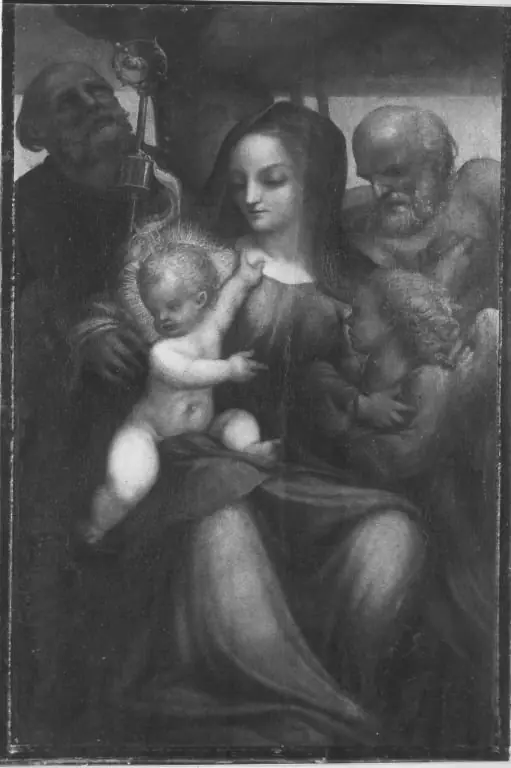 Maria mit Kind und Heiligen (Schule)
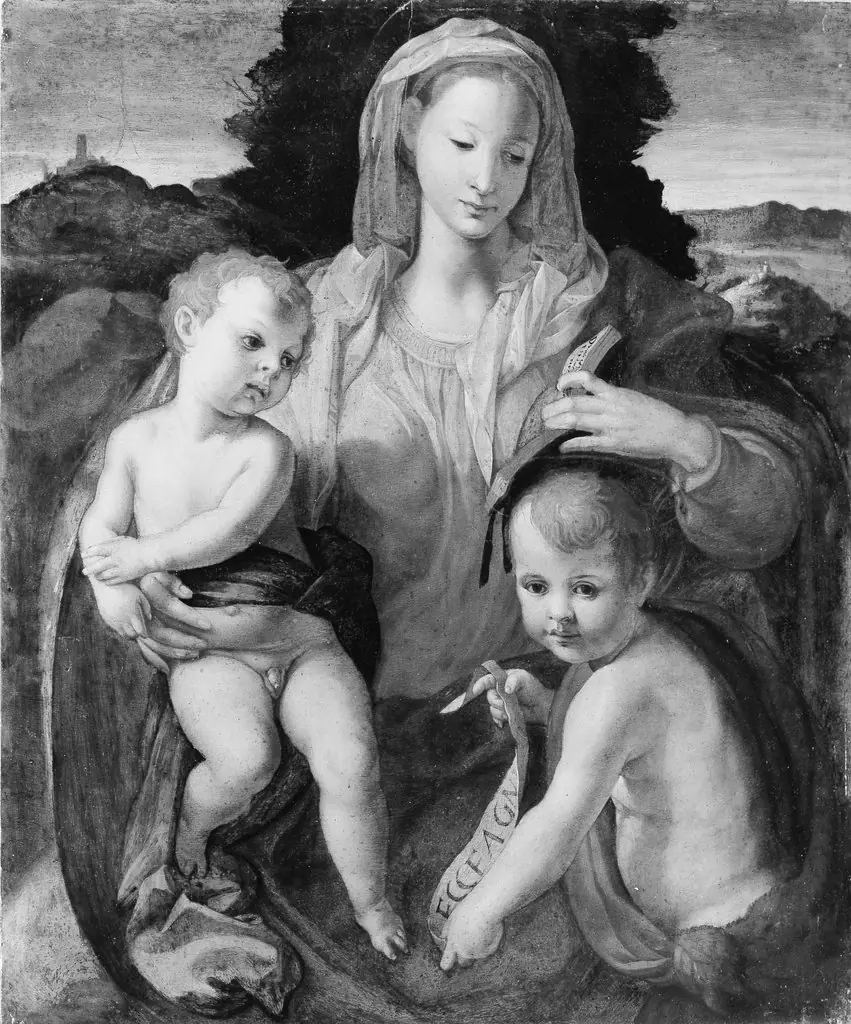 Madonna and Child with the Young Saint John the Baptist
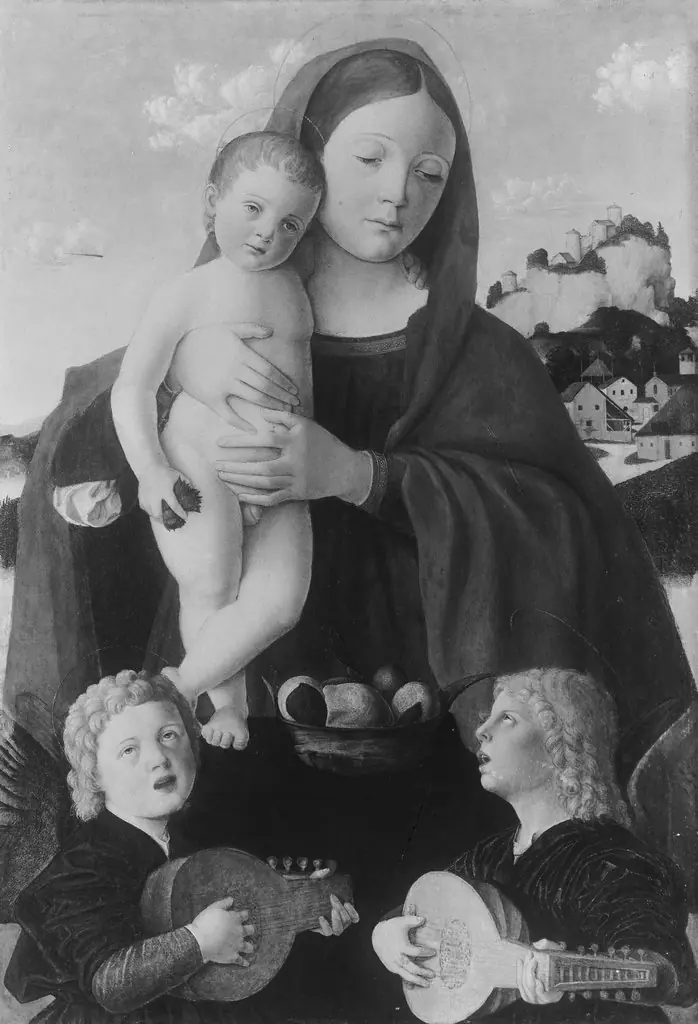 Mary with the Child
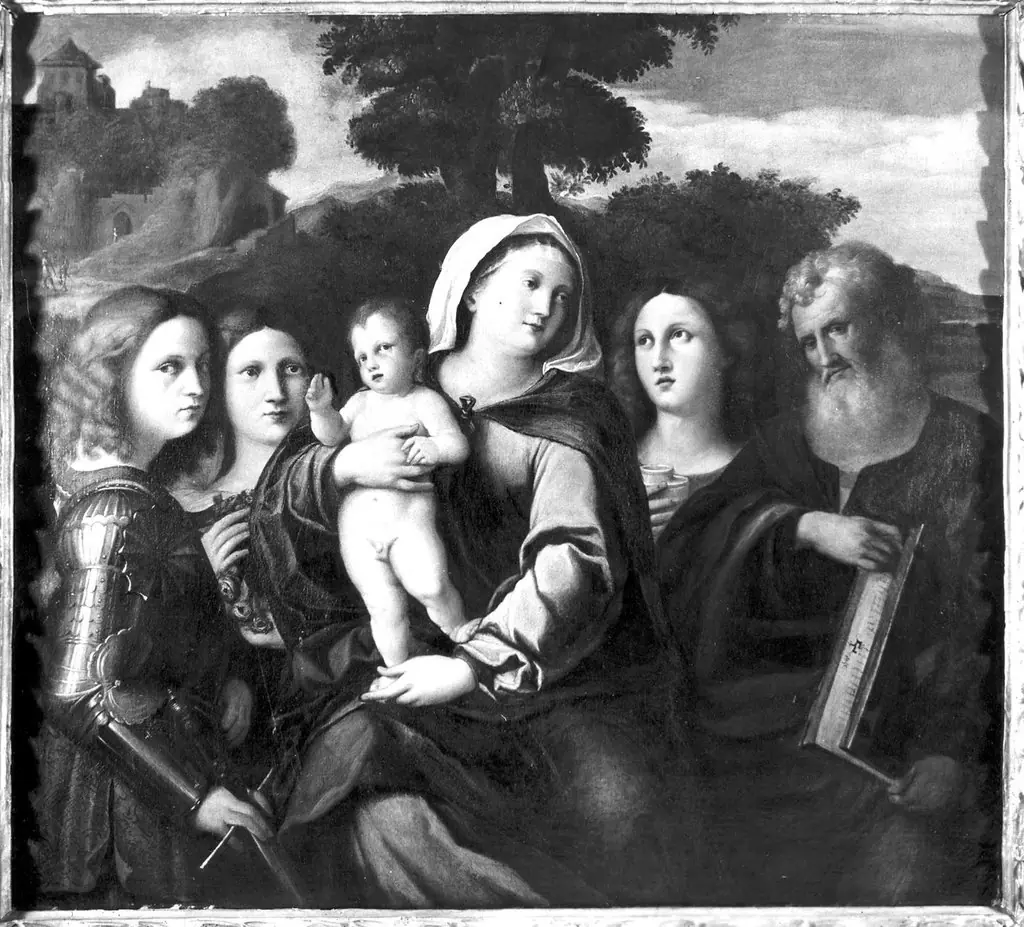 Mary with the Child and four Saints in front of a Landscape
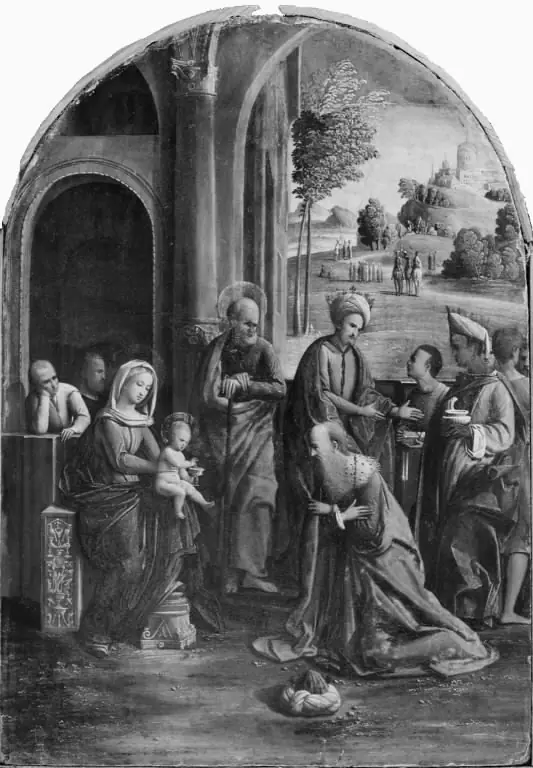 The Adoration of the Kings
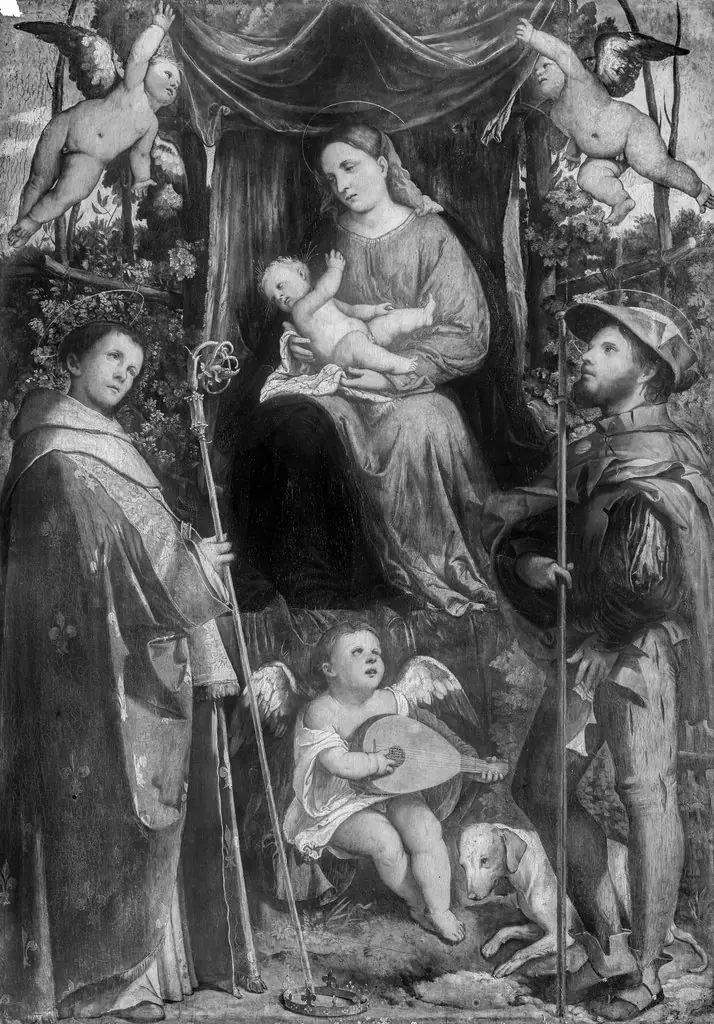 Mary and child enthroned with two saints
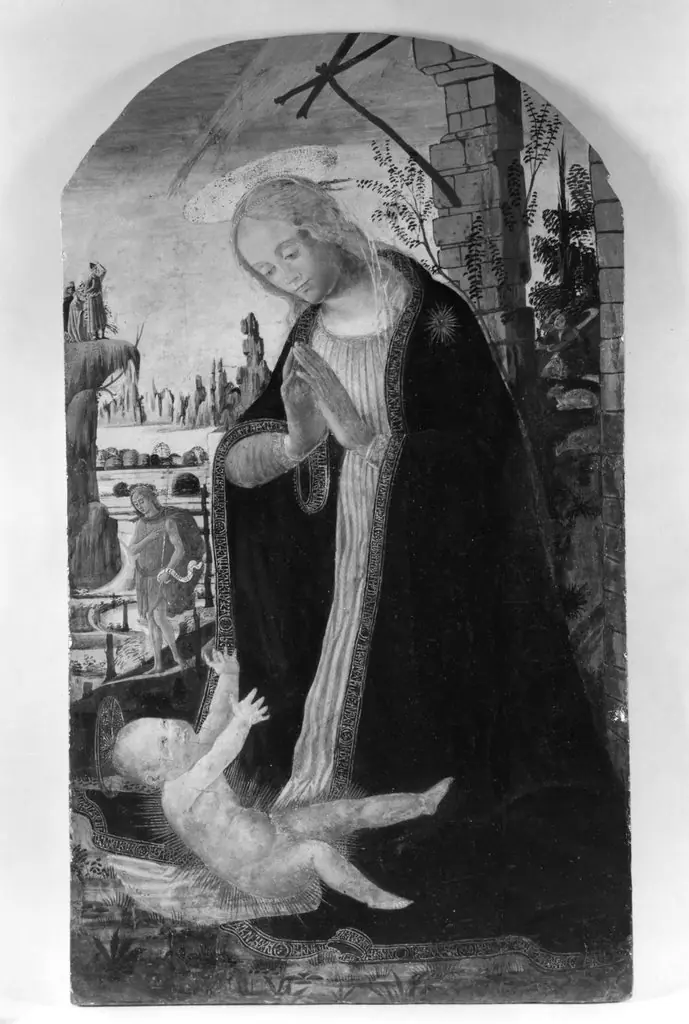 Madonna Adoring The Child
 The Holy Family with the Infant Saint John the Baptist