Artwork
Landskab med kvæg
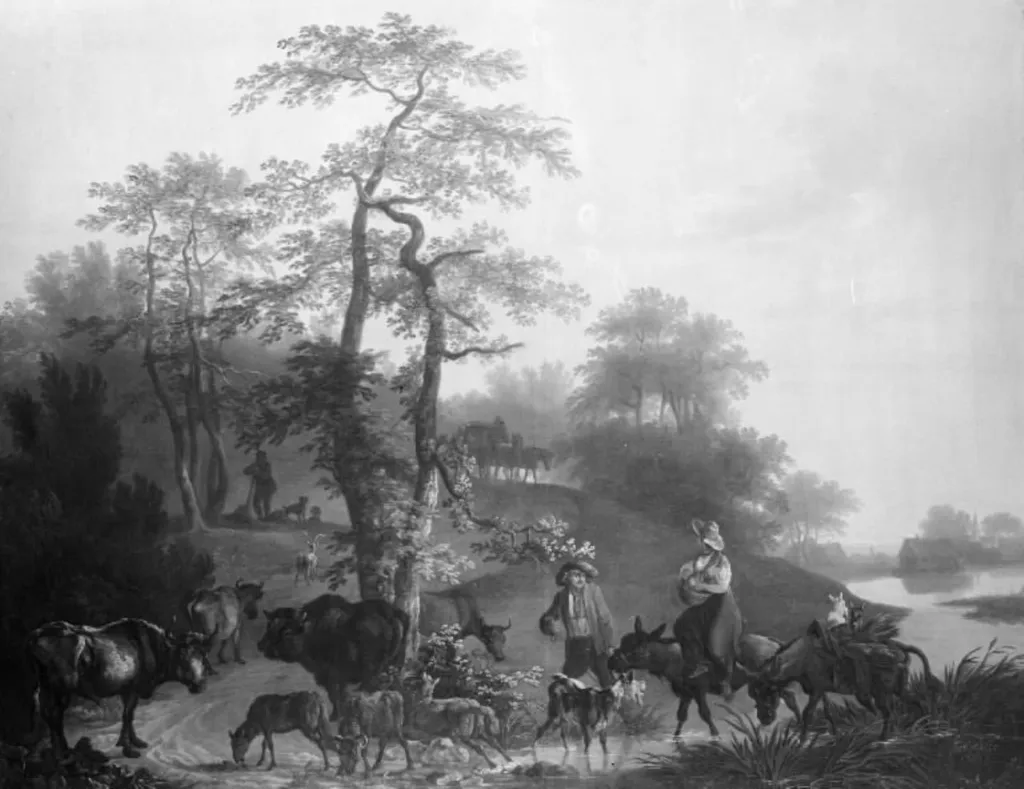
Landskab med kvæg is a photography by the Romanticist artist Unknown. It dates from 1816 and is held in the collection of the Statens Museum for Kunst.
About this work
Overview
Landskab med kvæg, executed in 1816 by the artist recorded as 303_person, is an early‑19th‑century landscape drawing preserved in the Museum of Ethnography.
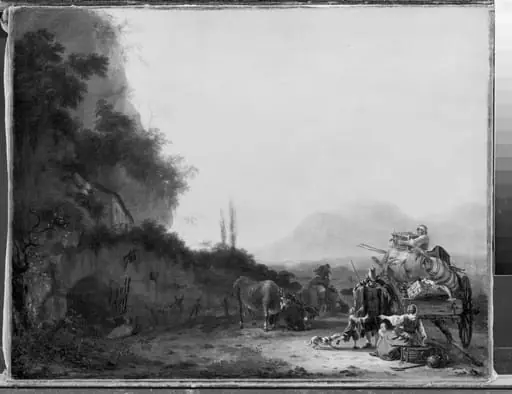
Landskab med kvæg, executed in 1816 by the artist recorded as 303_person, is an early‑19th‑century landscape drawing preserved in the Museum of Ethnography. Rendered in monochrome, the composition depicts a tranquil rural lane beside a river, where a herd of cattle grazes and a donkey burdened with sacks is guided by two figures. The scene is suffused with a soft, misty illumination that lends a calm atmosphere.
Subject & Meaning
The work presents a typical agrarian setting, emphasizing the relationship between humans, livestock, and the natural environment. The presence of a solitary traveler in the distance suggests movement through a quiet, productive landscape, while the cattle and donkey underscore the everyday labor and transport that sustained rural communities of the period.
Technique & Style
The artist employs chiaroscuro shading to model forms and convey depth, allowing the cows, trees, and figures to emerge from a gently veiled background. This handling of light and shadow aligns with the early 1800s landscape tradition, where tonal contrast was used to suggest atmospheric conditions such as mist and to structure the pictorial space.
History & Provenance
Created in 1816, the drawing entered the collection of the Museum of Ethnography, where it remains on display. Its attribution to 303_person reflects cataloguing practices that assign a placeholder name when the creator’s full identity is not documented, a common occurrence for works of this era.
Context
During the early nineteenth century, European artists frequently depicted pastoral scenes that idealized rural life amid growing industrialization. This piece reflects that trend, focusing on everyday labor rather than heroic or mythological subjects, and illustrates the period’s interest in documenting local customs and landscapes for ethnographic purposes.
Artist & collection

 Domestic Scene
 Giacomo and Cardinal Marco, investing Andrea, Abbot of San Zeno, with his Benefice
 The Nymph of Fontainebleau
 Portrait of a Woman
 Madonna and Child with Saints in the Enclosed Garden
 Venus and Minerva
 Family Group of Four on Sofa
 Wall painting from Room H of the Villa of P. Fannius Synistor at Boscoreale
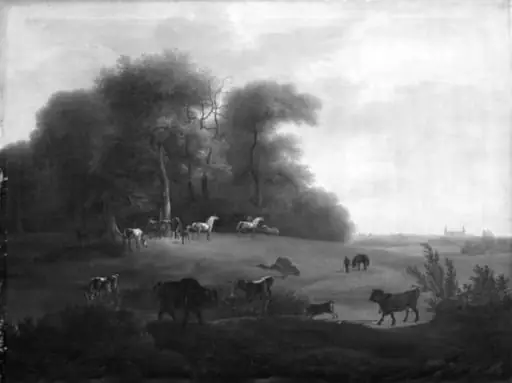 Keld Skov ved Frederiksborg med en del af det kongelige stutteri. I forgrunden schweizer- og tyrolerkvæg
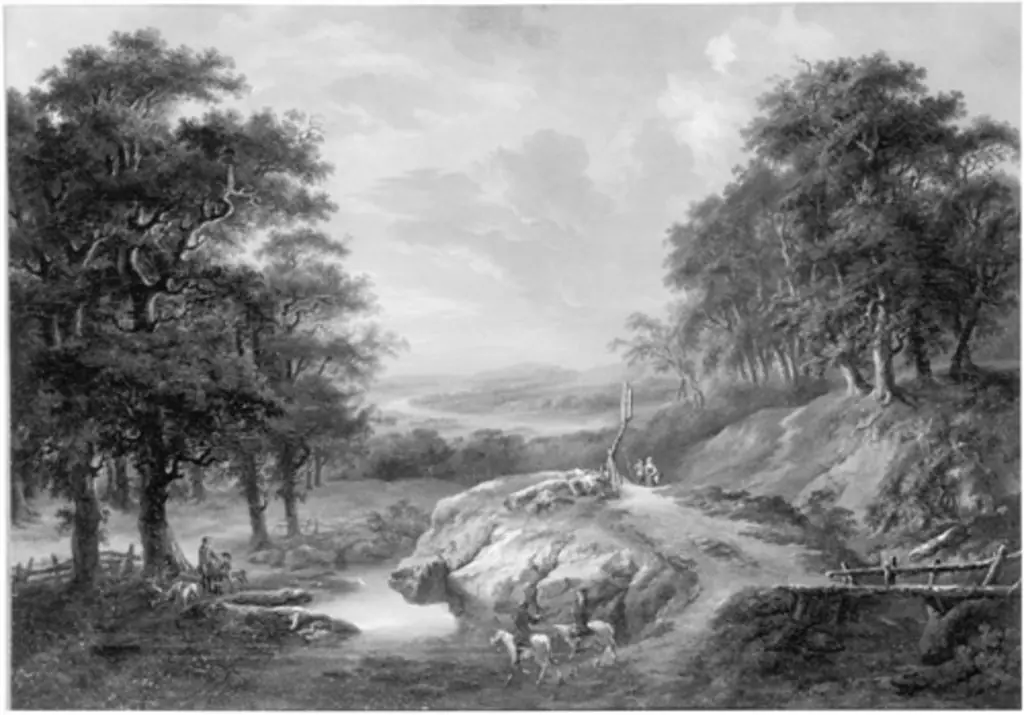 Komponierte Waldlandschaft mit Jägern
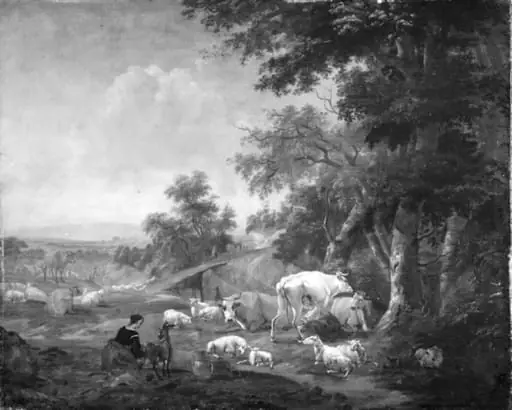 Landscape
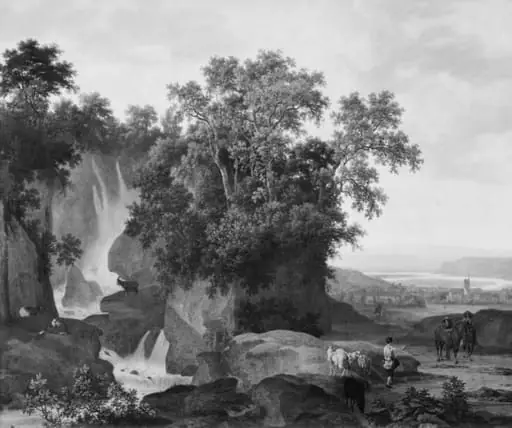 Wood-Clad Rocks with Waterfall
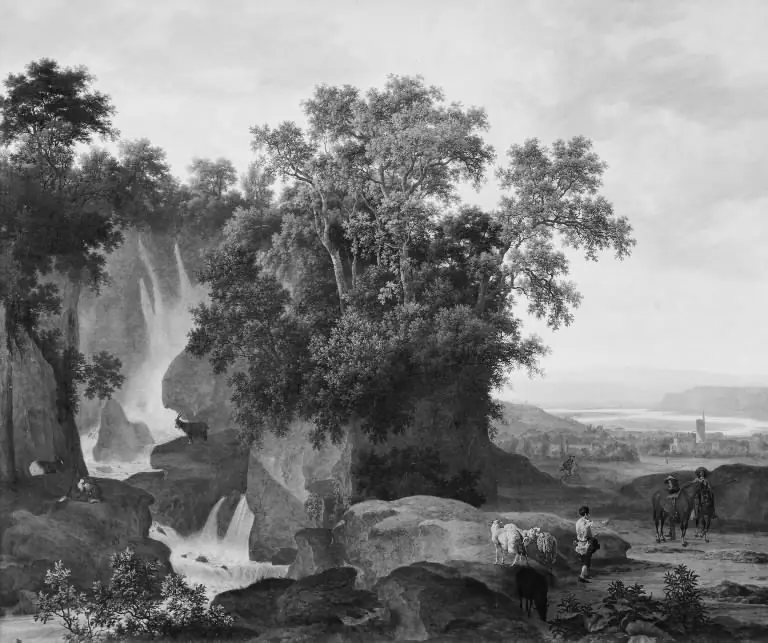 Wood-Clad Rocks with Waterfall
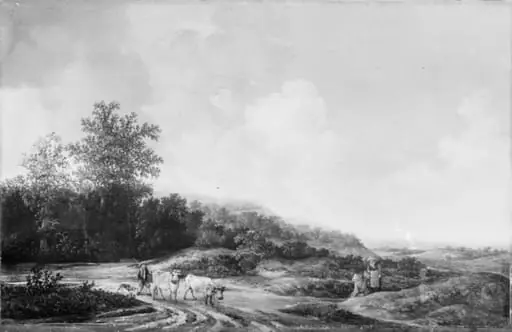 Hilly Landscape
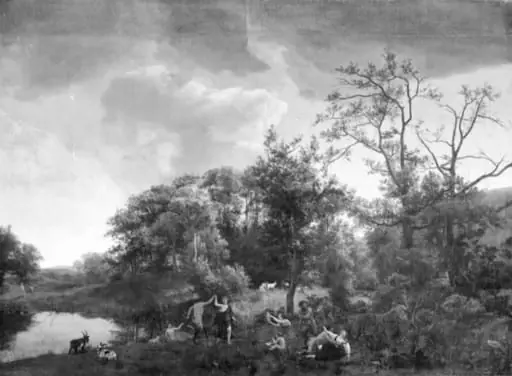 Landscape with Fauns and Nymphs
 Landscape with Huntsmen
 Landscape with a Removal Cart