Artwork
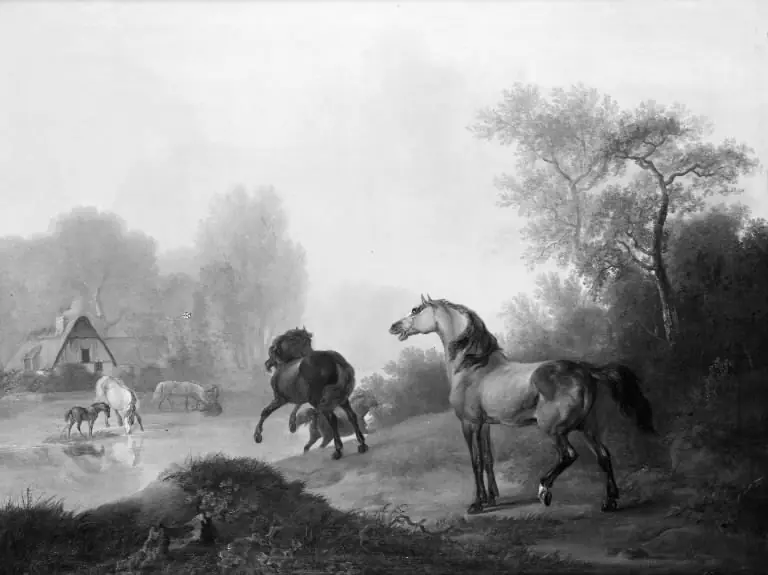
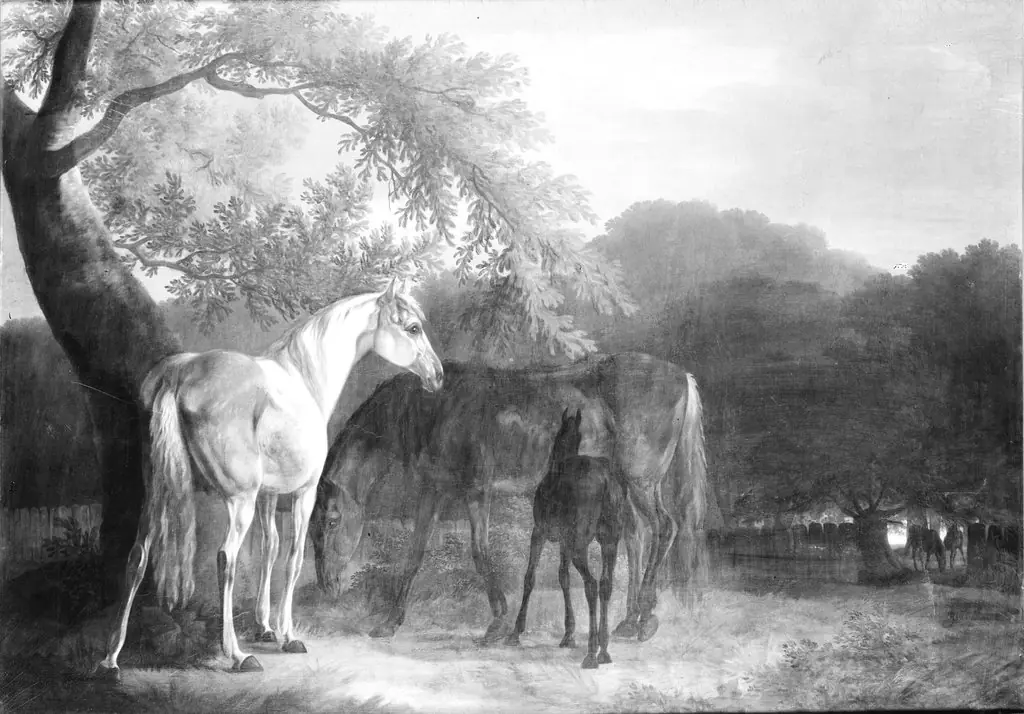
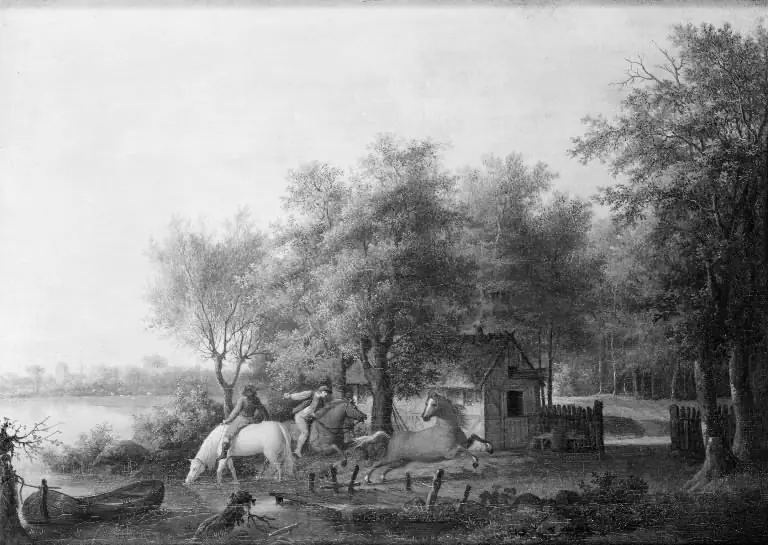
Vilde heste i et stutteri
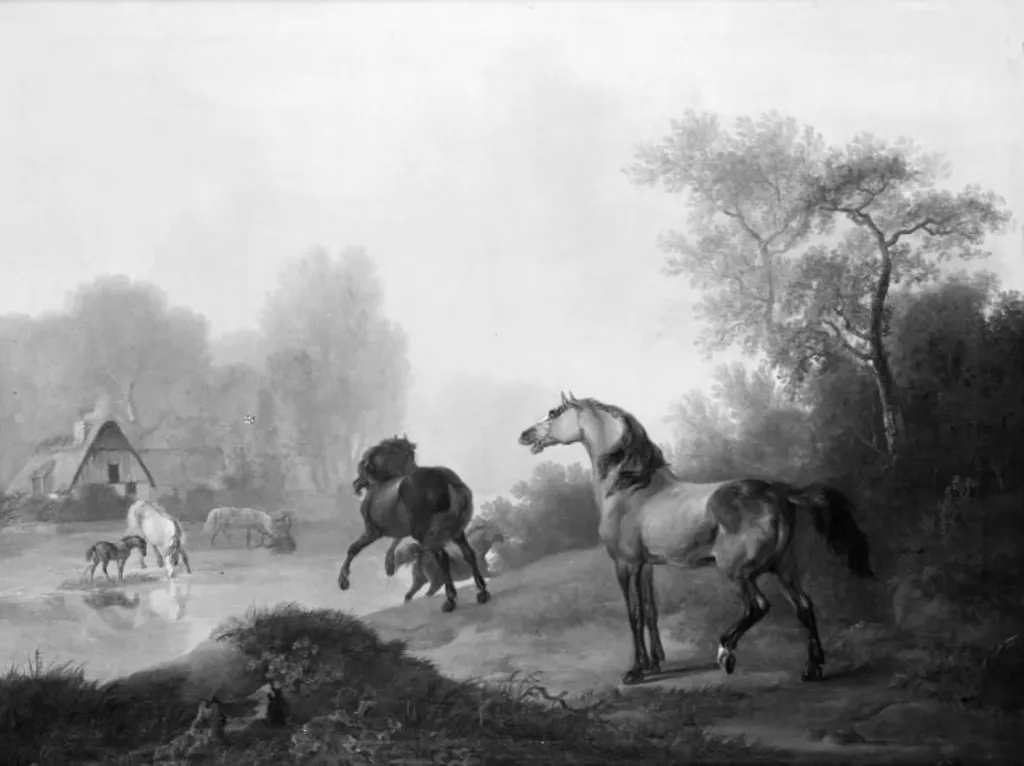
Vilde heste i et stutteri is a photography by the Romanticist artist Unknown. It dates from 1821 and is held in the collection of the Statens Museum for Kunst.
About this work
Overview
The composition centers on equine figures within a quiet rural environment, rendered with attention to spatial depth and atmospheric tone.
Painted in 1821 by 303_person, Vilde heste i et stutteri is a landscape-oriented work featuring wild horses in a pastoral setting. It resides in the Museum of Ethnography, where it is cataloged as part of a collection emphasizing natural and cultural relationships. The composition centers on equine figures within a quiet rural environment, rendered with attention to spatial depth and atmospheric tone.
Subject & Meaning
The painting portrays a group of horses grazing and moving through an open field, with minimal human presence. A distant structure suggests a pastoral boundary, reinforcing the theme of animals existing independently within their natural habitat. The absence of domestication cues implies a reverence for wildness, aligning with early 19th-century ideals that valued untamed nature as spiritually significant.
Technique & Style
The artist employs soft gradations of light and muted earth tones to model the horses’ forms and the surrounding terrain. Brushwork is deliberate but not overly detailed, favoring suggestive texture over precision. Shadows are used to create volume and distance, while the placement of figures—foreground versus background—guides the viewer’s eye through a layered, tranquil space.
History & Provenance
The work entered the Museum of Ethnography’s collection in the late 19th century, likely acquired during a period of increased interest in Nordic rural life and natural history. Its origin as a private commission or personal study remains undocumented. No exhibition records or artist correspondence from the time of creation have survived to clarify its initial reception.
Context
Created during the height of Romanticism, the painting reflects broader European trends that elevated nature as a source of emotional and moral insight. While not overtly dramatic, its quiet depiction of wild horses aligns with Romantic ideals of solitude, authenticity, and the sublime in ordinary landscapes. It contrasts with urbanizing industrial imagery of the era by preserving a sense of untouched wilderness.
Legacy
Though not widely reproduced or studied outside institutional circles, the painting remains a quiet example of Nordic Romantic landscape art. It contributes to the Museum of Ethnography’s mission of documenting human-nature relationships through visual culture. Its enduring presence underscores a historical preference for observing wildlife without anthropocentric intervention.
Artist & collection

 Domestic Scene
 Giacomo and Cardinal Marco, investing Andrea, Abbot of San Zeno, with his Benefice
 The Nymph of Fontainebleau
 Portrait of a Woman
 Madonna and Child with Saints in the Enclosed Garden
 Venus and Minerva
 Family Group of Four on Sofa
 Wall painting from Room H of the Villa of P. Fannius Synistor at Boscoreale