Artwork
Vildsvinejagt
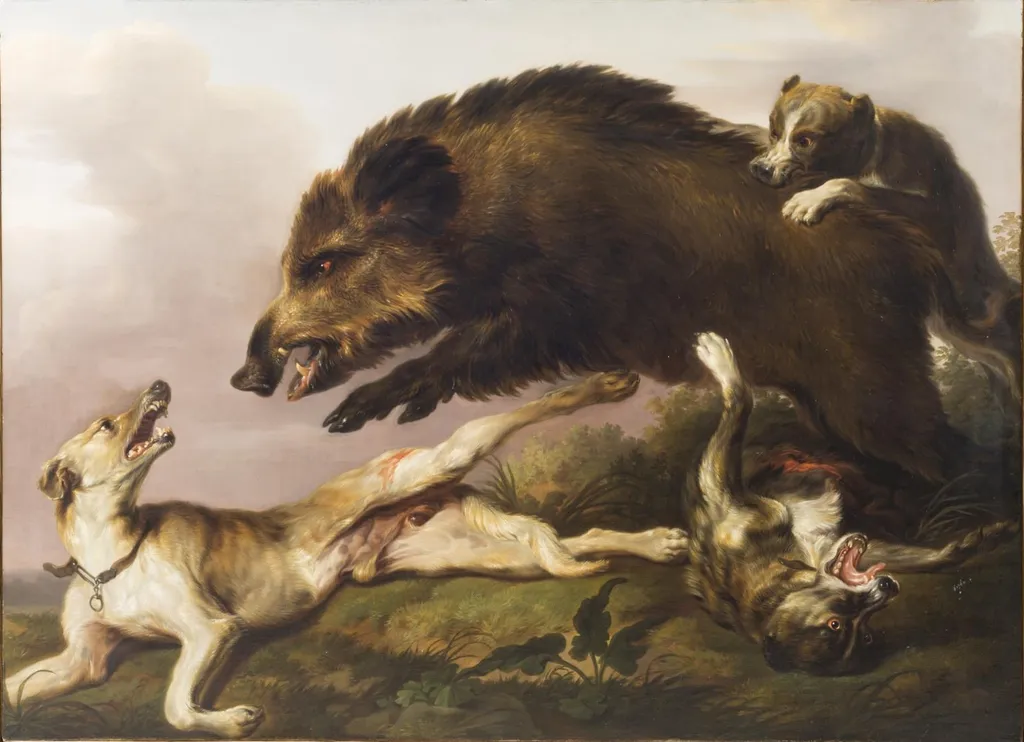
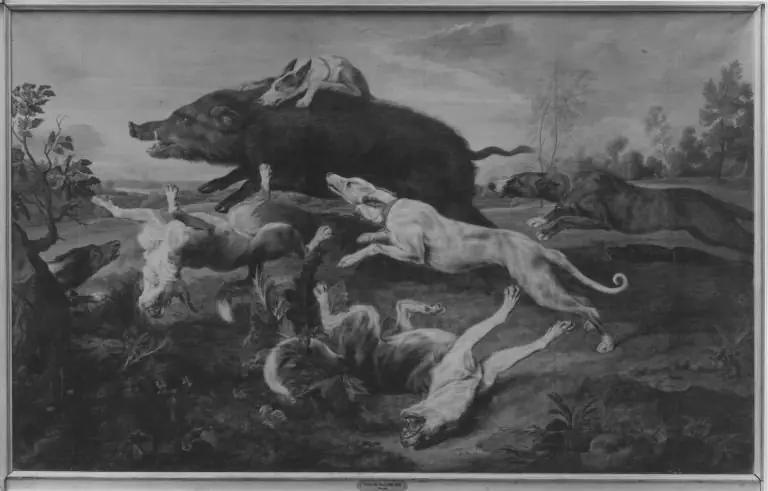
Vildsvinejagt is a photography by Unknown. It dates from 1750 and is held in the collection of the Statens Museum for Kunst.
About this work
Overview
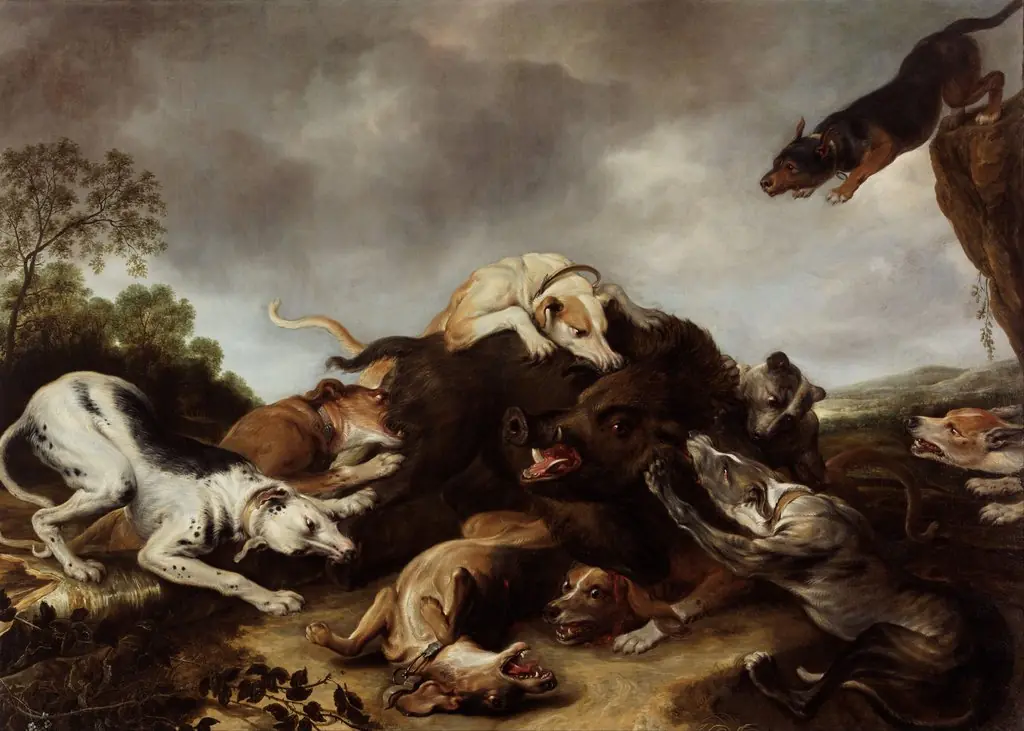
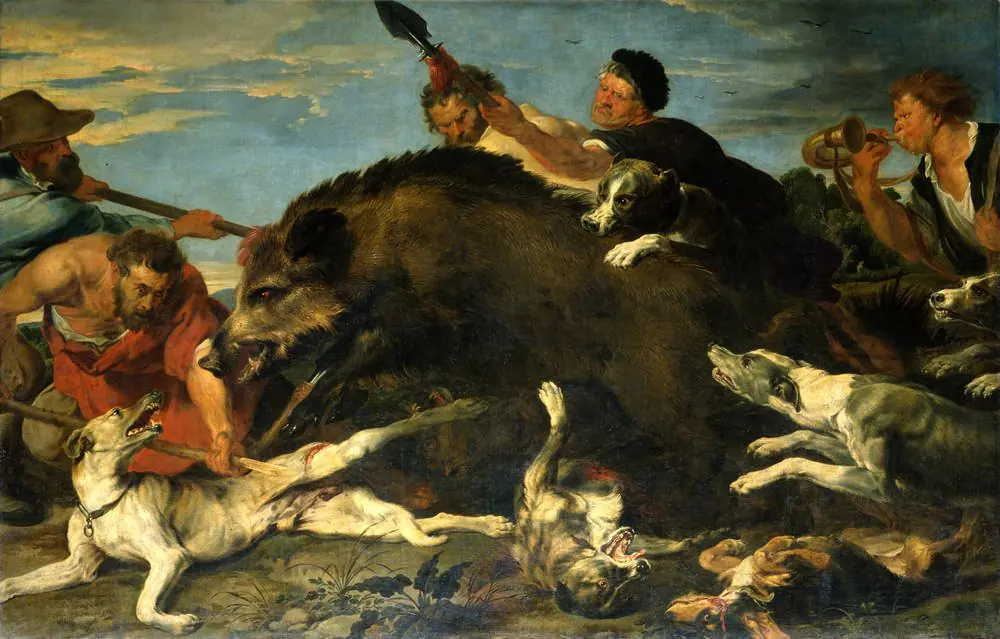
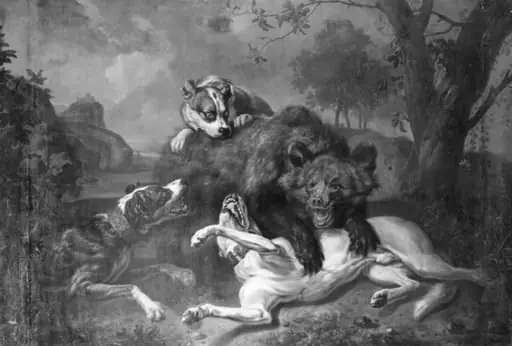
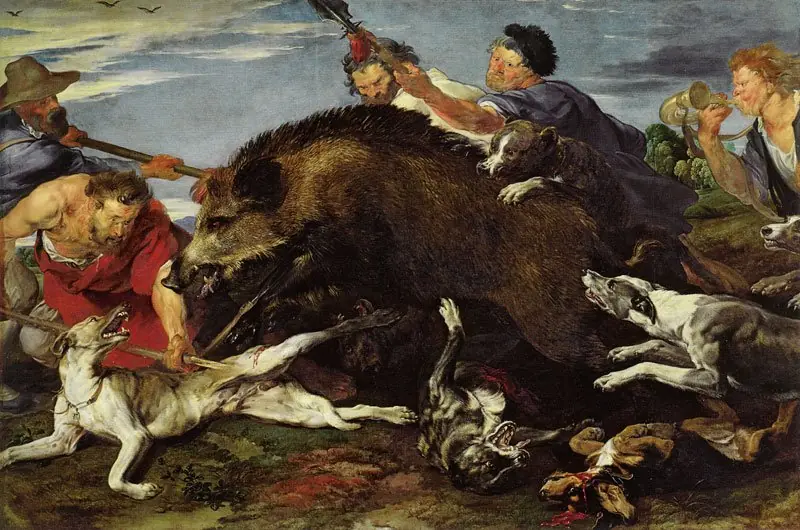
The work depicts a confrontation between a wild boar and three hunting dogs, rendered with heightened realism and emotional intensity.
Created around 1750, Vildsvinejagt is a hunting scene painted on canvas and currently held by the Museum of Ethnography. The work depicts a confrontation between a wild boar and three hunting dogs, rendered with heightened realism and emotional intensity. Though the artist’s full identity remains unconfirmed, the painting reflects 18th-century European interest in naturalistic depictions of wildlife and rural pursuit.
Subject & Meaning
The painting captures a moment of violent struggle between a wild boar and its pursuers. The boar, cornered on a grassy slope, stands defiant with tusks bared and fur raised, while the three dogs lunge from multiple angles. The scene conveys the raw tension of the hunt, not as a triumph but as a visceral, chaotic encounter, emphasizing the animal’s resistance and the dogs’ ferocity.
Technique & Style
The artist employs strong contrasts of light and shadow to heighten the drama, particularly in the boar’s bristled hide and the dogs’ muscular forms. Bold, saturated colors define the foreground figures, while the background recedes into softer tones. Sharp detailing in the animals’ anatomy and fur texture enhances the sense of immediacy, grounding the scene in observed reality rather than idealized form.
History & Provenance
The painting entered the collection of the Museum of Ethnography in the late 19th or early 20th century, likely as part of a broader acquisition of Nordic and European folk imagery. Its origins trace to a regional artistic tradition in Scandinavia, where depictions of hunting were common in domestic and public spaces, reflecting both practical and symbolic associations with nature and survival.
Context
In mid-18th-century Northern Europe, hunting scenes were popular in both elite and rural art, serving as records of skill, status, and the relationship between humans and the natural world. Vildsvinejagt aligns with this tradition but diverges by focusing on the animal’s agency and the physicality of the struggle, rather than the hunter’s control or glory.
Legacy
The painting remains a significant example of 18th-century Nordic naturalism, valued for its unembellished portrayal of animal behavior. It contributes to scholarly understanding of how wildlife was visually interpreted outside academic art centers, offering insight into regional aesthetics and the cultural weight of hunting as a lived experience rather than a spectacle.
Artist & collection

 Domestic Scene
 Giacomo and Cardinal Marco, investing Andrea, Abbot of San Zeno, with his Benefice
 The Nymph of Fontainebleau
 Portrait of a Woman
 Madonna and Child with Saints in the Enclosed Garden
 Venus and Minerva
 Family Group of Four on Sofa
 Wall painting from Room H of the Villa of P. Fannius Synistor at Boscoreale