Artwork
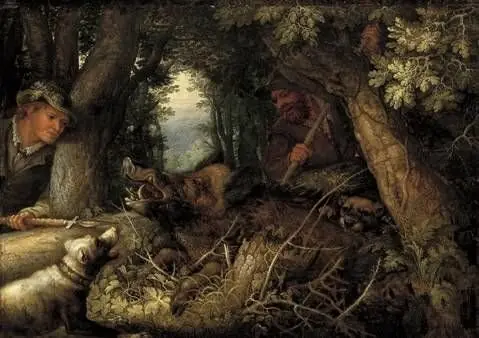
Boar hunt
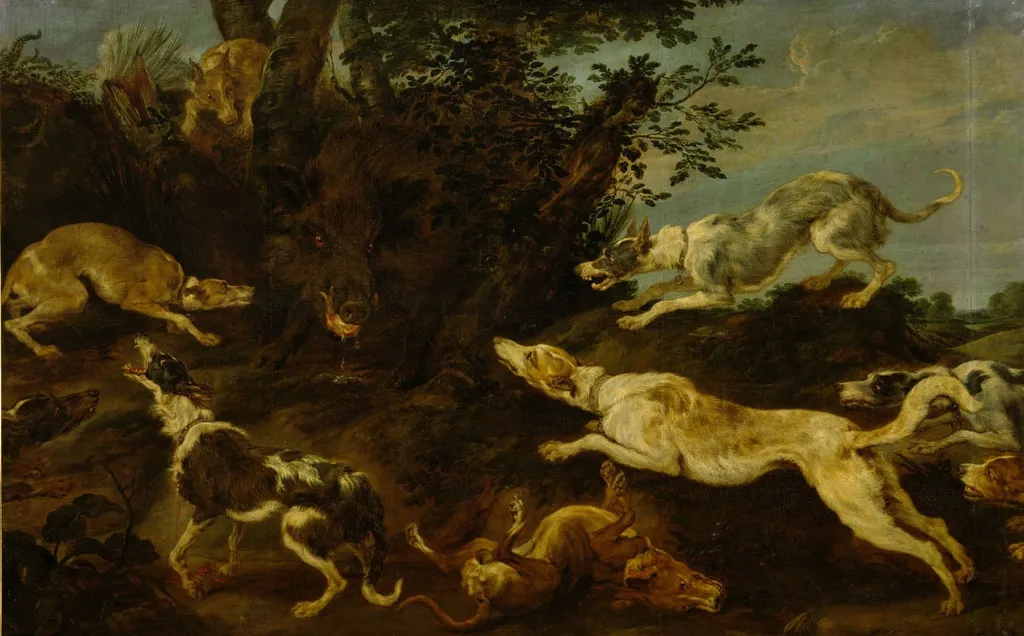
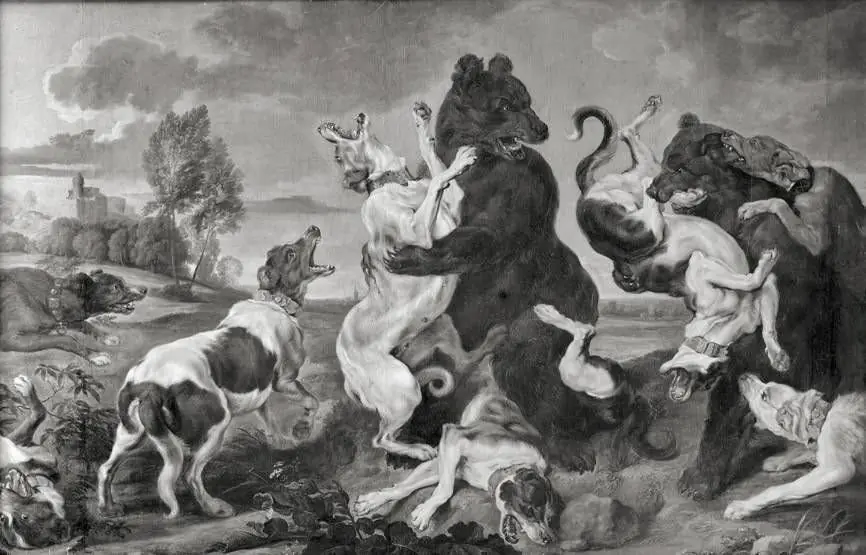
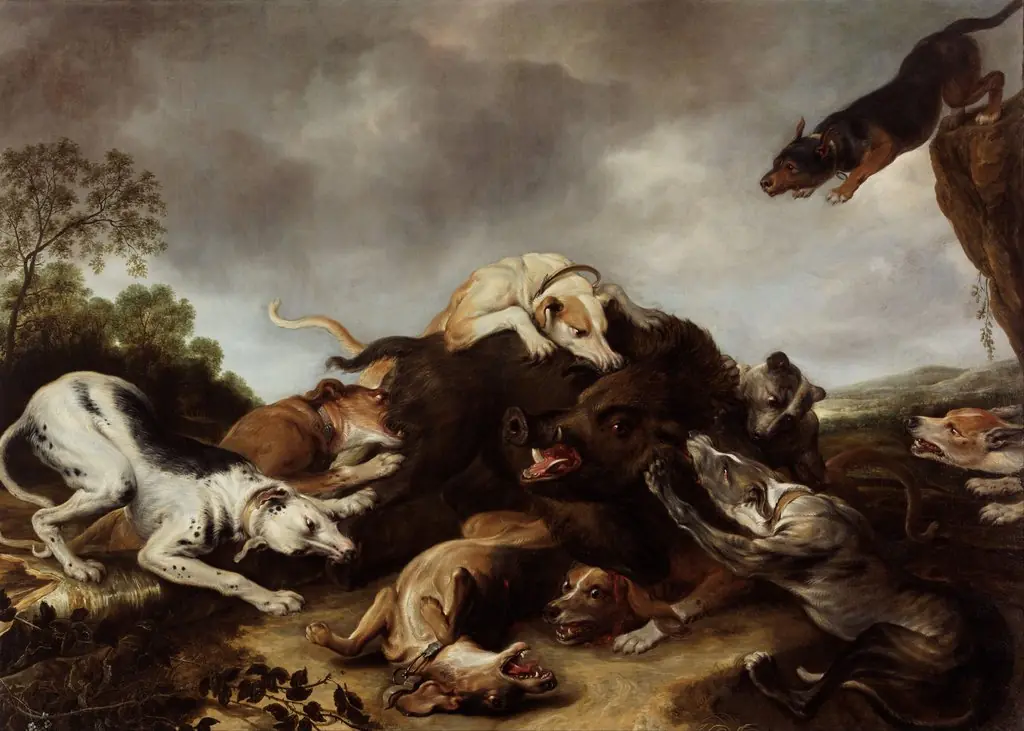
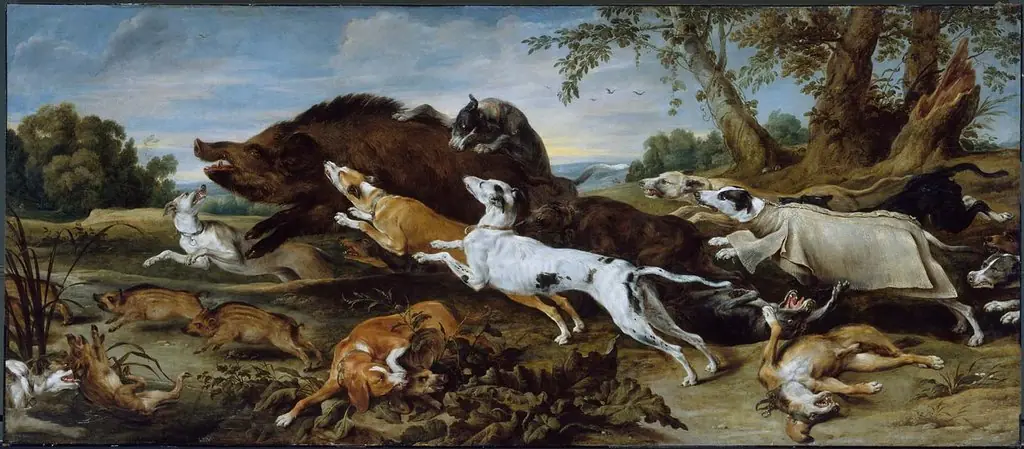
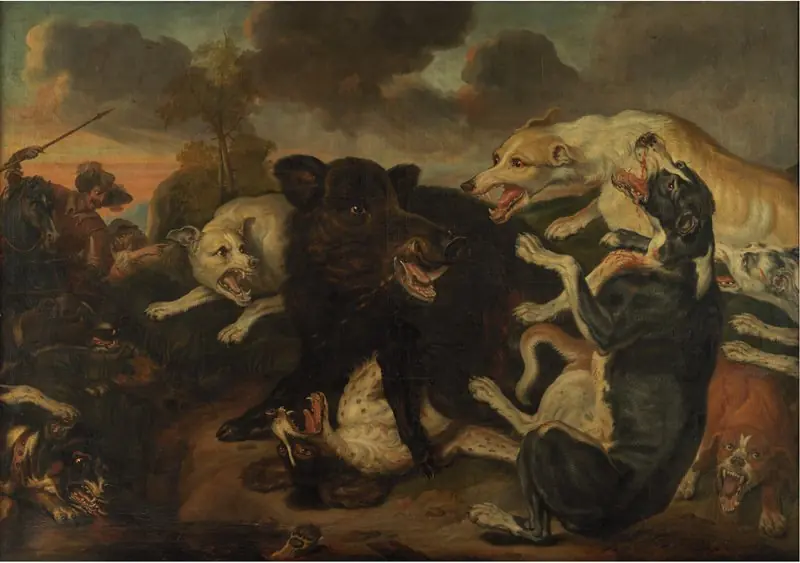
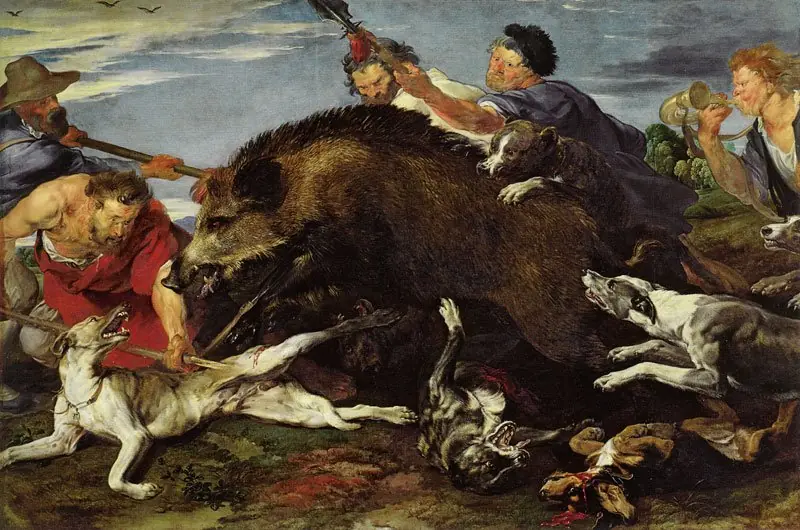
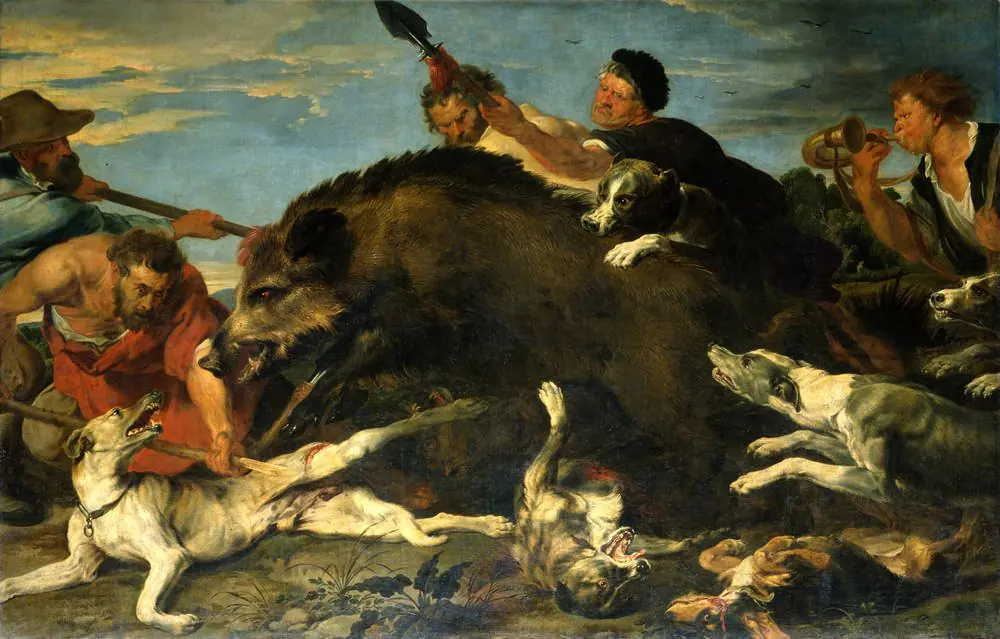
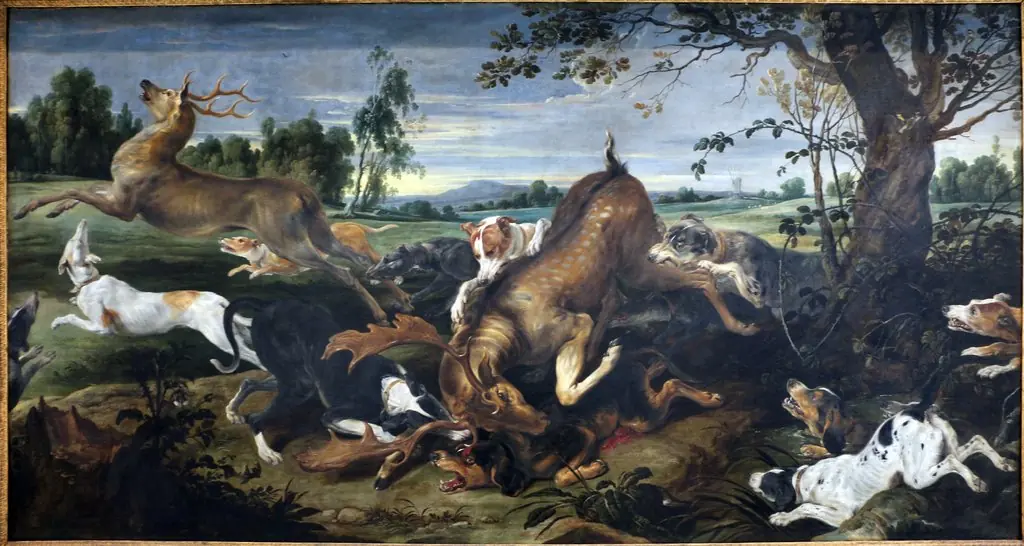
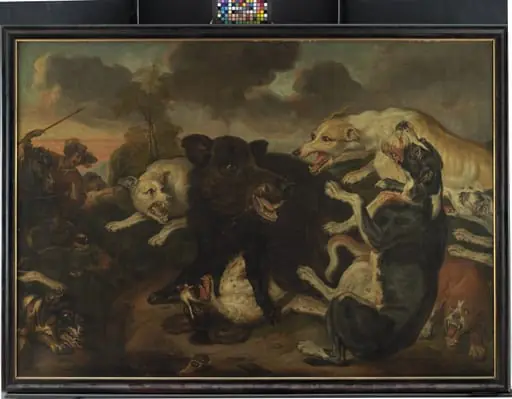
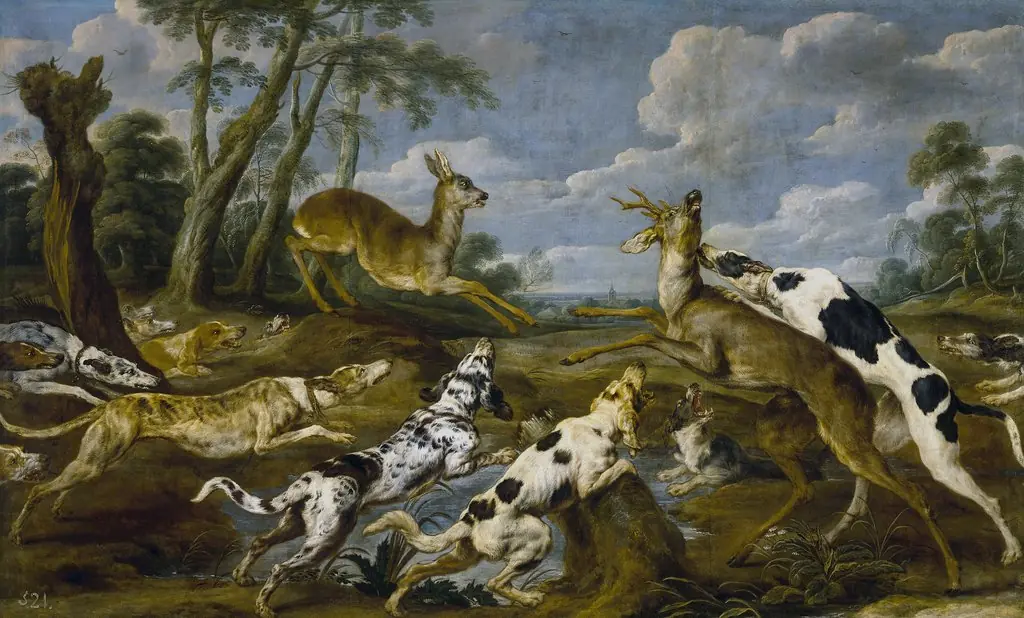
Boar hunt is an oil painting by the Flemish Baroque painting artist Paul de Vos. It dates from 1650 and is held in the collection of the Kunsthistorisches Museum.
About this work
The painting is called "Boar hunt" by Paul de Vos.
It was made in 1650 using oil paint.
The Kunsthistorisches Museum holds this work, which is an allegory and depicts hunting.
This painting is interesting because it's from a time when hunting was a popular subject in art, and allegories were used to convey hidden meanings.
You can learn more about the subject: hunting.
Overview
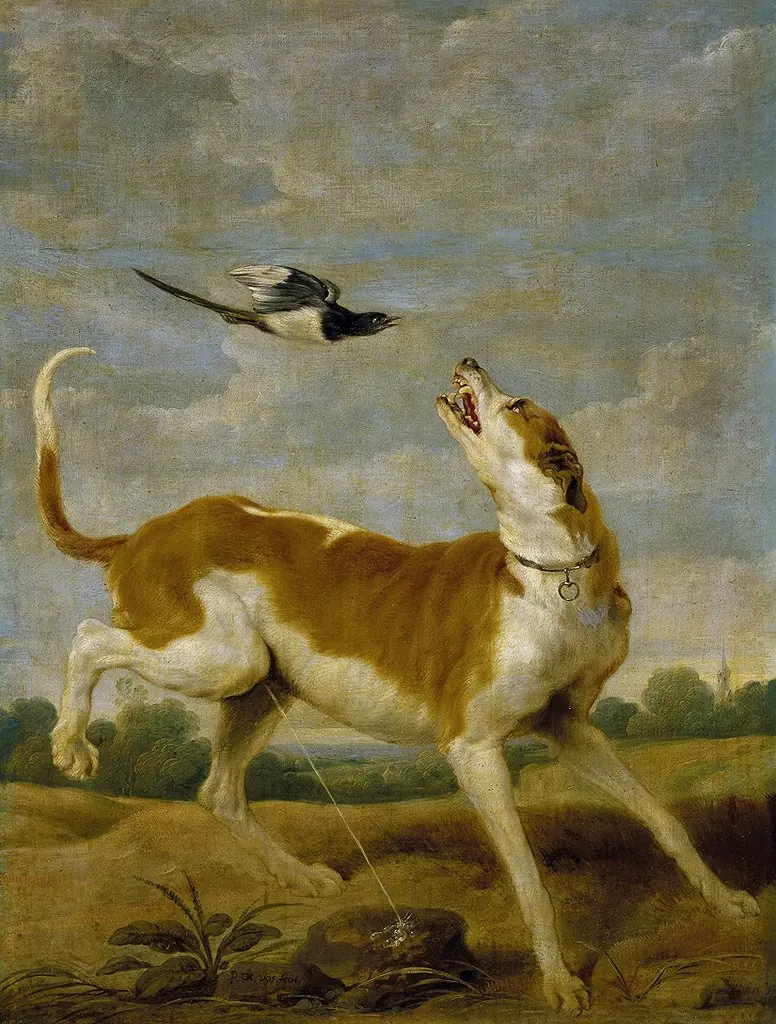
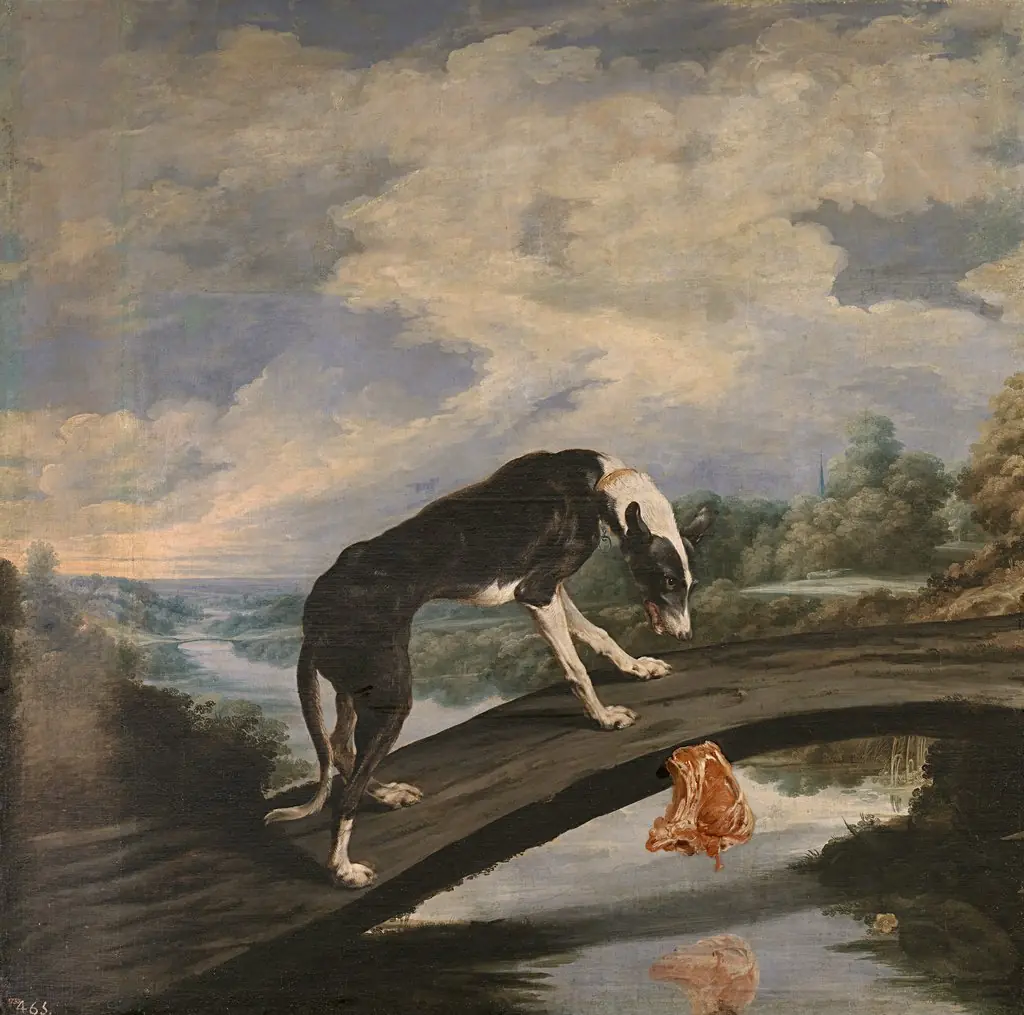
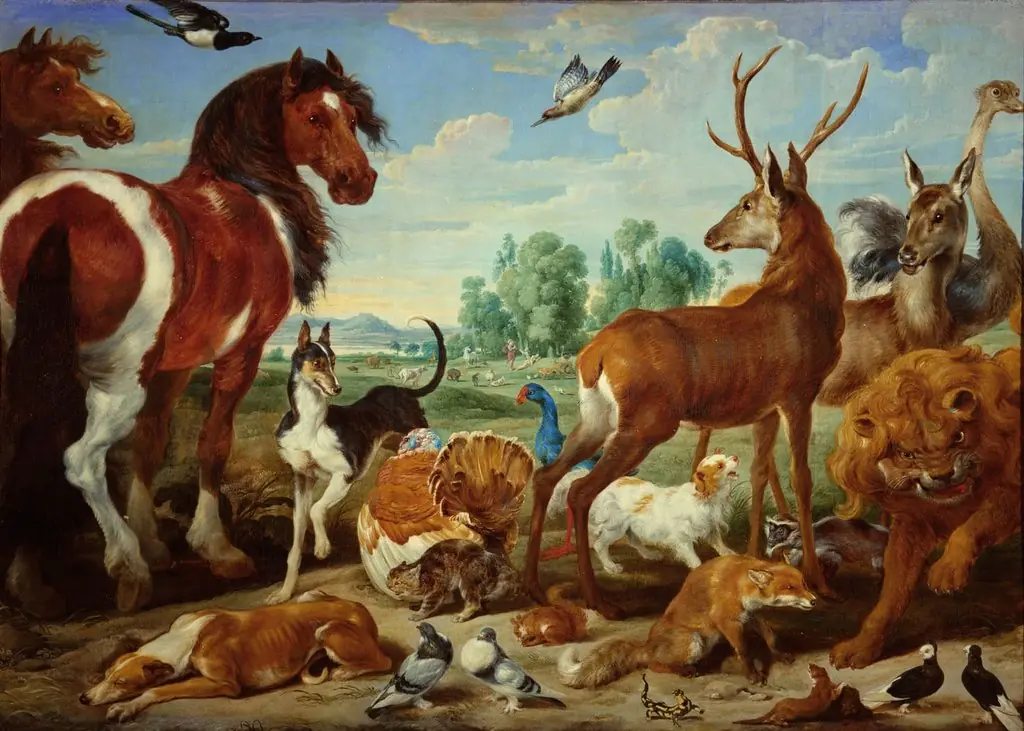
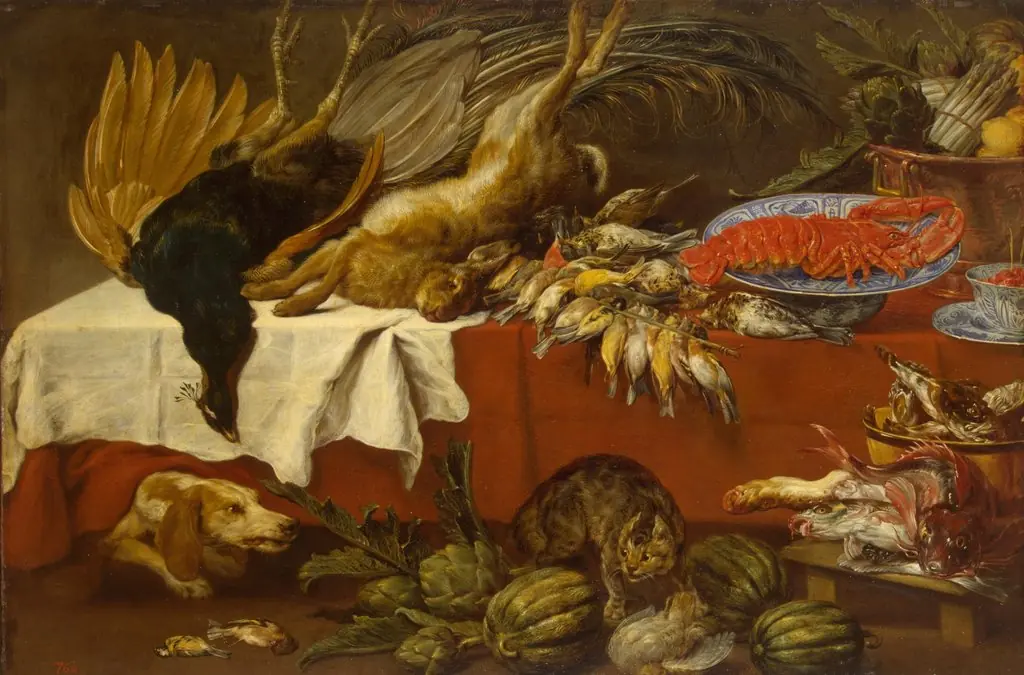
Painted around 1650, *Boar Hunt* is an oil-on-canvas work by the Flemish artist Paul de Vos, who specialized in lively animal scenes and hunting themes.
Painted around 1650, *Boar Hunt* is an oil-on-canvas work by the Flemish artist Paul de Vos, who specialized in lively animal scenes and hunting themes. It resides in the Kunsthistorisches Museum in Vienna, where it represents a strand of Baroque art focused on naturalistic animal behavior and aristocratic pastimes. The painting exemplifies de Vos’s skill in rendering movement and tension within complex group compositions.
Subject & Meaning
The scene depicts a violent encounter between hunters and a wild boar, framed not merely as a record of sport but as an allegory of human struggle against primal forces. Hunting imagery of this period often carried moral or symbolic weight, reflecting themes of courage, control, and the tension between civilization and nature. The boar, a symbol of ferocity and resistance, becomes a focal point for these layered interpretations.
Technique & Style
De Vos employed rich, layered oil paint to capture the texture of fur, leather, and foliage with precision. His brushwork conveys motion through swirling drapery and muscular tension in both animals and figures. The composition is dynamically arranged, with diagonal lines guiding the eye through the chaos of the hunt, a hallmark of Flemish Baroque narrative painting influenced by contemporaries like Rubens.
History & Provenance
The painting entered the Kunsthistorisches Museum’s collection as part of the Habsburg imperial holdings, likely acquired during the 17th century when aristocratic patrons favored such works. De Vos’s reputation as a specialist in animal subjects made his paintings desirable among collectors. Its continuous presence in the museum since at least the 19th century confirms its enduring institutional recognition.
Context
In mid-17th-century Antwerp, hunting scenes were popular among the elite, serving both as entertainment and as displays of status. Artists often collaborated, with de Vos frequently contributing animals to compositions by painters like Rubens and van Dyck. This work reflects a broader cultural fascination with the natural world, framed through the lens of aristocratic ritual and moral allegory.
Legacy
Paul de Vos’s *Boar Hunt* stands as a representative example of Flemish Baroque animal painting, influencing later depictions of wildlife in European art. While not widely exhibited outside specialized collections, its technical precision and narrative intensity continue to inform scholarly study of 17th-century genre painting and the symbolic use of the hunt in visual culture.
Artist & collection
Artist
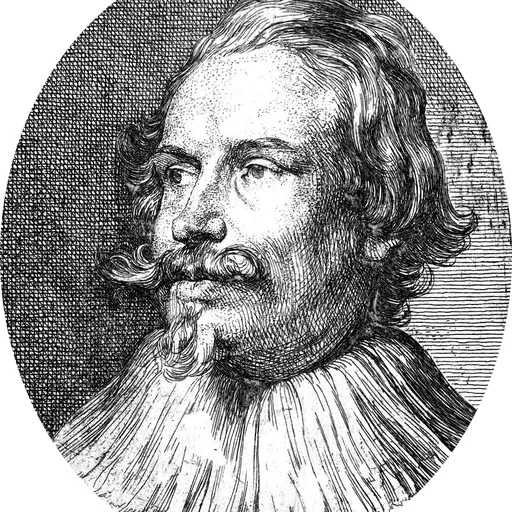
Paul de Vos (1591/92, or 1595 in Hulst – 30 June 1678 in Antwerp) was a Flemish Baroque painter who specialized in mainly in compositions of animals, hunting scenes and still lifes.