Artwork
Larder with Circular Meat Rack
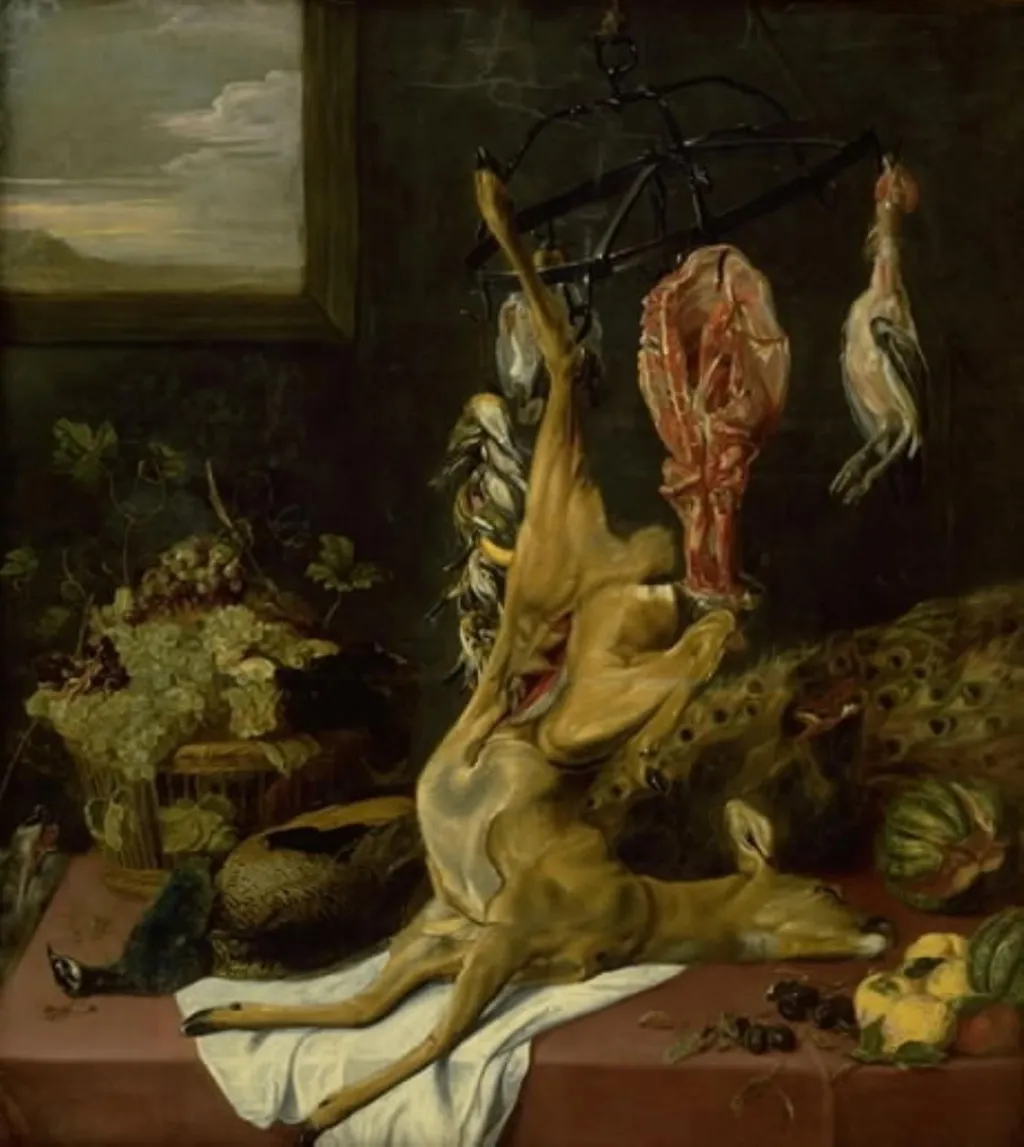
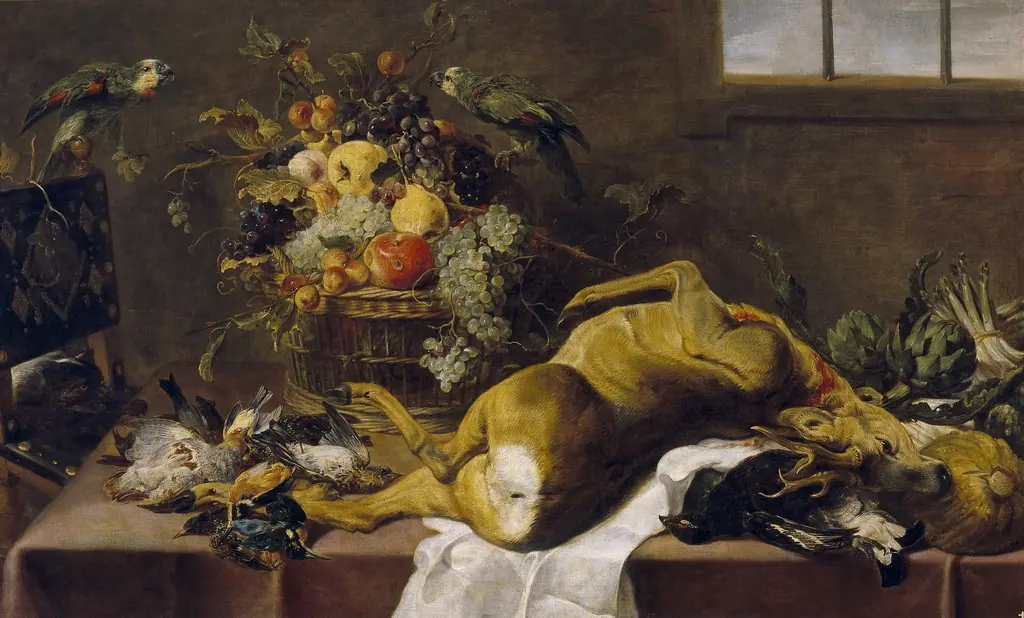
Larder with Circular Meat Rack is a photography by Unknown. It dates from 1650 and is held in the collection of the Statens Museum for Kunst. Painted around 1650, this still life depicts a domestic larder centered on a circular meat rack laden with cured meats.
About this work
Overview
The work is part of the collection at the Museum of Ethnography, where it is studied for its representation of early modern food preservation practices.
Painted around 1650, this still life depicts a domestic larder centered on a circular meat rack laden with cured meats. The scene is rendered in oil on panel, with careful attention to the textures of flesh, wood, and stone. The composition is restrained, avoiding theatricality while emphasizing the quiet functionality of a storage space. The work is part of the collection at the Museum of Ethnography, where it is studied for its representation of early modern food preservation practices.
Subject & Meaning
The painting presents a functional larder, not a display of wealth but a record of sustenance. The hanging deer carcass, along with other cuts of meat, suggests seasonal hunting and preservation. The absence of people and the dim interior imply solitude and routine. The arrangement reflects a practical, almost ritualized approach to food storage, conveying the rhythms of rural or domestic life rather than symbolic abundance.
Technique & Style
The artist employs chiaroscuro to model forms with subtle gradations of light and shadow, enhancing the three-dimensionality of the meats and wooden rack. Warm browns and russets dominate the foreground, contrasting with the cool, grayish background. Brushwork is precise yet unobtrusive, capturing the sheen of fat, the grain of wood, and the roughness of hanging ropes. The lighting, emanating from a narrow window, creates a focused, intimate atmosphere.
History & Provenance
The painting’s early ownership is undocumented, but it entered the Museum of Ethnography’s collection in the late 19th century, likely acquired as part of a broader effort to preserve material culture. Its attribution to 30384_person remains tentative, based on stylistic parallels with regional Dutch and Flemish still lifes of the period. The work has undergone minimal restoration, preserving its original surface and tonal balance.
Context
Created during a time when food preservation was essential for survival, the painting reflects everyday practices in northern Europe. Similar larder scenes appear in Dutch art of the era, often tied to themes of temperance and domestic order. Unlike grand banquet pieces, this work avoids moralizing or allegory, instead offering a direct observation of material life in a pre-industrial household.
Legacy
The painting contributes to scholarly understanding of early modern foodways and material culture. It is referenced in studies of domestic architecture, preservation techniques, and the evolution of still-life painting beyond symbolic or religious themes. Its quiet realism has influenced later ethnographic documentation, where visual records of daily life are valued for their unembellished detail.
Artist & collection

 Domestic Scene
 Giacomo and Cardinal Marco, investing Andrea, Abbot of San Zeno, with his Benefice
 The Nymph of Fontainebleau
 Portrait of a Woman
 Madonna and Child with Saints in the Enclosed Garden
 Venus and Minerva
 Family Group of Four on Sofa
 Wall painting from Room H of the Villa of P. Fannius Synistor at Boscoreale
 Game and Fruits
 Larder Still life
 Hunter and Dogs by a Table with Dead Game and Fruit
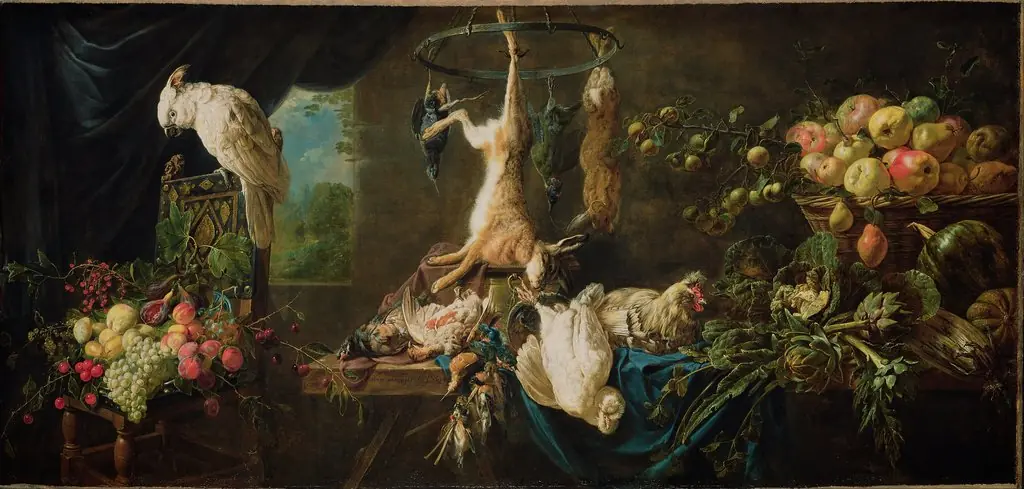 Still Life with Game, Vegetables, Fruit and a Cockatoo
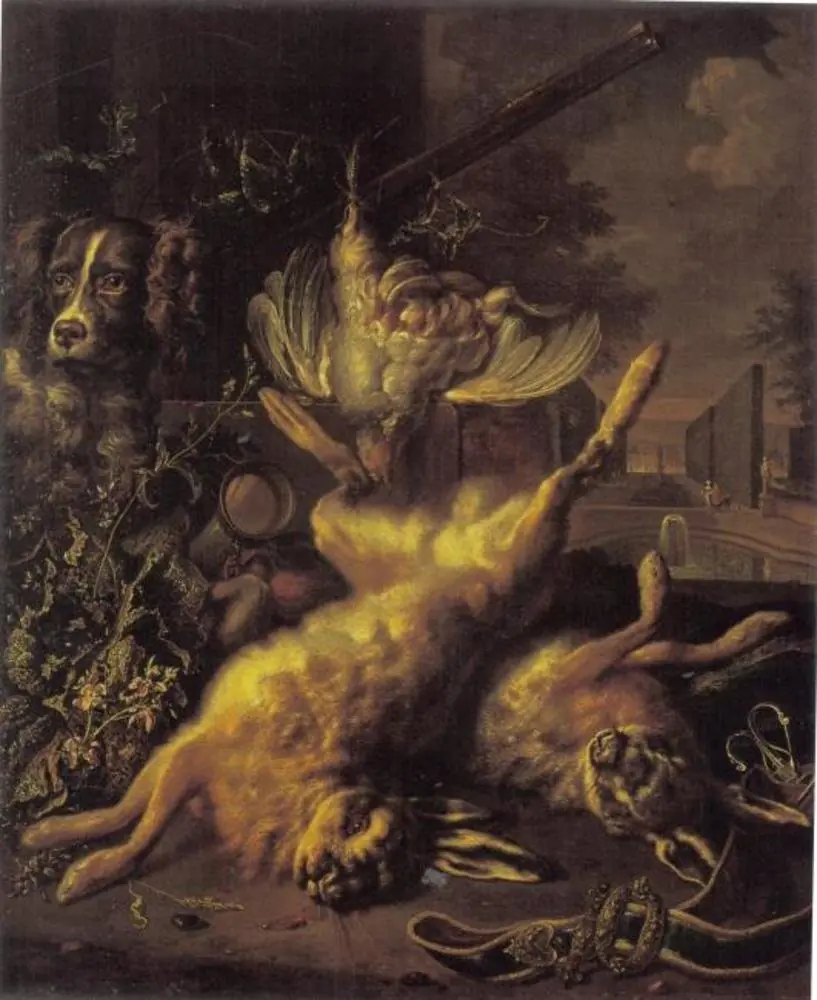 Hunting Trophies
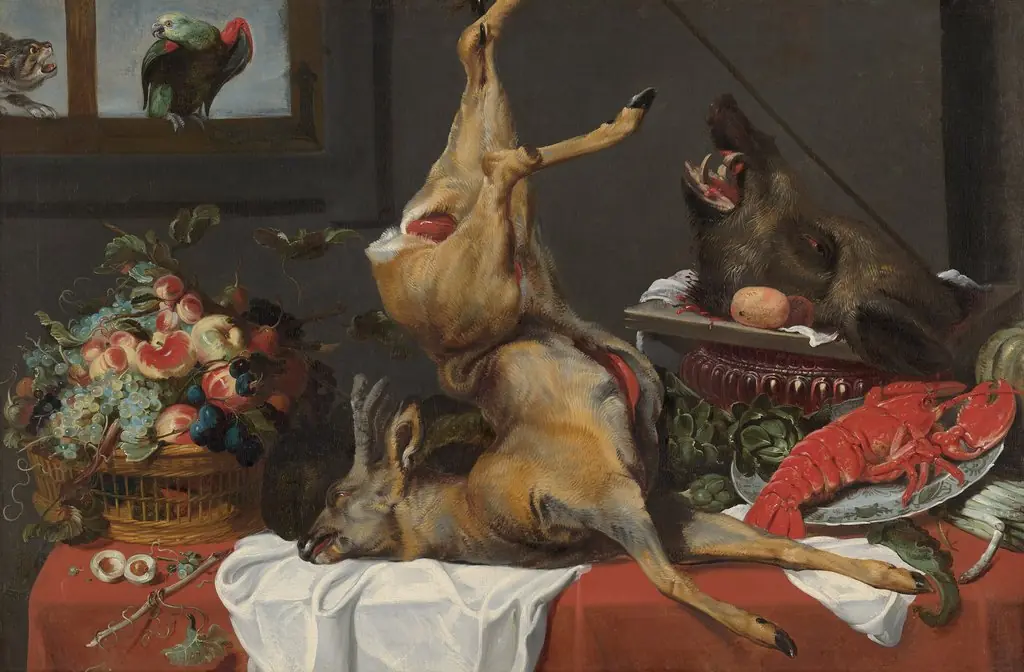 Still Life with a Dead Stag
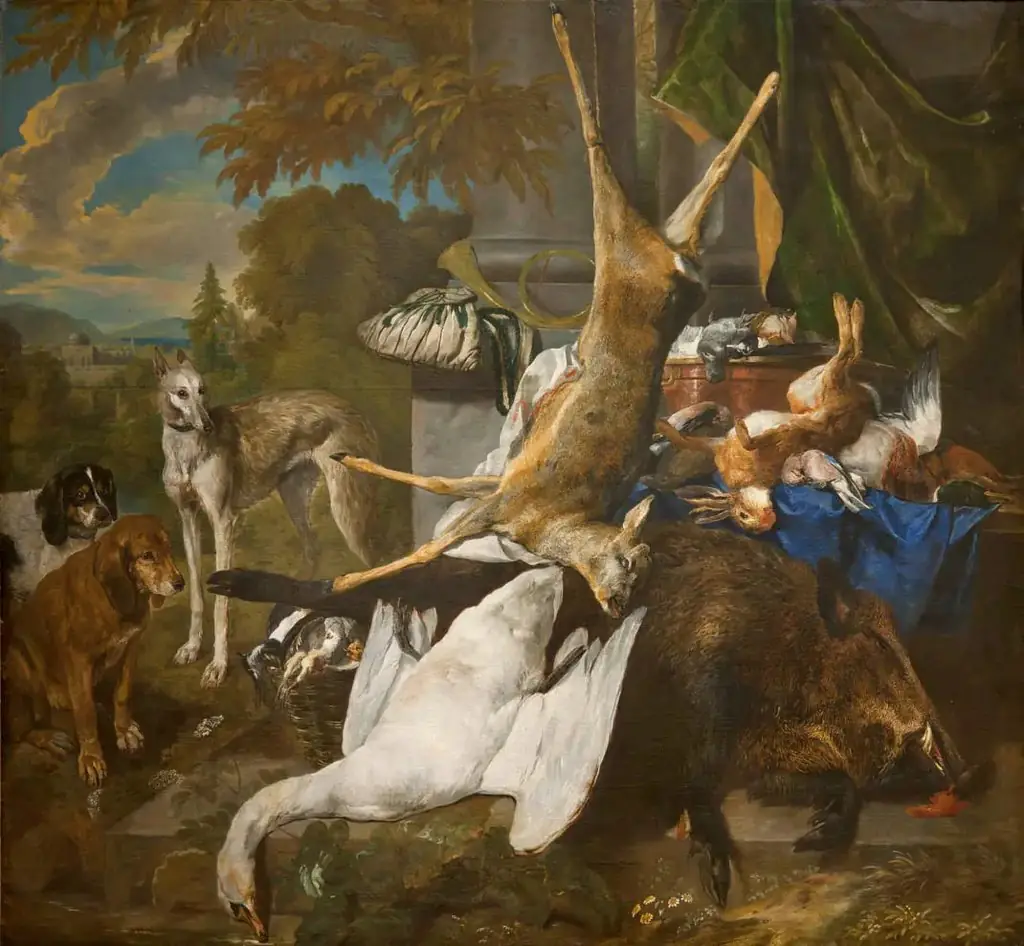 Still life of game and dogs
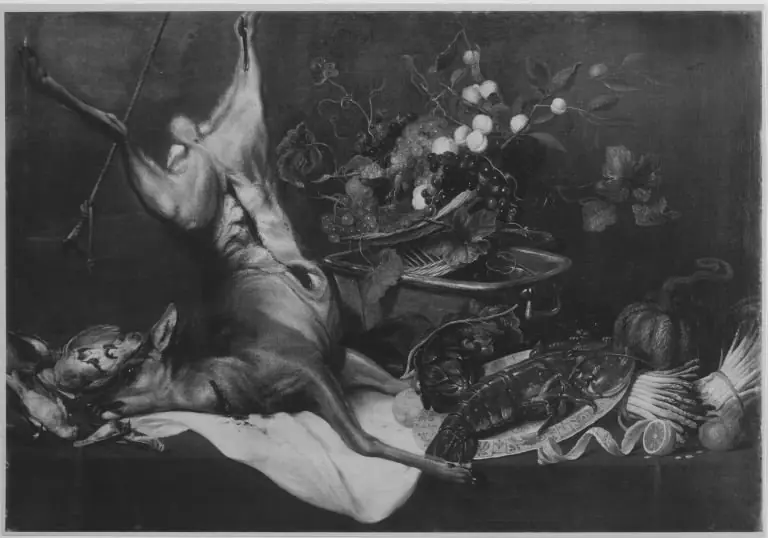 Still life with a dead roebuck, lobster and fruits
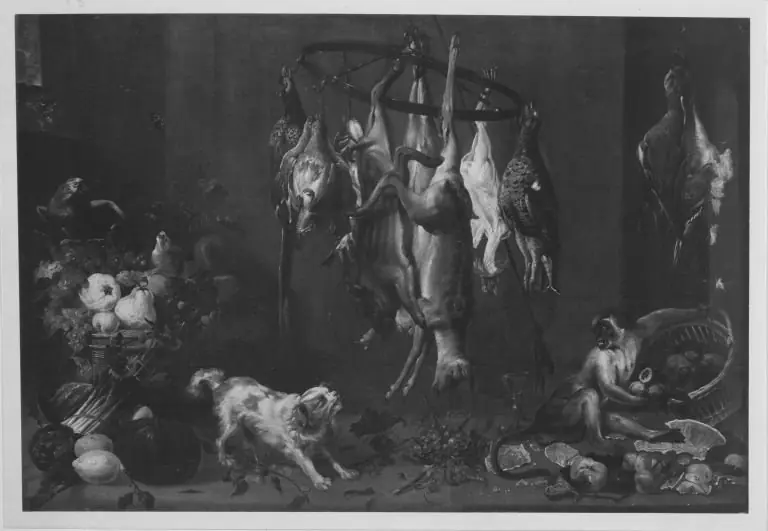 Pantry (Alte Pinakothek)
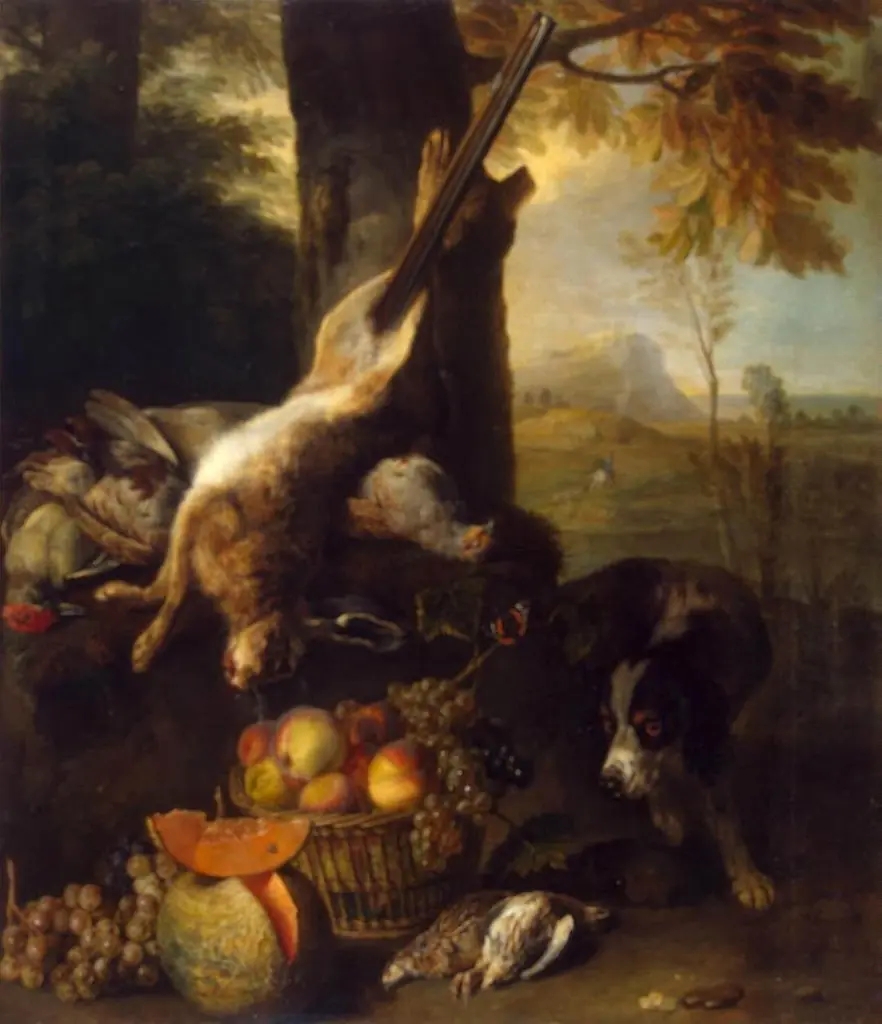 Still Life with a Dead Hare and Fruit
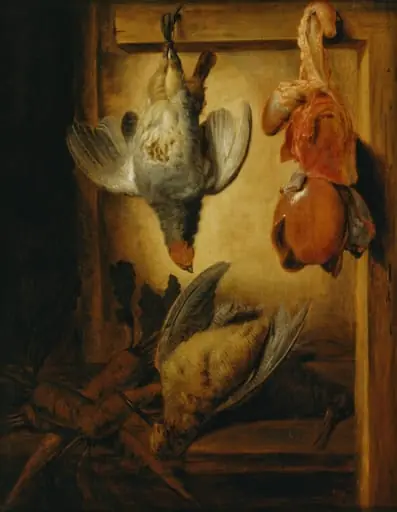 Dead Wild Fowl
 The larder