Artwork
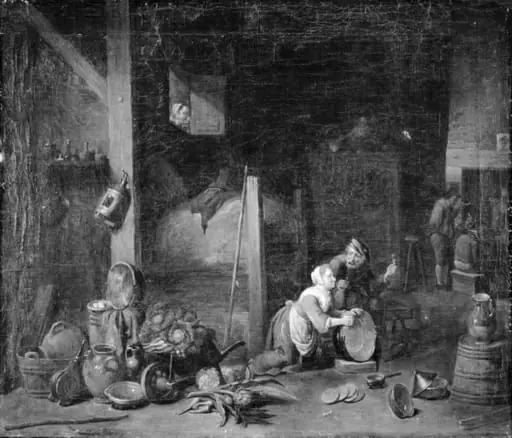
A Kitchen Maid at Work
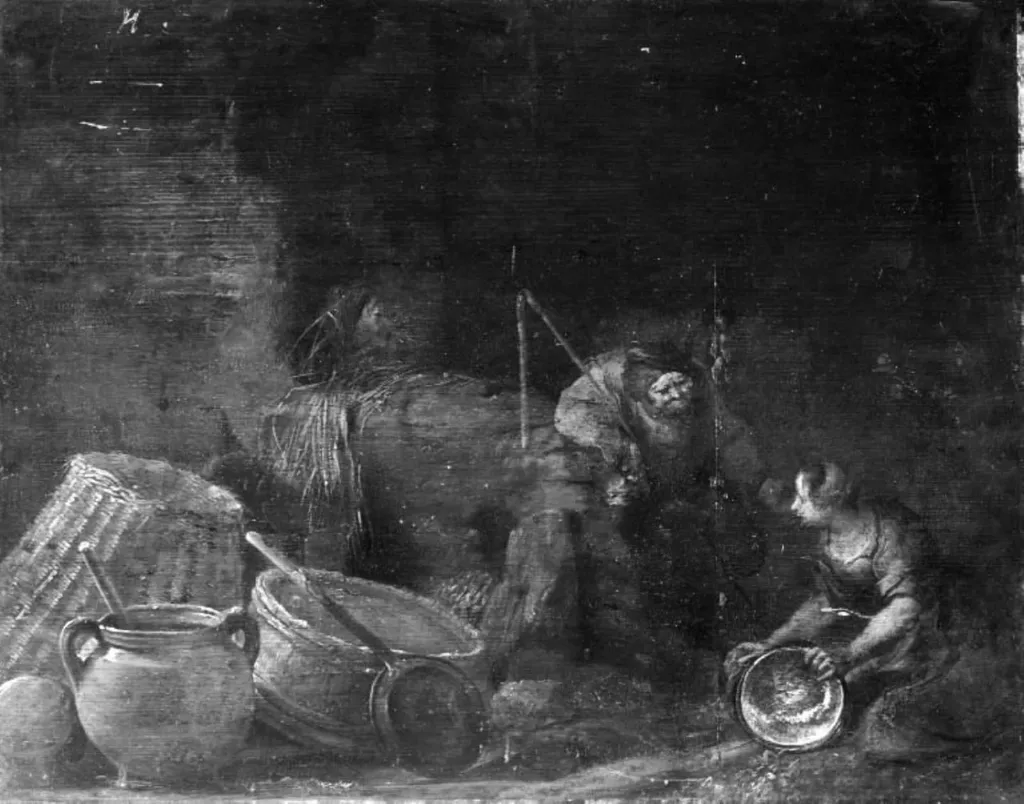
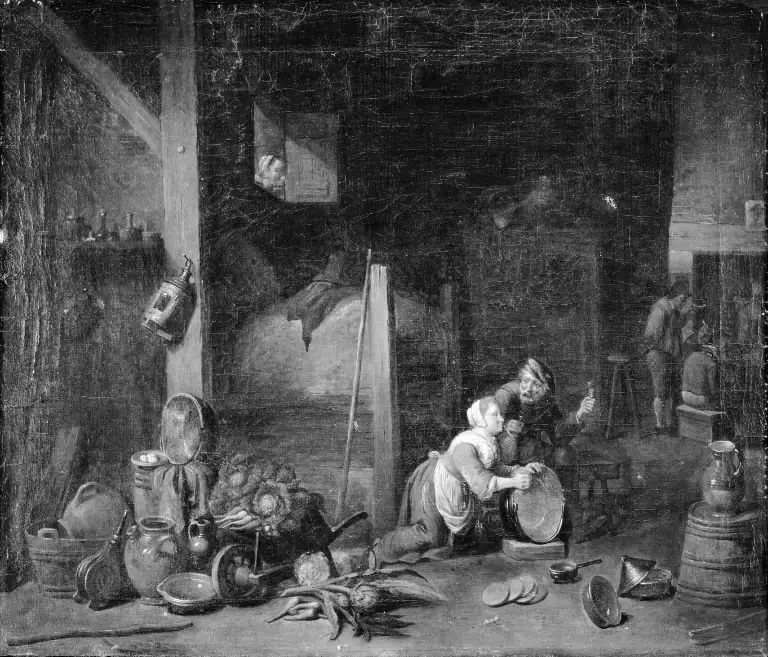
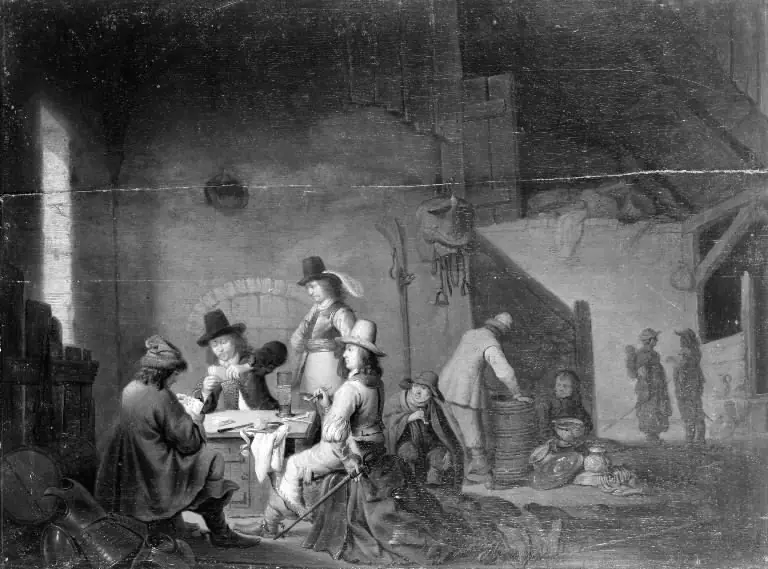
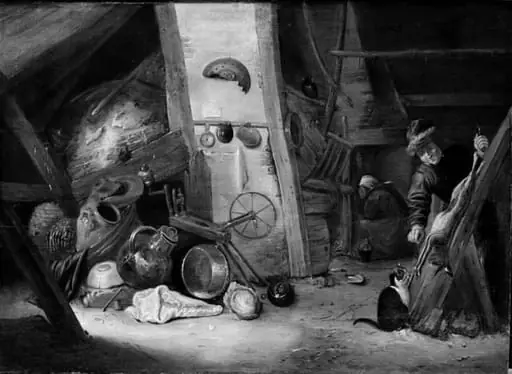
A Kitchen Maid at Work is a photography by the Baroque artist Unknown. It dates from 1634 and is held in the collection of the Statens Museum for Kunst. Painted in 1634, this work depicts three individuals engaged in domestic labor within a dimly lit kitchen.
About this work
Overview
Painted in 1634, this work depicts three individuals engaged in domestic labor within a dimly lit kitchen. The scene is rendered with focused realism, emphasizing physical effort over narrative detail. The painting is part of the Museum of Ethnography’s collection, where it is valued for its unidealized portrayal of everyday work in early 17th-century domestic settings.
Subject & Meaning
The figures are shown performing routine tasks—stirring a pot, kneeling with a bowl, holding a ladle—without gesture or expression. Their identities are obscured, suggesting a deliberate choice to represent labor itself rather than individual stories. The absence of ornament or social context underscores the quiet dignity of manual work in a time when such scenes were rarely elevated in art.
Technique & Style
The artist employs chiaroscuro to isolate the figures’ hands and kitchen utensils against a deep, receding shadow. Light falls sharply on the metal pots and the woman stirring, creating tactile immediacy. Faces and surroundings are softened or left indistinct, directing attention to the physicality of labor. This selective illumination heightens the sense of concentration and physical exertion.
History & Provenance
The painting entered the Museum of Ethnography’s holdings in the early 20th century, likely acquired as part of a broader effort to document vernacular life. Its origins before that are undocumented, and no records link it to a known patron or artist. Its attribution remains tentative, though stylistic elements align with regional Dutch and Flemish genre traditions of the period.
Context
In the 1630s, Dutch and Flemish painters increasingly turned to scenes of domestic labor, reflecting growing civic interest in the lives of ordinary people. Unlike grand historical or religious subjects, this work offers no moral allegory or social commentary—only the quiet rhythm of work. Its realism aligns with broader trends in Northern European art that valued observation over idealization.
Legacy
The painting contributes to a modest but enduring tradition of depicting labor without sentimentality. Though not widely reproduced or studied, it remains a quiet example of how light and composition could elevate mundane acts into subjects worthy of visual attention. Its preservation in an ethnographic context underscores its role as a record of material culture and daily practice.
Artist & collection

 Domestic Scene
 Giacomo and Cardinal Marco, investing Andrea, Abbot of San Zeno, with his Benefice
 The Nymph of Fontainebleau
 Portrait of a Woman
 Madonna and Child with Saints in the Enclosed Garden
 Venus and Minerva
 Family Group of Four on Sofa
 Wall painting from Room H of the Villa of P. Fannius Synistor at Boscoreale