Artwork
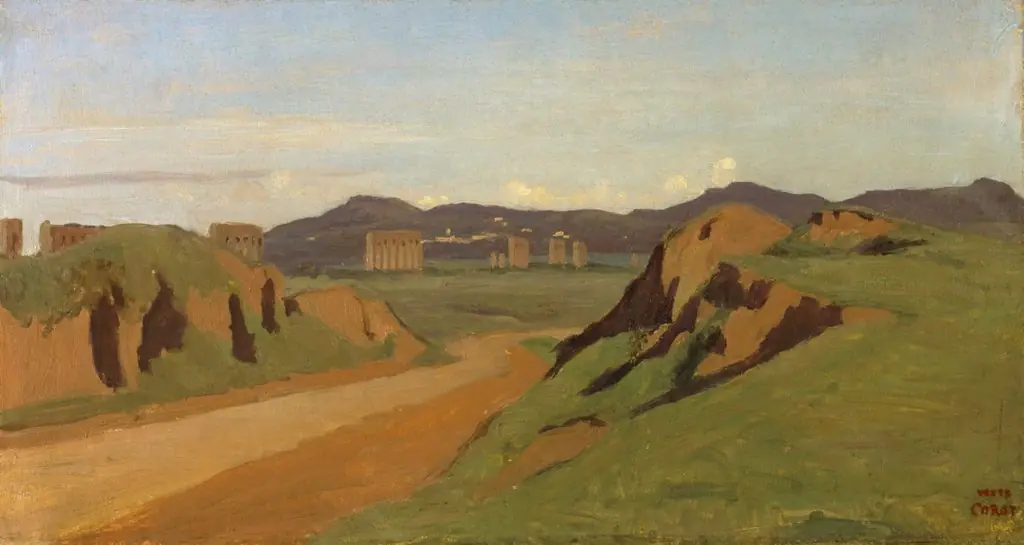
Porta Furba. Rom
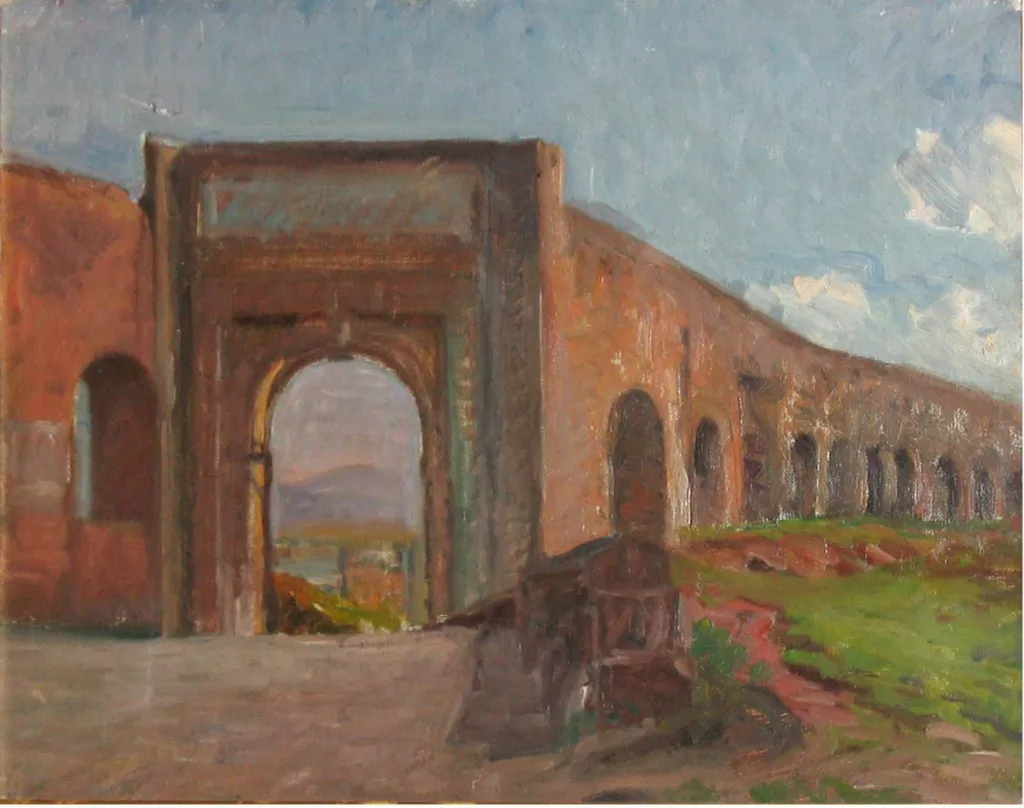
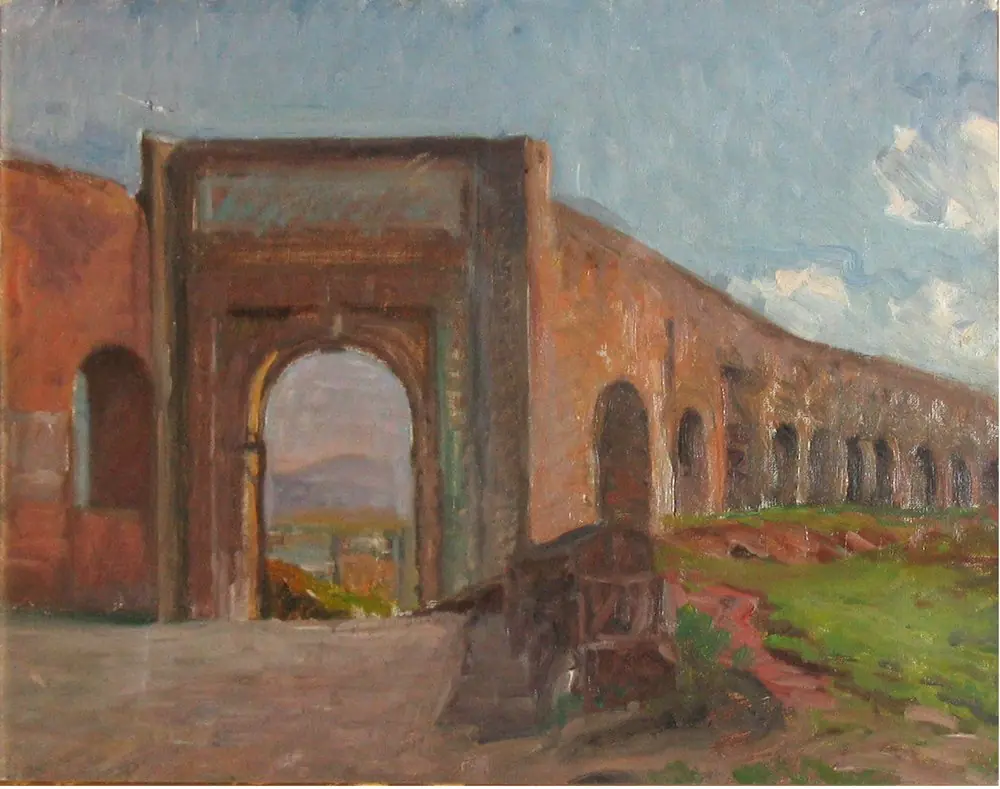
Porta Furba. Rom is a photography by Unknown. It dates from 1904 and is held in the collection of the Statens Museum for Kunst. Porta Furba.
About this work
Overview
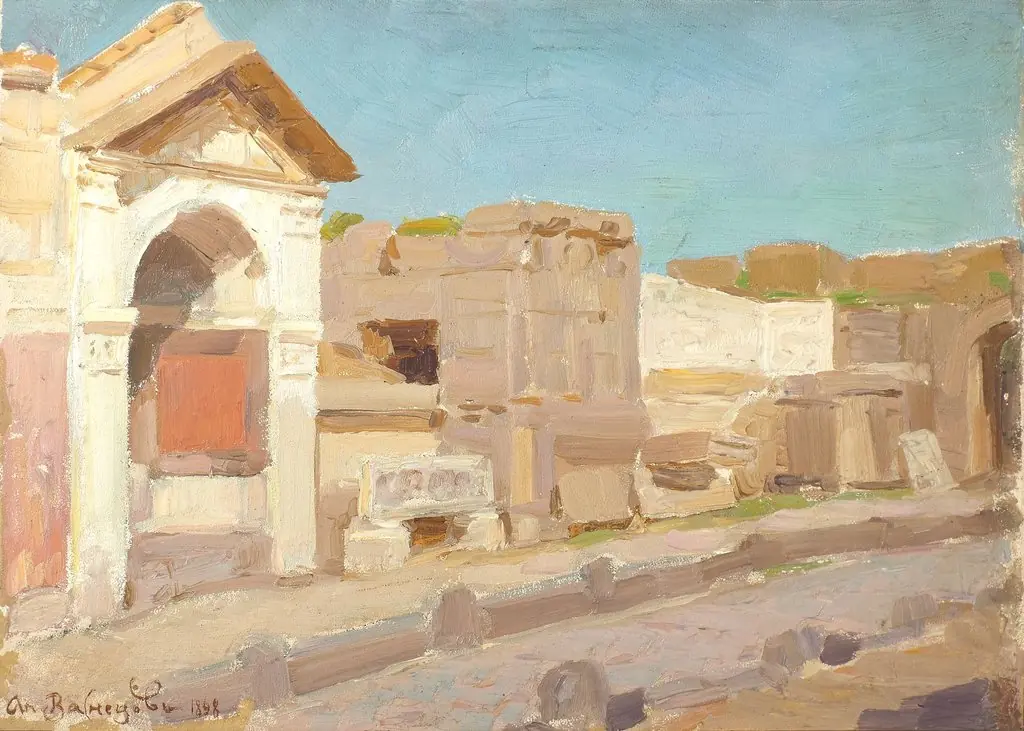
Porta Furba. Rom is a painted depiction of an ancient Roman gateway, rendered in 1904 by the artist 310_person. The work is part of the Museum of Ethnography’s collection and presents a detailed, observational view of a weathered stone structure. Its composition emphasizes architectural form and atmospheric conditions, capturing the monument’s presence within a quiet, open landscape.
Subject & Meaning
The subject is a section of an ancient Roman gate, likely inspired by surviving ruins in or near Rome. The arches and stonework suggest a functional yet monumental entry point from antiquity. The painting does not include human figures or narrative elements, instead inviting contemplation of time, endurance, and the quiet persistence of built heritage within the natural environment.
Technique & Style
The artist employed a realistic approach, carefully rendering the texture of aged stone through layered brushwork and subtle tonal shifts. Light falls across the surface to emphasize cracks, weathering, and the weight of masonry. The sky, rendered in soft blues and whites, provides a calm contrast to the solidity of the structure, enhancing the sense of stillness and historical depth.
History & Provenance
Its preservation in an ethnographic context suggests a focus on material heritage rather than artistic innovation.
Created in 1904, the painting entered the collection of the Museum of Ethnography shortly after its completion. While the artist’s broader body of work remains less documented, this piece reflects early 20th-century interest in documenting architectural remnants as cultural artifacts. Its preservation in an ethnographic context suggests a focus on material heritage rather than artistic innovation.
Context
At the turn of the 20th century, European artists and scholars increasingly turned to ancient ruins as subjects of study and representation, often as part of broader archaeological and nationalist interests. This painting aligns with that trend, treating the Porta Furba not as a romanticized ruin but as a tangible, physical record of Roman engineering and urban life.
Legacy
Porta Furba. Rom remains a quiet example of early modern documentation of ancient architecture. It contributes to a visual archive of Roman structures as they appeared in the early 1900s, offering insight into how such sites were perceived before modern restoration practices. Its value lies in its observational fidelity rather than stylistic experimentation.
Artist & collection

 Domestic Scene
 Giacomo and Cardinal Marco, investing Andrea, Abbot of San Zeno, with his Benefice
 The Nymph of Fontainebleau
 Portrait of a Woman
 Madonna and Child with Saints in the Enclosed Garden
 Venus and Minerva
 Family Group of Four on Sofa
 Wall painting from Room H of the Villa of P. Fannius Synistor at Boscoreale