Artwork
Decorative Landscape with Imaginary Architecture
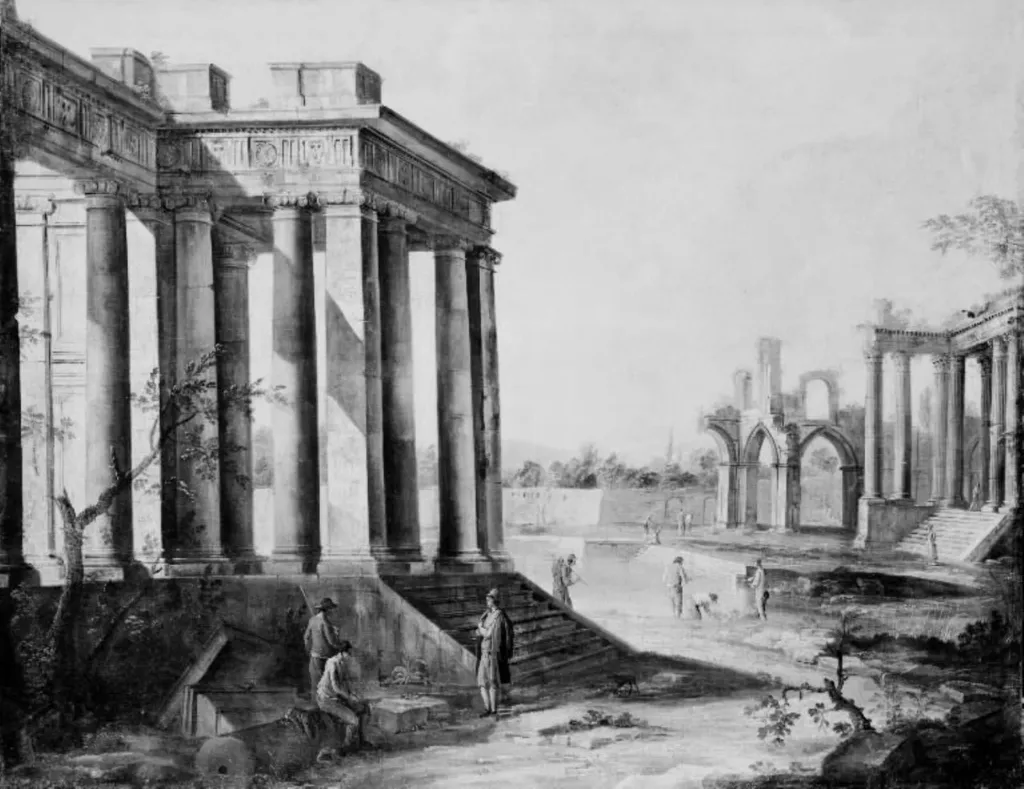
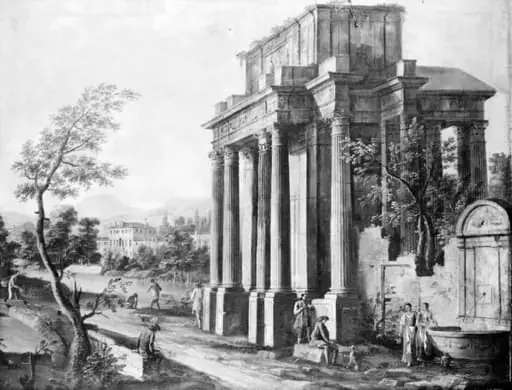
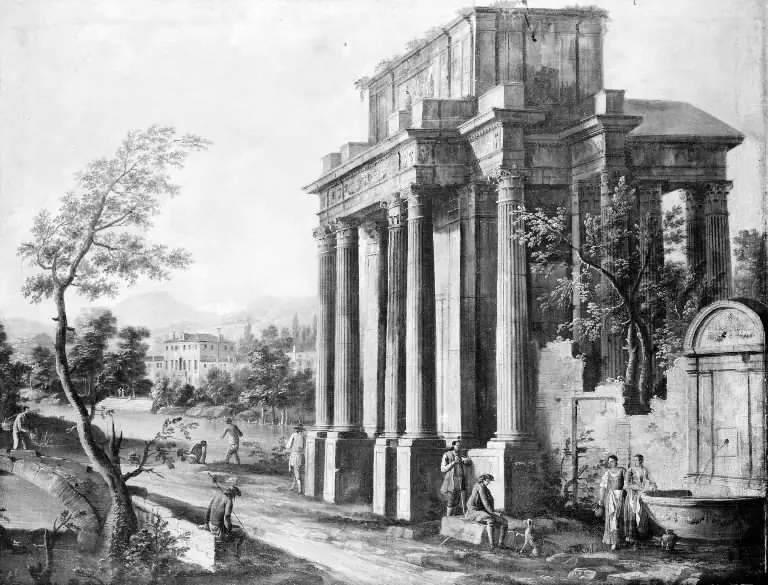
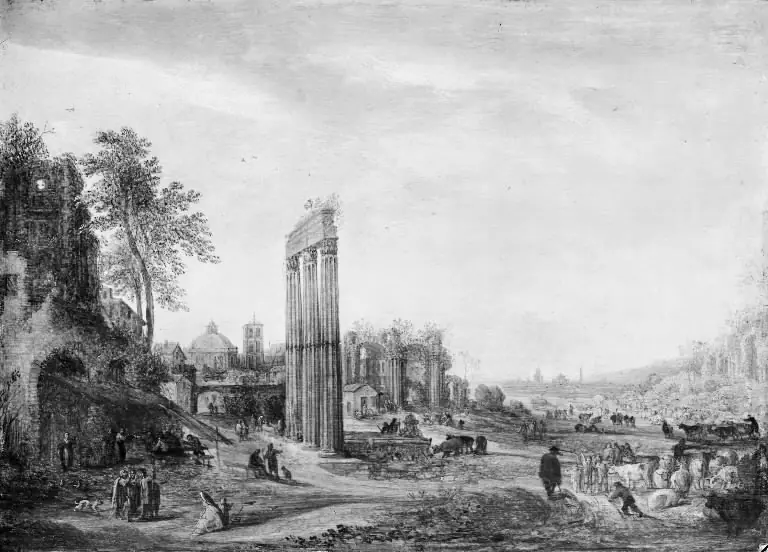
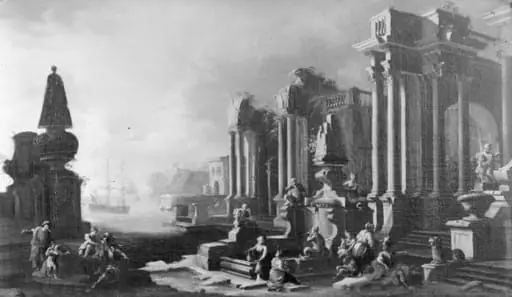
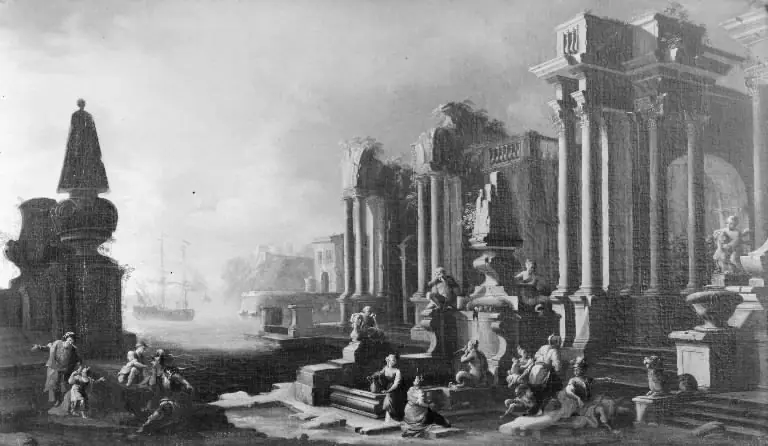
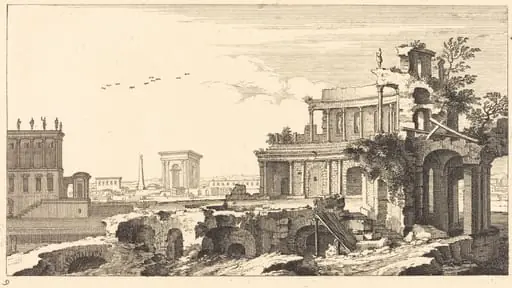
Decorative Landscape with Imaginary Architecture is an unspecified painting by Unknown. It dates from 1750 and is held in the collection of the Statens Museum for Kunst. Created around 1750, this landscape painting presents an invented architectural setting rather than a real location.
About this work
Overview
Created around 1750, this landscape painting presents an invented architectural setting rather than a real location.
Created around 1750, this landscape painting presents an invented architectural setting rather than a real location. Executed in subdued hues and delicate tonal transitions, it evokes a contemplative atmosphere. The work is part of the collection at the Museum of Ethnography, where it is displayed as an example of 18th-century imaginative topography, reflecting a broader European interest in idealized scenery beyond documented places.
Subject & Meaning
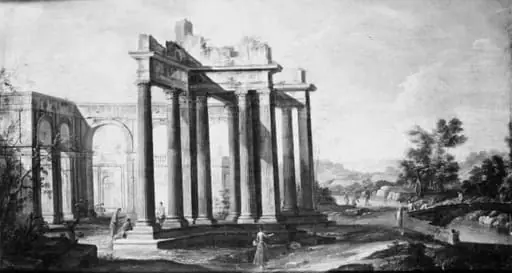
The scene centers on a monumental structure with tall columns and a flat roof, approached by a flight of steps where tiny figures move indistinctly. Behind it, a crumbling arch and scattered trees suggest decay and passage of time. No narrative is implied; instead, the composition invites quiet reflection on permanence and erosion, aligning with contemporary aesthetic preferences for melancholic, non-specific antiquity.
Technique & Style
The artist employs soft gradations of light and muted color to unify the composition, avoiding sharp contrasts or vivid detail. Forms are rendered with gentle edges, enhancing the dreamlike quality of the architecture. Brushwork is restrained, prioritizing atmospheric harmony over precision, a technique common in decorative landscapes of the period that favored mood over topographical accuracy.
History & Provenance
The painting entered the Museum of Ethnography’s collection in the late 19th century, though its earlier ownership remains undocumented. Its attribution to 3222_person is based on stylistic comparison with other works from the same milieu. No records of exhibition or commission exist, suggesting it may have been produced for private contemplation rather than public display.
Context
This work emerged during a period when European artists increasingly turned to imaginary ruins and idealized landscapes, influenced by classical antiquity and the Grand Tour tradition. Unlike topographical views, such scenes prioritized emotional resonance over geographic fidelity, serving as visual meditations on time, memory, and the sublime decay of human endeavor.
Legacy
Though not widely reproduced or studied, the painting exemplifies a quiet strand of 18th-century landscape practice that valued serenity over spectacle. Its inclusion in an ethnographic museum underscores its role as a cultural artifact reflecting aesthetic ideals rather than historical events, preserving a mode of seeing that valued atmosphere over documentation.
Artist & collection

 Domestic Scene
 Giacomo and Cardinal Marco, investing Andrea, Abbot of San Zeno, with his Benefice
 The Nymph of Fontainebleau
 Portrait of a Woman
 Madonna and Child with Saints in the Enclosed Garden
 Venus and Minerva
 Family Group of Four on Sofa
 Wall painting from Room H of the Villa of P. Fannius Synistor at Boscoreale