Artwork
Architectural Study with Columns and a Fountain
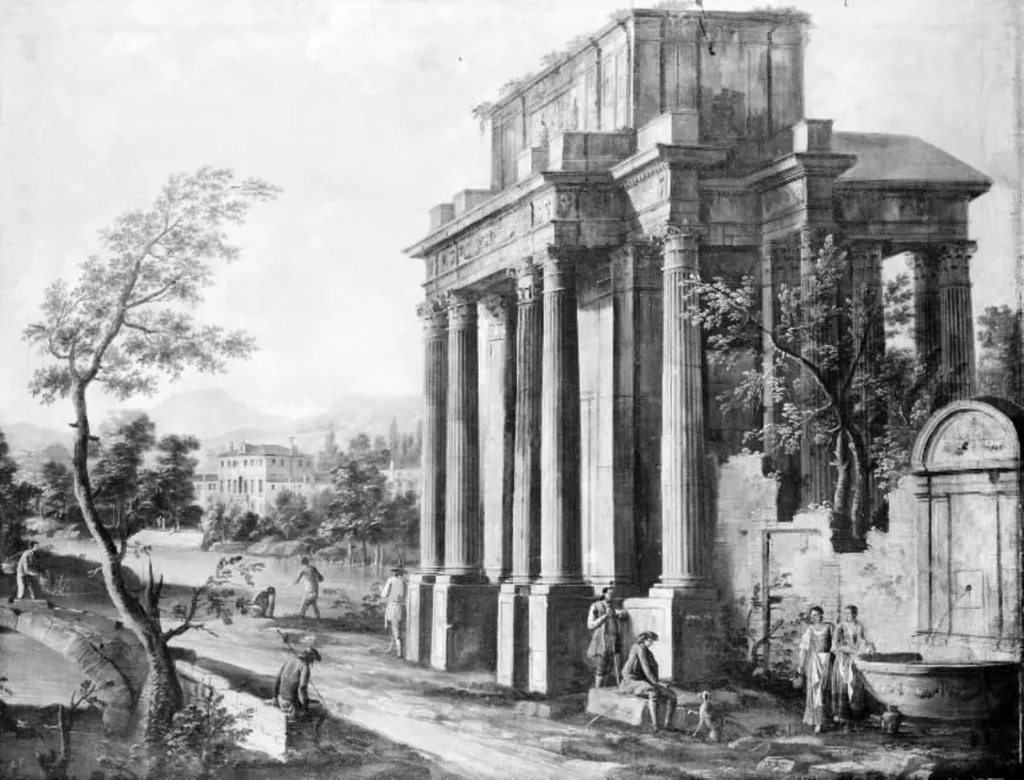
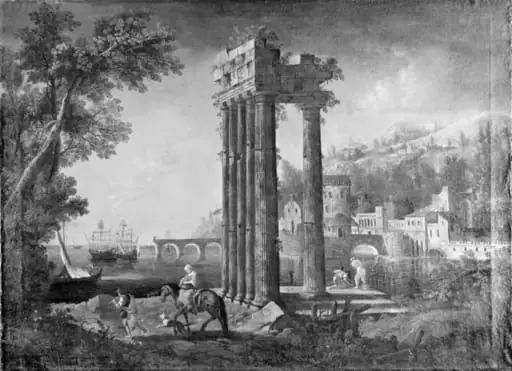
Architectural Study with Columns and a Fountain is a drawing by Unknown. It dates from 1750 and is held in the collection of the Statens Museum for Kunst. Created around 1750, this architectural drawing depicts a classical ruin softened by time and nature.
About this work
Overview
The composition balances structural detail with atmospheric calm, evoking a contemplative mood rather than grandeur.
Created around 1750, this architectural drawing depicts a classical ruin softened by time and nature. Rendered in precise linear technique, it captures a fragment of a once-grand structure—columns standing amid broken masonry, a modest fountain feeding a shallow basin. Figures in period attire move quietly through the scene, suggesting daily life amid decay. The composition balances structural detail with atmospheric calm, evoking a contemplative mood rather than grandeur.
Subject & Meaning
The scene presents a ruin not as a symbol of collapse, but as a lived-in space. Columns and a crumbling pediment suggest lost grandeur, yet the presence of people—sitting, walking, near the water—implies continuity. The fountain, though modest, functions as a center of activity, grounding the ruin in human routine. The quiet interaction between architecture and everyday life hints at a meditation on endurance, not loss.
Technique & Style
The artist employed fine, controlled lines to define architectural forms, with cross-hatching used to model light and shadow across stone surfaces. The precision suggests an architectural draftsmanship, yet the inclusion of figures and foliage softens its technical rigidity. Light falls naturally across the columns, emphasizing texture and volume without dramatic contrast. The rendering is neither idealized nor romanticized, but observed with quiet accuracy.
History & Provenance
The drawing entered the collection of the Museum of Ethnography, where it remains today. Its origin as a study—likely made on-site—points to an artist engaged with real ruins, possibly during travel or fieldwork. No record of its commission or early ownership survives, but its detailed observation suggests it was intended as a record rather than a finished artwork.
Context
In mid-18th-century Europe, interest in classical antiquity was growing, particularly among architects and travelers documenting ruins. This drawing aligns with a trend of recording ancient structures not for restoration, but as they existed in their altered state. The inclusion of contemporary figures reflects a shift toward documenting ruins as living landscapes, not merely relics.
Legacy
The work contributes to a broader tradition of architectural documentation that valued observation over embellishment. Its quiet realism influenced later studies of ruins, emphasizing the interplay between decay and daily life. Though not widely exhibited, it remains a quiet example of how artists captured the passage of time through careful, unembellished draftsmanship.
Artist & collection

 Domestic Scene
 Giacomo and Cardinal Marco, investing Andrea, Abbot of San Zeno, with his Benefice
 The Nymph of Fontainebleau
 Portrait of a Woman
 Madonna and Child with Saints in the Enclosed Garden
 Venus and Minerva
 Family Group of Four on Sofa
 Wall painting from Room H of the Villa of P. Fannius Synistor at Boscoreale
 The Fountains
 Decorative Painting with Imaginary Architecture
 Ruiner af et græsk-romersk tempel med mange figurer
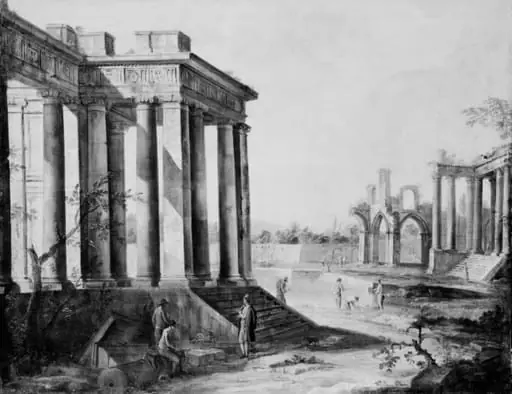 Decorative Landscape with Imaginary Architecture
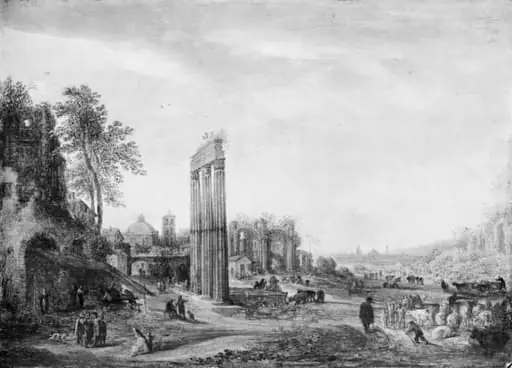 View of Campo Vaccino in Rome
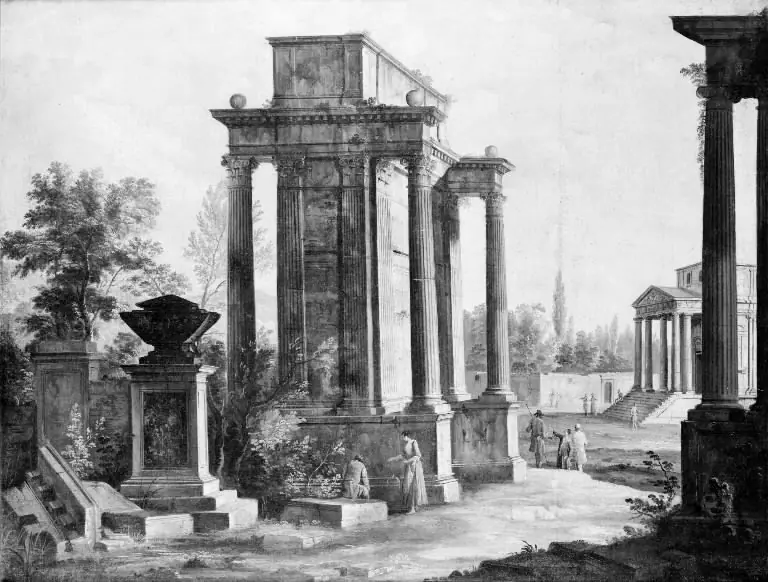 Imaginary Architectural Monuments
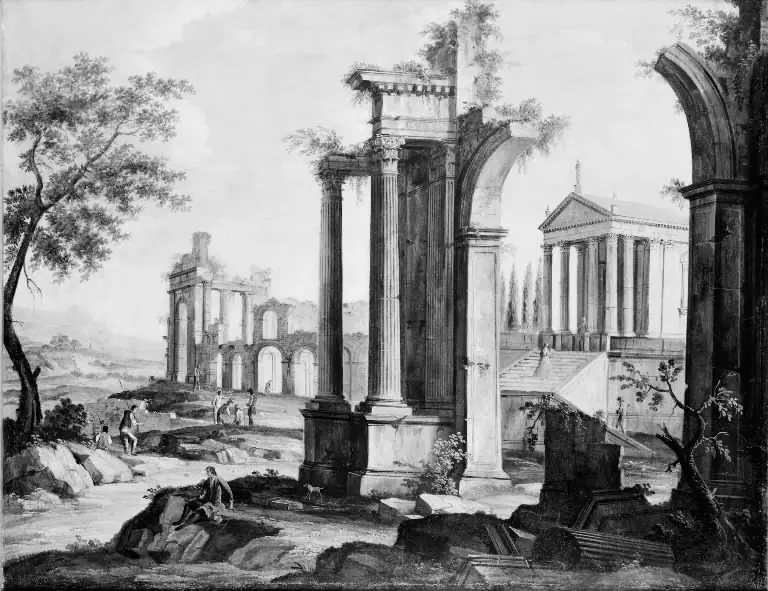 Decorative Painting with Imaginary Architecture
 Et mådeligt maleri, forestillende en venetiansk søhavn