Artwork
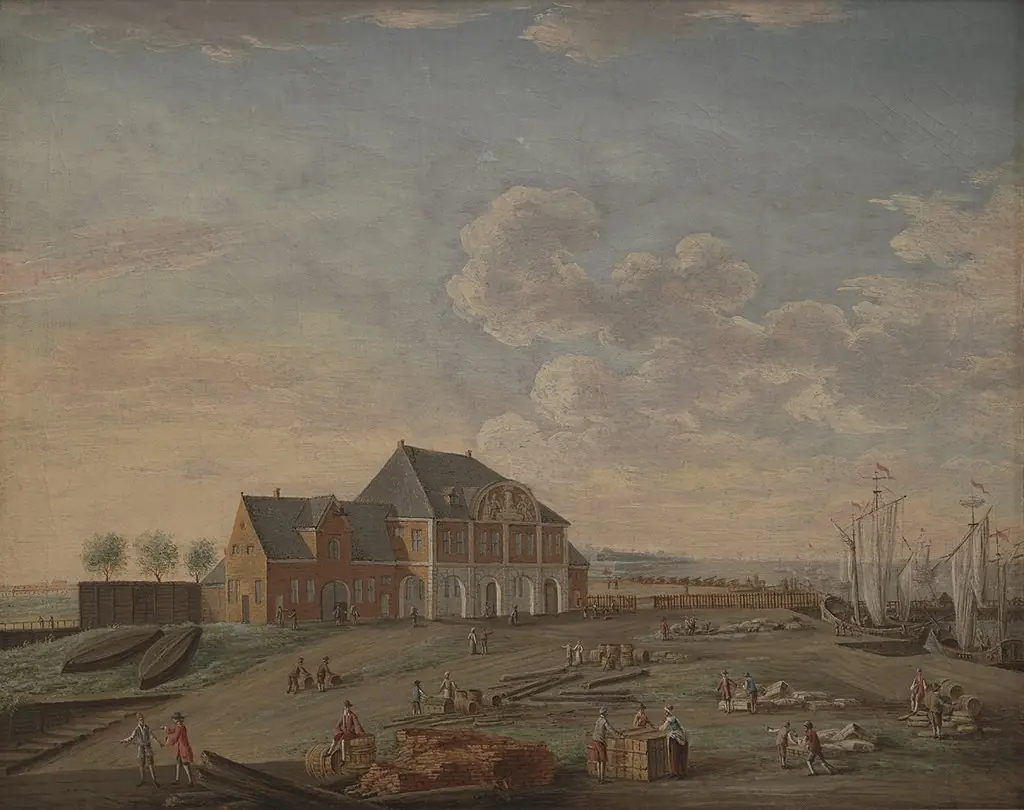
The Custom House of Copenhagen
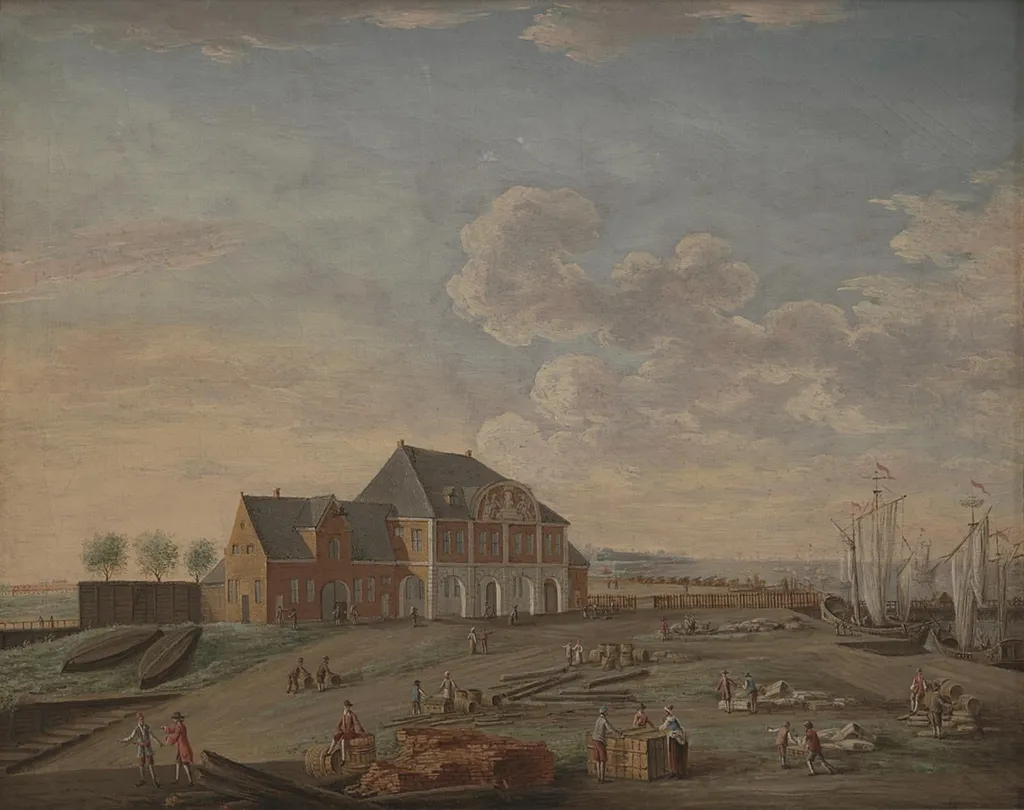
The Custom House of Copenhagen is a photography by the Romanticist artist Unknown. It dates from 1754 and is held in the collection of the Statens Museum for Kunst. Painted in 1754, this depiction of Copenhagen’s Custom House captures the daily rhythm of a working port.
About this work
Overview
The scene centers on a substantial brick structure with arched entrances and a modest tower, flanked by active waterfront activity.
Painted in 1754, this depiction of Copenhagen’s Custom House captures the daily rhythm of a working port. The scene centers on a substantial brick structure with arched entrances and a modest tower, flanked by active waterfront activity. Figures move with purpose—loading cargo, guiding boats, and walking along the shore. The calm water and clear sky suggest a tranquil morning, reinforcing the orderly nature of commerce in the city’s maritime hub.
Subject & Meaning
The painting documents the administrative and commercial heart of Copenhagen’s port, where goods were inspected, taxed, and distributed. The presence of a large merchant vessel and smaller craft underscores the city’s role in regional trade. Workers in plain attire and the building’s institutional architecture convey the function of the Custom House as a symbol of state control over maritime commerce, not merely a decorative landmark.
Technique & Style
The artist employs soft, muted tones—warm brick reds against cool sky blues—to create harmony. Light falls evenly across the scene, with subtle modeling to suggest volume in the building and figures. Shadows are gentle, not dramatic, supporting a documentary rather than theatrical intent. The composition guides the eye from the foreground laborers toward the central structure and distant ship, reinforcing spatial depth without overt perspective tricks.
History & Provenance
The painting was completed in 1754 and has remained in institutional care since at least the late 19th century. It entered the collection of the Museum of Ethnography, where it is preserved as a record of 18th-century urban life and economic infrastructure. Its attribution to the artist 3222_person is based on archival records, though little is known about the painter’s broader oeuvre.
Context
In mid-18th century Denmark, Copenhagen was a vital port for Baltic trade, and the Custom House played a key role in regulating imports and exports. This painting reflects the era’s emphasis on civic order and economic transparency. Similar scenes by lesser-known artists were often commissioned to document public institutions, serving both administrative and civic pride functions in an age before photography.
Legacy
Though not widely exhibited outside specialized collections, the painting remains a valuable visual archive of pre-industrial port operations. It contributes to scholarly understanding of how European cities managed trade logistics and visualized state authority. Its quiet realism offers a counterpoint to more dramatic maritime paintings of the period, emphasizing routine over spectacle.
Artist & collection

 Domestic Scene
 Giacomo and Cardinal Marco, investing Andrea, Abbot of San Zeno, with his Benefice
 The Nymph of Fontainebleau
 Portrait of a Woman
 Madonna and Child with Saints in the Enclosed Garden
 Venus and Minerva
 Family Group of Four on Sofa
 Wall painting from Room H of the Villa of P. Fannius Synistor at Boscoreale
 The Naval Dockyards at Christianshavn
 De Handelskom in Brugge
 The Naval Dockyards at Christianshavn
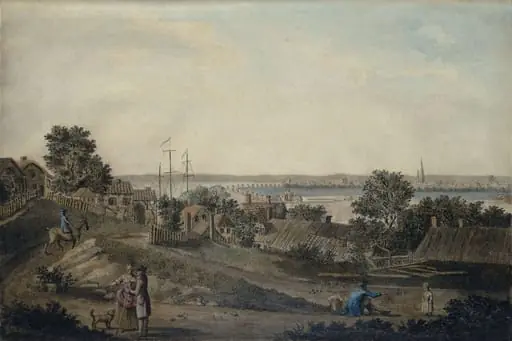 A Distant View of Southampton, taken from Pear Tree Green
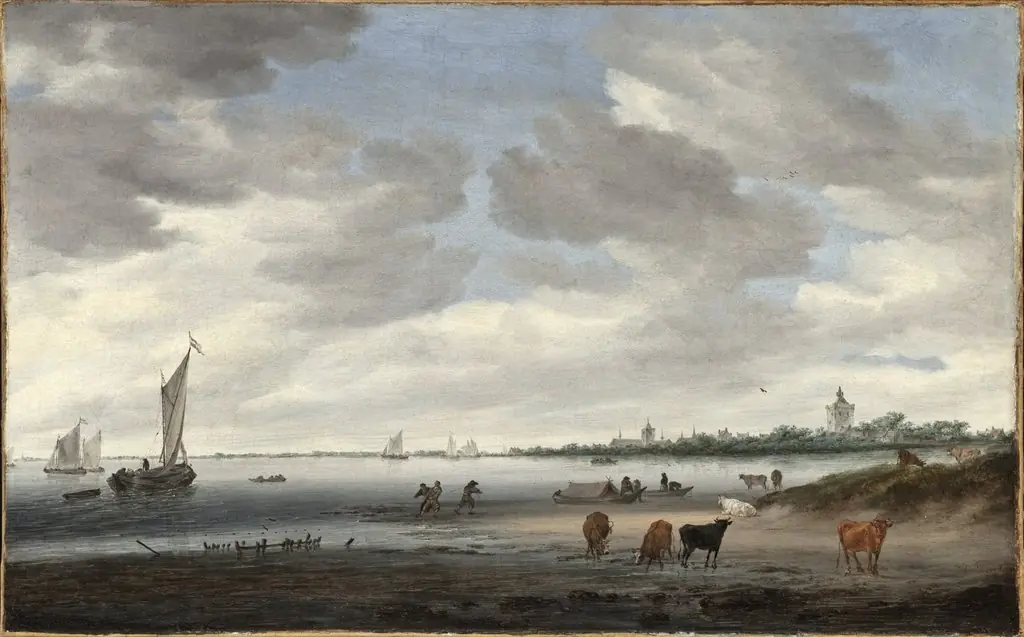 View of the River Lek and the Town of Vianen
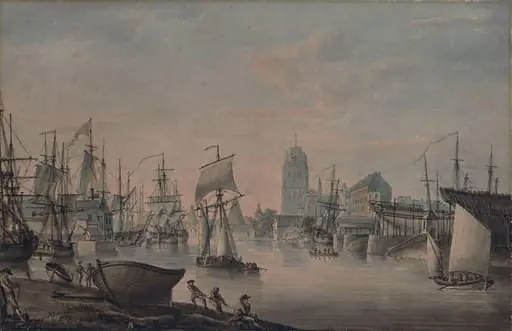 View of Bristol
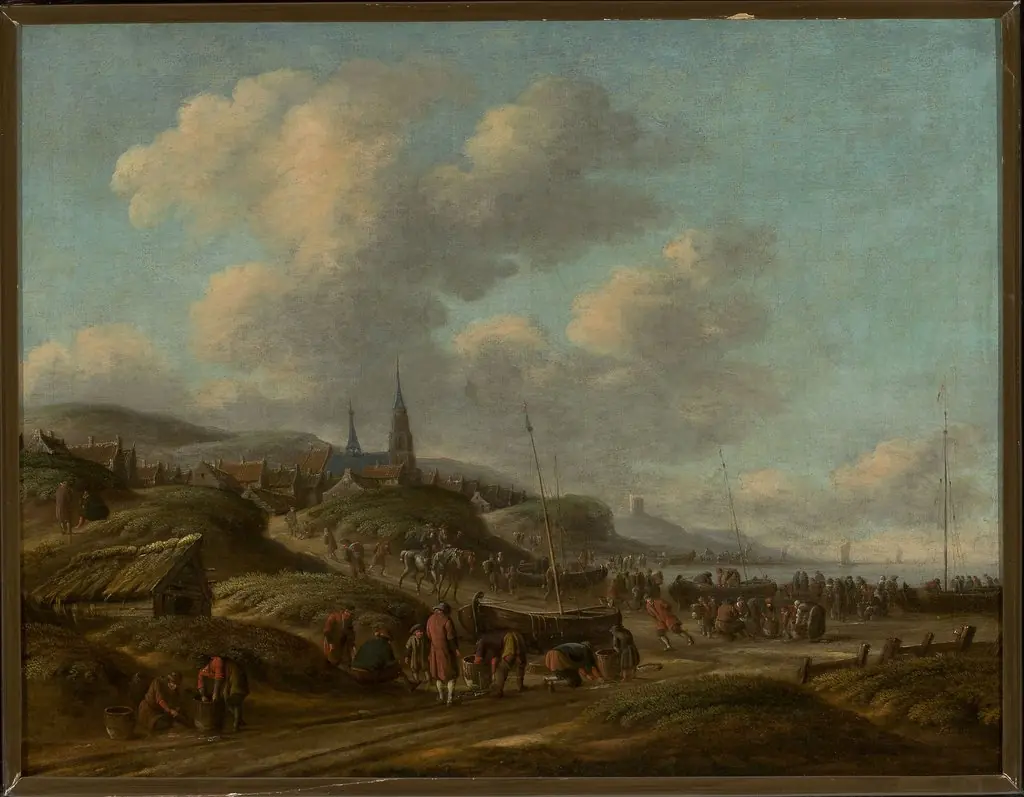 Coast in Scheveningen
 Fishing boats in a harbor
 Ships near Zierikzee with the Zuidhavenpoort in the Background
 The exchange at Waterford
 Deptford, with shipping
 The Custom House of Copenhagen