Artwork
The Naval Dockyards at Christianshavn
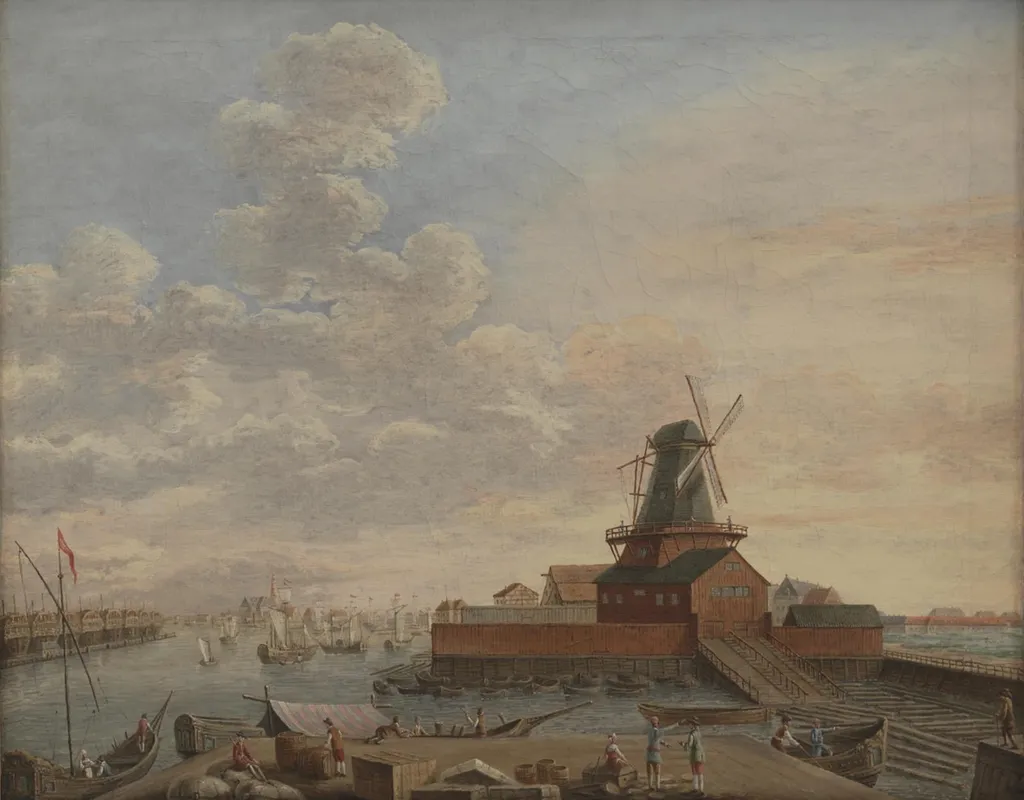
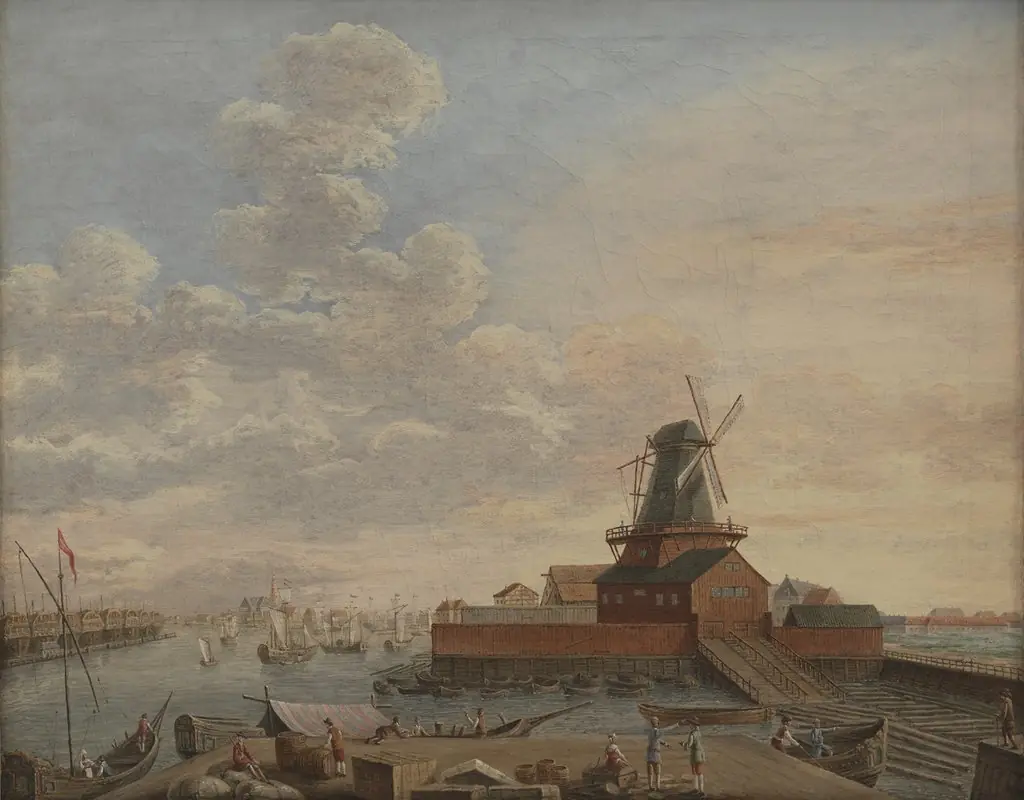
The Naval Dockyards at Christianshavn is a photography by the Romanticist artist Unknown. It dates from 1754 and is held in the collection of the Statens Museum for Kunst. Created in 1754 by the artist identified as 3222_person, this oil painting depicts the naval dockyards of Christianshavn.
About this work
Overview
Created in 1754 by the artist identified as 3222_person, this oil painting depicts the naval dockyards of Christianshavn. The work is part of the collection of the Museum of Ethnography. It presents a bustling harbor environment, populated by small craft, laborers handling cargo, and a prominent windmill that dominates the foreground.
Subject & Meaning
The composition concentrates on ordinary activity rather than heroic or martial themes. A traditional Dutch‑style windmill, likely employed for grain milling or water management, anchors the scene, while numerous vessels and workers illustrate the daily rhythms of a 18th‑century port. The bright sky and scattered clouds reinforce a sense of openness and routine.
Technique & Style
The artist employs a clear, observational approach, rendering architectural and maritime details with precise brushwork. Light is treated with a naturalistic palette, allowing the sunlit clouds and water reflections to convey atmosphere. The overall style aligns with mid‑century European genre painting, emphasizing realistic depiction over dramatic embellishment.
History & Provenance
Since its execution in the mid‑1700s, the painting has remained within institutional holdings, ultimately entering the Museum of Ethnography’s collection. Its provenance traces back to the artist’s workshop, with no recorded changes in ownership before its acquisition by the museum.
Context
Christianshavn’s dockyards were a vital component of Denmark’s maritime infrastructure during the period, supporting both commercial and naval operations. The inclusion of a windmill reflects the integration of agricultural technology within urban harbor zones, illustrating how the city’s economic life blended seafaring and land‑based production.
Artist & collection

 Domestic Scene
 Giacomo and Cardinal Marco, investing Andrea, Abbot of San Zeno, with his Benefice
 The Nymph of Fontainebleau
 Portrait of a Woman
 Madonna and Child with Saints in the Enclosed Garden
 Venus and Minerva
 Family Group of Four on Sofa
 Wall painting from Room H of the Villa of P. Fannius Synistor at Boscoreale
 Deptford, with shipping
 Boats at a Mooring Place
 The Custom House of Copenhagen
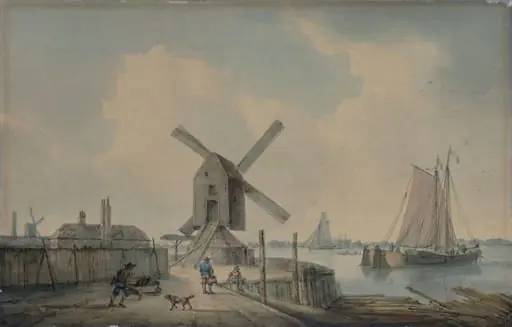 A Shore Scene with Windmills and Shipping
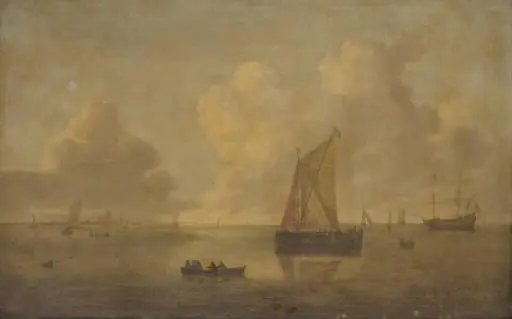 Seascape with a Town in the Background
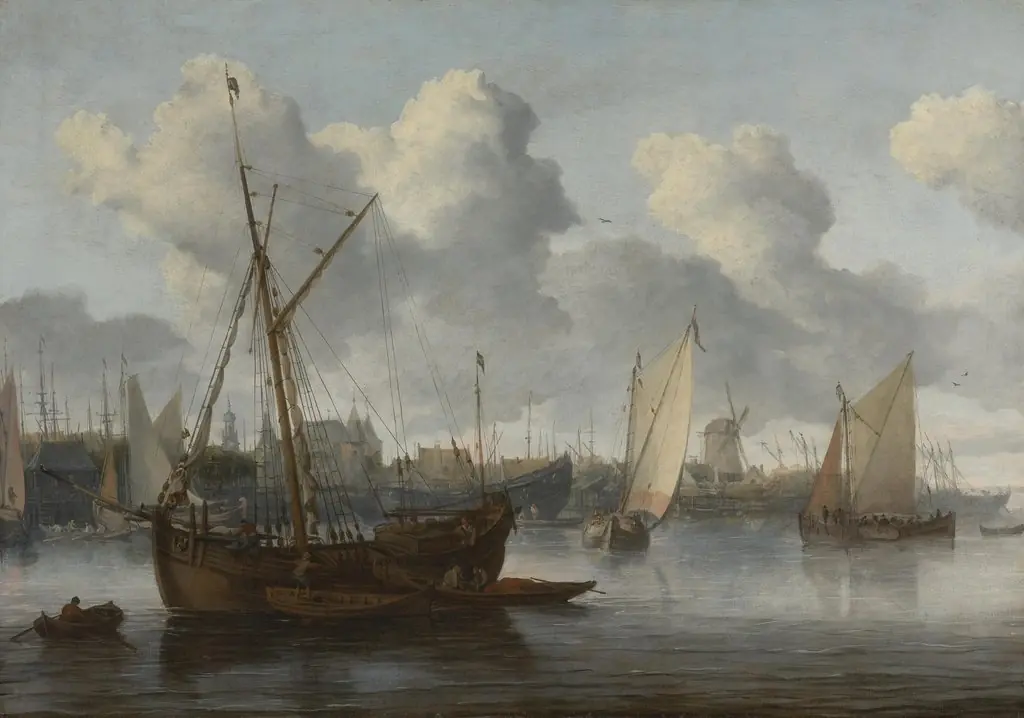 Fishing boats in a harbor
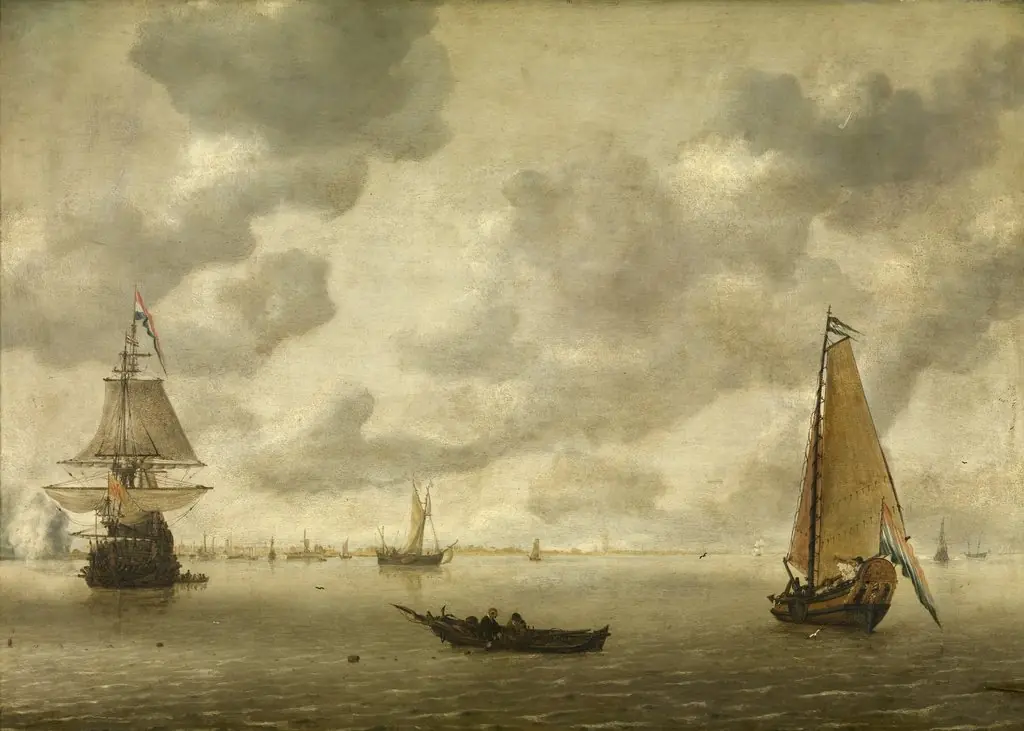 Dutch ships in a harbour firing salute
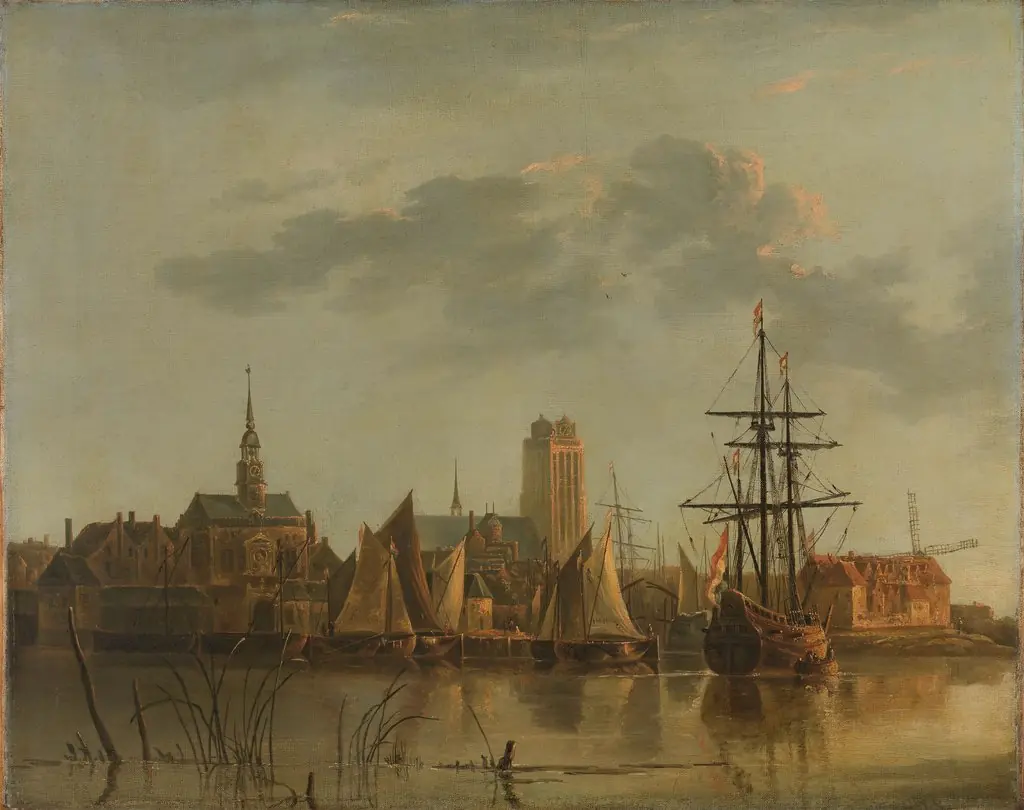 View of Dordrecht at sunset
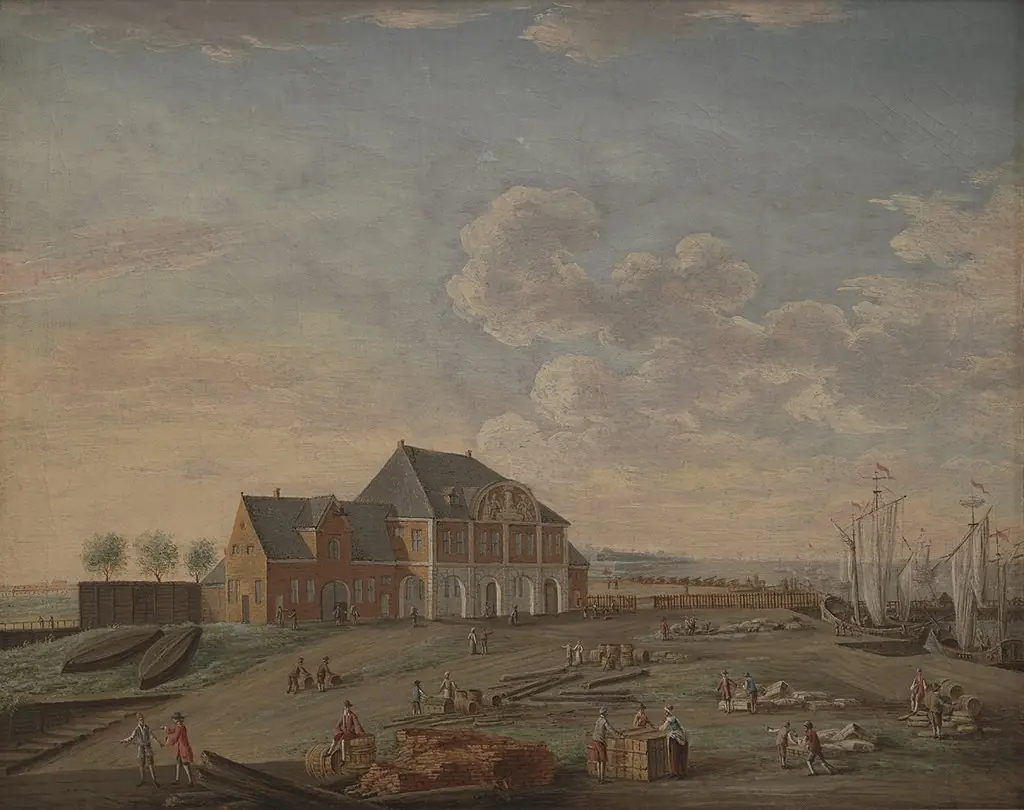 The Custom House of Copenhagen
 View of Bristol
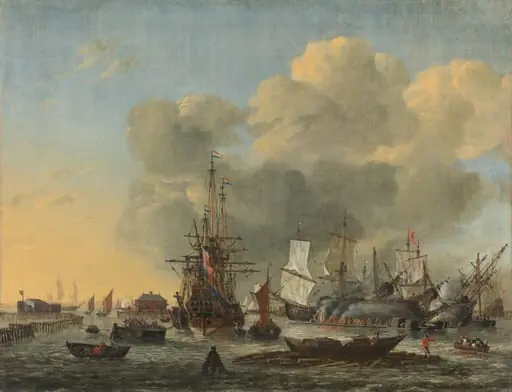 Untitled
 The Naval Dockyards at Christianshavn