Artwork
The Custom House of Copenhagen
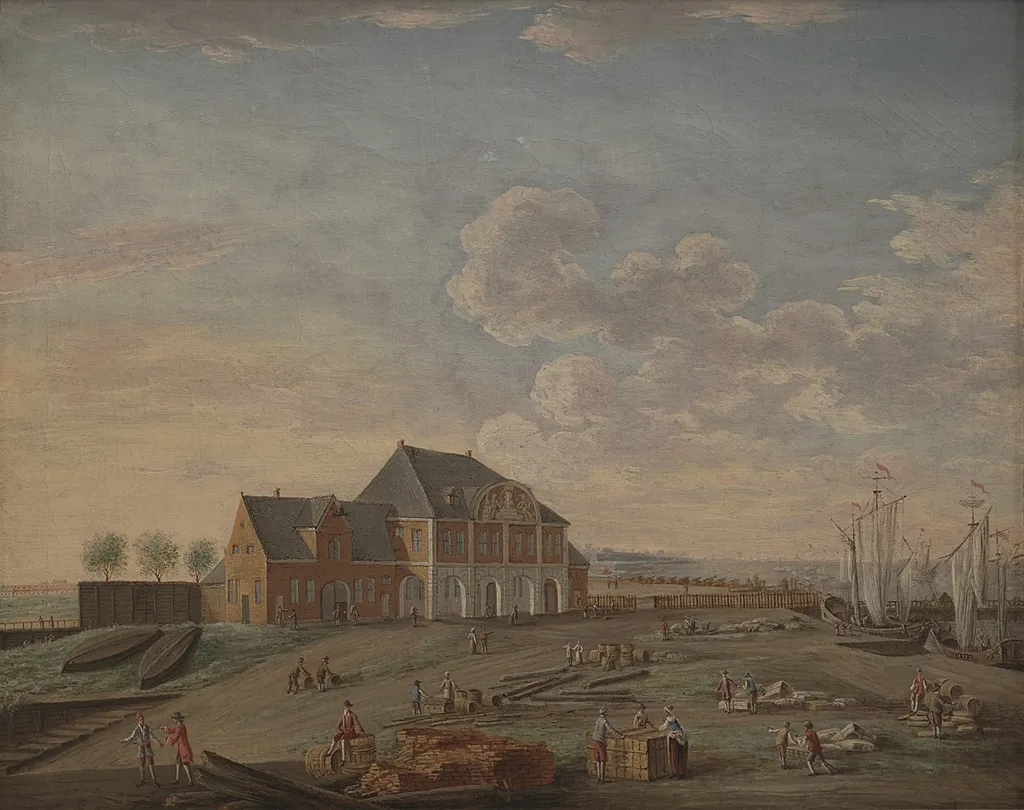
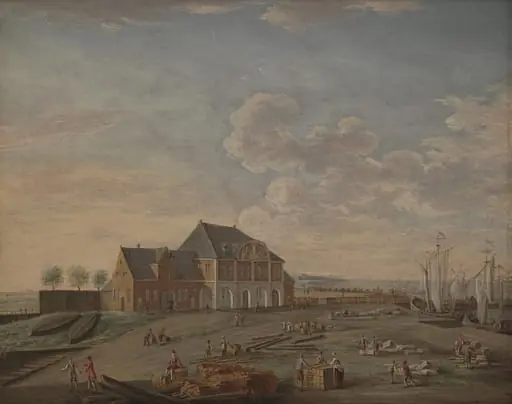
The Custom House of Copenhagen is an oil painting by the Rococo painting artist Giovanni Antonio Cesari. It dates from 1754 and is held in the collection of the Statens Museum for Kunst.
About this work
Overview
Giovanni Antonio Cesari’s oil on canvas, painted in 1754, depicts Copenhagen’s Custom House as a bustling waterfront scene. The work is part of the collection of Denmark’s National Gallery, Statens Museum for Kunst, and presents a detailed view of the building’s brick façade, dark roof, and grand arched entrance.
Subject & Meaning
The composition centers on the customs building, a hub of trade, surrounded by figures loading and unloading goods such as barrels, wood, and other merchandise. The activity conveys the commercial vitality of mid‑18th‑century Copenhagen, emphasizing the port’s role in daily economic life.
Technique & Style
Cesari employs a realistic approach, rendering architectural details and human figures with careful observation. The muted palette of brick reds, dark roofing, and overcast sky creates a sober atmosphere, while the handling of light on the water and the texture of stacked goods adds depth to the scene.
History & Provenance
Created in 1754, the painting entered the Statens Museum for Kunst’s holdings at an unspecified date, where it remains on display. Its provenance traces back to the artist’s workshop in Italy before being acquired by the Danish national collection.
Context
The work reflects the broader European interest in documenting urban commerce during the Enlightenment, when ports were symbols of progress and prosperity. Copenhagen’s Custom House, a key point of tax collection and trade regulation, serves as a focal point for this narrative.
Artist & collection
Artist
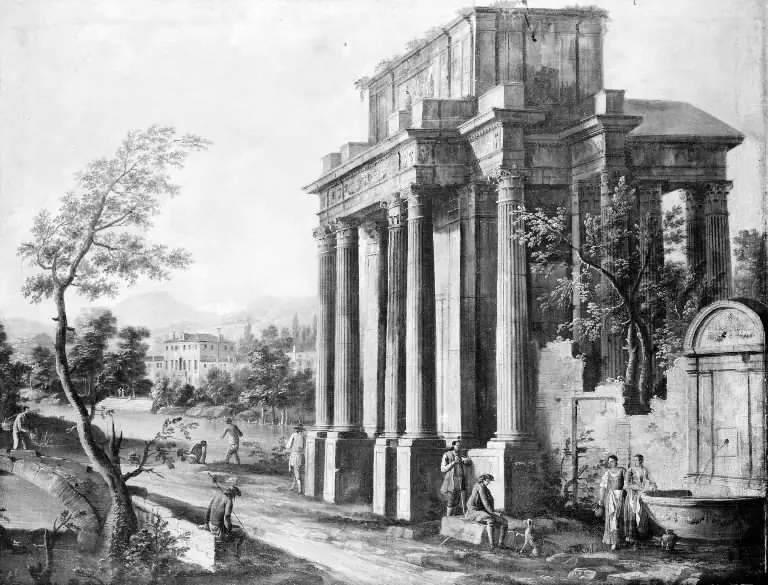
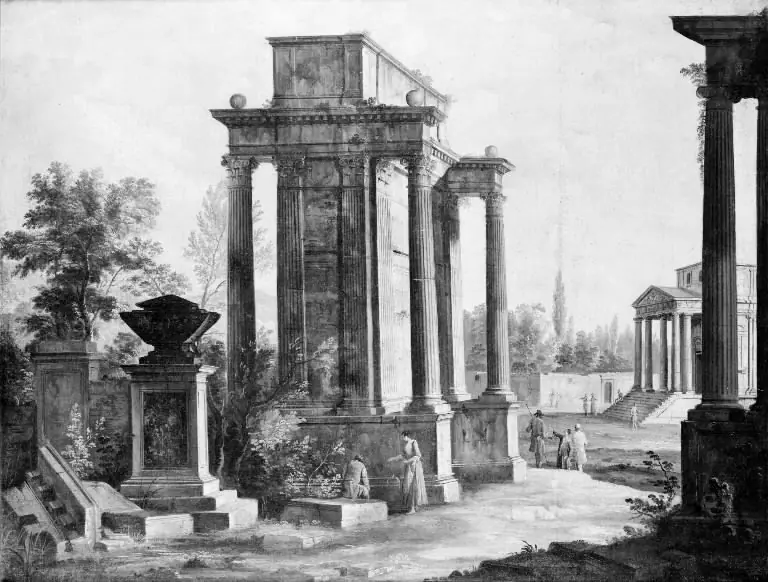
Giovanni Antonio Cesari loved buildings. He drew and painted them all the time. One thing that's interesting about his work is that he often combined real and imaginary structures. Check out his "Architectural Study…

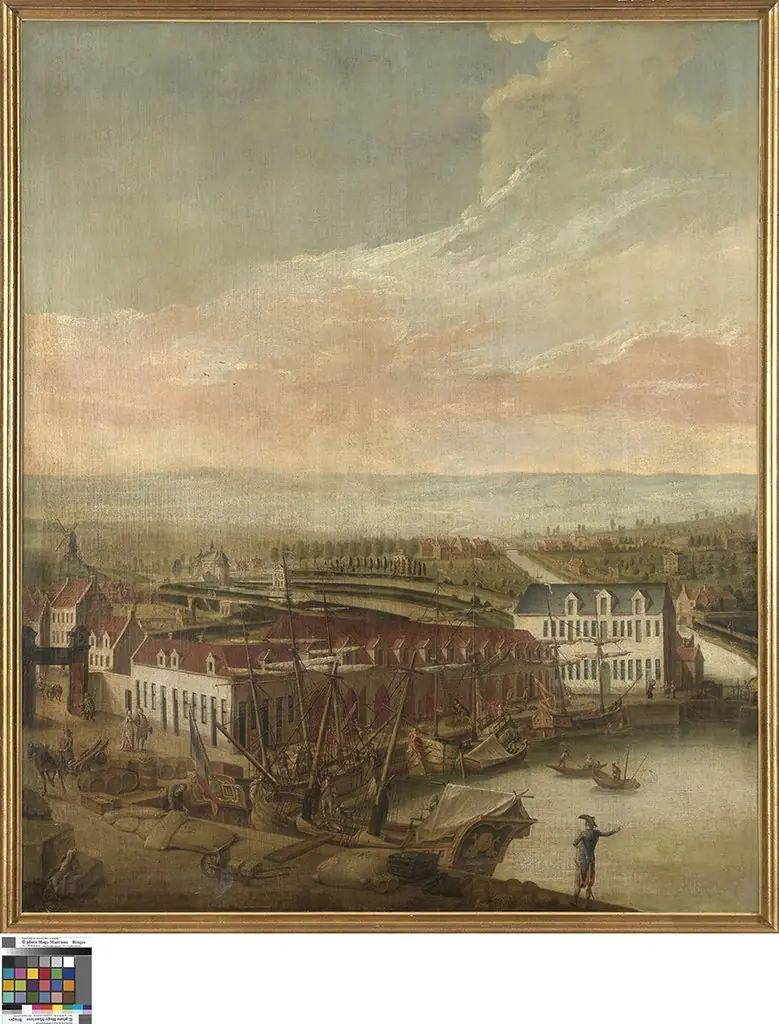 De Handelskom in Brugge
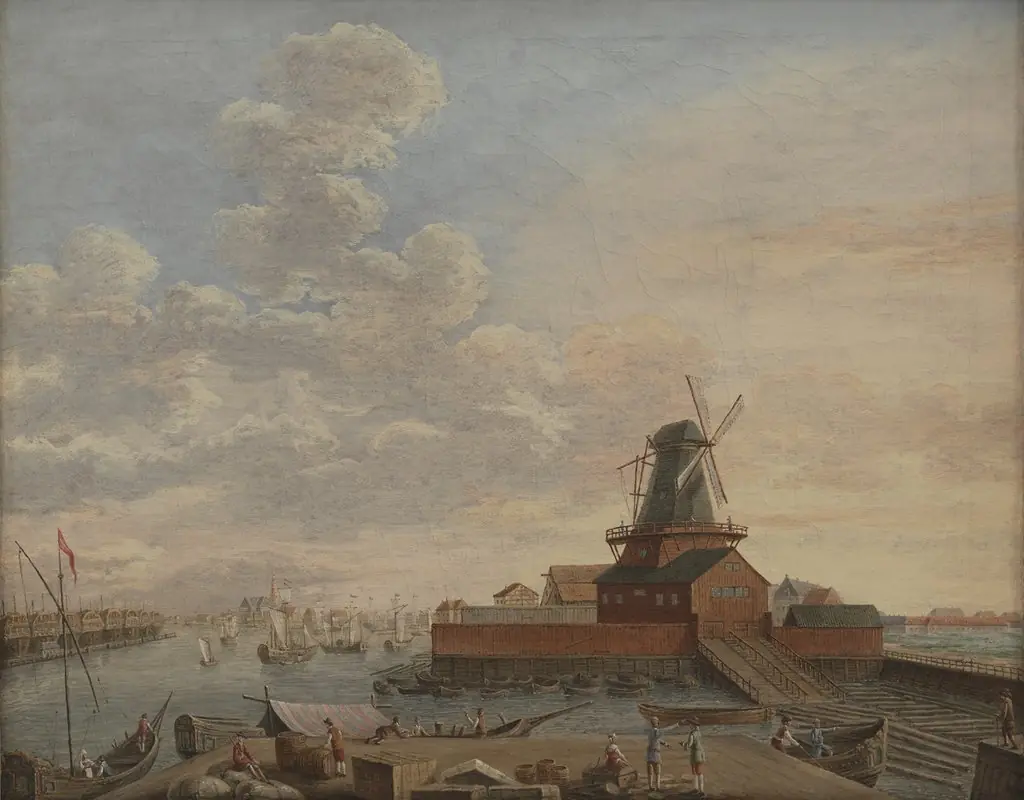
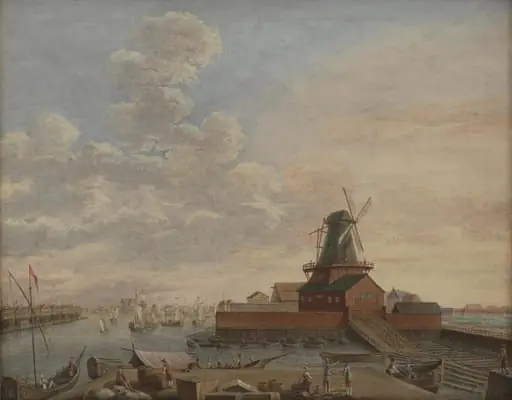 The Naval Dockyards at Christianshavn
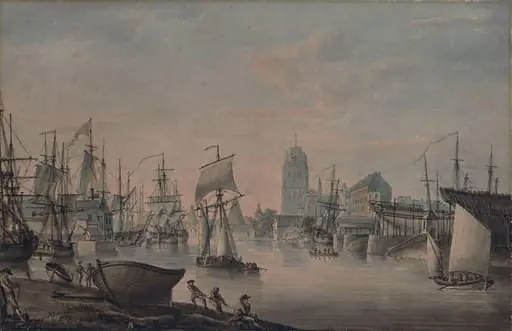 View of Bristol
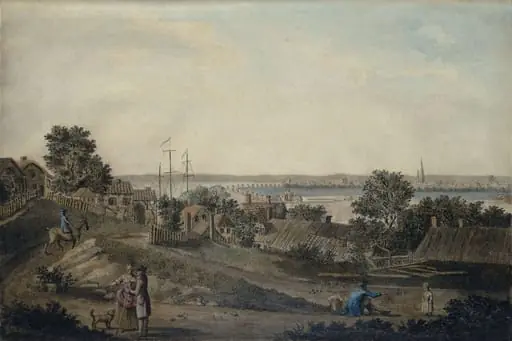 A Distant View of Southampton, taken from Pear Tree Green
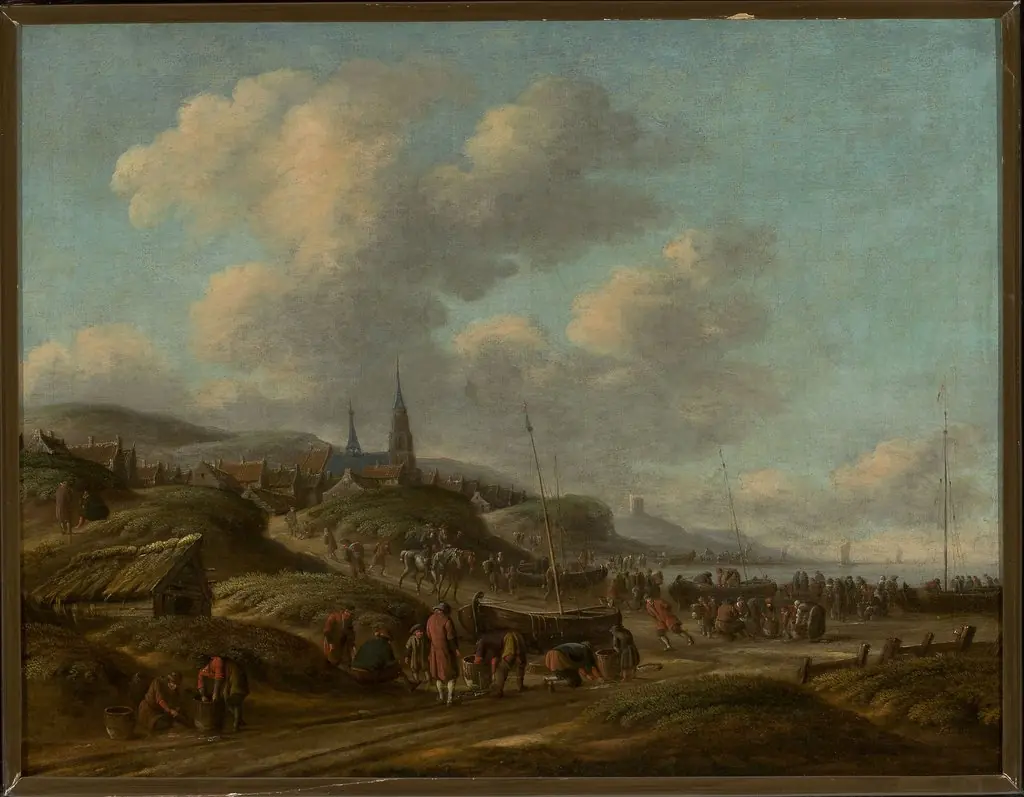 Coast in Scheveningen
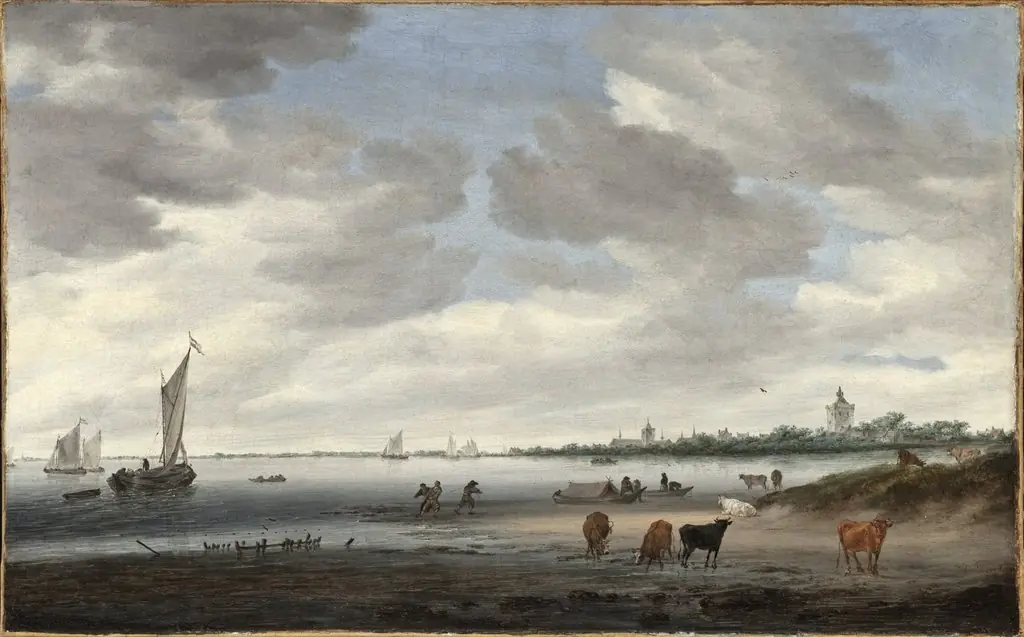 View of the River Lek and the Town of Vianen
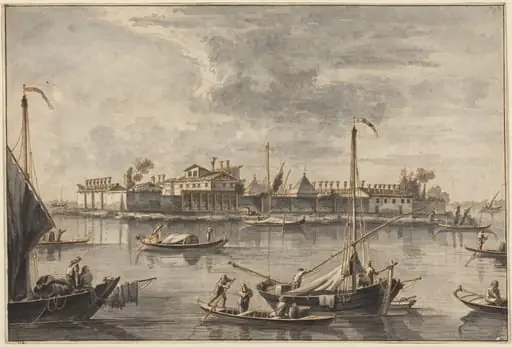 Isola del Lazaretto Nuovo
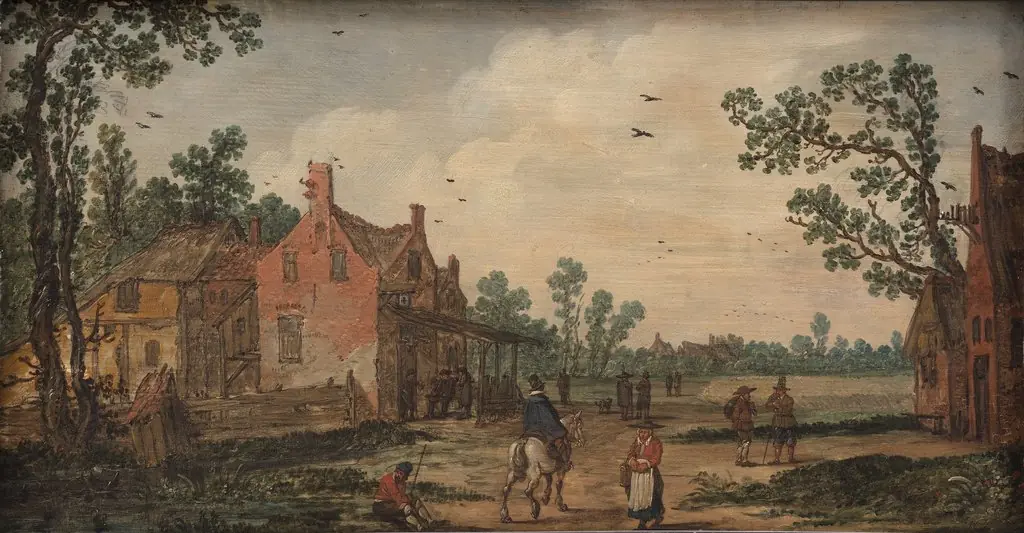 Summer at the "Lily" Tavern
 A country home
 The exchange at Waterford
 The Custom House of Copenhagen