Artwork
Rådyr
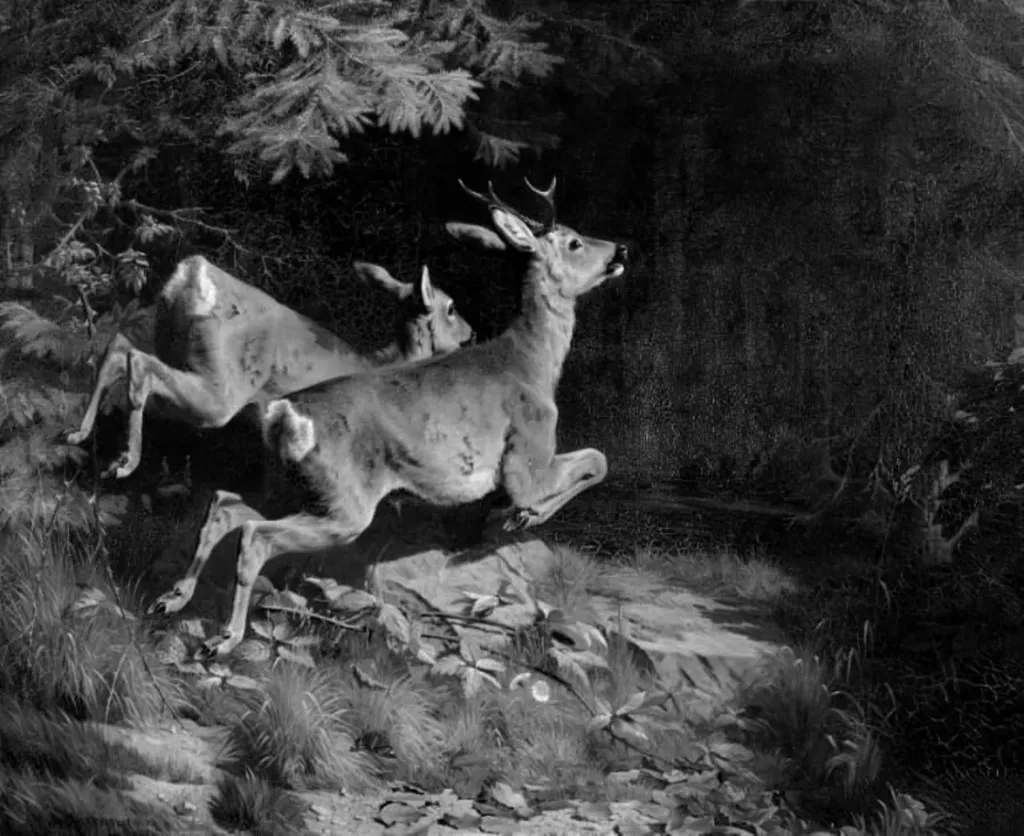
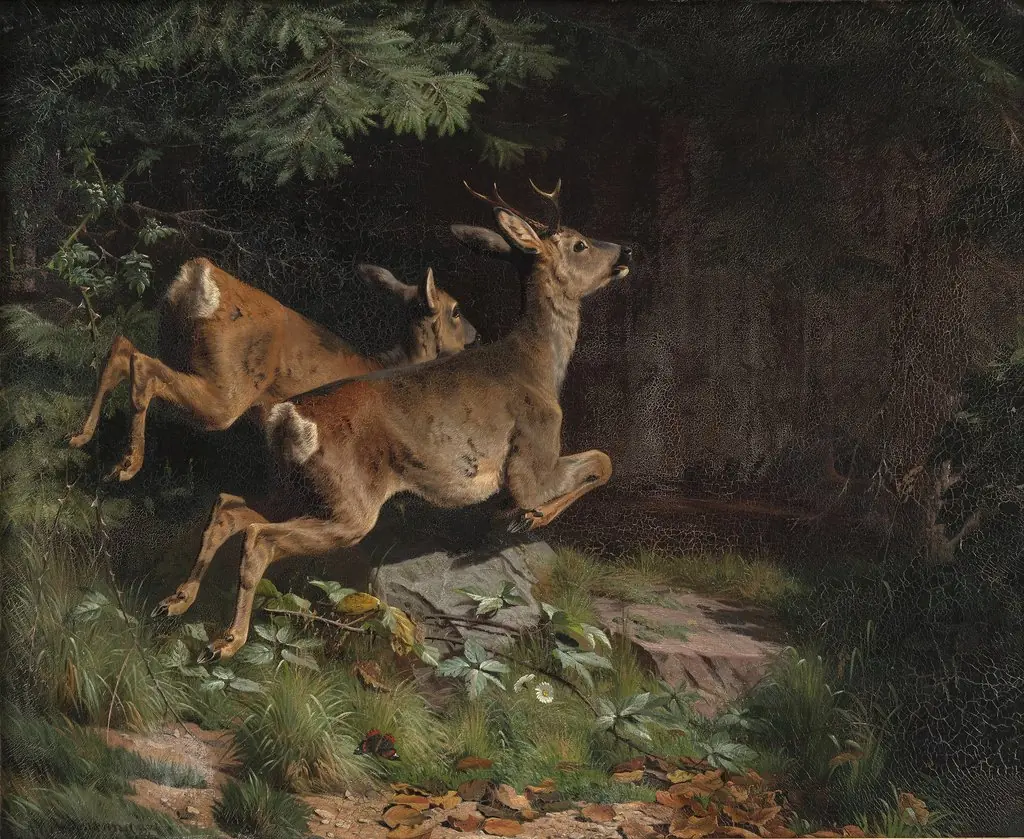
Rådyr is a photography by the Impressionist artist Unknown. It dates from 1874 and is held in the collection of the Statens Museum for Kunst.
About this work
Overview
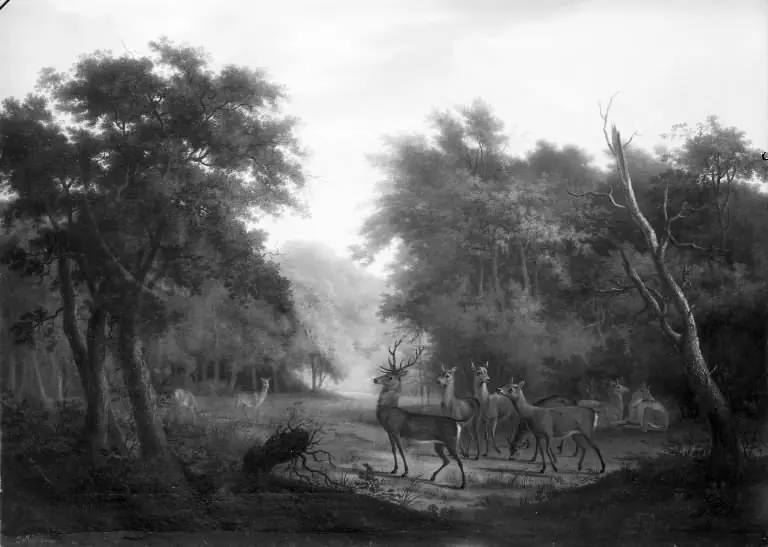
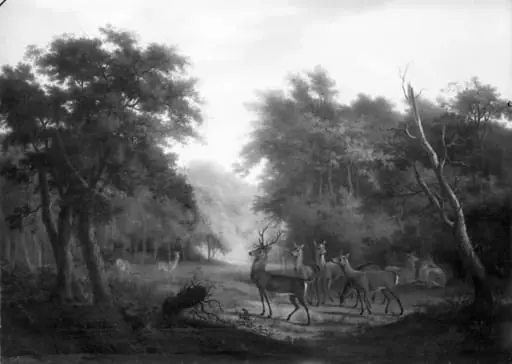
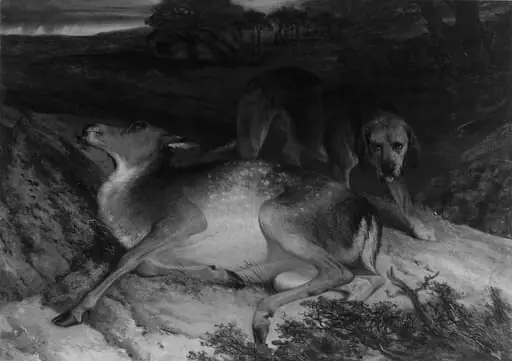
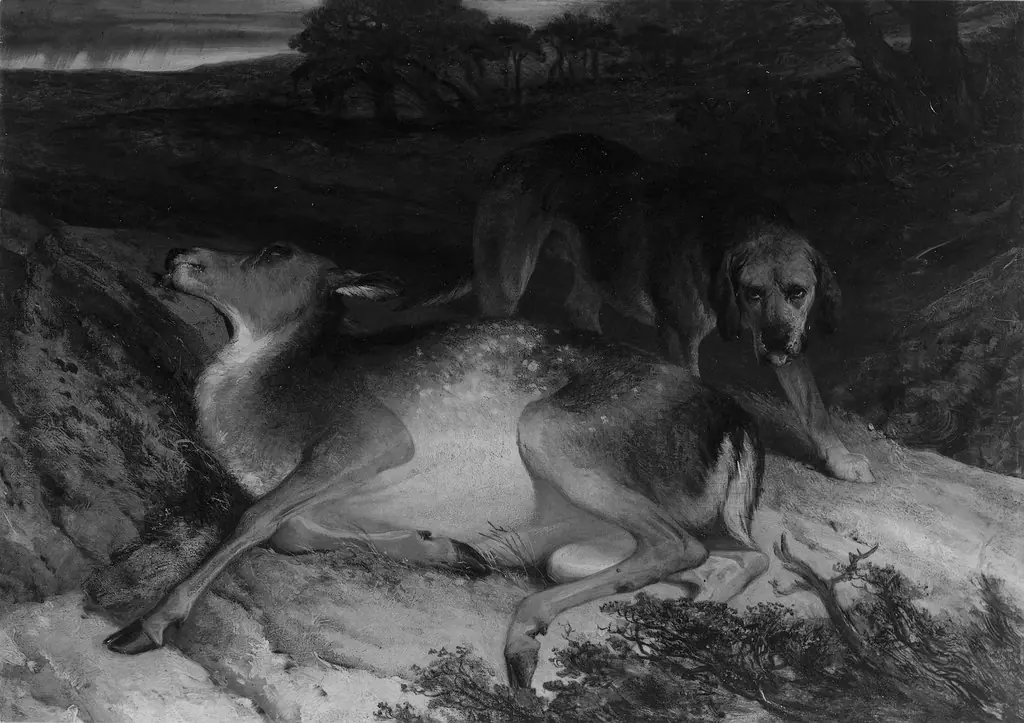
Rådyr, painted in 1874 by 323_person, is a naturalistic depiction of two deer in motion through a woodland setting. The work resides in the Museum of Ethnography and exemplifies 19th-century observational painting, emphasizing accurate rendering of animal anatomy and environmental detail without idealization or narrative embellishment.
Subject & Meaning
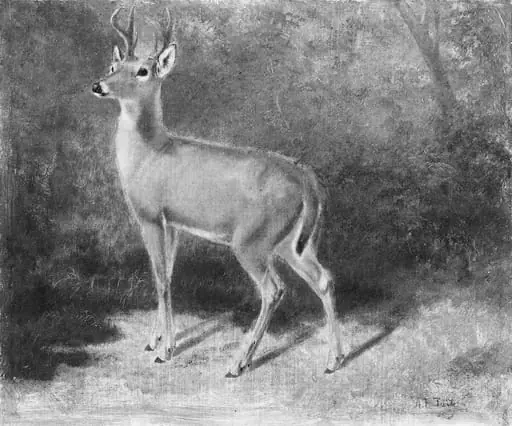
The painting portrays two roe deer mid-stride, their bodies taut with movement, heads lifted as if alert to distant sounds. The scene conveys no symbolic or mythological layer; instead, it presents the animals as subjects of quiet, unmediated observation, reflecting a period interest in documenting wildlife in its native habitat with scientific precision.
Technique & Style
Rendered in a detailed, realist style, the work captures the texture of fur, the play of light across muscle, and the layered undergrowth of the forest floor. Brushwork is precise but unobtrusive, allowing the naturalism of the scene to dominate. The background trees and foliage are rendered with equal care, creating depth without softening focus from the central figures.
History & Provenance
Created in 1874, the painting entered the collection of the Museum of Ethnography shortly after its completion. Its acquisition aligns with the museum’s broader mission to document human relationships with the natural world, though the work itself contains no human presence, focusing solely on the animal subjects as ecological entities.
Context
During the late 19th century, European artists increasingly turned to nature as a subject worthy of study apart from myth or allegory. Rådyr reflects this shift, emerging alongside rising scientific interest in zoology and ecology. Its quiet realism contrasts with romanticized landscapes of the earlier century, favoring observation over sentiment.
Legacy
Rådyr remains a quiet but significant example of period naturalism in Scandinavian art. While not widely exhibited outside its home institution, it continues to serve as a reference for the technical and philosophical approach to wildlife representation in 19th-century Nordic painting, valued for its restraint and fidelity to observed reality.
Artist & collection

 Domestic Scene
 Giacomo and Cardinal Marco, investing Andrea, Abbot of San Zeno, with his Benefice
 The Nymph of Fontainebleau
 Portrait of a Woman
 Madonna and Child with Saints in the Enclosed Garden
 Venus and Minerva
 Family Group of Four on Sofa
 Wall painting from Room H of the Villa of P. Fannius Synistor at Boscoreale