Artwork
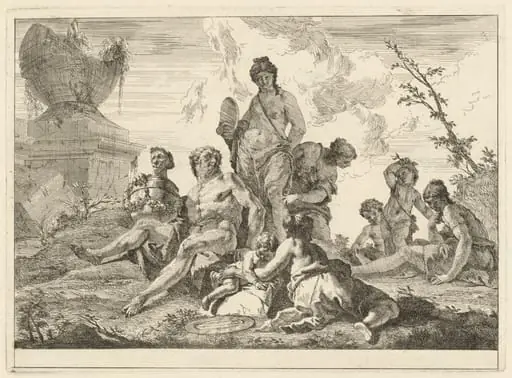
The three Graces and Mercury, after the painting in the Anticollegio, Palazzo Ducale, Venice
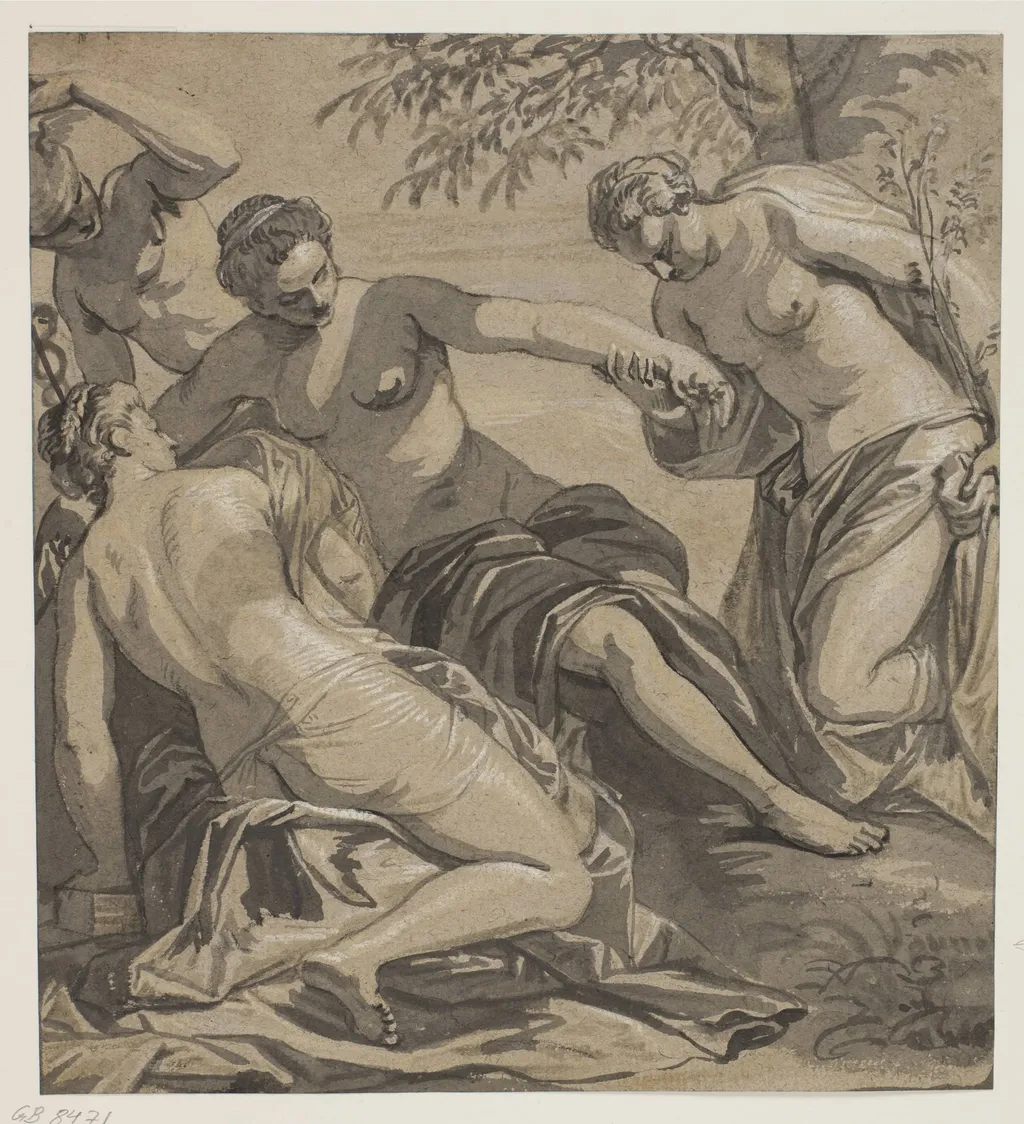
The three Graces and Mercury, after the painting in the Anticollegio, Palazzo Ducale, Venice is an unspecified painting by Unknown. It dates from 1556 and is held in the collection of the Statens Museum for Kunst.
About this work
Overview
Executed by the artist catalogued as 32406_person, the piece is presently part of the collection of the Museum of Ethnography.
The drawing titled *The Three Graces and Mercury, after the painting in the Anticollegio, Palazzo Ducale, Venice* is a mid‑sixteenth‑century work, dated to around 1556. Executed by the artist catalogued as 32406_person, the piece is presently part of the collection of the Museum of Ethnography. It is a preparatory or derivative image based on a larger fresco that once adorned the Anticollegio of Venice’s Doge’s Palace.
Subject & Meaning
The composition presents three female figures, traditionally identified as the Graces, seated together and linked by their hands, embodying harmony and beauty. Adjacent to them stands a winged male figure, representing Mercury, who gazes downward, suggesting a narrative of divine interaction or patronage. The setting is a wooded landscape, reinforcing a mythological atmosphere that blends the classical with a natural environment.
Technique & Style
Rendered primarily in brown and black tones, the drawing emphasizes soft modeling and gradual transitions between light and shadow. The artist employs chiaroscuro to give the figures a three‑dimensional presence, allowing them to merge subtly with the surrounding foliage. The line work is fluid, and the overall effect is one of gentle integration of human forms within the forested backdrop.
History & Provenance
Created as a copy or study after the original fresco in the Anticollegio, the work reflects the practice of reproducing important decorative schemes for documentation or dissemination. Although the original palace painting no longer survives in its entirety, this drawing preserves its iconography. It entered the Museum of Ethnography’s holdings through acquisition in the twentieth century, though the precise path of ownership remains undocumented.
Artist & collection

 Domestic Scene
 Giacomo and Cardinal Marco, investing Andrea, Abbot of San Zeno, with his Benefice
 The Nymph of Fontainebleau
 Portrait of a Woman
 Madonna and Child with Saints in the Enclosed Garden
 Venus and Minerva
 Family Group of Four on Sofa
 Wall painting from Room H of the Villa of P. Fannius Synistor at Boscoreale
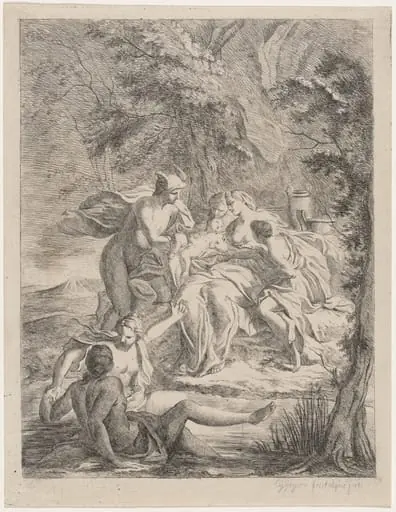 Hermes Bringing the Infant Dionysus to the Nymphs
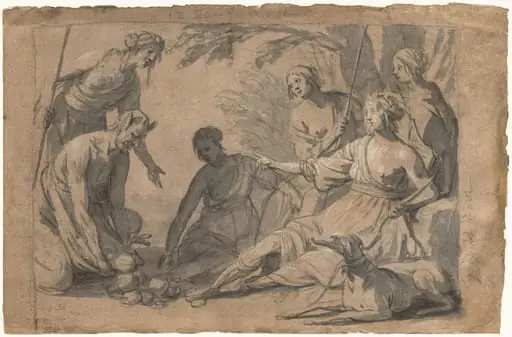 Diana and Four Nymphs Receiving Gifts from a Satyr
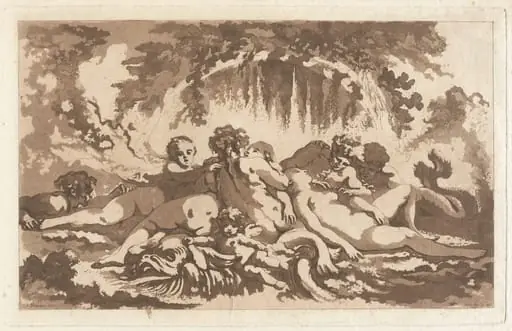 Naiads and Tritons
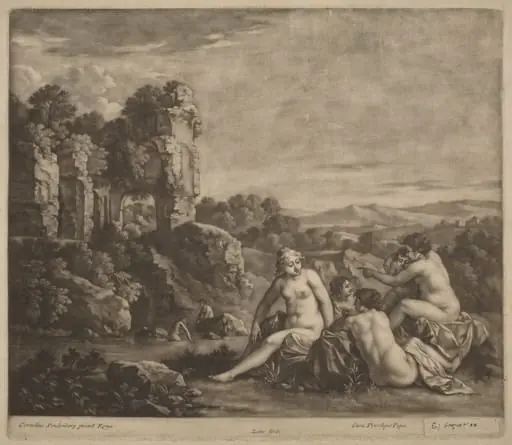 Bathers in a Landscape
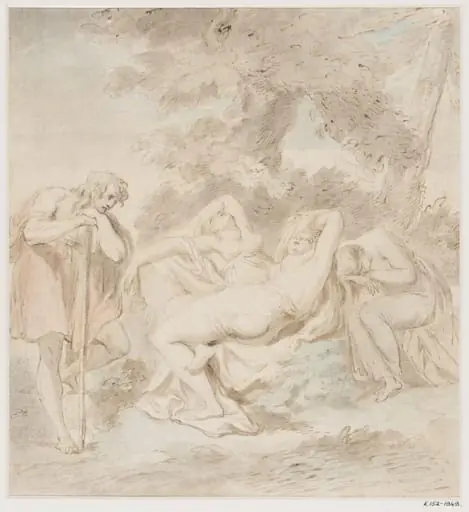 Cymon, Iphigeneia and two female attendants in a landscape.
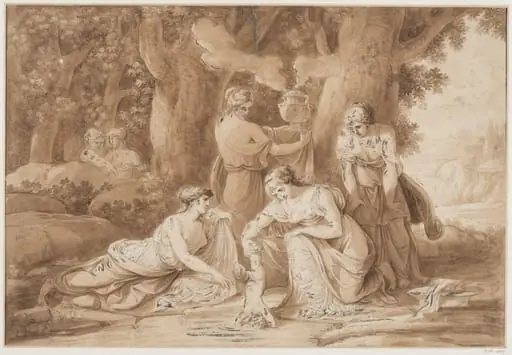 Thetis dipping Achilles
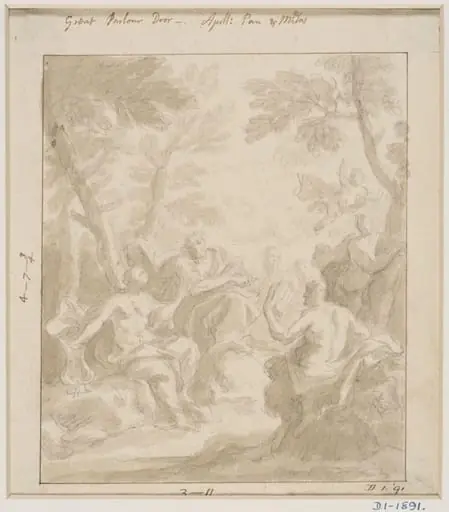 Design for an overdoor painting depicting Apollo, Pan and Midas
 Venus and Vulcan with Three Nymphs and Three Cupids