Artwork
Hermes Bringing the Infant Dionysus to the Nymphs
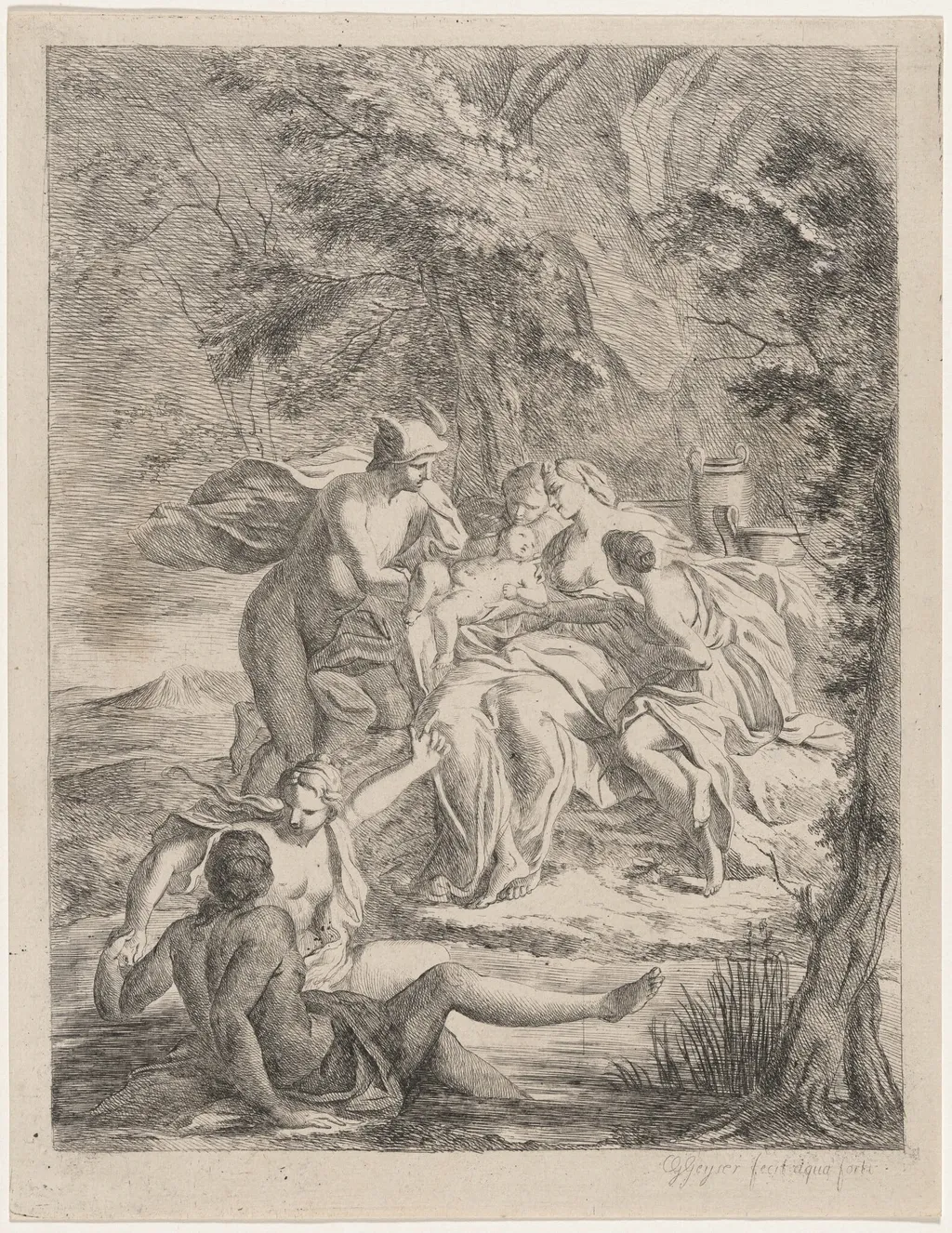
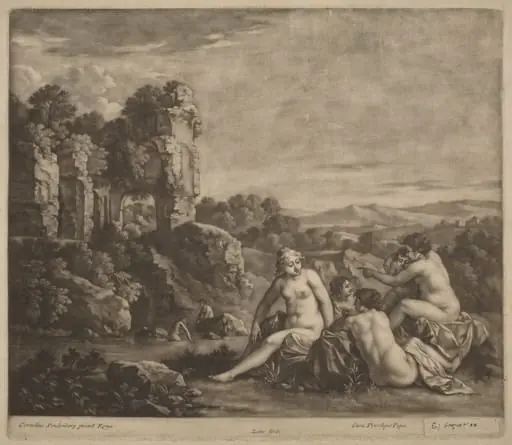
Hermes Bringing the Infant Dionysus to the Nymphs is an ink print by the Romanticist artist Christian Gottlieb Geyser. It dates from 1764 and is held in the collection of the National Gallery of Art.
About this work
Overview
Hermes Bringing the Infant Dionysus to the Nymphs is an etching on laid paper by Christian Gottlieb Geyser, dated circa 1764, part of the collection at the National Gallery of Art in Washington.
Subject & Meaning
The etching depicts a serene natural scene with mythological figures: a seated woman cradling a baby (Dionysus), another woman tending to them, and a staff-bearing man (Hermes) observing. The composition conveys a quiet, intimate moment in a wooded, waterside setting.
Technique & Style
Geyser employed intricate fine lines to render dense, tangled foliage, and utilized shading to capture the texture of plants and the folds of the simply dressed figures' clothing, achieving depth and detail.
History & Provenance
Created around 1764, the etching is now housed at the National Gallery of Art in Washington, D.C., as part of its print collection.
Context
As an etching, the work exemplifies 18th-century printmaking techniques, inviting comparison with the era's broader artistic practices in capturing detailed, naturalistic scenes.
Artist & collection

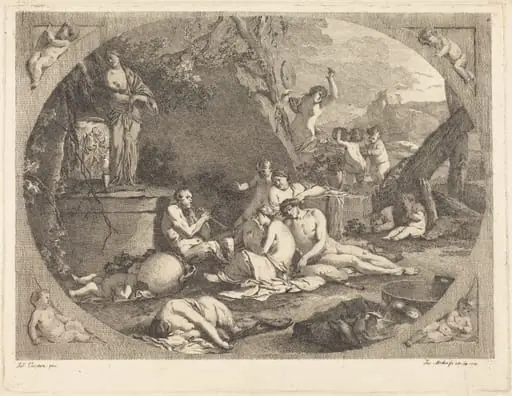 Bacchanal
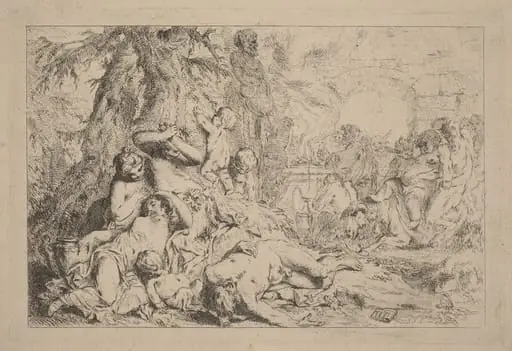 The March of Silenus
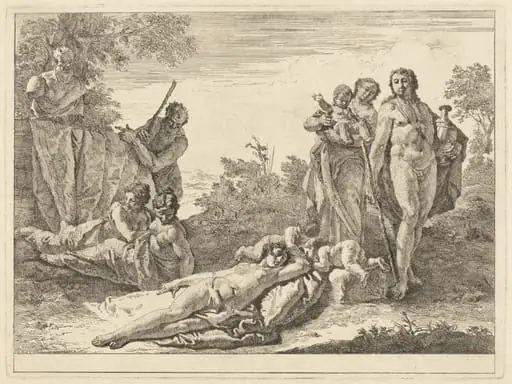 Nine Figures around a Herm of Pan
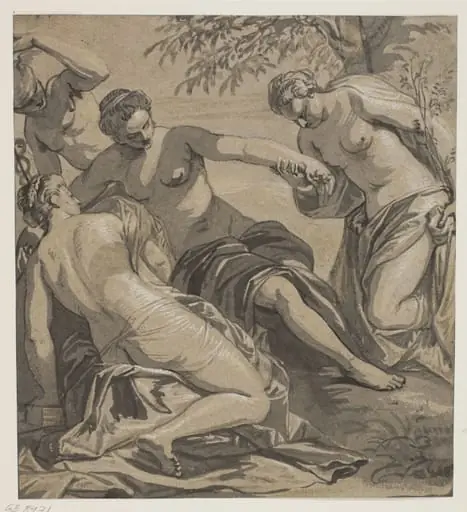 The three Graces and Mercury, after the painting in the Anticollegio, Palazzo Ducale, Venice
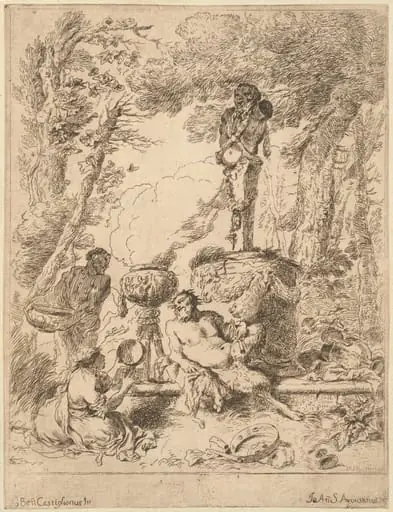 Bacchanal by a Herm
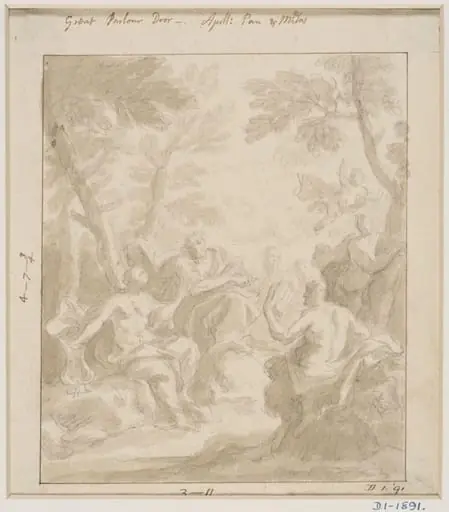 Design for an overdoor painting depicting Apollo, Pan and Midas
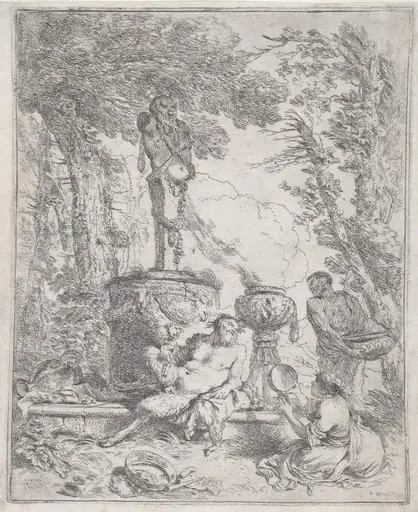 Pan Reclining before a Herm
 Rachel Concealing Laban's Idols
 Nymphs Bathing in a Cave
 Apollo and Nymphs in a Landscape with a Bust of Pan
 La Bonne Aventure
 Bathers in a Landscape